


Cage disappears into a role—one of his most complex, chilling, and memorable to date—as a devil-worshipping serial killer in “Longlegs.”
No time to read? Click the button below to listen to this post.
IN THIS CORNER: KELLY MINTZER
The Lowdown

I am not, generally speaking, a fan of dynasties. Nepotism is an inevitable evil, but it’s hard not to bristle a little at the successes of those who were simply born into it—whatever the “it” may be. So I entered my first encounter with Osgood Perkins tentatively at best. It was I Am the Pretty Thing That Lives in the House, and it was somewhat annoyingly INCREDIBLY my jam. But we always allow for a fluke, so I remained cautious for The Blackcoat’s Daughter. I loved it even more.
So, by the time Longlegs came around, I was greeting it with the same breathless anticipation and enthusiasm I usually reserve for a Mike Flanagan or Ari Aster release.
And all of my hopes?
It surpassed them.
Longlegs has been compared frequently and understandably to Silence of the Lambs, which, while obvious, is an unfair equation. Silence of the Lambs is intentionally grounded; Longlegs is intentionally not.
I know it’s a divisive film; the sort of nutshell, elevator pitch is this: FBI agent Maika Monroe has some small degree of psychic ability, which agent Blair Underwood wants to harness to catch an elusive killer, played with absolute bizarre menace by Nic Cage (SO MUCH more on that later). As the story unravels, it becomes apparent that Agent Maika is not drawn into the plot by happenstance; she is the crux of it.
Without going too deeply into details that may be considered spoilers (but there’s some of that, so if you are sensitive to those things, I see you, I respect you, please stop reading), this is where the story became really intriguing to me—and where my read of it could differ greatly from others and perhaps even Perkins’ intentions.
I very much viewed Cage as a very small and specific Svengali—a storyteller whose only purpose is to create an encompassing, slow hell for Monroe. He has an end he is writing towards, and he is filling the pages of her life with as much horror and terror as he can because he has nothing against her and not for any greater purpose, simply because she is the story he is telling, and evil is sometimes banal and petty.
Longlegs trades in a certain kind of creeping dread.
Look at Nic Cage’s strange, prosthetically enhanced, washed-out face and try to explain why he’s terrifying. I can’t. But I know he genuinely haunted me in a way that few movie visuals have besides the Justin Long walrus creature in Tusk (yes, it was me; I was the one person who liked that movie).
But more penetratingly, Longlegs explores the fear of family and of loved ones; how fully can we ever know anyone, even the people we trust to share our space and to keep us safe? And what could be more terrifying and heartbreaking than having that sense of security snatched away?
That is the greatest cruelty of Cage’s killer, forcing betrayal into the last moments of the families whose executions he engineers.
The Cage Factor:
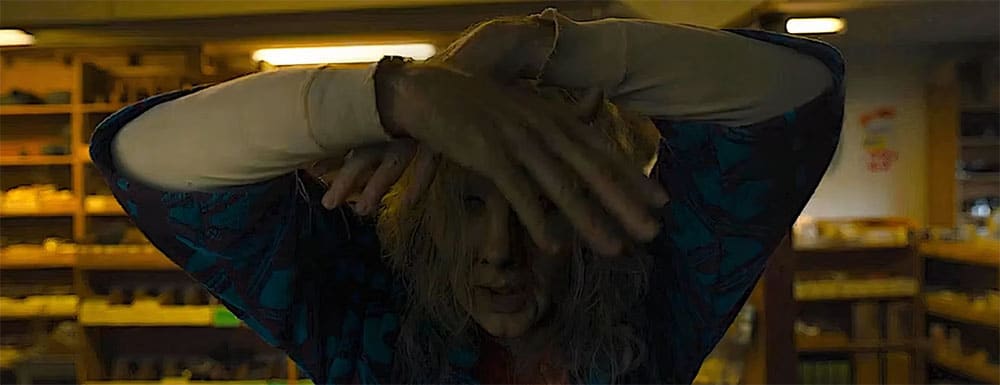
Absolutely indispensable. I don’t think he’s ever delivered a performance quite like this. He’s rarely the villain, and I can’t think of any horror he has done (Vampire’s Kiss does not count). But his performance in Longlegs can’t be held down under layers of latex and prosthesis.
Speaking in an otherworldly falsetto, he imbues every moment he is on the screen with palpable dread, even as we rarely see him actually committing acts of violence. He feels dangerous, truly, in a way that few recent monsters have. If the Academy were more accepting of genre fare, I would certainly say it’s a performance that warrants Oscar contention.
I acknowledge this MOVIE isn’t for everyone; my partner did not care for it! And they offered valid criticisms that make sense to me—and also didn’t change my mind about loving it.
AND IN THIS CORNER: STEPHANIE MALONE
The Lowdown
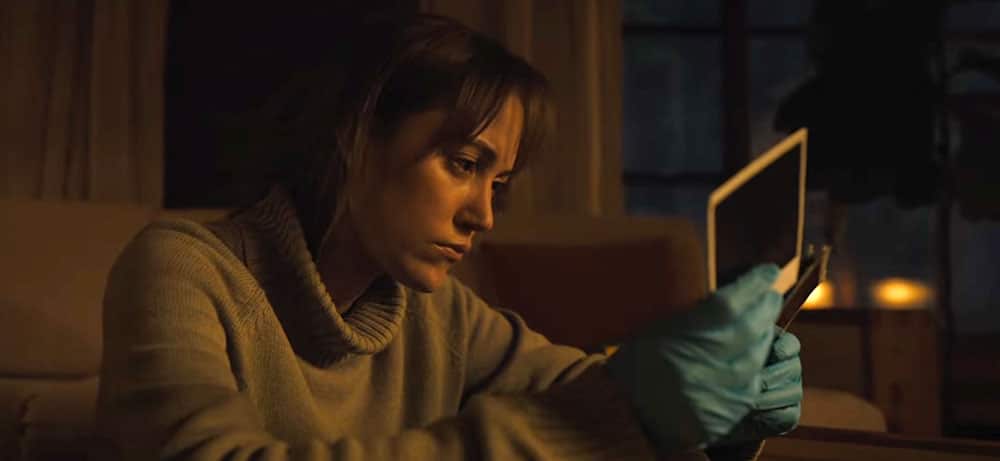
In Longlegs, director Osgood Perkins crafts a distinct and haunting experience that may not be for everyone but is likely to leave a lasting impact on the genre.
Perkins is a master of mood, and in Longlegs, his aesthetic vision shines. The color palette is desaturated, employing muted tones that perfectly match the emotional bleakness of the story. Perkins understands how to generate suspense through quiet, unsettling visuals. The sparse, methodical framing reflects the disturbed mind at the center of the film, constantly reminding us of the unnerving presence lurking just out of sight.
The film’s atmosphere is bolstered by its eerie sound design and minimalist score, which pulse with a dreadful calm that feels like the quiet before a storm. The sound is intentionally sparse, immersing the viewer in a space where evil is a tangible, suffocating presence.
Maika Monroe brings depth and intensity to her role as FBI Agent Harker. Her performance is nuanced, never falling into caricature or the typical “hard-nosed investigator” trope. Instead, she reveals a vulnerability beneath her stoic nature, providing glimpses of a haunted soul grappling with her inner demons.
By centering the story around Agent Harker’s journey rather than the gruesome details of Longlegs’ crimes, the film creates a haunting intimacy. It dives into the psychological interplay between good and evil, almost as if Longlegs himself is less a person than an idea that has infected Harker’s world.
And then, there’s Nicolas Cage. He delivers one of the most haunting, transformative performances of his career. It’s the kind of performance that requires complete immersion, and Cage disappears into the role so thoroughly that he becomes almost unrecognizable. Longlegs will likely stand as one of the most memorable and disturbing villains in recent horror cinema.
The horror in Longlegs is existential, a creeping fear that something unholy is lurking just beneath the fabric of reality. The film’s artistry lies in its restraint, its willingness to build suspense through subtle, unnerving details, and its unflinching focus on character-driven dread.
The Cage Factor:

Cage doesn’t just play Longlegs; he becomes him, disappearing into a role that’s chilling not because of outward violence but because of a slow-burn intensity that feels deeply unnatural but wholly convincing.
Visually, Cage is unrecognizable, sporting a look that’s downright uncanny. Every detail of his disturbing visage speaks to a man who is as spiritually rotten as he appears physically.
Unsurprisingly, given Cage’s reputation, he crafted his performance with meticulous attention, using prosthetics and adjusting his voice to become almost unrecognizable. This helps him fully embody Longlegs as a manifestation of malevolent mystery. In a career filled with iconic performances, Cage’s portrayal of Longlegs stands out because it feels so disturbingly genuine; he fully immerses himself in this character’s pathology, delivering a restrained but unnerving performance that burrows under the skin and carves its way into your psyche.













Follow Us!