

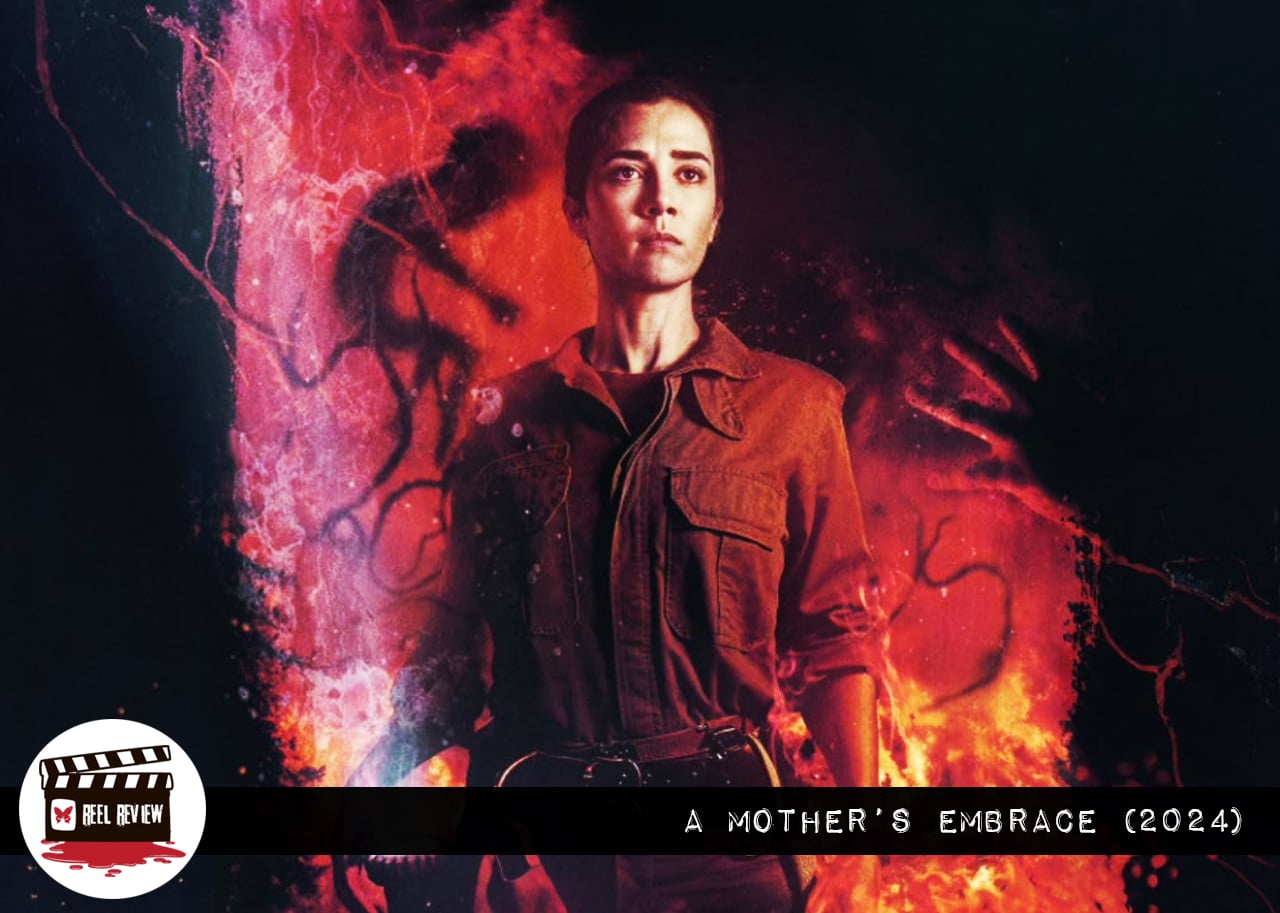
Though lacking in narrative depth, Cristian Ponce tackles trauma while crafting an exceedingly creepy dreamscape in “A Mother’s Embrace.”

No time to read? Click the button below to listen to this post.
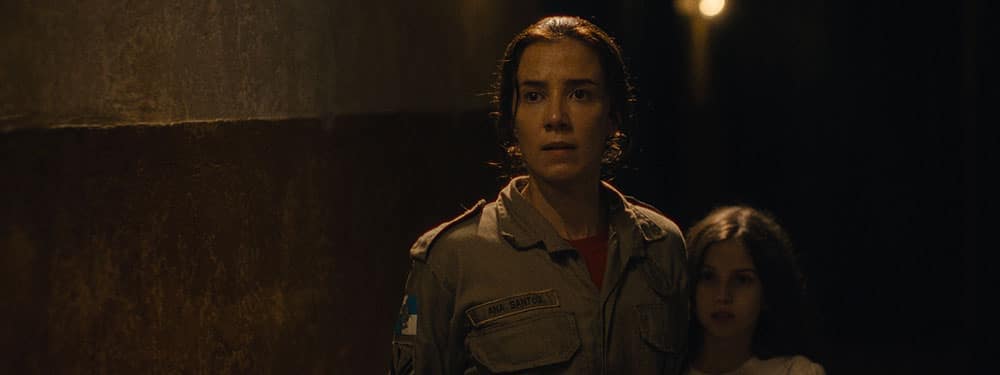
Set in 1996, Rio De Janeiro, firefighter Ana (Marjorie Estiano) has freshly returned to work after having a breakdown on the job and almost losing her life.
Ana has serious PTSD from years before, in 1973 when her mother drugged her and tried to burn down their house with them in it. Ana had no contact with her mother for 20 years before her death, which just happened to be the day of the incident at work.
She sees visions of her mother everywhere, even as a nurse in the old folk’s home, where her unit is dispatched to ensure it doesn’t collapse during one of the worst storms in the city’s history.
A gloomy, dread-inducing shadow hangs over the dingy, rundown retirement home, with its cracked walls and the inhabitants’ silent, blankly staring faces. Given the perceived health code violations, Ana wants to evacuate the residents, whether or not they find structural damage.
Ana, Dias (Val Perré), Roque (Reynaldo Machado), and Mourão (Rafael Canedo) are responsible for ensuring the building’s safety, but it soon becomes clear that this home is not exactly what it seems.
At one point early in the film, it is hinted that human experiments were conducted in the home. The old woman, Drica (Ângelo Rebelo), who owns the home, explains, “This has not always been a nursing home. But it has always been a temple.”
The camera then pans to a photo of what looks like a Nazi and a young girl hanging on the wall. As you may know, Latin America became a haven for Nazis to hide after World War II. It’s a scene that makes us question the nature of human darkness.
What follows is a slow-burning but endlessly creepy mystery.
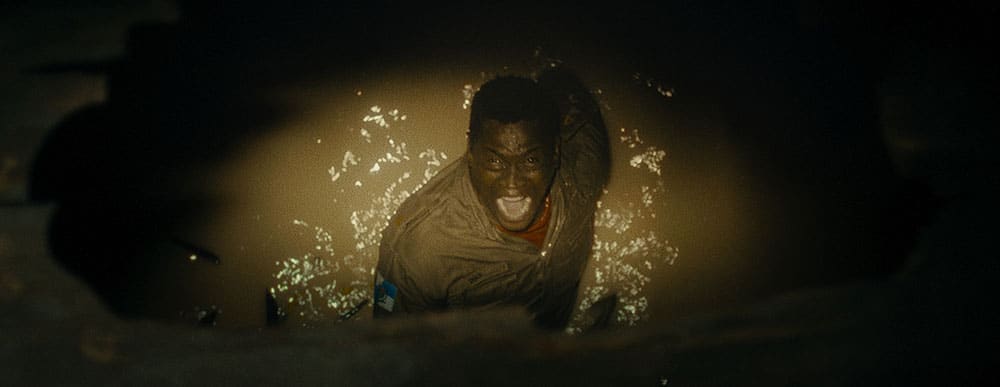
It requires patience as the story unfolds at a measured pace, taking time to build dramatic tension and invest you in the characters. The pervasive sense of unnerving dread and memorable visuals elevate this above more forgettable, paint-by-numbers horror films.
The finale is intense but somewhat predictable. A Mother’s Embrace begins with much promise, but the ending left me wanting more. The film’s momentum, which had been expertly building, depreciates as it reaches its conclusion. I wanted the film to do more with its intriguing PTSD premise.
In the words of the old woman who owns the nursing home, “Salvation is only for those who want it.” Does Ana want it enough to stay alive? Does she want it enough to wrestle herself out of the grip of her demons? These are intriguing questions, but the way the film addresses them will not work for all viewers.
A Mother’s Embrace excels in its rich symbolism and haunting imagery, but there is little narrative meat on the bones.
Ana is a compelling character, and Estiano’s performance is superb. Yet, I wanted more for her development and would have loved to see director Cristian Ponce, who co-wrote the film with Gabriela Capello and André Pereira, offer more depth to these Lovecraftian waters.
Despite leaving me a little cold in its murky waters, this is a well-made and thoroughly enjoyable film worth seeking out.
(3/5 stars)
EDITOR’S NOTE
If you appreciate more subtlety in your storytelling and are willing to embark on a journey that’s more symbolic than straightforward, there are some gorgeous and resonant themes here.
A Mother’s Embrace has much to say about facing pain, letting the hurt wash over you, and healing by walking through the fire. It’s about being tested and coming out the other side cleansed.
The devastation caused by fire and water is a fitting metaphor for the kind of emotional disasters that upend our lives and keep us trapped in the rubble of psychological trauma. It’s easy to drown in the abyss of trauma. What keeps us tethered to our pain is often immense, and it scars our psyche like flames scarring skin. It’s not easy to break free from the unshakeable grip our suffering has on us.
This film is about fighting to move forward when the temptation to let go is so great. It’s about choosing strength over peace and breaking free from generational trauma.
Whether or not that story resonates with you will depend on your tolerance for more allegorical horror that’s intentionally oblique. It’s beautiful and harrowing, with spectacular imagery, but it may be challenging for some viewers to forgive its failure to provide satisfying answers and explanations.
(4/5 stars)
Overall Rating (Out of 5 Butterflies): 3.5
Combined average score
A MOTHER’S EMBRACE made its World Premiere at Beyond Fest 2024, where it was screened for this review.













Follow Us!