


“The Fetch” will shake you to your core—a film about grief and trauma that’s as emotionally gripping as it is truly terrifying.
No time to read? Click the button below to listen to this post.
RELEASE UPDATE:
THE TWIN, previously titled THE FETCH, is now available to stream on AppleTV, Amazon, and PVOD and will be released on Shudder this fall. Now is a great time to check out an excellent film we reviewed last year, out of the festival circuit.
I’ll say one thing: The Fetch is not messing around. It wants to terrorize you on a cellular level. I mean, it really wants to make you suffer.
The film deals with sensitive subject matter; a trigger warning may be in order. It centers around a man who believes he deserves to die and a malevolent entity that exploits this vulnerability to try to force the issue. There are multiple references in dialogue and in a couple of difficult scenes that deal directly with suicide.
If that’s not material you can engage with, you might need to skip this film. For everyone else, The Fetch is absolutely worth your time—an utterly chilling exploration of trauma that is both heartbreaking and horrifying.
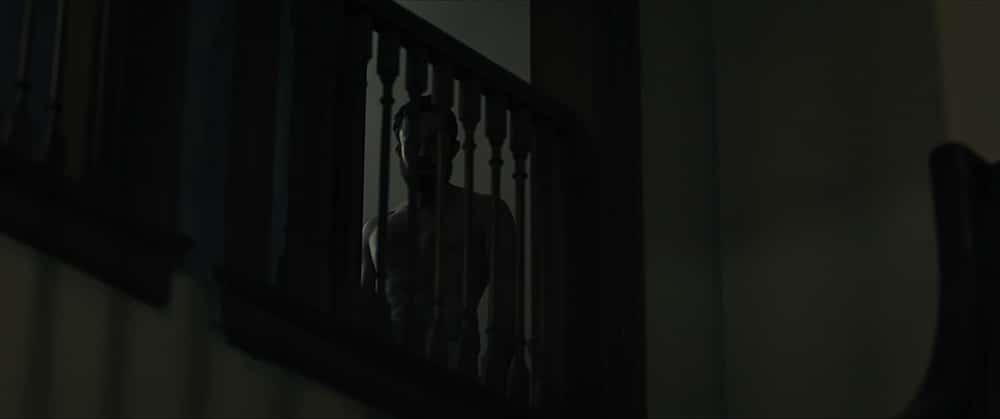
It begins with an intense and unnerving opening involving a creepy old woman and a young boy that signals much nastiness to come. During a brief bit of “far too good to last” wholesomeness, we are introduced to a happy couple and their cherubic young son.
Then that telegraphed nastiness comes a calling.
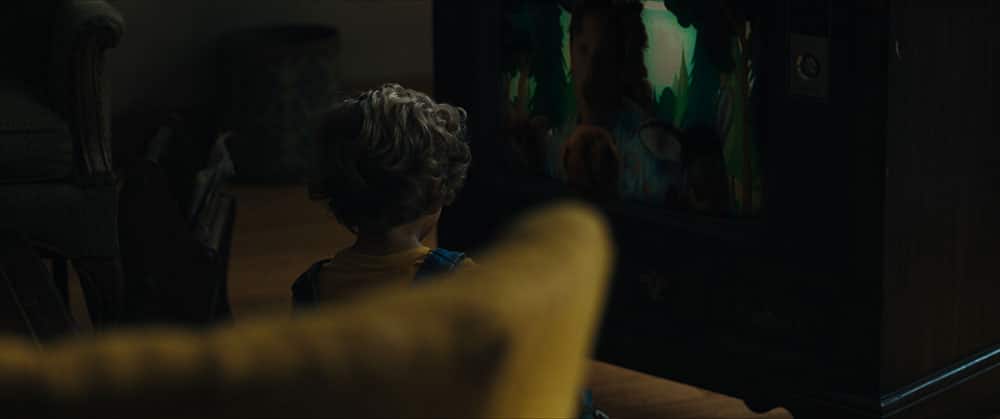
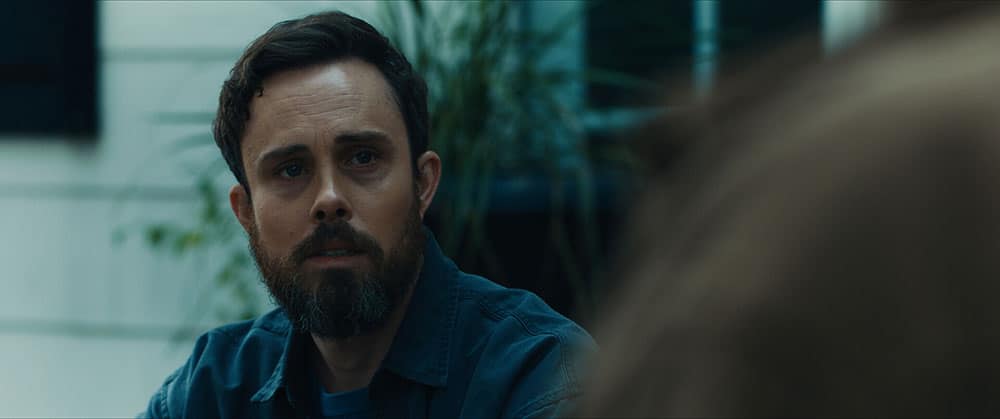
The father, Nicholas (Logan Donovan), is home alone watching his son, Jacob (Tripp Toupal), while his wife, Charlie (Aleksa Palladino), is at work. In a tragic accident, young Jacob —channeling cruel levels of cuteness reminiscent of Gage in Pet Sematary—is killed.
A despondent Nicholas attempts to take his own life, compounding a tragedy the couple cannot recover from. After a monthlong stint at a state institution, Nicholas moves back into their home, although Charlie has moved out.
Before he can live on his own—in the home that once belonged to his dead grandmother— he must undergo a period of observation by a psychiatrist, Dr. Beaumont (Robert Longstreet). Through their relationship, we learn that tragedy has plagued Nicholas his entire life.
Meanwhile, he’s desperately trying to prove he’s mentally stable. But, uh-oh, he’s seeing and hearing things, having vivid nightmares, and coming more than a little undone.
What’s worse, something that looks an awful lot like a twisted version of himself is haunting him, using visions of his son to torture him in the most sadistic way imaginable.
It’s a bleak but effective setup for an engrossing horror film about a devastating creature from Irish folklore known as a fetch.
This supernatural entity appears as a double or an apparition of a living person and is regarded as an omen, usually for impending death.
As is a common theme in modern horror, it’s a film about trauma and the ways unimaginable loss and grief can shake the very foundation of our existence, bringing us to our knees. The Fetch is more about internal demons than external ones. Whether or not the titular creature that seems to be terrorizing Nicholas is real is irrelevant. He’s being consumed by darkness, even if it’s only a manifestation of the extreme guilt he feels over his son’s death.
However, that’s not to say it doesn’t work exceedingly well as a straightforward, visceral horror film. Whatever is haunting Nicholas is truly frightening, thanks to a great sense of atmosphere and stellar makeup effects/creature design from Lisa O’Neal.
The film’s effectiveness is largely due to a gripping performance by Logan Donovan, who dazzles in a dual role. As Nicholas, he masterfully conveys a devastating anguish that will shake anyone who has ever felt extreme loss, as well as any parent who can understand the extent of his suffering.
When he transforms into a menacing doppelganger, which requires him to spend 80 minutes in the makeup chair, he delivers a harrowing performance as a creature relentless in its quest to unravel its prey.
Director J.C. Doler ensures the film remains tense and unnerving from the first to the last frame.
Doler, who co-wrote the screenplay with Paul Peterson (with Taylor Bracewell and Chris Alan Evans sharing story credit with Doler and Peterson), deftly balances the conventions of the genre with an emotionally impactful narrative that will rip your heart out and shove it down your throat.
It’s brutal, but it’s also beautiful in its resonant nature and the way it speaks so powerfully to universal themes of guilt, loss, depression, and the annihilating ways we too often torture ourselves.
Overall Rating (Out of 5 Butterflies): 4
THE FETCH made its World Premiere at the 2024 Austin Film Festival, where it was screened for this review.




Follow Us!