


While those expecting a traditional Wolfman movie might balk, I cannot brook a single complaint or argument against this “Wolf Man.”

No time to read? Click the button below to listen to this post.
We have grown accustomed to our monsters; we have grown too comfortable with them. Vampire? I know them well. Mummies? I confess that their motivation confuses me, but I have a nodding acquaintance. But to this day, nothing speaks to me quite like the werewolf.
I am a lover of body horror; the werewolf is the epitome of that. To be betrayed by your corporeal being by no fault of your own…what a unique and distinct horror.
While launching into an ecstatic recounting of Leigh Whannell’s Wolf Man (that space is important, and more on that later) to my partner, they gently mentioned that Hollywood has become perhaps too reliant on the reboot—a valid argument certainly, and one I’m very familiar with.
However, Whannell’s beautiful and deeply empathetic nightmare is not, in fact, a reboot. Nor is it a reimagining, truly. It is instead a revelation, a reminder that we get to create our own myths and stories, a reminder that our monsters are our darlings, and we are not beholden to lore. We write our stories. We get to create our own legends. And what a fucking blessing.
Whannell throws out the werewolf rulebook, and we’re all better off for it.
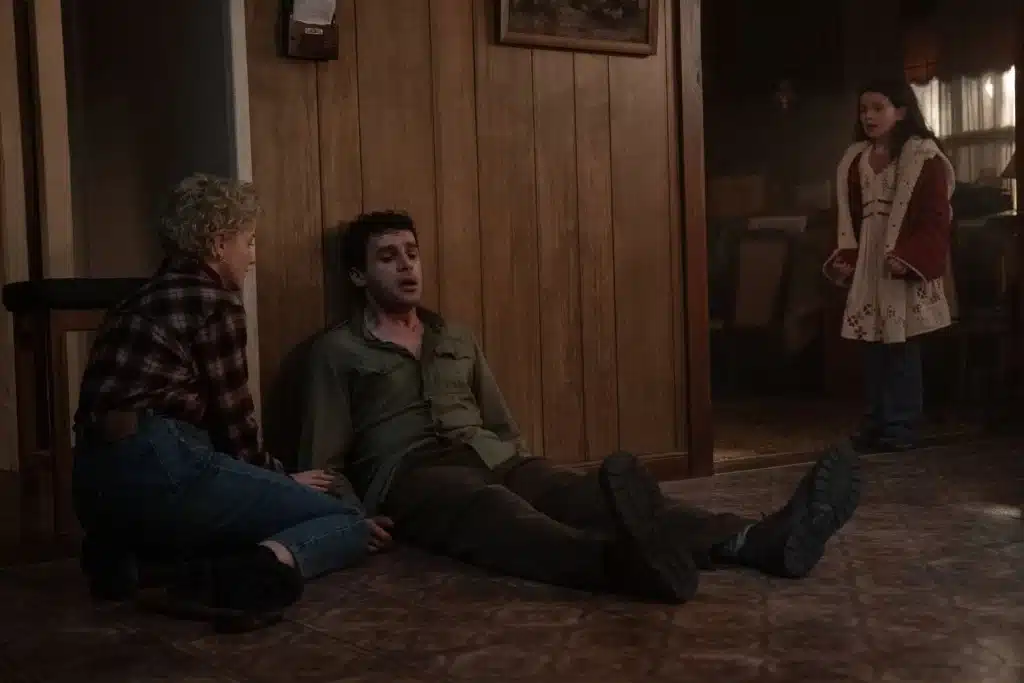
I suppose you could argue that Wolf Man follows some of the basic tenets of werewolf media; our hero, Blake, gets mauled by a lupine creature on his way to his father’s house in the Pacific Northwest. His wife and child are left undamaged physically but still reeling from the attack.
Throughout the course of one long, dark night of the soul, Blake—played gorgeously and with not an ounce of ego by Christopher Abbott—begins to transform into the titular wolf man, forcing his beloved wife and child to make impossible decisions.
I don’t want to give too much away; Whannell makes fearless and inventive choices throughout. To be clear; I think this is how we should be approaching our vintage monsters. We have exhausted the form and template, and why shouldn’t we forge our own paths?
Like the brilliant Mike Flanagan recasting a vampire as an angel in the unspeakably perfect MIDNIGHT MASS, Whannell fearlessly says, “fuck it,” and reinvents the werewolf mythos.
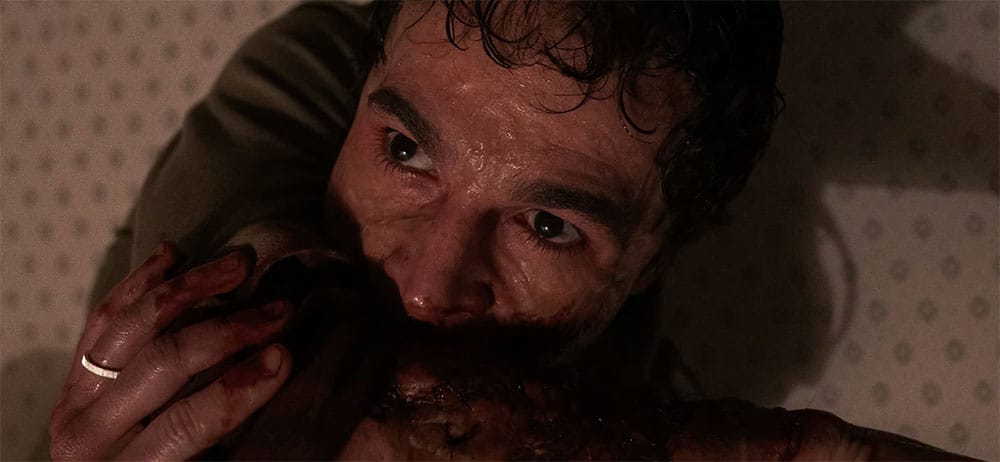
Let us discuss briefly, the importance of the creature design. I am an aficionado of the werewolf; it is my favorite monster.
Wolf Man understands in a way that I’ve not seen in any previous media the importance of the balance between wolf and man. The wolfman has always served as a metaphor for both mental illness and the sins of the father passed onto the son, and while Wolf Man does not entirely shirk that, it’s refreshing to see the ways that Whannell reframes that. So often, werewolf movies make the wolfman look like a furry in cut-off shorts.
Blake appears in equal measures, wolf and man, suggesting the brutal battle raging within him—through no fault of his own.
Wolf Man additionally does something incredibly effective that I have only seen done once before (and that the wildly under-rated Exorcist TV show—don’t get me started, but please watch that brilliant show; it’s lamentably only 2 seasons), in that it puts us in the mind of the possessed.
The horror of a werewolf movie is often limited to the pursuit; we are sympathetic to Laurence Talbot, but the fear, the terror is reserved for those being chased by him. Whannell puts us in Blake’s perspective, as he loses the ability to communicate, as sounds become unbearably loud, as his senses become more and more lupine.
Because the thing is, while Wolf Man often manages to be frightening, it is, perhaps above and beyond all else, a tragedy.
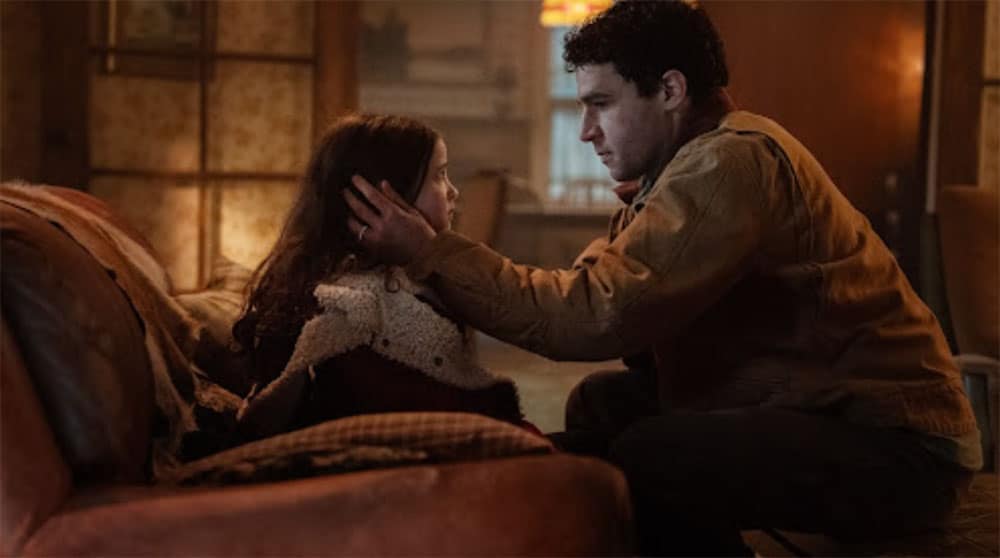
Blake is a good man. He is a good father. He is a thoughtful partner.
Whannell beautifully strips away any pretenses of toxic masculinity; in many movies, Blake would resent being the primary caregiver for young Ginger. Blake relishes it. Many masculine characters would resent their wives being the primary breadwinner; Blake doesn’t give a shit. He likes being a stay-at-home dad. He wants to reconnect with his wife simply because he loves her.
He is a good man who doesn’t deserve what happens to him.
And then there’s the brilliance of setting the movie in the Pacific Northwest, a sort of American purgatory, a space where—much like Appalachia—it is understood that a strange otherness exists. Yes, this is truly the place where, if I were to believe a strange cryptid wolf-man existed, it would rest its head. This new mythology feels entirely at home in the mountains and forests of Oregon.
But even within the grander ambitions of the story, Whannell finds beautifully small, humane, and relatable moments.
Horror movies tend to suggest that a family must be either unreasonably happy or ludicrously miserable prior to the inciting incident; Wolf Man shows a couple still deeply committed to each other and enduring the ennui and inertia that comes from not seeing each other enough and just enduring the decay of time. It’s a refreshing change.
Whannell pulls an astonishing trick by making his werewolf both an unusually balanced blend of human and wolf but also tapping deeper into the animalistic nature of the creature than I’ve yet seen.
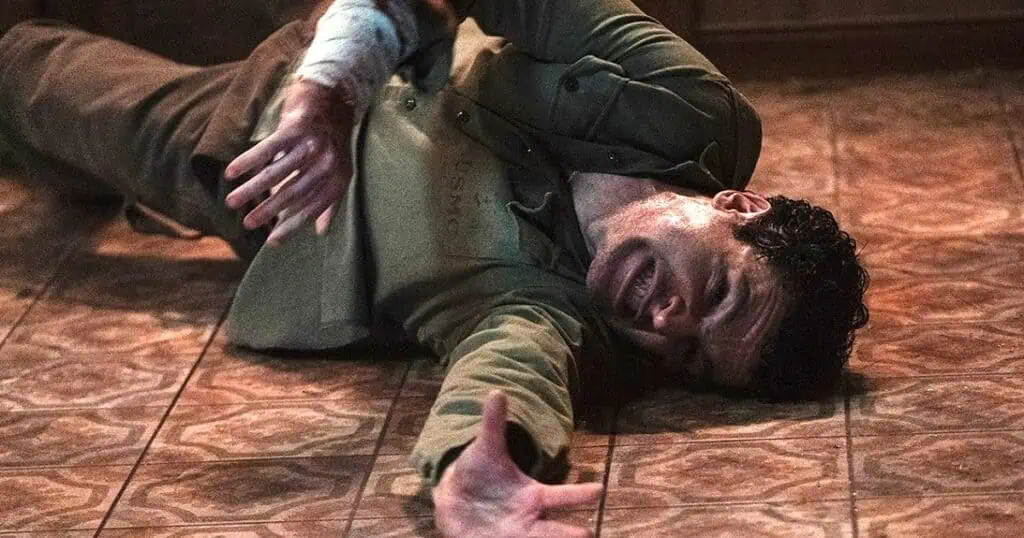
It was poignant and smart and reinvigorated a potentially tired cryptid. What more could you hope for?
Pathos? Heart-break? Top-notch effects?
Done.
It may not be for everyone but never fault Whannell for an absence of ambition. Or heart.
What a movie. What a monster. What an absolutely gorgeous fucking reinvention.
Overall Rating (Out of 5 Butterflies): 5











Follow Us!