

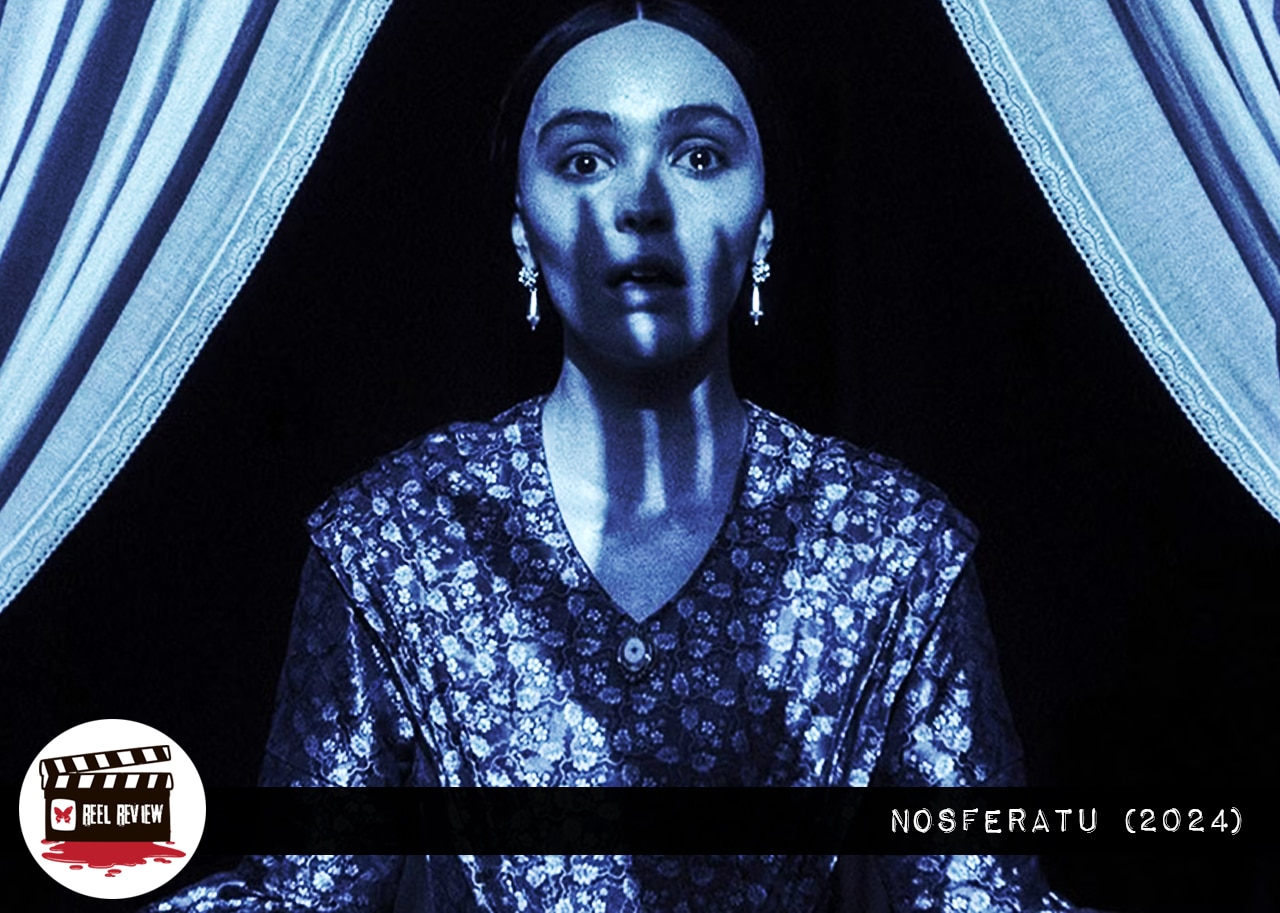
Robert Eggers’ sumptuous reimagining of “Nosferatu” masterfully bridges German Expressionism with Victorian sexual repression.
No time to read? Click the button below to listen to this post.
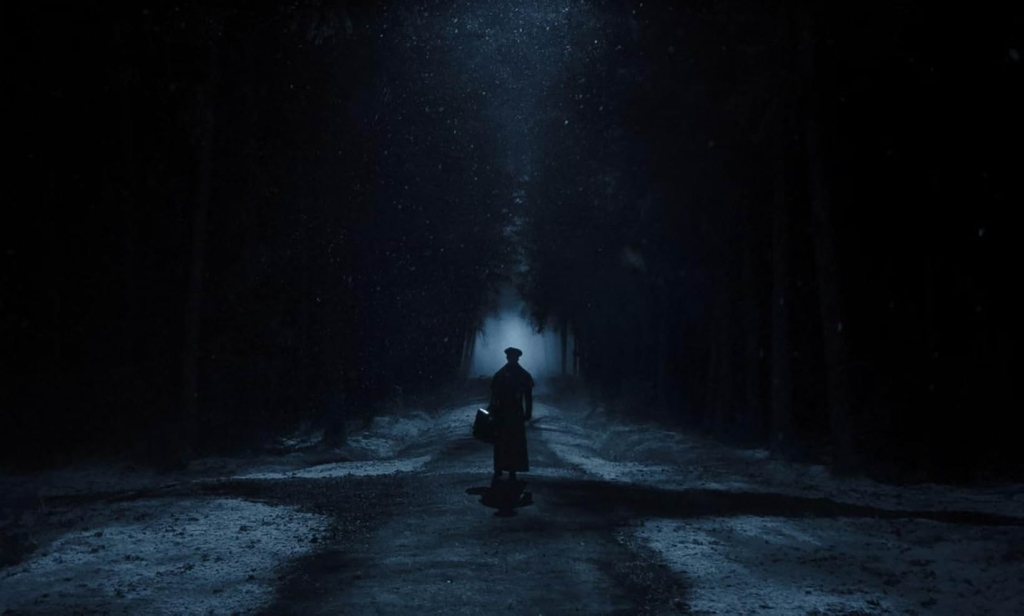
Given his previous works, one can see the attraction for Robert Eggers to make a Nosferatu film; a straight line could be drawn from the shadowy crookedness of German Expressionism in early cinema to The Lighthouse or The Witch. It was only a matter of time before he was drawn to the iconic creeping shadow of Count Orlok, an image Eggers wastes no time indulging in the first scene.
This sets the stage for the shadows that will be deftly wielded throughout the film’s two-hour run time.
Nosferatu follows the story of Thomas and Ellen Hutter, played by Nicholas Hoult and Lily-Rose Depp, respectively, and their struggle against the dreaded Count Orlok, a centuries-old vampire, played by a prosthetics-buried Bill Skarsgård.
The film opens to darkness and fear, turning to soft moans of desire. Eggers’ take on the F. W. Murnau classic bridges the original’s ghoulishness to the themes of Victorian sexual repression depicted in Bram Stoker’s Dracula—that’s the novel, not the film.
In homage to its silent era predecessors, Nosferatu uses mise en scène to represent the inner workings of its characters.
This is a story of two worlds: the ashen light of Victorian society in which Ellen Hutter tries to fit in and the nighttime world where every corner is brimming with the endless darkness of her desires, the latter inhabited by the towering Count Orlok.
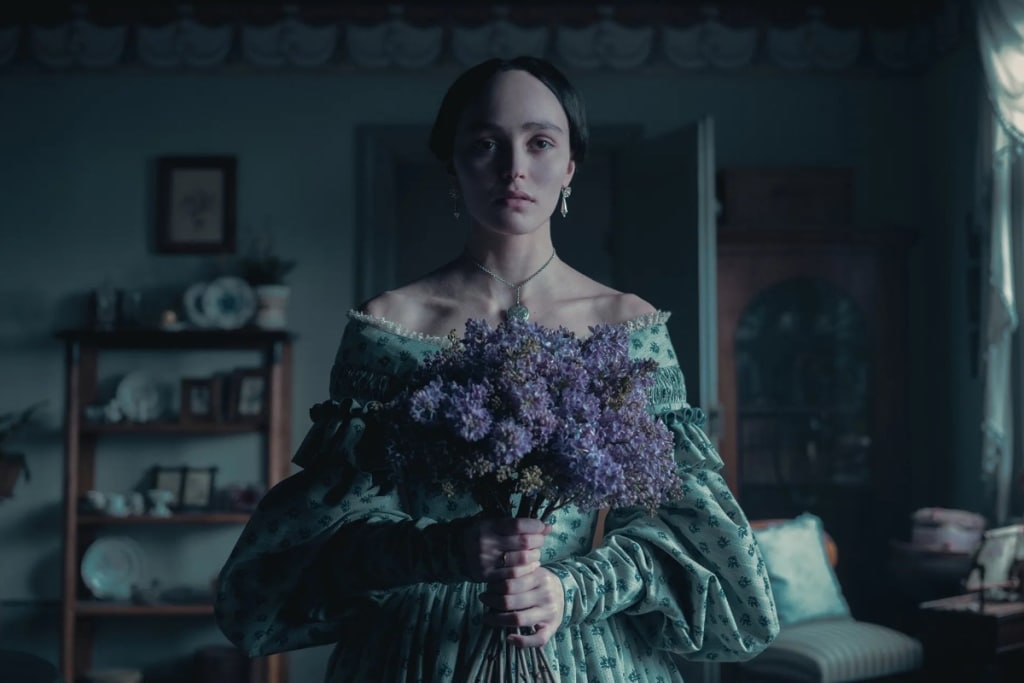
Depp’s physical performance of a woman trapped in repression might be her breakout role. Ellen is meek at first but, during the second act, becomes a contorting maelstrom of emotion. Easily, the most unsettling moments are when Ellen is in the throes of possession, begging the question of whether the danger comes from Orlok’s mysterious power or from within Ellen herself.
The aforementioned dark world of Nosferatu has a life of its own with spectacular visuals of baroque gothic architecture. Every scene at night is textured with black velvet darkness, boldly using a limited color palette to create exuberant visuals straight out of dark fairytales.
Ellen is conditioned by society to see her sexuality as an object of shame, implying that darkness is a manifestation of fear emanating from one’s own self.
Count Orlok is an extension of that fear and the expressionist craft of making the internal external.
Eggers’ detractors will roll their eyes at this, seeing another gloom-core riff on sexuality and horror. However, where he simply includes it as a natural occurrence in his remote society folk horror films, here it is fully realized in all its Jungian glory as a central conflict of the story.
Robert Eggers’ Nosferatu is an ambitious ride through cinematic history that shows how far we’ve come in visual storytelling.
What better way to start the year off than with this deliciously crafted exercise in indulgence in the explicit?
Overall Rating (Out of 5 Butterflies): 4










1 Comment
1 Record
RG wrote: