Politics of Horror: History of Evil (2024)


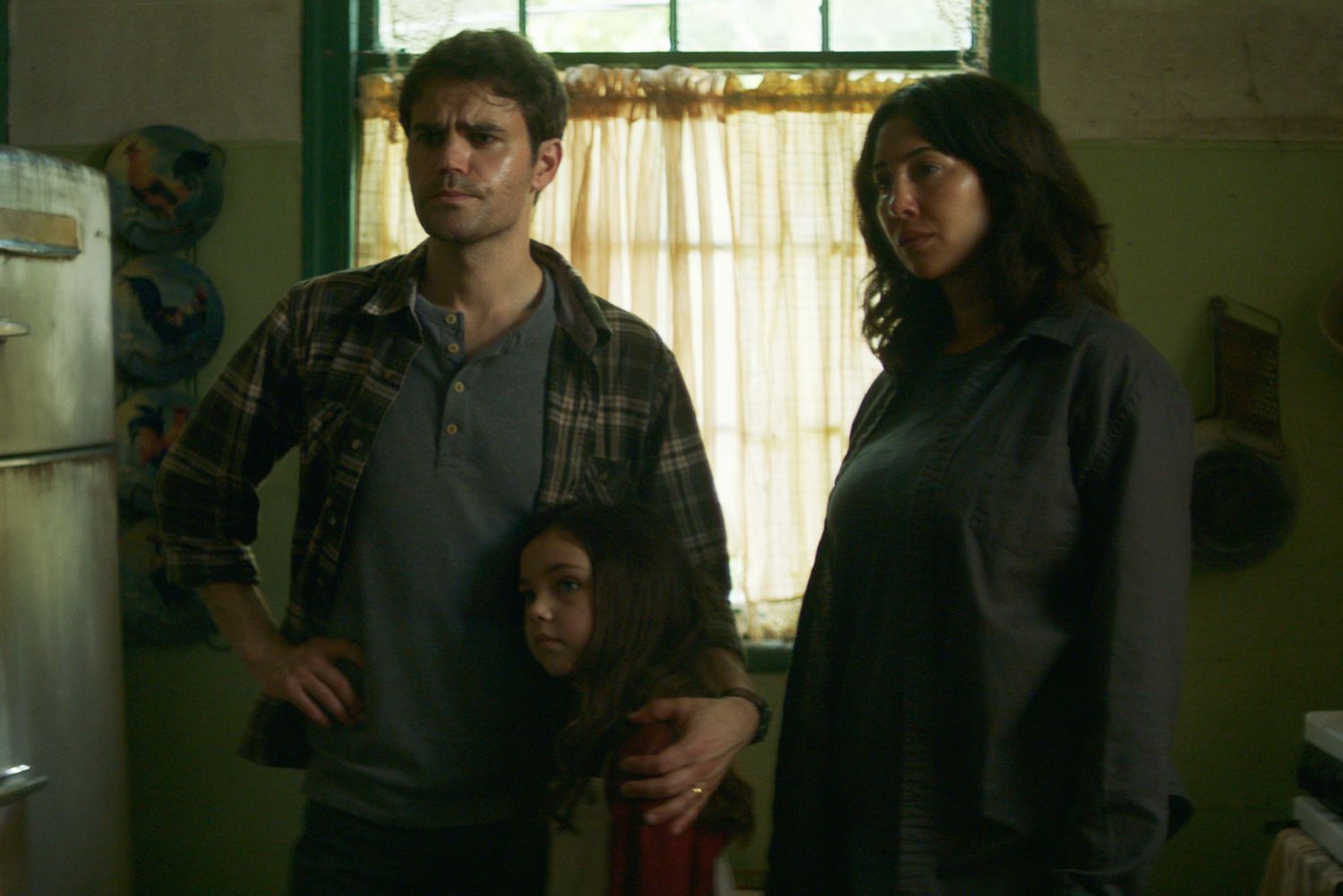
History of Evil is not a particularly good or concise film, but in terms of political potential, it’s packed in a fair amount of America’s collective fears.
Referencing a new government as a theocracy enforced by a police state is quite interesting. It blends a fear of God with a fear of the law, the ultimate combination to stir up doubt. Directed and written by Bo Mirhosseni, this film never takes time to establish its sense of self or direction, so I figured I would focus on the political aspects tucked into the nuances of this film instead of fixating on the aimless, confusing story that overwhelms the majority of the plot.
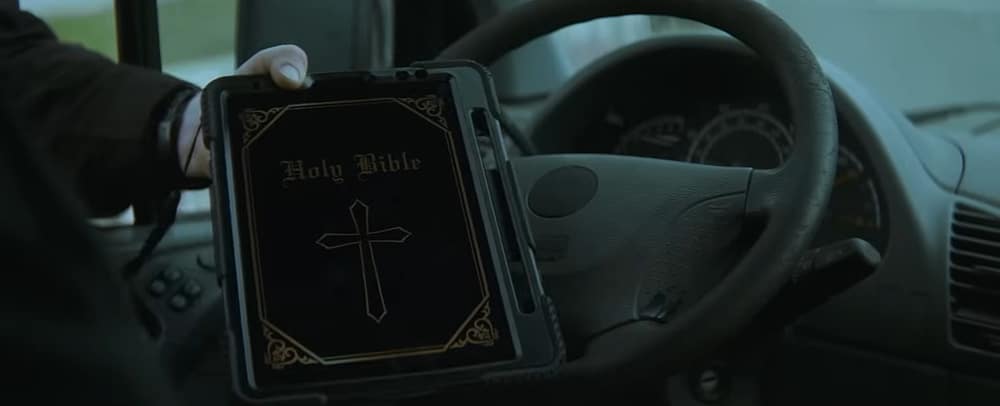
With digital Bible swearing, motion detection drones, constant patrols, and lines of traffic stops to verify the identity of both friend and future political prisoner, this movie wielded more power in its first act, commanding me with the possibility of this theocratic future supposedly only decades away.
Unfortunately, once the group gets established, this story on the outside fades, and a less interesting supernatural element takes hold.
Even when those elements get political, cultural, or theological, they fall prey to the same old haunted house tricks.
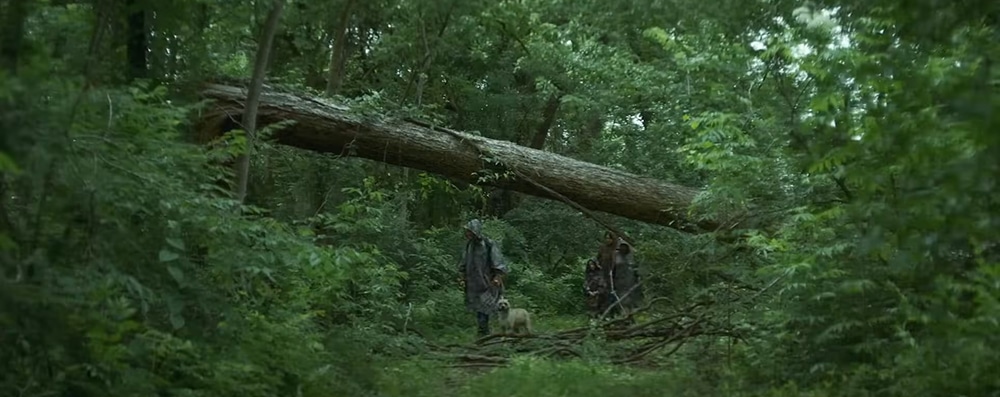
The country is now a theocratic political state enforced by faith and firearms, with agents of the government now titled The North American Federation. While state-sanctioned militias wander about causing terror, another force, The Resistance, is a group of ordinary citizens prepared to rise up against tyranny from the shadows.
Alegre Dyer Rodriguez (Jackie Cruz) is a wanted woman and a high-up for The Resistance. A manifesto circling the nation, supposedly causing misconduct and protests, makes it the goal of all citizens and the government to find Rodriguez and restore order.
We see that a guard takes pity on Alegre, reuniting her with her husband, Ron (Paul Wesley), and daughter Daria (Murphee Bloom). A tense traffic stop almost uncovers the fugitives in the back of the van, but with false ankle monitors to hide their identities, the group passes with a fleeting remark, “Fascist pigs.”
The unit of four don camouflage and work their way through the woods to what looks like a remote safe house.
The group struggles with rationing as they’ll have to wait two days for an extraction team to secure them. This location was selected because, according to their guide, Trudy (Rhonda Dents), people are terrified of the house.
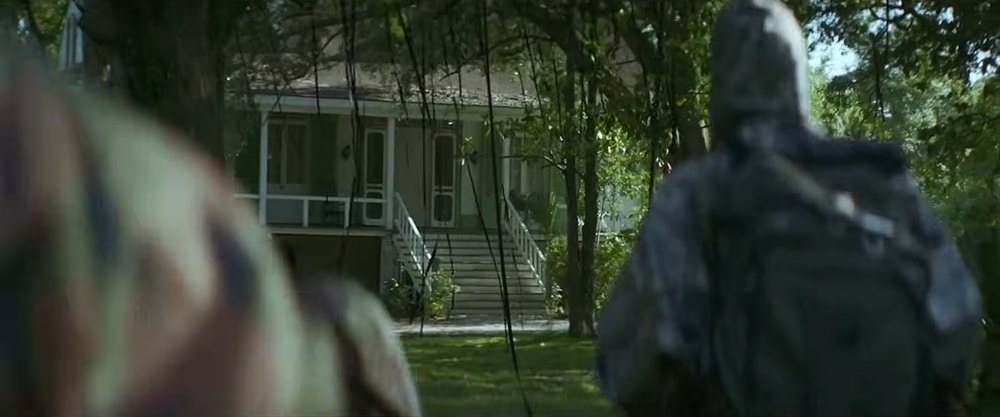
As the family settles in and struggles with bare amenities and Alegre’s fear she’s becoming useless, her daughter suddenly says something about a young boy in the house, and we all get clued in on why perhaps this place is a place to fear as the house presents a horrifying hidden history.
While history is littered with former theocracies, currently, there are between four and six countries (it depends on who you ask) that function under theocratic rule. They are Vatican City, Iran, Afghanistan, and Saudi Arabia, with Yemen and Mauritania as two other options.
A theocracy can seem hard to define, but it is a form of government where the leader is a divine being or adjacent to the divine, ruling either directly over subjects or using servants, such as the clergy, to help rule with or for them.
This was an interesting concept that the film explores. Of course, a dystopian America is not an uncommon theme, but to completely reconstruct the government in the form of a theocratic dictatorship would have been some juicy meat to chew on regarding how this near-off future comes to be.
We only see the holy warriors or their toys, such as infrared drones, acting on behalf of a greater power and praying or the like to bless their violent deeds. The theocracy is mostly displayed through props or heavy-handed dialogue; none of the sinister details are revealed.
While those exact words will not be found in our constitutional rights, the Founding Fathers intended to begin a nation based on Christian morals and principles but avoiding the creation of a religious state.
Found in the First Amendment: “Congress shall make no law respecting an establishment of religion.” This stops the government from creating an official religion or having biases or favoritism toward one type of worship. This type of thinking was going on early in the conception of the United States, with the founder of Rhode Island and the first American Baptist Church, Roger Williams, calling for a “wall or hedge of separation” between secular and sacred.
This call was made in the 1600s. Though founders tried to keep religious alignment out of play, it’s still evident today from failed, former, and acting presidents that religion is a staple for government officials. Trump will be forever immortalized in his photos where he holds up a Bible for all to see in front of a Parish House sign, the same as the actions of his predecessor, Joe Biden, who awarded the Pope the Presidential Medal of Freedom.
On the other side, for those religions that have yet to be widely accepted, the ridicule and doubt that was cast on Mitt Romney for his Mormon affiliations certainly affected his public perceptions and odds in the race.
Religion is a slippery topic.
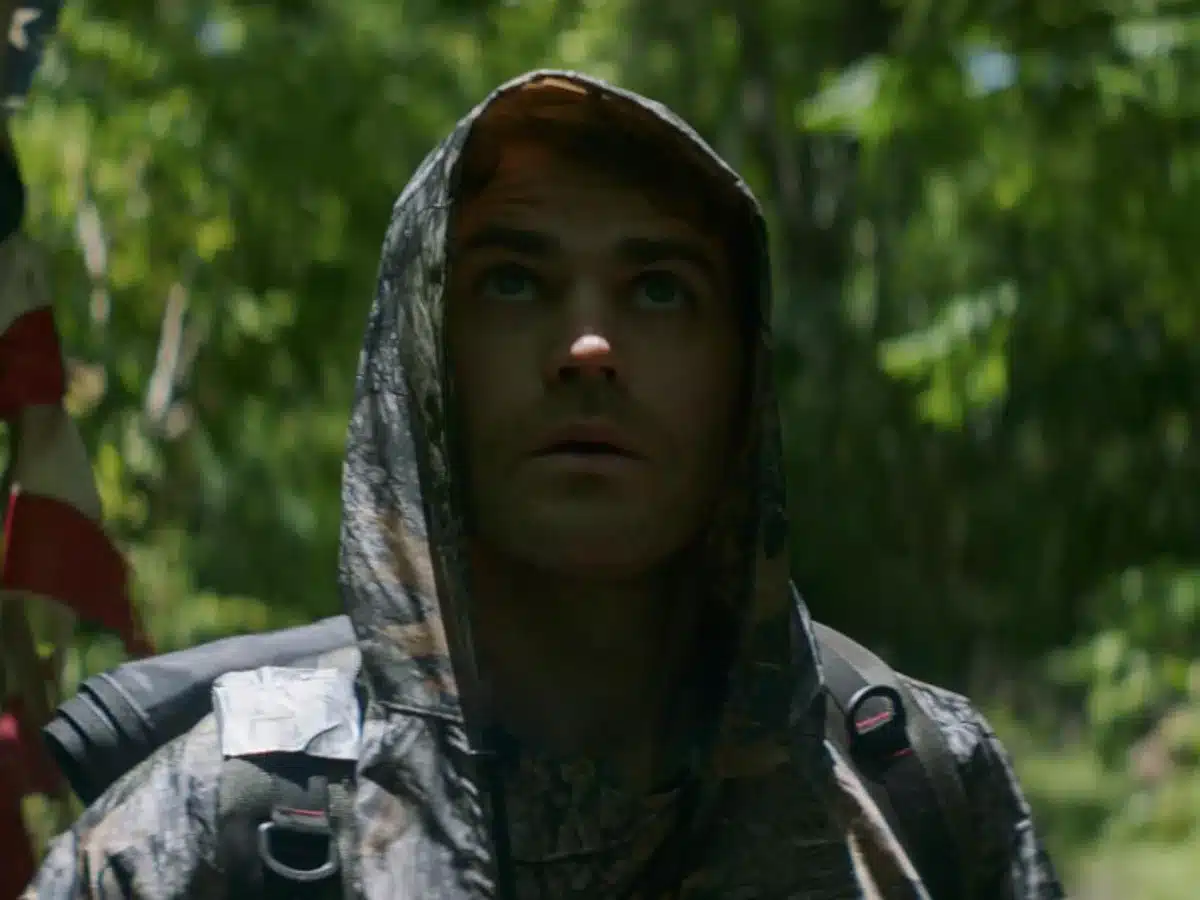
The theocratic narrative takes a backseat to themes of white male insecurity, fascism, and feminism—taking a somewhat step back from theology and moving more toward a term we hear more frequently: the patriarchy.
We ignore the detestable actions of the male spirit controlling the house, such as being a member of the KKK, and instead focus on his gender grievances. Somewhere in this film, we shift away from the religious tones and are given something spiritual, or rather, supernatural, in nature.
This supernatural force is rooted in hatred of all things female, all things gentle, all things not made in man’s hands.
The spirit even states that female children will turn out just like their ungrateful, unloving, unacceptable mothers. It communicates with the man of the family, getting in his head and planting ideas that females don’t have what’s best in mind for him.
We see and hear some of the advertising directed at males through the radio or television, urging men “don’t be a cuck” and selling steroid kits. The lingo for males has shifted and being a beta or a cuck is unacceptable; alpha and sigma males are now the ones looked up to.
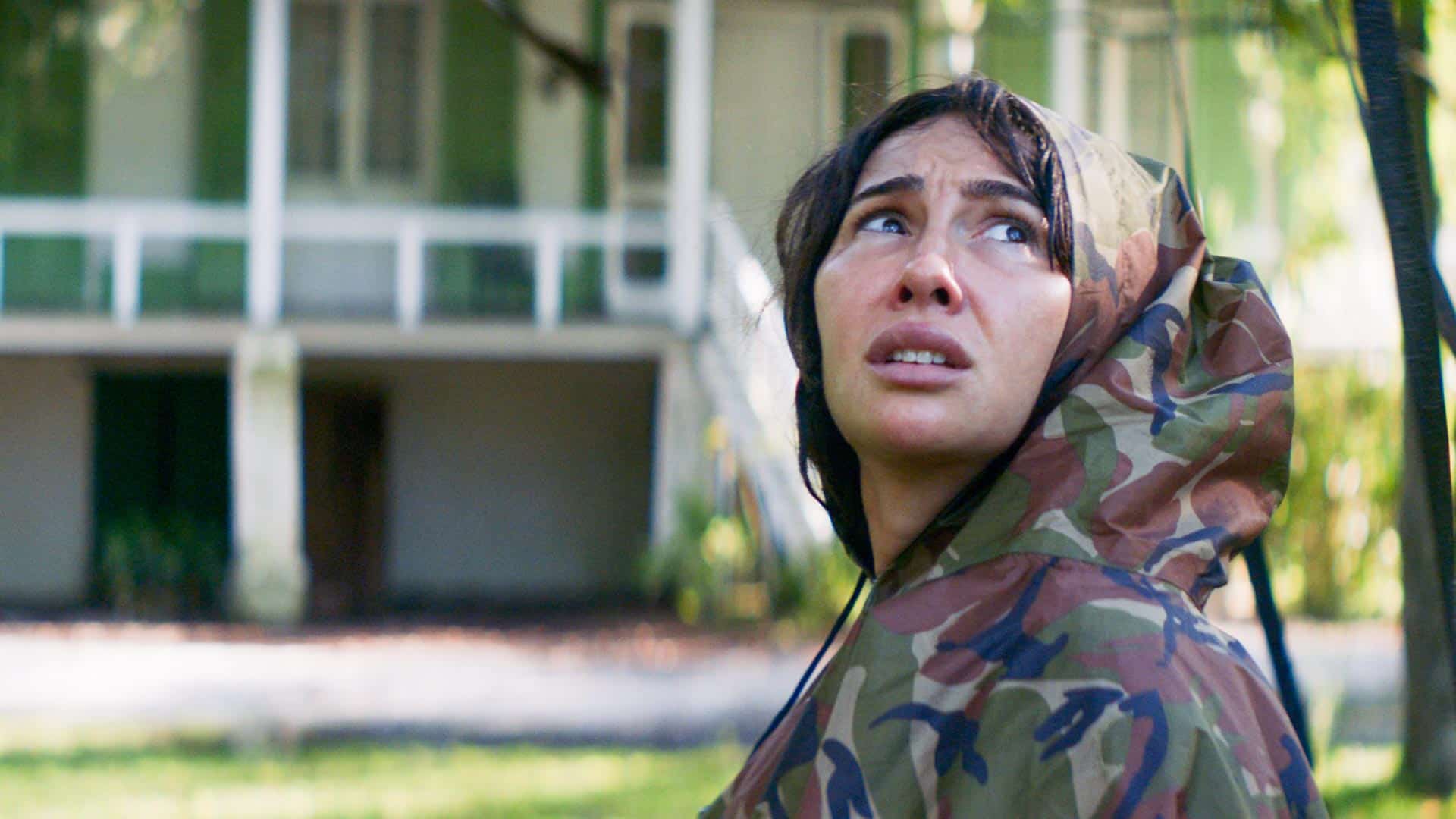
Women overwhelmingly felt a sense of rage or disquiet about how patriarchal things have become, saying we can rage against the changes made for the worse.
Some women went so far as to say they felt they had become possessions or property in the eyes of men and feared for how some men might treat their partners. Men, on the other hand, expressed some sense of helplessness, with one stating he felt there was “no one in his corner” to fight for the issues he cared about. The two groups felt their needs were unseen in different ways.
History of Evil turns from the larger picture of how a patriarchal theocratic dictatorship would change the country and the world and narrows in on the age-old battle of equality that we are still fighting today.
Though this film covers many important, timely topics, it lacks direction and uses the same old haunted house ruse to make things perhaps “scarier” but also take away from the true fear of a country overthrown.
History of Evil may not come with my highest recommendation—it’s far more of a miss than a hit for me—but the points it attempts to land deserve attention in a world seemingly more divided than ever.

She’s a lover, he’s a fighter. Together, they’re CHEER AND LOATHING. Tune in to hear your hosts, Stephanie (Cheer) and Casey (Loathing), clash over the films they love — and the ones they love to hate.
In this holiday extravaganza episode of Guilty Pleasures, join hosts Stephanie, Kelly, and our newest addition, Jonathan (Jack was tied up in tinsel and couldn't join us), as they unwrap the bizarre and unhinged world of holiday cinema. They dive into the depths of Elves, a film that's as chaotic as it is entertaining. It's a sleigh full of questionable decisions, diabolical dialogue, absurd plot twists, wildly offensive antics, and unhinged holiday mischief.
And that's not all! In the second half of the podcast, join your festive cinephile friends for a look at four more ”nutty as a fruitcake” holiday treats: A New York Christmas Wedding, Elf Bowling, A Medea Christmas, and Jack Frost. Plus, we each offer a bonus Christmas flick guaranteed to make you say, ”Ho, Ho, HO-LY Hell!”
Expect laughter, disbelief, and a spirited debate about what truly makes a movie a guilty pleasure. Don't miss this festive journey through the weirdest corners of holiday films!





Follow Us!