


“Get Out” delivers a razor-sharp commentary on racial exploitation that’s as thought-provoking as it is chilling.
No time to read? Click the button below to listen to this post.
EDITOR'S NOTE
The following article contains an in-depth analysis of the 2017 film Get Out. As a result, you are strongly encouraged to watch the film, which is currently available to stream on Peacock or rent on VOD, before reading this analysis to avoid any significant plot spoilers.
Probably the most blatant, bold, and excitingly open political entry to the market is the Jordan Peele instant classic Get Out.
Arriving just before a large political upset in our country brought neighbors to each other’s throats over beliefs, Peele put out his first feature with style and awareness of how the world may perceive him and his work. Cast perfectly with just enough comic relief to keep you from crying, Get Out was a proper title once you’ve peeled back the layers of depravity that make up the house and this particular visit.
We will be looking back over societal relics such as the “auction block” that is so eerily recreated, to the idea of a culture and race being not only “fashionable” but the next step in some human’s race for immortality.
A political bomb that was just waiting to explode, it found an Oscar win for Best Original Screenplay in the rubble.
Get Out will remain a film where feelings and tensions run high no matter how you vote and will do its best to tickle your sensitivities when it can.
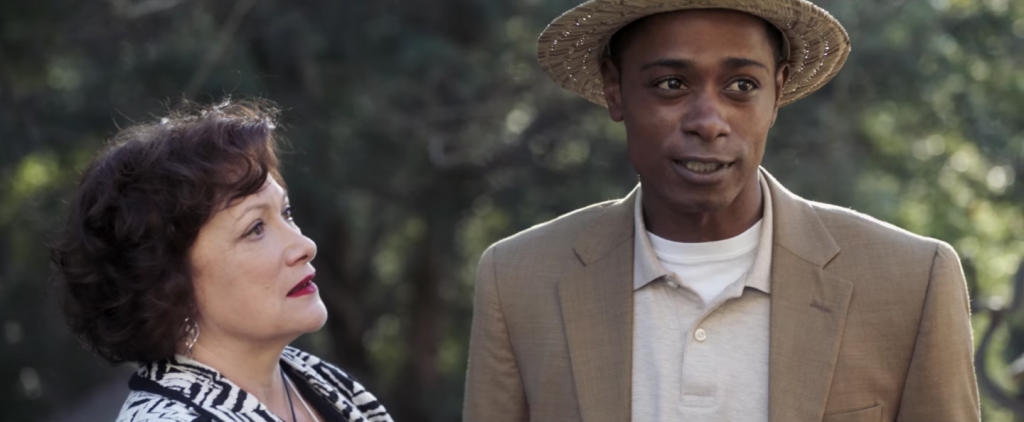
Opening to a dark suburban street, Andre (LaKeith Stanfield) is on the phone with someone trying to make it to a friend’s house. As he’s walking a little white car blasting 1932’s hit Run, Rabbit, Run! by Flanagan and Allen, Andre feels the vibe is off and turns the other way, getting past the car. Suddenly, the driver gets out and beats Andre into submission, dragging him into the car.
Wherever Andre is headed, it can’t be good as it took his captor little more than two minutes of screen time to disable, subdue, and abduct him.
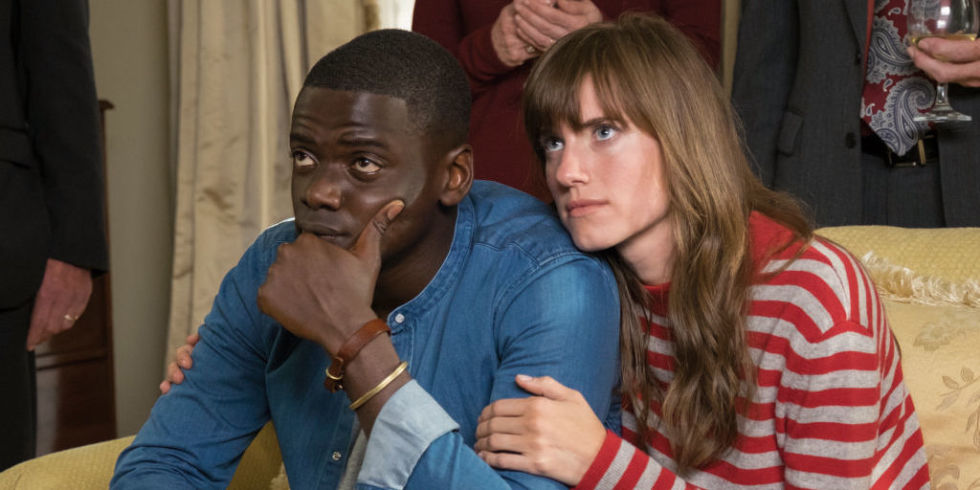
After this dark introduction of sinisterly upbeat music, we are graced by the soulful melodies of Childish Gambino as we meet our star players, Chris (Daniel Kaluuya) and Rose (Allison Williams). It seems the couple is beautiful and perfectly balanced.
Chris is worried about their upcoming weekend trip to meet Rose’s family in the country at their estate. “Do they know I’m black?” Chris asks Rose sheepishly — like it’s the elephant in the room that can’t be disturbed.
Rose’s response, though supposed to be reassuring, isn’t. She doesn’t admit openly or deny openly that she’s told her family about Chris’s race, but she doesn’t seem to understand exactly why it would be important to Chris.
“They are not racist,” she states — a very direct qualifier.
The two set off on their road trip, Chris itching for a cigarette and Rose denying him. Chris rings a buddy, Rod (Lil Rel Howery), a TSA worker watching Chris’ dog for the weekend. Already nervous about the trip, Rod is cracking jokes too much for Chris. Suddenly a deer hits the car sending it careening and rattling the couple inside, and Chris is drawn to the injured animals cries as Rose calls for help.
The police arrive, advising them to call animal control services next time. After chatting, the officer decides he needs to see Chris’ identification for some reason, prompting outrage from Rose, but Chris, knowing the system and the game, complies.
After a short while longer, they arrive at a beautiful estate where Chris notices the workers are only black and taking notice of him as well.
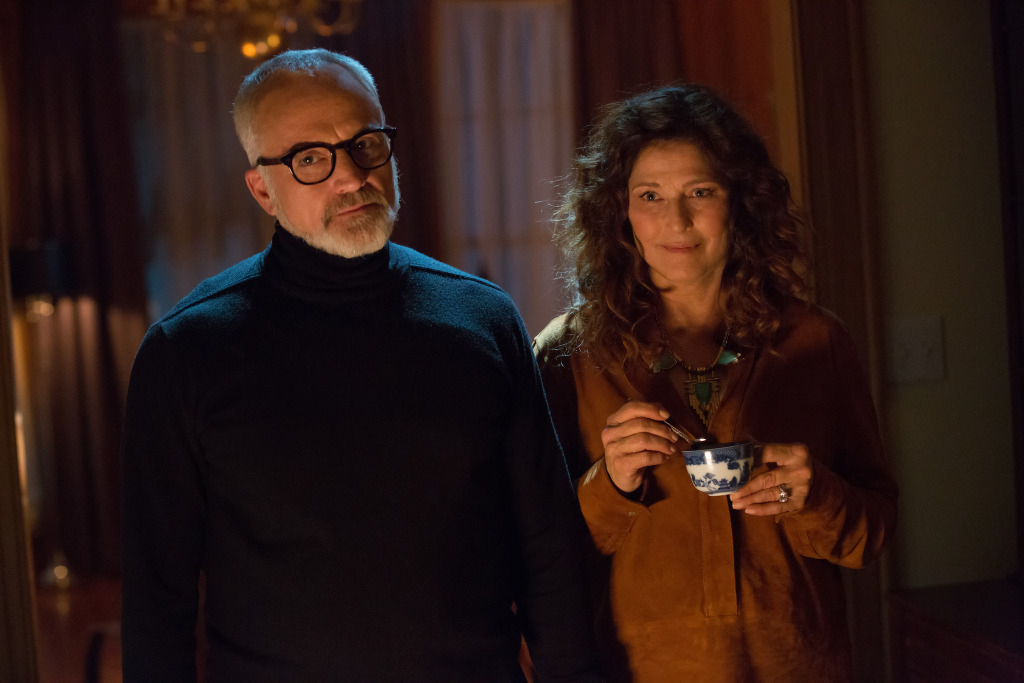
Rose’s parents are all hugs and welcomes, the Armitage family, Dean (Bradley Whitford) and Missy (Catherine Keener), are embarrassingly “woke” as they struggle through awkward conversation. A reference to the killing of the deer makes an intense comparison to racist leanings and leads to even more uncomfortable talking about how long the couple’s been together.
Moving on, Dean shows off his family and doctors, including his wife, a therapist. He discusses the privileges he’s experienced in “other people’s culture,” he even has borderline Nazi memorabilia celebrating his elder’s participation in the Olympics in front of Hitler. He explains the presence of the black staff as well, saying he only brought them in to care for his parents, but after they passed, he couldn’t bear to have the staff lose their jobs as well.
This high-class country house is all the makings of a dream getaway… or one of the most elaborate hoaxes ever set up.
The Auction Block Reimagined
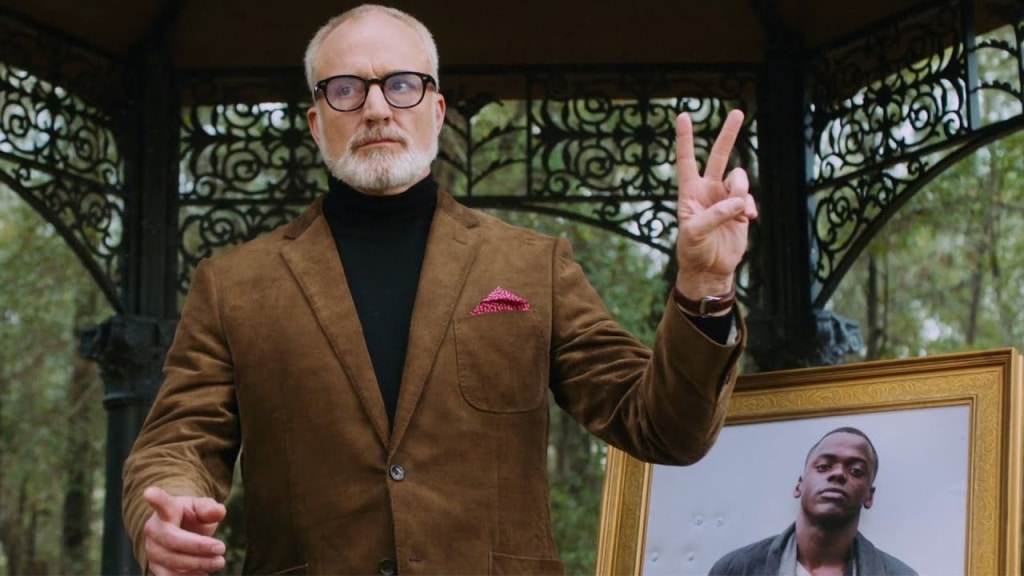
It’s a staple when you imagine the horror of slavery, the inhumanity, and indignation when you look back at selling a human being; it is the auction block.
Used during the hundred-plus years of slavery in this country, the auction block is where people in need (and there was a high demand after The Revolutionary War) of slave labor would go to buy workers. Usually set near cities with ports, Get Out makes this auction block a gazebo, the object of desire set in a portrait frame, buyers are aristocrats and high artists, and the port to this block is the estate’s own private lake.
Richmond, Virginia., New Orleans, Louisiana., Savannah, Georgia., and Charleston, South Carolina, were all major ports where enslaved Africans landed.
The South wasn’t the only one benefiting from ports as northerners had Massachusetts, Rhode Island, New Jersey, and New York; with ports in every growing city, sales were taking place all over our growing nation. In taverns, market squares, or even by the side of the road, these sales were happening, and the enslaved often waited in private jails or pens before being sold.
The scene in Get Out laying out the buy is as crass as it is made to feel formal and dignified.
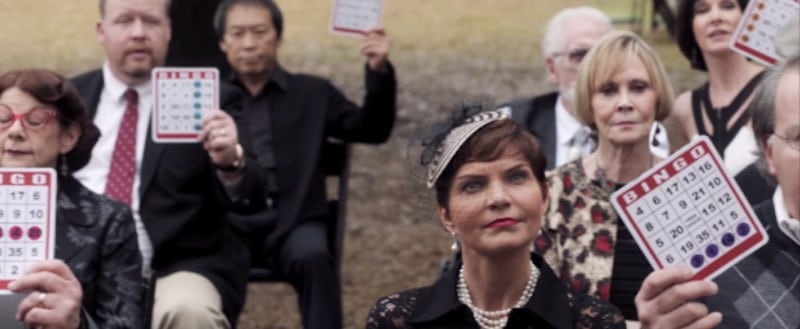
This isn’t any old auction or garage sale; this is a gathering that feels profound.
If you have enough capital for one lucky buyer this round, there’s a person and their gifts to be had. Paddles and hands raised high are replaced with bingo cards and hand signals, keeping things secret, making this a truly silent auction.
There are still some auction blocks that survive today, one of note in Hagerstown, Maryland, and the most talked about one I found is located in Fredricksburg, Virginia. While its history remains debated, there is no doubt that individuals were sold for decades on this block that once sat publicly on a corner. This auction block, often referred to as the “Slave Block,” was installed in 1843 and sat adjacent to a new hotel.
“Fredricksburg seems to be the best place to sell slaves in the State,” a horrifying notice from 1854 reads, also listing prices for different slaves in different quantities, reflecting how much a sale would cost now.
In 2016, it would be the site of a Black Lives Matter Protest, where the location of the auction block was debated.
In 2019, the block was slated to be moved, but delays pushed it to 2020, sparking backlash; it was finally housed in the Fredricksburg Area Museum for the preservation and education of those who wished to know the stories of The Slave Block.
Superior Inferiority
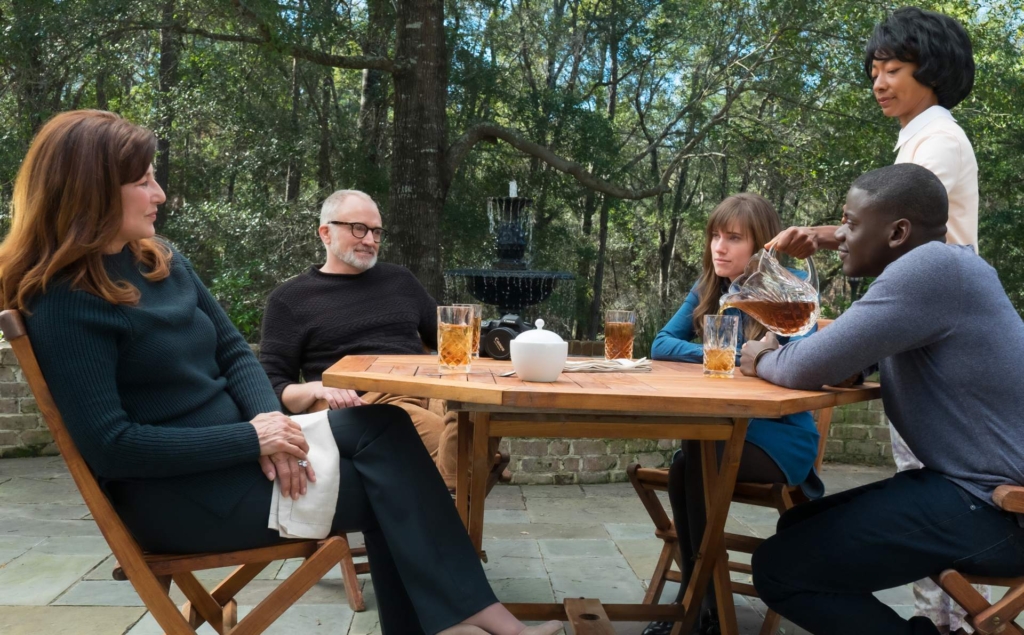
It’s well known that during slavery, many white people saw themselves as more valuable or above the station of a black individual.
It was built into the societal fabric that people of color were property and, therefore, weren’t even people. Not only were they seen as inferior, they were also disposable. Once slavery was abolished, the chains were broken, but not the belief systems and systemic racism persisted in new nefarious ways. IQ tests that began around World War I tested different demographic’s intelligence levels and observed the findings.
Tests like these would separate out races and highlight “weaknesses” that would plant the seed for what is now called “scientific racism”.
Craniometry, skull shapes, and brain sizes were taken into account. As we know, this is all bad science now. It reflects nothing about an individual’s intelligence or suggests that one race is more intelligent than another.
Even in science, there were persons looking to justify the subhuman treatment of what were barely classified as people.
Currently, the battle is still being fought to expose more of black history and prevent black erasure from culture.
Bogus science has been debunked regarding intelligence, yet we still find ourselves at a crossroads of inequality.
Where once a white man wouldn’t dare trade places with a black man for obvious fear of the danger, we see in Get Out that white men and women are willing to shed their privileged skin for a chance at something even more privileged: the ability to control another human being.
With the longevity and increased performance promised, white people in the film are using black bodies for their own gain to escape the pains of mortality temporarily.
The Armitage family specializes in this particularly complicated and inhumane practice.
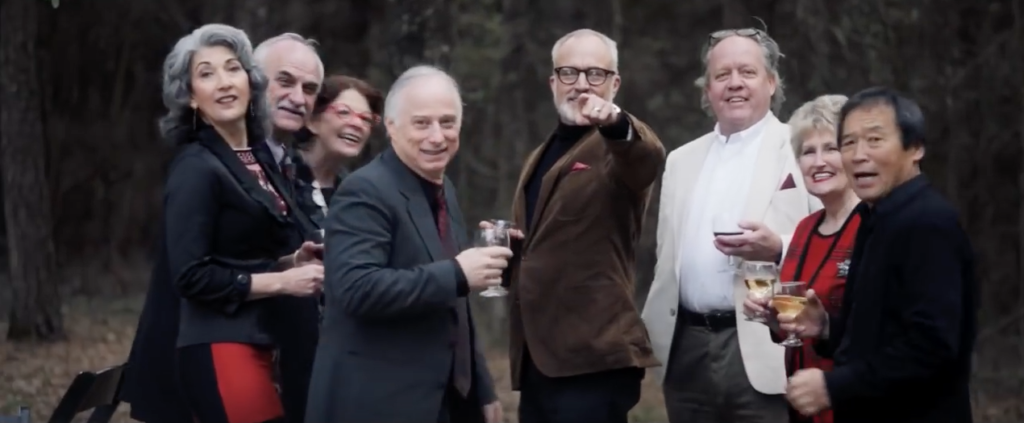
Some of the people we meet wonder if Chris is an athlete, drawing comparisons to Tiger Woods; others reference his striking handsomeness and some other more… sexual features.
Some, sounding so insanely out of touch, tone deaf, and batshit, think that fair skin is “fading out of fashion” after the last few hundred years. Now, they say “black is in fashion” directly to Chris, who does the only thing you can do with that level of ignorance: walk away.
It’s strange that a group so proud and so certain they are the chosen ones using the bodies of those they believe got dealt a more difficult hand.
Peele, in a way, drummed up the echoes of slavery as black minds were plunged into darkness and their bodies used up to their fullest extent at the will of the sick, chosen few exploiting them. Only one man in the group doesn’t tip his hand if he’s truly racist or not. In fact, he admires Chris for his talent, vision, ability, and drive that creates his spectacular photographs.
Though the man is aiming to steal these gifts for himself, he’s the first person, ironically blind, to see Chris and some of what’s inside of him instead of his “aesthetic.”
If only we made these efforts more often, and more sincerely, perhaps there would be less of a divide in our society.
Though this gentleman ultimately chooses his own happiness over Chris’ freedom, it was one bright moment in the film that exposed that even the blind can see people for who they are, their passions, and what they give back to the world—and that we need more of.
Overall Rating (Out of 5 Butterflies): 5
SOURCES
Bailey, A. C. (2020, February 12). They Sold Human Beings Here. The New York Times. https://www.nytimes.com/interactive/2020/02/12/magazine/1619-project-slave-auction-sites.html; Fredericksburg Area Museum | AMW2 Early History. (2024). Famva.org. https://famva.org/amw2-early-history/#:~:text=The%20Auction%20Block%2C%20often%20referred; Harvard University. (2022). Scientific Racism. Harvard Library. https://library.harvard.edu/confronting-anti-black-racism/scientific-racism.








Follow Us!