

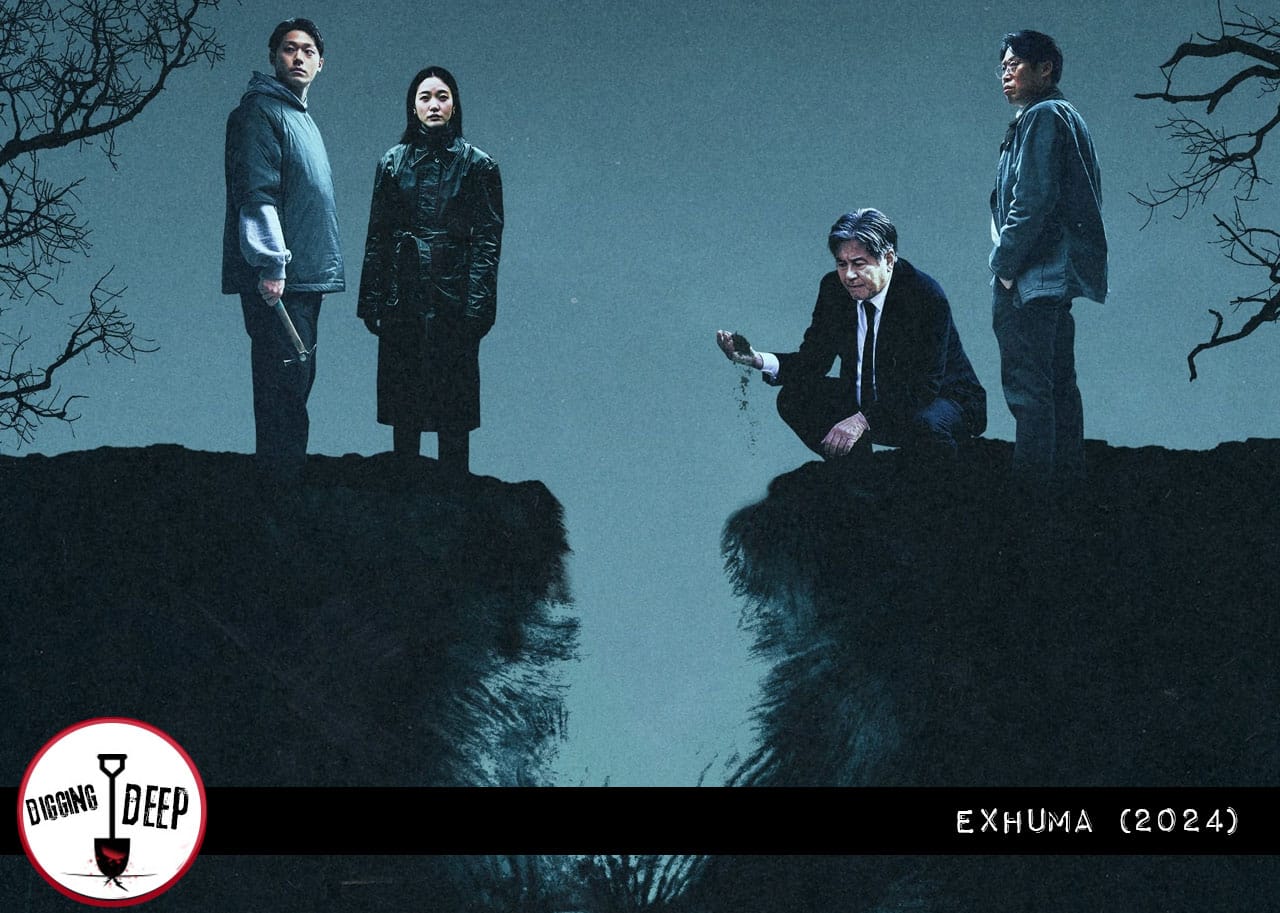
We explore the rich symbolism and historical and spiritual depths of “Exhuma” — a haunting Korean folk horror about ancestral reckoning.
No time to read? Click the button below to listen to this post.
For non-Korean viewers keen to appreciate Exhuma, invest in building some historical and cultural awareness before pressing play so the spiritual and artistic messages hit with the intended weight and power.
Exhuma is among the highest-grossing Korean films in the top ten, alongside well-known names like Parasite and Train to Busan.
My friend Ellie and I periodically have movie nights. She is proudly Korean and loves encouraging me to try her favorite foods and watch shows and movies she recommends. I am quite the introvert, so these play dates don’t happen often, however I am always introduced to something tasty—literally and figuratively—when we get together.
We watched Exhuma together recently, and I had to rewatch it, given how it stuck with me. The second pass solidified this as a favorite for three reasons:
- Well-researched and then thoughtfully delivered pieces with a factual or historical lean are my JAM. This Twitter/X thread can walk you through the highlights.
- There is deep spiritual and cultural significance generously offered in this film in a culturally resonant way.
- As someone drawn to supernatural and folk horror, this film is profoundly unsettling (accomplished hugely in part by the palpably committed cast).
Now, as I sit down to write up my reflections under the light of current local and global circumstances, I add a fourth:
- It serves as a reminder that you cannot bury the past, no matter how appalling or shameful it is. You have to face it and continue talking about it, or it will fester and potentially perpetuate future generations worth of continued violence.
Exhuma offers the story of a Korean American family seeking to save their infant son who has medical complications.

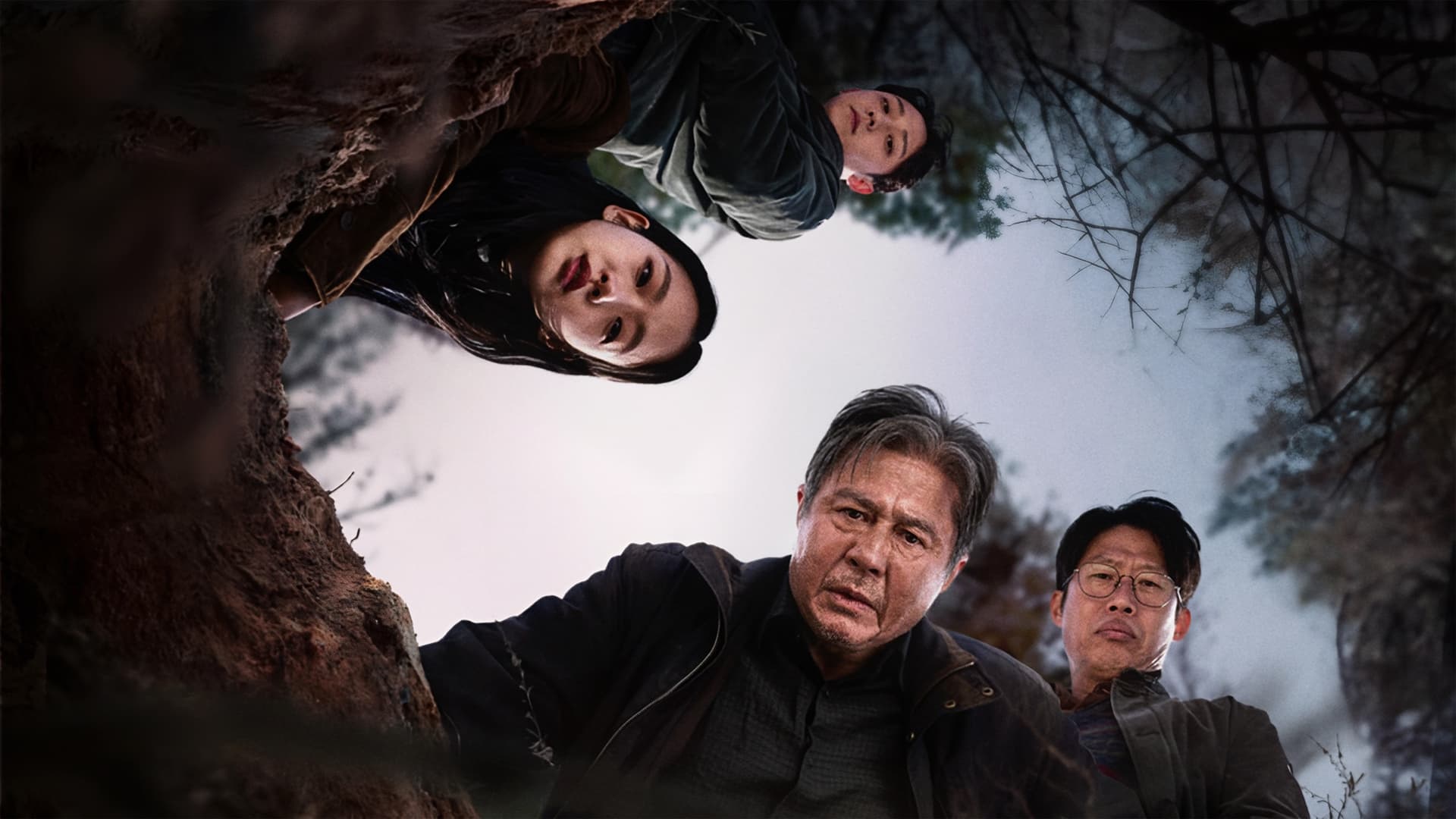
It turns out the family’s struggles are connected to a bad spirit or “Grave’s Calling,” which is an ancestral shadow haunting a family. Two young “MZ” (Millennial/Generation Z) shamans, Lee Hwa-rim and Yoon Bong-gil; geomancer Kim Deck; and undertaker Ko Yeong-geun, are hired to help dispel the entity.
From a Eurocentric view and without adequate context, you might think this feels like a possession and exorcism story.
Exhuma is more than an atmospheric, brooding folk horror. It offers a stark reminder of the hauntings of colonialism. There is so much gorgeous, deliberate symbolism in this film.
I am grateful to my friend for helping me see things that might have been overlooked while watching through my American-born-of-European-roots-now-Canadian lens. Ellie provided me with the historical and cultural context required to appreciate the depth of this film, and, with her permission, I offer a bit of the same to you (apologies, you can’t also enjoy our witty repartee on the couch).
This learning journey started before our movie night. Ellie gave me homework to prepare, and I’m glad she did. Here is a short overview of the two pieces she encouraged me to explore in advance.
First, I researched the meaning of this phrase, which is repeated throughout the film: “The fox cuts off the tiger’s waist.”

This phrase is repeated throughout the film and holds significant historical significance. Geographically, Korea is referred to as a tiger. Japan is known as the fox who “cut off the tiger’s waist,” meaning Japan’s role in the ultimate division of North and South Korea.
If you aren’t familiar with the history of Japan’s occupation and colonization of Korea and how Korea became divided after World War II—this became permanent after the Korean War—you can read more here.
(I know that this history was not adequately covered in the world history courses I took in the United States, and you’re likely in the same boat.)
One last note on this that will hold importance later: The fox or kitsune is an element of fire.
All of the dark roots in this film sprouted from the seeds planted during colonization. The evil stems from a Japanese monk named Gisune (whispering of the Japanese word for fox, kitsune). While never shown in the film, Gisune is the one responsible for the curse on the Park family. Park Ji-yong’s grandfather, Park Geun-hyeon, allied with the Japanese and had a close relationship with Gisune.
Gisune is the root cause of the two evil entities in the film. He recommended the gravesite for Park Geun-hyeon, which did not allow Park’s spirit to rest. Gisune also cursed a powerful Japanese General buried at the same cursed gravesite.
Both are released during the film and have to be contained or overcome.
The second element I needed to address with appropriate cultural awareness is the importance of spiritual beliefs and practices for many Koreans.

Before we unpack this further, here is an important distinction to highlight. While the line between these two terms can be blurry, please do not conflate spirituality with religion in this film’s context.
Many religions have influenced Korean culture throughout history, which “inform people’s view of life both here and in the afterworld.” So, while the characters presented in the film share many perspectives on spirituality and related protocols, they do not all practice the same religion.
For example, Yeong-geun is an elder in a Christian church. There are moments demonstrating reverence for Buddhism. As viewers, we need to hold space for the “complexity of Korea’s religious dimension” and appreciate director Jang Jae-hyun’s thoughtful approach to presenting this.
Many Koreans of different religions profoundly respect energies and spirits, especially those of our ancestors. Ellie shared the example of a practice Koreans have of hosting a feast for an ancestor who has passed. The family will prepare the meal and step away to let the spirit eat. We see this practice twice in the film.
Because spiritual beliefs and relationships with land, spirits, and energies are acknowledged and valued within Korean culture, respected geomancers and shamans are highly regarded for their spiritual knowledge and abilities, guidance, and practices or rituals.
Geomancy or pungsu, which is similar to Feng Shui in China, involves understanding the flow and balance of energy over the earth.

Pungsu means wind and water. Pungsu can be wholly responsible for the good fortune an individual or their family has. It is viewed as a combination of religion and science.
One example of geomancy in practice relevant to the film is choosing a gravesite. For many Korean families, choosing a gravesite—often selected with a geomancer’s guidance—holds significant cultural and spiritual weight. Choosing an appropriate site allows your ancestors to rest. Choosing poorly can have dreadful consequences for generations to follow.
Shamans possess the knowledge and ability to navigate spirits and energies, serving as a bridge between the spirit world and the earthly world.
Shamans are connected to and live their life serving a deity. This role is often passed down within a family. Ellie explained that a deity would come to you to confirm the call, and you had to accept it. If you do not, you will get sick. She expressed how respected this role can be within Korean culture.
It is essential to know and appreciate how powerful the grandmother spirit that Hwa-rim serves can be throughout the film. Each time, her grandmother’s spirit offers important guidance or protection.
In the film, a very important relationship between shamanism and geomancy ensures different forms of balance.

On this point of balance, we are bombarded by visuals and messages to land the importance of the four elements, which all influence the energy (and outcome) of the film and reinforce the value of the spiritual expertise offered by Hwa-rim, Bong-gil, Sang-deok, and Yeong-geun.
There is the inclusion of a small Nure-Onna, a creature that looks like a snake with a face and that signifies water. The mountain where Park Geun-hyeon is buried represents earth energy. Throughout the film, these three and a deft cast of supporting (often humorous) helpers lend their gifts to resolve the Park family’s spiritual crisis and restore balance, helping to continue repairing a lingering, intergenerational wound and shame tied to the aforementioned history.
How these beliefs and practices, and the deeper historical significance, were introduced and presented—both visually and through narrative structure—was extremely powerful to me.
If you appreciate complex, layered horror, I cannot recommend this film highly enough.
If you also have deep spiritual side and are drawn to supernatural or folk horror, may you find this as profoundly unsettling as I did. Or, if you are simply paralyzed as you watch bad energies try to repeat bad histories here in North America, it may also resonate.
We should take heed of Exhuma’s warning. Remember, we are the future ancestors.
Let’s make braver choices that respect the physical, mental, emotional, and spiritual needs of this world so we are not haunting our grandchildren’s families in unhealthy and potentially irreparable ways.









Follow Us!