


Based on a supposedly true haunting in a home with a grisly history, “The Amityville Horror” has captivated audiences for almost 50 years.

The village of Amityville, in Long Island, New York, changed forever on November 13, 1974, when six family members were shot and killed at 112 Ocean Avenue.
The only surviving member, Ronald DeFeo, Jr. (known as “Butch”), was convicted of killing his parents and siblings. Butch DeFeo changed the story many times over the years. At first, he tried to blame the mafia, but he confessed to the crimes at one point. DeFeo changed his story again, claiming that demonic activity in the house influenced him. His final story, as far as I’ve heard, was that his sister, Dawn, murdered the family, and he killed her in self-defense.
There were some odd things noted about the crime scene, such as that the family members were shot in their beds and didn’t move. Also, no one in the area heard the gunshots. Butch DeFeo died in prison, taking the events of that night to his grave on March 12, 2021.
About one year after the murders, in December of 1975, George and Kathy Lutz moved into the outwardly charming Dutch Colonial home at 112 Ocean Avenue. They knew about the gruesome murders that were committed within its walls. They even purchased the DeFeo’s old furniture—including the beds.
As the story goes, the Lutzes lived in the house for only 28 days before fleeing, leaving behind all their possessions. Afterward, they told a tale that would become one of the most famous American paranormal cases.
The authenticity of their claims has been debated since their story hit the press.
Whether you believe the Lutzes’ story or not, the film their tale spawned is undoubtedly a horror classic.
The Amityville Horror is iconic — the image of the house with the eye-shaped windows and its bleeding walls leaves an indelible mark on the psyche. Its chilling true backstory has left an indelible mark on not only horror but true crime and paranormal history. The real house still draws countless tourists today.
Twenty-two horror films have been released since Amityville’s release in 1979. Few sequels have stories tied to the first film, but most use the name Amityville in the title to capitalize on the enduring appeal of the first film.
The Amityville Horror celebrated its world premiere at the Museum of Modern Art three days before its wide theatrical release on July 27, 1979. Critics offered only mixed reviews, but the film drew those who were fascinated by its real-life horror origin story, making the film a resounding commercial success.
The Amityville Horror was ranked the highest-grossing independent movie of its time and the highest-grossing horror movie in the history of film. The film earned both Golden Globe and Academy Award nominations for Lalo Schifrin’s musical score, and Margot Kidder earned a Saturn Award nomination for Best Actress.
The Lutzes told their tale to writer Jay Anson, who wrote the book The Amityville Horror, published in 1977. Anson’s book was so successful that producer Samuel Z. Arkoff purchased the rights to the book.
The original plan was to produce a made-for-TV movie for the CBS network. Anson wrote the screenplay, which Arkoff rejected. Sandor Stern was hired to write the script, and the plans were changed. Stern was a TV writer whose previous credits include The Mod Squad (1971) and Doc Elliot (1973). American International Pictures, a division of MGM, picked up The Amityville Horror. Stern reworked the script as a feature film. Stuart Rosenberg was hired to direct. Rosenberg’s previous credits include Cool Hand Luke (1967) and Voyage of the Damned (1976).
James Brolin and Margot Kidder star as George and Kathy Lutz.
The movie follows the Lutzes, a stepfamily who purchases a Dutch Colonial with a dark past.
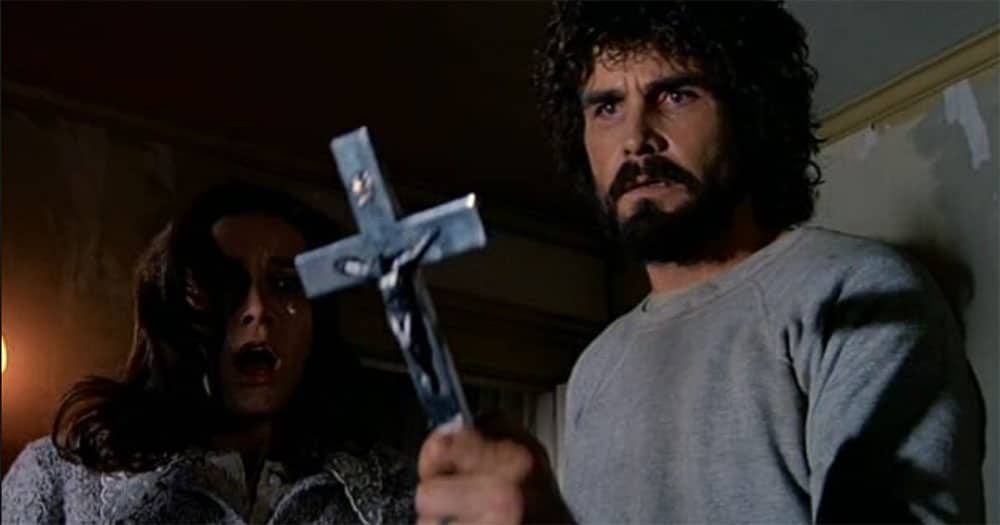
They begin to experience odd occurrences such as fly infestation, extreme cold, and occasional glowing eyes. Kathy’s daughter, Amy (Natasha Ryan), starts talking to a new friend, Jody, who Kathy assumes is imaginary. That is until she sees a rocker in Amy’s room moving on its own and a pair of glowing eyes in the dark. George begins having extreme mood swings and develops an obsession with firewood.
Paranormal activity aside, the Lutz family is dysfunctional. The family is experiencing mundane issues, including George’s mounting financial troubles, being a stepparent of three children, and having acquired a new home he and Kathy can’t afford. Many fans of the movie, myself included, interpret it more as a tale of a dysfunctional family than a frightening haunted house film. I experience the movie as not frightening but tense.
Though Burt Reynolds, Christopher Reeve, James Caan, and Harrison Ford were all considered for the role of George Lutz, James Brolin won the role. He delivers an intense performance, portraying George Lutz as a man grappling with multiple stressors. At times, his performance oozes creepiness, acting like a man possessed.
At the time, Brolin had just come off starring in 1973’s Westworld. When he was approached about the role, the script wasn’t complete. So, instead of reading an unfinished script, he read Jay Anson’s book. By all accounts, Brolin was captivated by the Lutz’s tale. He was so engrossed in the book that he read it for seven hours straight. He recalled that at a tense and suspenseful part of the book, a pair of pants he had hanging fell on the floor, startling him. Brolin said he took this as a sign he should take the part.
Margot Kidder was known for her starring role as Lois Lane in Superman (1978).
Mental Floss reports that Kidder’s agent urged her to take the role. In a 2009 interview, Kidder told The A.V. Club: “At the time, my agent proposed sort of a ‘one for me, one for them’ policy. That was one for them.” While Kidder would later admit that she didn’t like the film, she enjoyed working on it. She said that she was “laughing my whole way through it.”
Rosenberg had to devise methods of eliciting a frightened response from Kidder in some scenes. He made an odd choice for the scene in which Kathy sees a demonic-looking pig in the window. Rosenberg used a plush pig as a stand-in to elicit authentic fright from Kiddier. However, she started laughing instead of screaming.
The producers wanted to shoot at the real house.
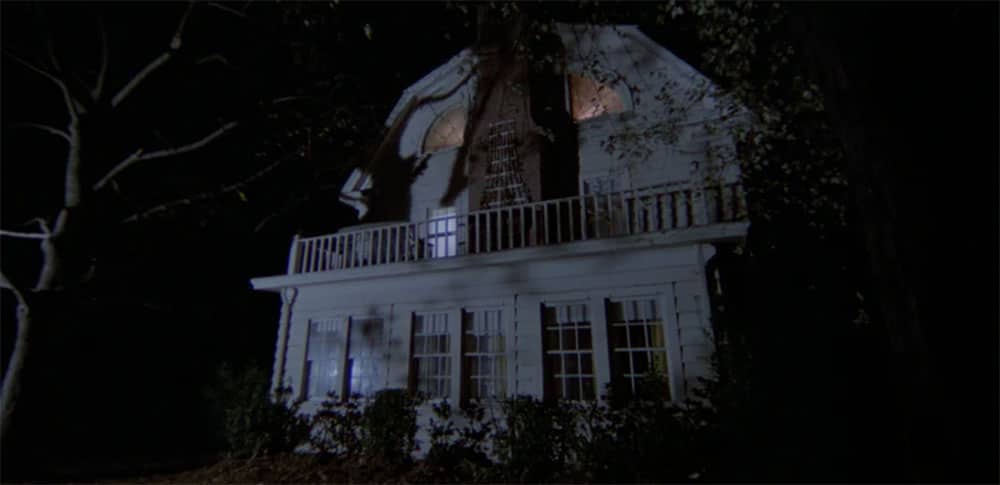
However, the village of Amityville banned them from filming there, wanting distance from the house’s dark and tragic past.
Producers instead found a home in Toms River, New Jersey, to stand in for the infamous Dutch colonial. They gave it a makeover to look more like the real 112 Ocean Avenue. The interiors were shot on an MGM soundstage.
The producers wanted to bring as much attention to their project as possible. So, they took a cue from previous successful supernatural horror films such as The Exorcist and The Omen, which experienced many odd events during production. Brolin and Kidder recalled that the producers of The Amityville Horror told them to make up stories of paranormal events occurring on the set.
“The producers told us we should say all these terrible things happened on the set,” Kidder recalled in an interview. “It was all bullshit. Nothing happened, but it was funny.”
Brolin joked that when asked to make up strange stories, he would say something like he was eating lunch, and it fell off the table and landed on his lap.
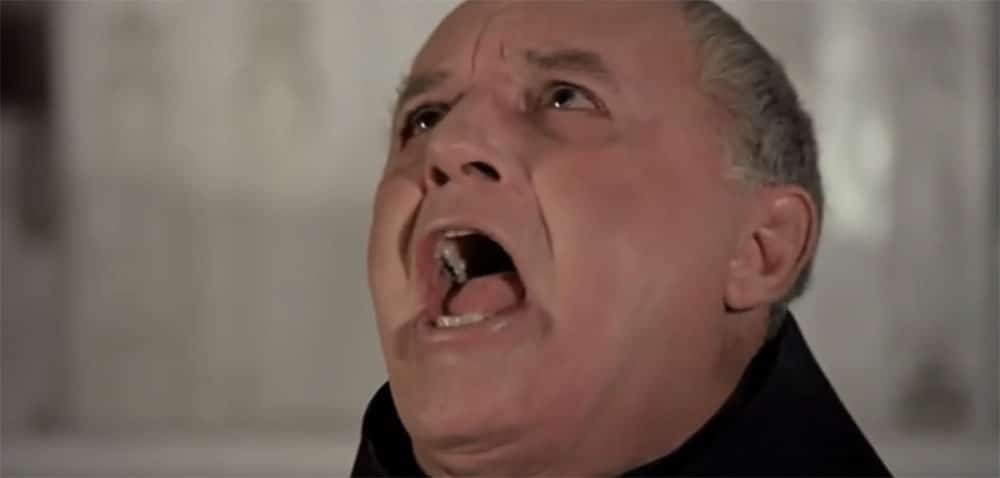
However, no film’s production backstory is without some interesting anecdotes. Cinematographer Fred J. Koenekamp’s fear of insects was so intense that it made shooting the scene where Father Delaney (Rod Steiger) is attacked by flies difficult. To shoot the close-ups of the flies for the famous “house blessing” scene, Koenekamp pointed the camera where he needed it and looked away.
Another interesting fun fact is that to get the flies to attack Steiger, he had honey rubbed on his head.
After the film’s release, Brolin and Kidder visited the real house in Amityville. Nothing paranormal happened. Brolin observed that the house was more “condensed” than the environment where they filmed. Brolin and Kidder admitted they didn’t believe the Lutzes’ haunted house story.
Mental Floss reports that Brolin described Lutz as a “good salesman.” Brolin said that he met the Lutz children, and when questioned about the events, they answered “as though they were reciting a script and not recalling real events.” After meeting the Lutzes, Kidder took “a kind of willingness to believe,” which she referenced to fuel her performance. Kidder later called the story “nonsense.”
The Amityville Horror spawned a franchise of 22 films—some related and others not to the original story. Amityville II: The Possession (1982) is considered a “soft” prequel featuring a family based on the DeFeo family.
The “true story” aspect of the film may have been concocted, but no one can doubt the influence of The Amityville Horror on the horror genre.
EDITOR'S NOTE:
SOURCES: “10 Things You Didn’t Know About Amityville 1979,” July 6, 2021, Minty Comedic Arts, YouTube; “The Amityville Horror (1979): 14 Facts You Didn’t Know,” May 29, 2019. Dice Rollen. YouTube; “The Amityville Horror (1979): WTF Really Happened to This Movie? October 23, 2020, JoBlo Originals, YouTube; “13 Terrifying Facts About ‘The Amityville Horror,’” by Matthew Jackson, June 11, 2024, Mental Floss.




Follow Us!