

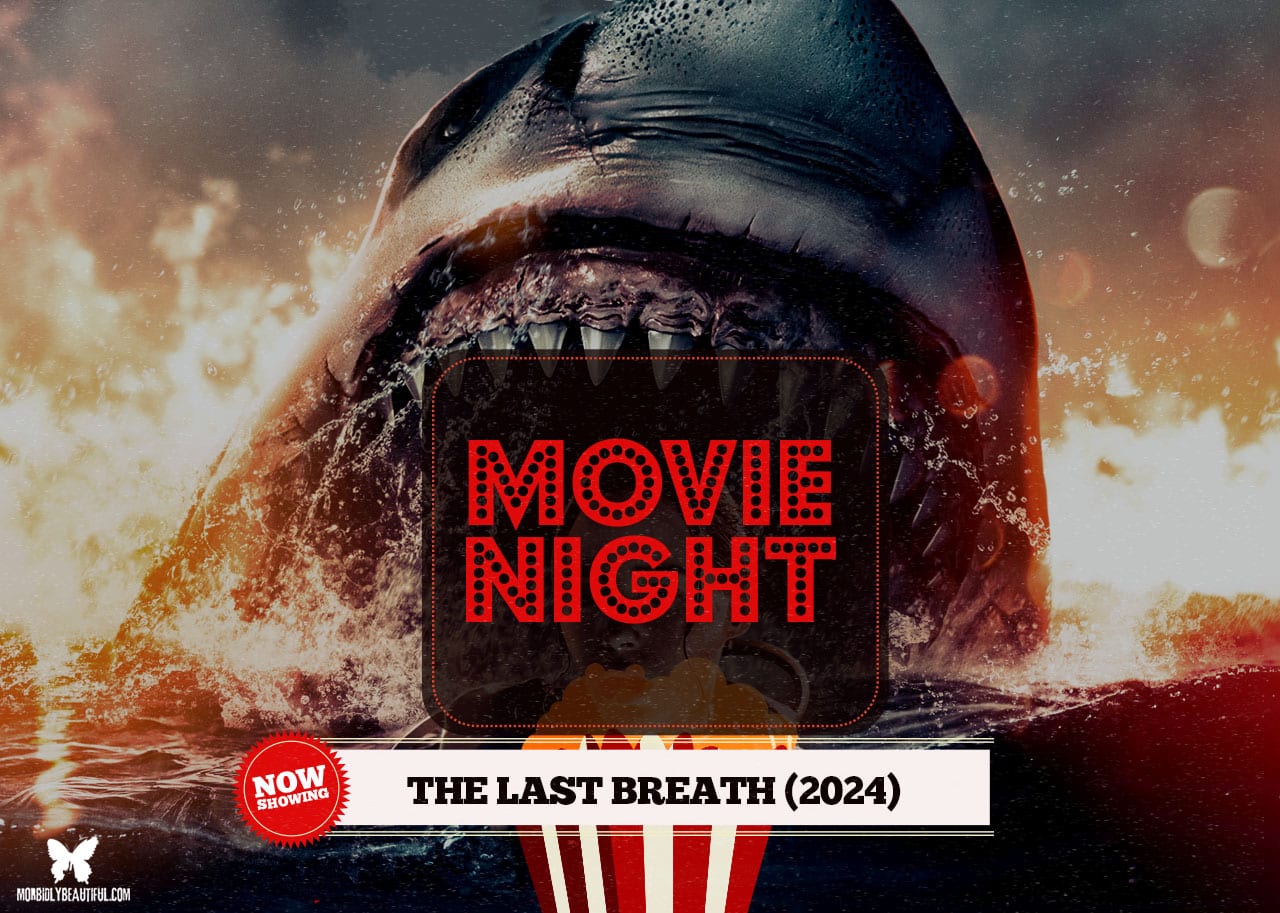
“The Last Breath” is a thrilling addition to the shark horror subgenre that delivers on claustrophobic tension and underwater terror.
No time to read? Click the button below to listen to this post.
Director and former cinematographer Joachim Hedén crafts a visually striking and atmospheric film that makes excellent use of its scenic Caribbean setting.
The film opens with a gripping prologue set during World War II, depicting the sinking of the USS Charlotte off the British Virgin Islands. This historical event sets the stage for the following modern-day adventure, as a group of old college friends reunite for a scuba diving trip that quickly turns deadly.
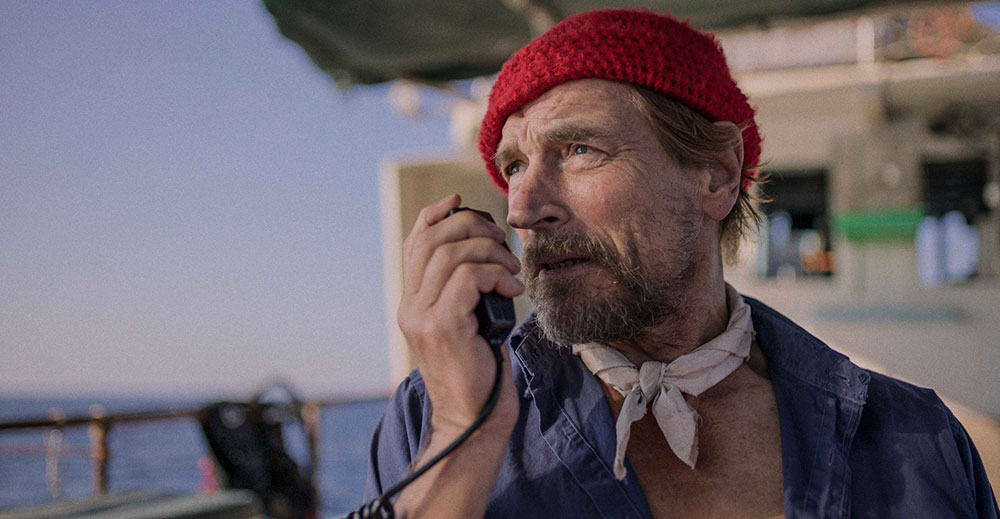
At the heart of the story is Noah (Jack Parr), who discovers the long-lost wreck while diving with veteran captain Levi, played by the late Julian Sands in his final on-screen role.
Sands’ performance as the grizzled boat captain stands out despite his limited screen time.
He brings a weathered gravitas to the role, imbuing Levi with a sense of world-weariness and regret that adds depth to the character. Even though Levi is sidelined by injury for much of the film, Sands’ presence looms large over the proceedings, and his character’s decisions and motivations drive the plot forward.
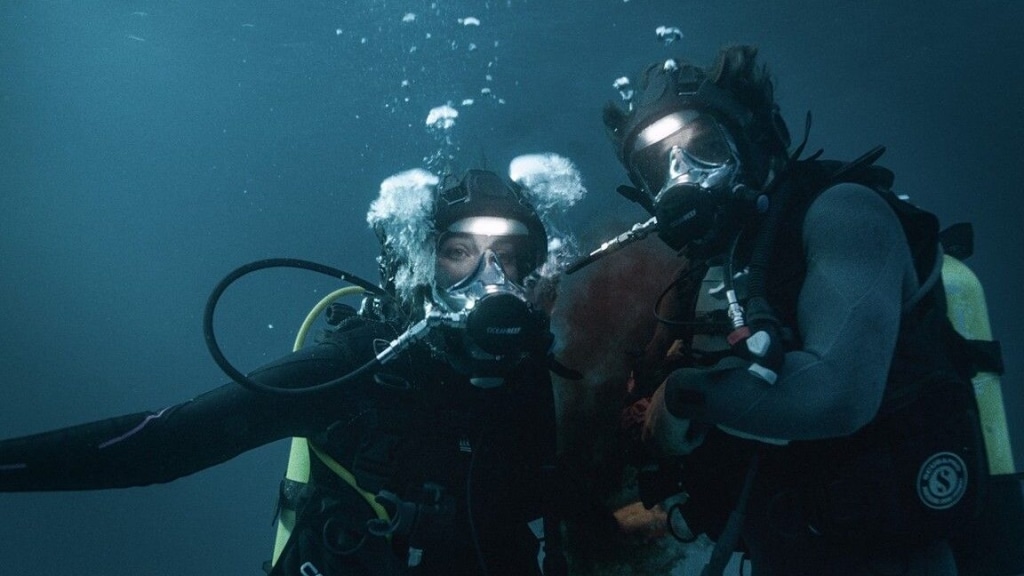
The ensemble cast, including Alexander Arnold as the brash Brett, Kim Spearman as Sam (Noah’s ex and a doctor), Erin Mullen as Riley, and Arlo Carter as Logan, does an admirable job of conveying panic and fear, especially considering their faces are often obscured by diving gear.
Their performances help sell the mounting dread as the characters find themselves trapped in the underwater labyrinth of the sunken battleship, surrounded by hungry, great white sharks.
While The Last Breath doesn’t reinvent the wheel, it executes its familiar formula of survival horror in an underwater setting with skill and intensity.
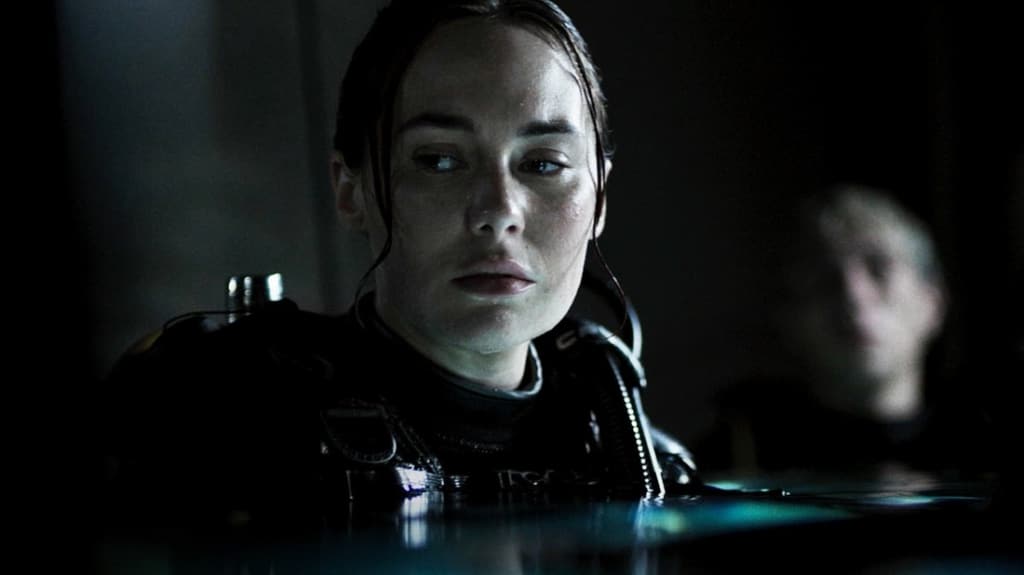
The result is a gripping and suspenseful experience for the audience.
The underwater setting is particularly effective in creating a claustrophobic and intense atmosphere. The sunken USS Charlotte serves as a labyrinthine deathtrap, with its narrow corridors and rusted metal creating a sense of confinement that amplifies the terror.
The film’s lean runtime and fast pace, with plenty of breathless sequences, keep viewers invested and on the edge of their seats.
Hedén, drawing from his experience with underwater thrillers like Breaking Surface (director) and The Dive (writer), skillfully uses the wreck’s confined spaces to ratchet up the tension, making viewers feel as trapped as the characters.
Dwindling oxygen supplies are used as a plot device in the film, adding desperation and panic to the already tense situation.
As the characters’ air tanks run low, every breath becomes precious, creating a palpable sense of urgency that permeates every scene. This ticking clock element enhances the suspense, forcing characters to make split-second decisions that often lead to dire consequences.
The shark effects are surprisingly sound for a film of this budget, striking a balance between realism and cinematic spectacle.
Horror fans will appreciate the occasional bursts of gore, which are used judiciously to heighten the stakes. One of the film’s standout sequences occurs midway through in the medical bay, providing a shocking and unexpected turn that keeps audiences on their toes.
While some character fates may be predictable, the film’s unwavering commitment to building and maintaining suspense ensures that even familiar beats remain compelling, keeping viewers engaged and invested in the story.
The film’s focus on the psychological toll of being trapped underwater and the threat of sharks creates a more nuanced and intense experience than many of its genre counterparts.
The movie, written by Nick Saltrese, also distinguishes itself through its unwavering commitment to realism. The shark effects perfectly balance believability and cinematic spectacle, drawing viewers into a more immersive and terrifying experience.
This attention to detail, coupled with the claustrophobic setting and the ever-present threat of suffocation, elevates The Last Breath above the typical shark movie fare, offering viewers a more immersive and terrifying experience.
While not without flaws, including questionable character decisions and occasional pacing issues in the first half, The Last Breath succeeds as a taut, suspenseful shark thriller that honors Julian Sands’ legacy while providing plenty of scares for genre fans.
It may not be entirely original, but it delivers everything fans of shark horror could want, treating its underwater thriller premise with seriousness and respect.
Overall Rating (Out of 5 Butterflies): 3.5










Follow Us!