

Upon its release, “Jaws” scared and scarred a generation, and nearly 50 years later, it maintains its grip on our collective conscience.
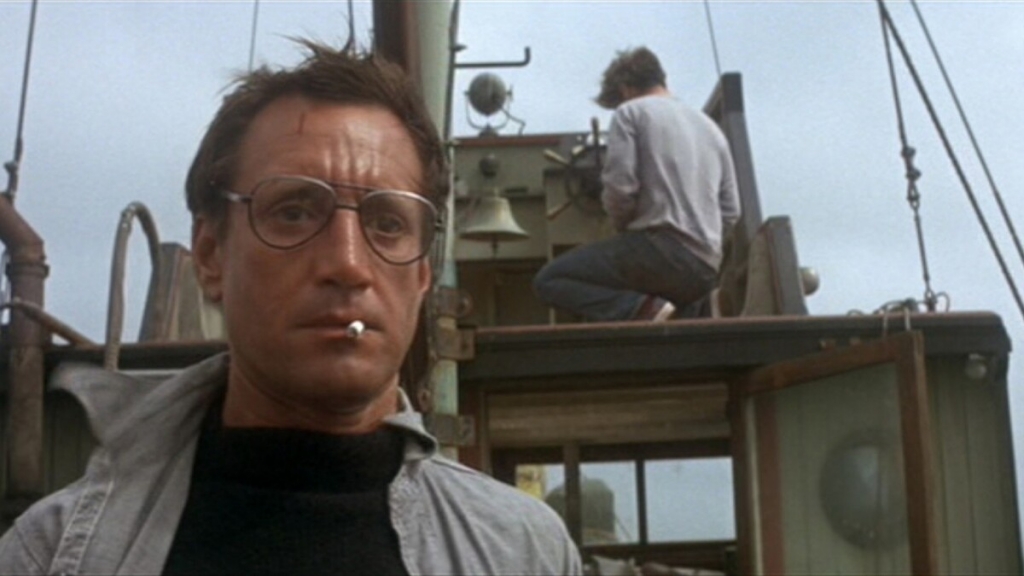
When Jaws hit theaters in 1975, it didn’t just redefine the summer blockbuster—it sank its teeth into the collective consciousness of an entire generation. The film, with its mesmerizing score and unseen threat, created a lasting sense of dread, especially in younger viewers. This enduring fear, often referred to as “kindertrauma,” refers to the lasting psychological impact of films not directly aimed at children but still deeply affecting their sense of safety and security.
Few films represent this concept more profoundly than Jaws. With its suspenseful build-up and primal fear, Jaws introduced a unique and widespread fear in children that has resonated through the decades, leaving an unforgettable legacy of trauma.
Directed by Steven Spielberg, the movie featured a monstrous great white shark terrorizing the fictional town of Amity Island. The film played on our animalistic fears—our inherent fears of the unfamiliar and what lies beneath the surface.
Unlike other horror films of the time, Jaws didn’t need to rely on shocking images or supernatural entities. Instead, it capitalized on the unseen danger, where what you couldn’t see was often more terrifying than what was right before you. The theater of the mind.
For children and young teenagers, Jaws was more than just a fun, scary movie; it was a psychological experience.
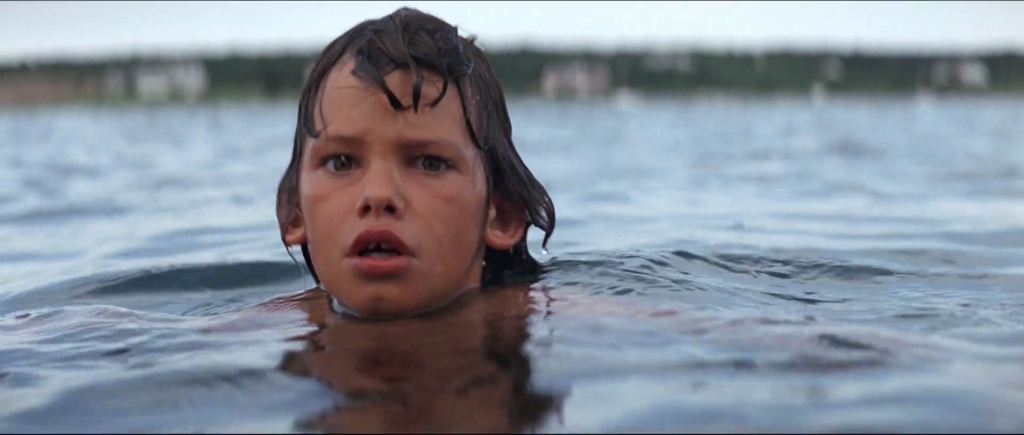
The film’s slow burn, accented by John Williams’ extraordinary score, magnified the suspense and dread. Children who saw Jaws during its initial release were left with haunting memories, often tied to specific scenes like the opening attack or the unsettling moment the shark’s fin slices through the water, like a hot knife through butter.
Research has revealed that horror films can leave lasting impressions on younger audiences. Children are particularly susceptible to these influences, as their capability to differentiate between fiction and reality is still developing. While actual statistics on childhood fears directly related to Jaws are scarce, word of mouth says kids refused to swim, even in pools, for fear of sharks waiting beneath the surface.
Personal stories from viewers of Jaws reveal the depth of this trauma, many of whom still remember the terror they experienced as children.
One Reddit user shared how the movie’s terror infiltrated even the safest of places: “JAWS scared the shit out of me so bad that even in a swimming pool, I need to periodically check for sharks. Not a joke. It’s in my head justified that maybe some nutter has secret shark storage, and the beast could be let out to feed.”
Another commenter recalled how the film turned a fun childhood activity into a thrill ride of fear:
“We used to go swimming at the city lake when I was a kid. I was a decent swimmer by the time I was about 7 or 8 years old, so I was able to swim out to the raft and use the diving boards. Every time I would do the high dive, right as I bounced off of it on my way down to the water, I envisioned a giant shark jumping out of the water with its mouth open, ready to catch and eat me. What an adrenaline rush for a kid that young. Terrifying and fantastic all at the same time.”
For some, the trauma has lingered well into adulthood, with one person simply stating, “I still won’t go in the water.”
The kindertrauma triggered by Jaws didn’t fade over time—it grew and evolved.
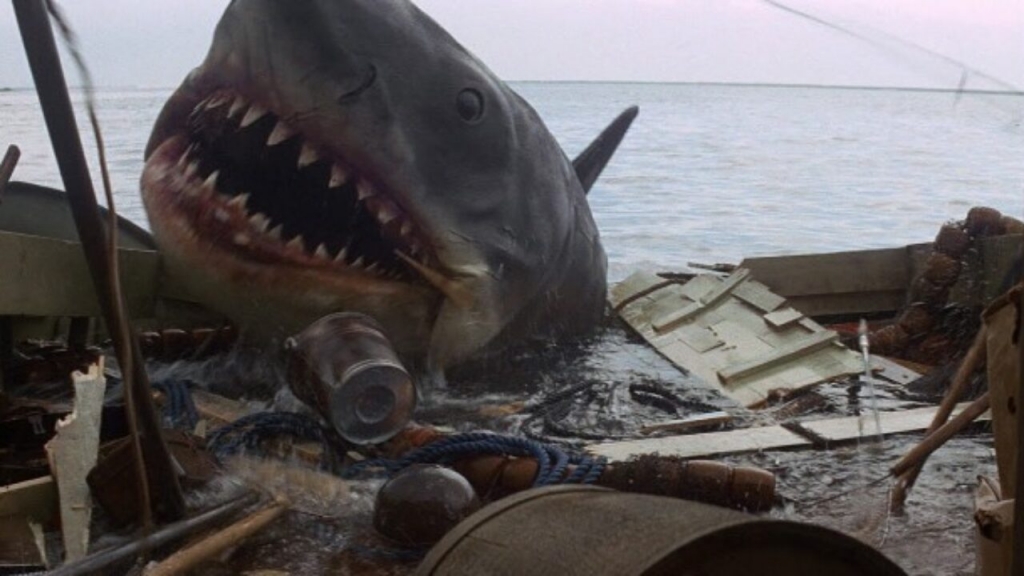
The film’s influence continues to shape cultural fears, making sharks one of the most feared animals despite the low statistical risk they pose to humans. The movie’s legacy endures in everything
from the likes of Shark Week to modern films like Meg and 47 Meters Down. Even video games and theme parks borrow from the anxiety and fear achieved by Jaws.
In modern media, references to Jaws are commonplace, from parodies in animated shows to direct homages in horror films, such as Ghostshark. The anxiety ignited by Jaws continues to reverberate, serving as a reminder that horror—when executed properly—can create a lasting impression.
Jaws isn’t just a film; it’s a pivotal cultural reference that, for many, represents the very essence of kindertrauma.
By invoking primal fears and harnessing the power of suspense, Jaws fashioned a generation of children who couldn’t swim without thinking of the threat looming beneath. As time goes on, the film’s power to terrify hasn’t weakened.
Its heritage lives on in the form of shared trauma and collective fear, reminding us of horror’s unique ability to shape—and sometimes scar—our childhoods.











Follow Us!