


“Longlegs” was plagued by inevitable comparisons to “Silence of the Lambs” — but the film deserves praise for carving its own path.

No time to read? Click the button below to listen to this post.
Note: This analysis contains some plot spoilers for “Longlegs” you may wish to avoid if you have yet to see the film.
Jonathan Demme’s The Silence of the Lambs set a high bar for psychological horror. Based on Thomas Harris’ book of the same name, Demme masterfully crafted a film so well-paced, well-acted, and twisted that very few films have managed to emulate. Enter Longlegs, Oz Perkins’s chilling new film that draws inspiration from Demme’s classic yet successfully veers into its own unchartered territory.
Building on Silence of the Lambs’s legacy, Perkins creatively borrowed from Demme’s mixing pot of tension and trauma and weaved it into a fresh, supernatural narrative.
There’s no denying that Perkins was heavily influenced by the grandfather of psychological horror, something he has openly admitted in several interviews since the film’s release in July.
Both films share a similar premise: a female FBI rookie is recruited by a senior agent to help hunt down a serial killer, all while grappling with her own traumas. In Longlegs, it’s Lee Harker (Maika Monroe), recruited by Agent Carter (Blair Underwood) to help investigate the Longlegs (Nicolas Cage) case – a serial killer who manipulates fathers to murder their wives and daughters.
In Silence of the Lambs, it’s Clarice Starling (Jodie Foster), recruited by Jack Crawford (Scott Glenn) to help find serial killer Buffalo Bill (Ted Levine) with the help of cannibal psychiatrist Hannibal Lecter (Anthony Hopkins).
Harker is essentially Starling’s doppelganger.
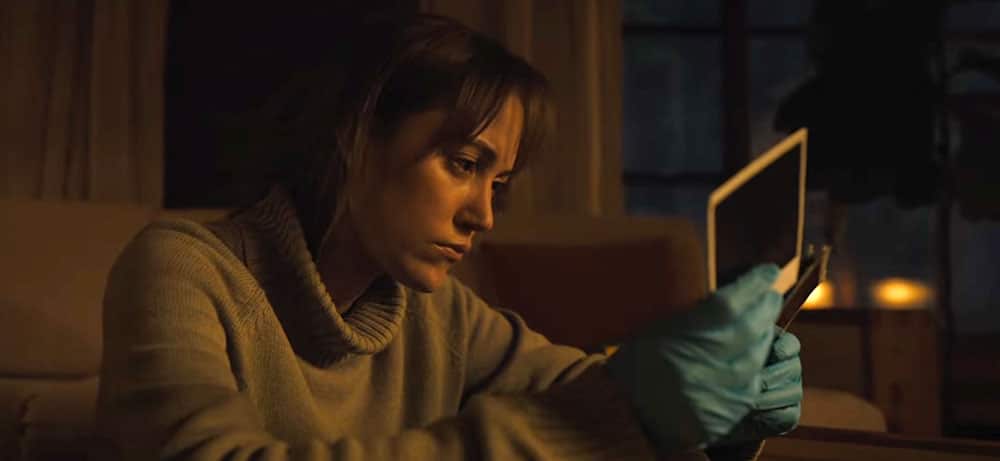
Both are rookies in their fields, grappling with childhood traumas and determined players in a game of cat and mouse. They’re two tough characters with a mental tenacity that makes them nearly impossible to challenge. Starling pushes through Lecter’s mind games, persistent in her hunt for Buffalo Bill, while Harker uses her dissociative amnesia and childhood trauma as a catalyst in her search for Longlegs.
However, one key element separates these two characters and films: Harker’s psychic abilities.
From the outset, Harker is portrayed as a detached and intuitive individual, marked by a profound sense of dread and unease about the world around her.
In an early scene, Harker and her partner visit a neighborhood searching for a suspect. Almost immediately upon arrival, Harker is inexplicably drawn to a particular house and confidently asserts that it’s home to the suspect. Her intuition is proven correct when, after knocking on the door, her partner is shot and killed by the suspect.
Longlegs leans heavily into an ethereal, almost dreamlike quality, adding an extra layer of ambiguity that leaves you questioning whether the terror is rooted in reality or something otherworldly.
Unlike Silence of the Lambs, we don’t fully understand Longlegs’ story until the final act, and even then, we are undoubtedly left with questions. We follow Harker on her journey but remain just in the dark as she is. In Silence of the Lambs, we understand the story as it unfolds. We see Buffalo Bill in his layer, watch the FBI’s investigation, and piece together the mystery alongside Starling. Its tension comes from knowing the danger and watching Starling get closer to it.
But Longlegs keeps its cards close to its chest, obscuring the full scope of its story and leaving us in a constant state of uncertainty.
Perkins deliberately plays with our expectations, constantly shifting between reality and the supernatural.
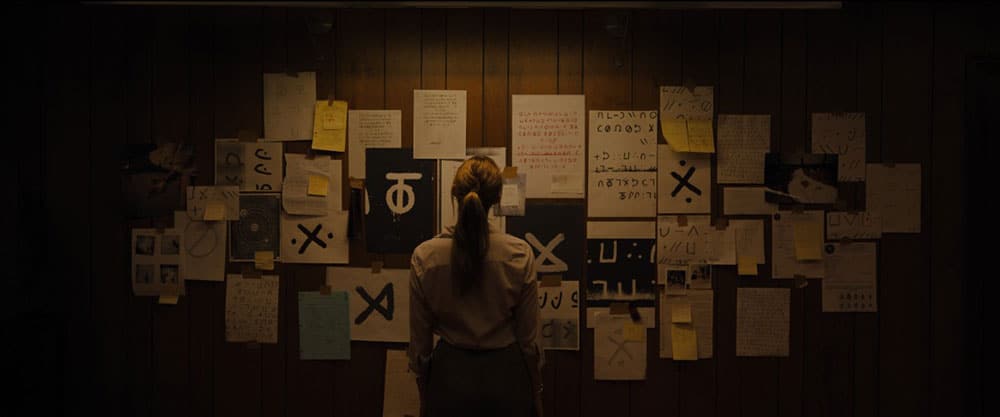
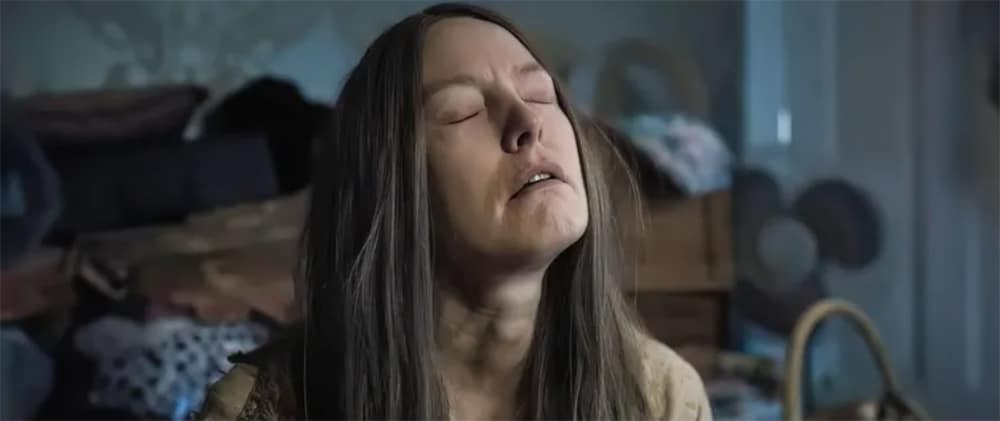
In the final act, we learn that Harker’s mother, Ruth (Alicia Witt), has been working with Longlegs since Harker’s 9th birthday in a desperate bid to spare her daughter’s life. Ruth gifts life-like dolls crafted by Longlegs to families that replicate the daughters, infused with whisperings that convince the families to murder each other. We also learn that Harker’s psychic abilities stem from her connection with her own Longlegs-crafted doll.
Longlegs is almost like a puzzle.
We have to piece together the narrative to understand the whole picture. In some ways, this parallels Silence of the Lambs with Demme’s use of symbolism and Lecter’s characterization.
Lecter speaks in riddles and hidden meanings, offering indirect information in the form of cryptic messages for Starling to solve. He pushes Starling to discover the answers herself, constructing an intellectual maze that challenges her to piece together fragments of knowledge.
Similarly, Longlegs speaks to Harker through cryptic letters that allow her to uncover the truth about her past. However, Longlegs is far vaguer in his communication than Lecter, using Biblical quotes and references to warp the meaning of his actions.
On the surface, these Biblical references are nothing more than suggestive paradoxes that drive Longlegs’ occult narrative.
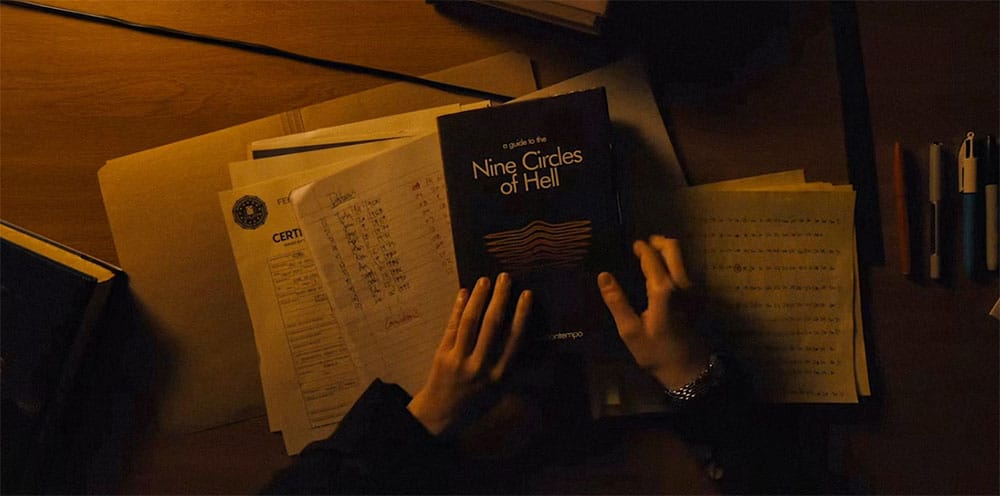
Much like Lecter, we don’t know the full scope of Longlegs’ plan or why he is helping Harker, and we can only assume he’s an occultist doing the devil’s work.
However, while occultist themes are somewhat present throughout the film, they aren’t the driving force of the narrative. Through cryptic messages left at the crime scenes and sent to Harker, Longlegs frequently quotes Revelation 13: 11-18, a Bible passage titled “The Two Beasts”.
In Revelation 13, the Dragon, aka the Devil, summons two beats – The Beast from the Sea and The Beast from the Earth – to create an unholy trinity. The Beast from the Sea rises and is given authority from the Dragon to destroy those who worship God, while the Beast from the Earth acts as its enforcer, compelling humanity to worship the first beast.
In Longlegs, this reference to Revelation 13 resonates on both literal and symbolic levels.
Longlegs sees himself as an agent of chaos, much like The Beast from the Sea. The dolls he uses to brainwash the families serve as physical manifestations of his control, twisting their innocence into tools of destruction. And if Longlegs is The Beast from the Sea, that would make Ruth The Beast from the Earth.
She compels the families to act under the Devil’s influence. Her role as an enforcer of Longlegs’ resolve mirrors the Beast from the Earth, using deception and influence to ensure that humanity worships the first Beast. By distributing the dolls and acting as an agent for Longlegs’ power, Ruth becomes the catalyst for the chaos, driving the families toward violence under the guise of protection.
From the outset, Longlegs grips you with an unsettling, slow-burning atmosphere that keeps you on edge.
The tone is eerie and oppressive, relying heavily on its haunting score to build tension. Instead of bombarding us with immediate action or overt scares, Longlegs creeps along slowly, allowing the unease to fester as the story unfolds.
Longlegs is a compelling homage to Silence of the Lambs while skilfully charting its own dark path. While both films share a similar plot structure, their narratives couldn’t be further apart.
Instead of copying directly from Demme’s classic, Perkins builds from its legacy—its tone, themes, and intensity—and weaves it into his own supernatural narrative.







Follow Us!