


“Sorry/Not Sorry” is a sobering look at a post-MeToo world and the nation’s reluctance to hold powerful men like Louis C.K. accountable.
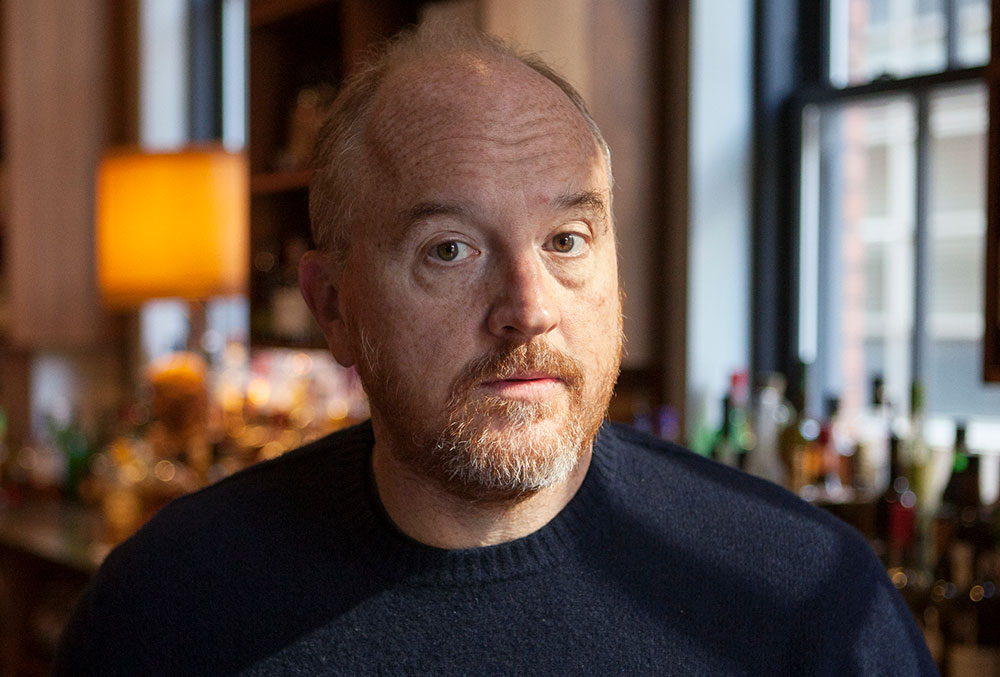
Louis C.K. photographed at the Toronto International Film Festival on 9/17/17 for The New York Times’ article Asking Questions Louis C.K. Doesn’t Want to Answer by Cara Buckley. Photo Credit: Angela Lewis for The New York Times.
No time to read? Click the button below to listen to this post.
The more things change, the more they stay the same.
Remember back in 2017 when there was supposed to be a reckoning – a fundamental shift in the type of behavior we accepted and tolerated from men in positions of power? “Everything is going to be different from this moment forward,” we thought.
Yet, if America is anything, it’s quick to move on and happy to forget.
A new documentary from filmmakers Caroline Suh and Cara Mones, produced by the New York Times, explores the meteoric rise, spectacular fall, and shocking resurrection of comedic legend Louis C.K., Sorry/Not Sorry.
It reminds us in a sobering fashion that the only thing that’s absolute in America is not justice or accountability but power—and the enduring power of power to endure.
The immunity a creator enjoys for their sins is magnified when they are not only widely considered a genius but also wield great power and influence over the careers of others, as was the case with Louis.
Louis rose to power on the back of perceived authenticity and vulnerability, a raw truth that was self-aware and refreshingly candid.
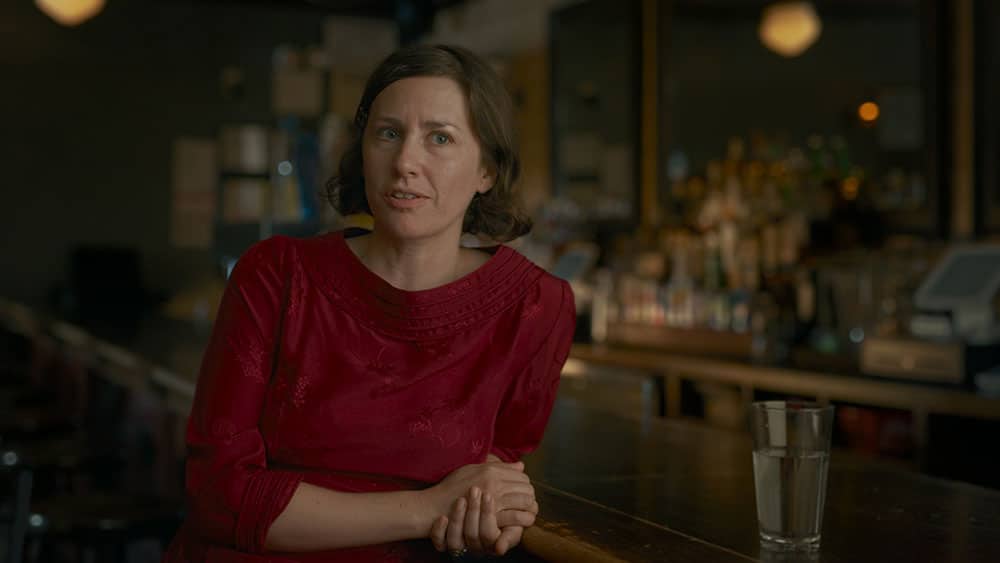
Photo courtesy of the New York Times
He boldly revealed his weaknesses, failures, and less desirable traits. As one interviewee notes, he presented himself as deeply flawed but still trying to do the right thing and be a good guy.
His standup act was full of diatribes about how problematic men are and how dangerous they are to women. He became the unlikely moral conscience of the comedy world.
But rumors began to widely circulate about his untoward behavior to women, fellow comics coming up in the industry who looked up to him and even idolized him. His lewd behavior became an open secret that everyone knew, but no one wanted to admit in public.
Then, after extensive research, the NY Times published a game-changing article in 2017 entitled “Louis C.K. is accused by five women of sexual misconduct.” The next day, Louis admitted everything in the article was true.
Suddenly, the secret was really out, and people could no longer deny it or pretend they didn’t know.
At the height of his empire-building career, Louis announced he was stepping back from the spotlight and taking time to reflect on his behavior.
Sorry/Not Sorry explores, with brutal honesty, a culture of permissiveness that allows men — most notably, powerful white men — to do whatever they want.

Photo courtesy of the New York Times
It also speaks to our nasty tendency to shame and penalize women who dare to speak up.
It explores the culpability of everyone who sees terrible behavior but willingly looks away to preserve their career or social standing, making excuses for men who they want to see the best in no matter what.
In one powerful interview, Parks and Rec co-creator Michael Schur admits to thinking, “It’s not my problem,” and pretending he didn’t know what he knew about Louis when he hired him to work on the show.
After the explosive NY Times article, he admits, “It was my problem.”
Forcing women to risk their health, sanity, and careers to bravely speak up against the most influential people in the business while so many others, especially other men, remain silent is everyone’s problem—it’s a pervasive cultural problem.
The documentary explores how many rationalized their continued support of Louis and how willing they were to blindly ignore their morality.
Jon Stewart admits during an interview that he’s not sure what would have changed if he had known about Louis’ bad behavior when they started working together. And the fact that he isn’t sure knowing would have changed anything is telling… and chilling.
Louis’ divisive return to the spotlight prompted a national dialogue about second chances and the consequences of bad behavior.
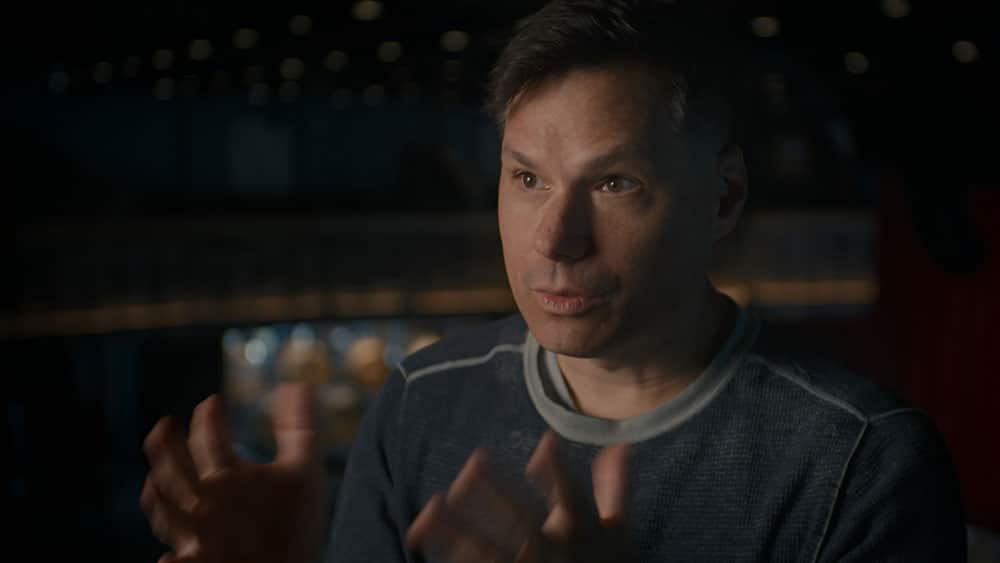
Photo courtesy of the New York Times
Comedian Michael Ian Black talks about a tweet he made that went viral in the worst possible way, asking how men caught up in the #MeToo movement can find a way to redemption. He admits it was ill-timed and ill-worded, and he failed to acknowledge that the pain around Louis’ actions was real for people.
It was a pain exasperated by Louis’ hypocrisy and the cynical nature of his comeback tour.
After nine months in self-imposed exile, he returned to comedy clubs, eventually touring and starting to sell out large venues.
He incorporated his troubles into his act, but not with sincere regret but a flippancy and contempt for the repercussions he faced and the damage to his career. He made no apologies, reducing everything to an innocent kink (despite admitting to harassment months prior).
In his period of “reflection” he once touted, it seemed he had learned nothing — except that, in Hollywood, you can’t keep a good man down for long, or a bad man for that matter, if that man is a serious moneymaker.
Louis named his next tour “Sorry” — a big middle finger to the #MeToo movement.
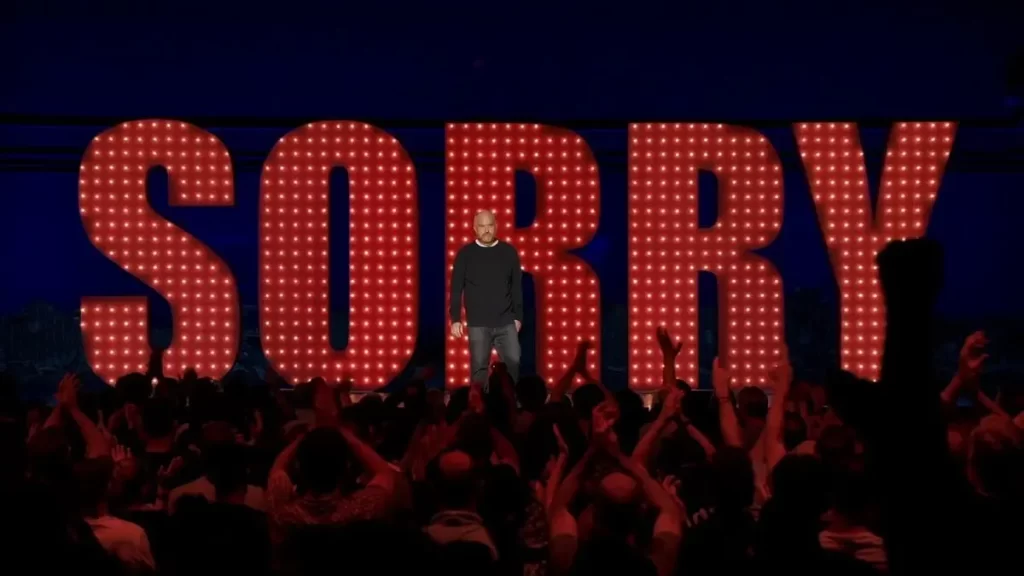
One interviewee states, “He’s waving a banner for people who don’t care.” Jen Kirkman, a comedian at the forefront of Louis’ reckoning, states, “Letting predators back, when others never had a chance, hurts.”
Louis won a Grammy in 2022 for his comeback album. Dave Chappelle won a Grammy for a special, during which he openly mocked one of Louis’ victims.
Several interview subjects, along with the filmmakers themselves, question whether cancel culture exists and what it says about our society that several years after the #MeToo revolution, nothing seems better.
It’s an essential and shattering watch about so much more than Louis C.K.’s ability to weather a temporary storm; it’s about a pervasive problem that refuses to go away.
Overall Rating (Out of 5 Butterflies): 4
SORRY/NOT SORRY is produced by The New York Times and based on the 2017 reporting by Melena Ryzik, Cara Buckley, and Jodi Kantor, who served as consulting producers on the film. It opens theatrically in LA and NYC and will be released on VOD on July 12, 2024.






Follow Us!