

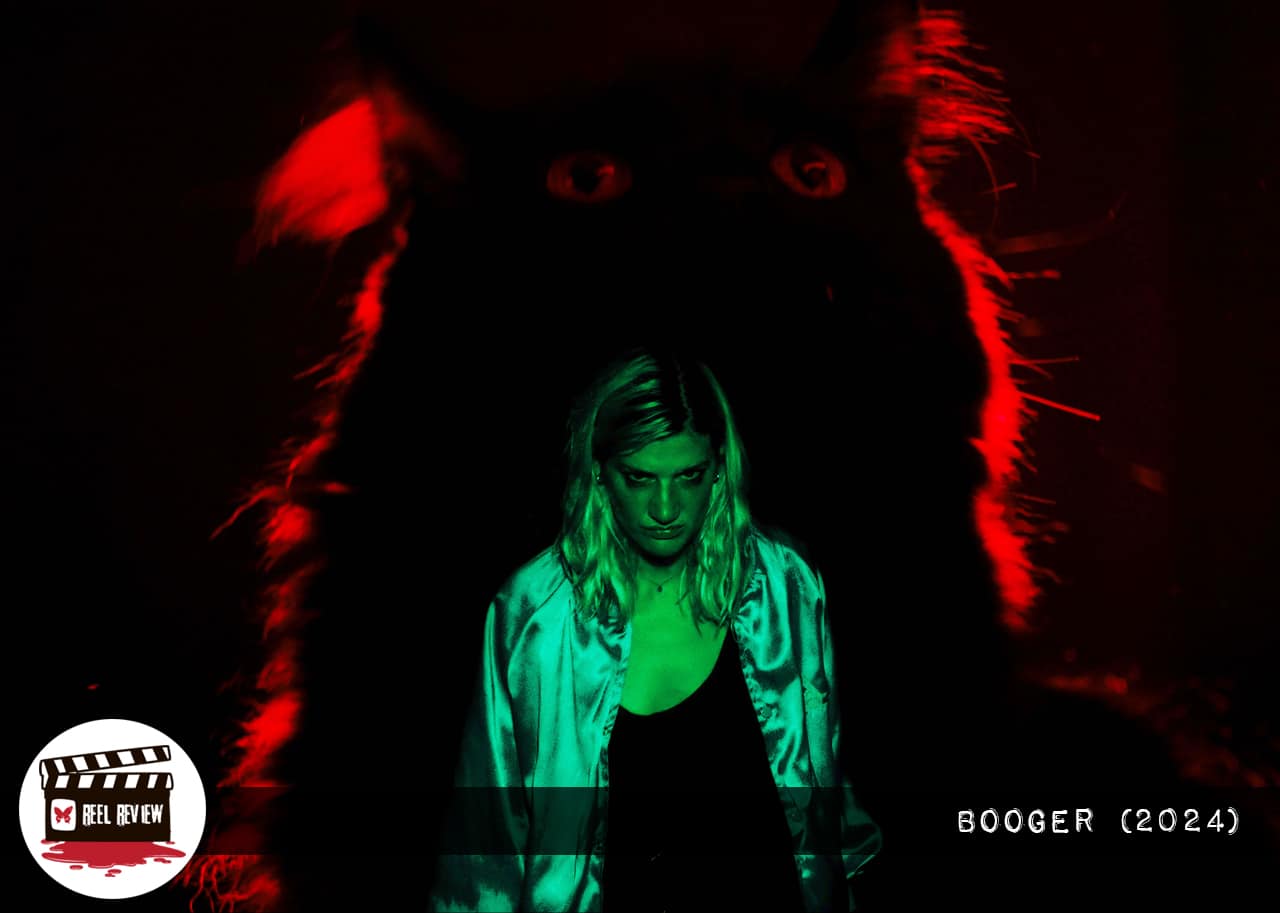
“Booger” is a bold, thought-provoking debut that uses the language of horror to explore the complex emotions surrounding loss and grief.
No time to read? Click the button below to listen to this post.
Booger (2024), the directorial debut from Mary Dauterman, is a haunting exploration of grief that burrows deep under the skin, leaving an indelible mark on the psyche.
The cat, dubbed Booger, is a mess when he shows up. He looks and smells like he’s been living in the garbage. He’s wild and unpredictable. But Izzy (Sofia Dobrushin) sees something beautiful in him, even if the rest of the world — including her best friend and roommate Anna (Grace Glowicki) cannot. She eagerly adopts him despite Anna’s protests.
Soon, we learn that Booger’s arrival into the lives of Anna and Izzy is a flashback to happier times. Now, Izzy is dead, and Anna is struggling to act human.
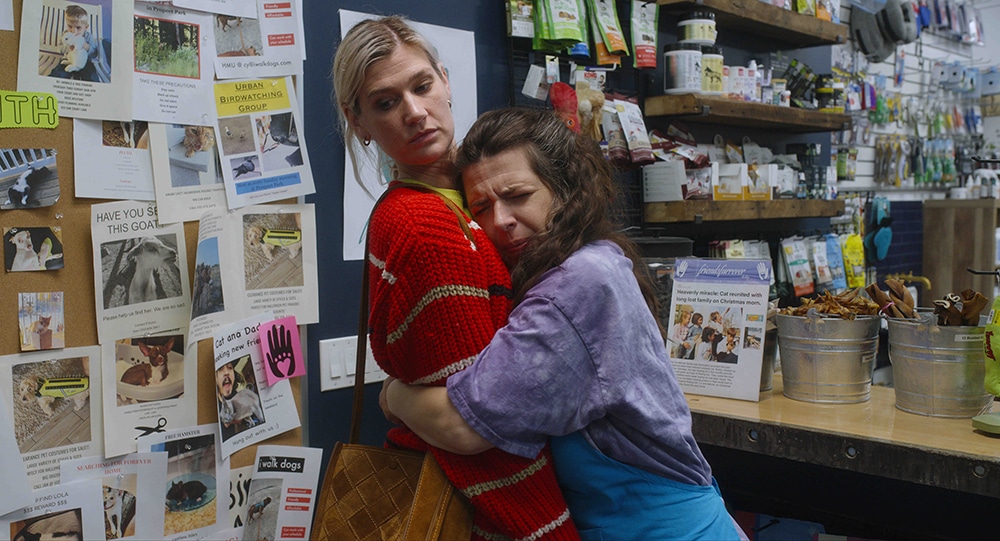
She can’t work, can’t return phone calls, can’t enjoy the people and things she used to, and can’t face Izzy’s grieving mother, who is desperate to maintain a relationship with the girl who meant so much to her daughter.
She prefers to spend her time alone, rewatching old videos on her phone of Izzy and recalling moments of joy and laughter.
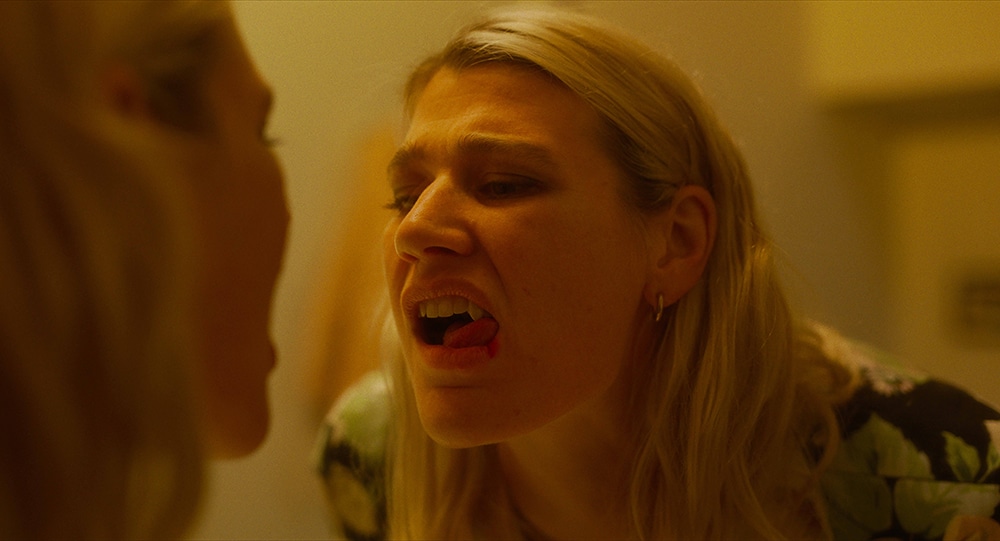
Just when she thinks things can’t get any worse, she has an altercation with Booger, who bites her, jumps out a window, and runs away. She spends the rest of the film desperately trying to find him while navigating strange changes in her body and behavior.
The physical changes Anna experiences mirror the internal turmoil of depression and loss, deftly illustrating how profound sadness can make one feel like an outsider in one’s own life.
Ironically, a film about becoming a cat feels like a profoundly human story.

Booger taps into the shared pain of existence, resonating deeply with anyone who has ever felt alienated by their own emotions or struggled to make their way in a world that suddenly feels foreign and hostile following a profound loss.
The film poignantly captures the disconnect between societal expectations of “normal” behavior and the overwhelming nature of genuine human emotion.
It’s important to note that Booger is not the creature feature or gross-out body horror film some might expect. Instead, it’s a nuanced exploration of psychological descent and the impact of loss, grief, and isolation. The change Anna undergoes is more internal than external, focusing on the emotional rather than the physical.
Dauterman skillfully balances moments of genuine humor and tender poignancy amidst the discomfort, creating a multifaceted emotional experience.
The film’s absurdist nature works to its advantage, embracing the inherent chaos and unpredictability of the human experience. By leaning into the surreal, Dauterman creates a visceral representation of how grief can make the world feel nonsensical and alien.
At the heart of BOOGER is Grace Glowicki’s tour-de-force performance.
Carrying the film almost single-handedly, Glowicki conveys the agony of loss and the disorienting nature of unwelcome change with raw, unflinching honesty. Her portrayal of Anna’s feline transition is subtle but masterful, seamlessly blending human vulnerability with increasingly animalistic mannerisms.
A delightful cameo by the incomparable Heather Matarazzo provides much-needed levity, and her brief screen time is a welcome respite from Anna’s harrowing journey.
However, the film is not without its flaws. Despite a lean 78-minute runtime, there are moments where the pacing drags, and the narrative becomes somewhat repetitive. Further, horror fans expecting more visceral thrills may be disappointed by the subtlety of Anna’s transformation.
Despite these potential drawbacks, Glowicki’s captivating performance keeps viewers invested. Her nuanced portrayal of Anna’s fugue state is both heartbreaking and mesmerizing.
Booger also deserves praise for its frank examination of a rarely discussed form of grief: the loss of a close friend.

By focusing on this often-overlooked type of grief, Dauterman highlights how such a loss can profoundly impact one’s sense of self and place in the world.
Zoe Polanski’s unnerving score enhances the atmosphere of dread and surrealism, perfectly complementing the film’s exploration of identity loss. The claustrophobic setting of Anna’s apartment serves as both a physical and psychological prison, heightening the sense of isolation and disorientation. This confined space becomes a crucible for Anna’s transformation, amplifying every subtle shift in her demeanor and appearance.
Booger will undoubtedly resonate most strongly with those who have experienced loss.
The film’s unflinching portrayal of grief may alienate some viewers, mirroring the way Anna’s transformation isolates her from those around her.
Nonetheless, Dauterman’s debut gets under your skin, presenting a story of trauma manifesting as a physical metamorphosis that explores how overwhelming sadness can make one feel as if they’re losing their very essence.
While it may not appeal to all viewers, those who connect with its themes will find a deeply affecting and unforgettable cinematic experience.
Overall Rating (Out of 5 Butterflies): 3.5











Follow Us!