

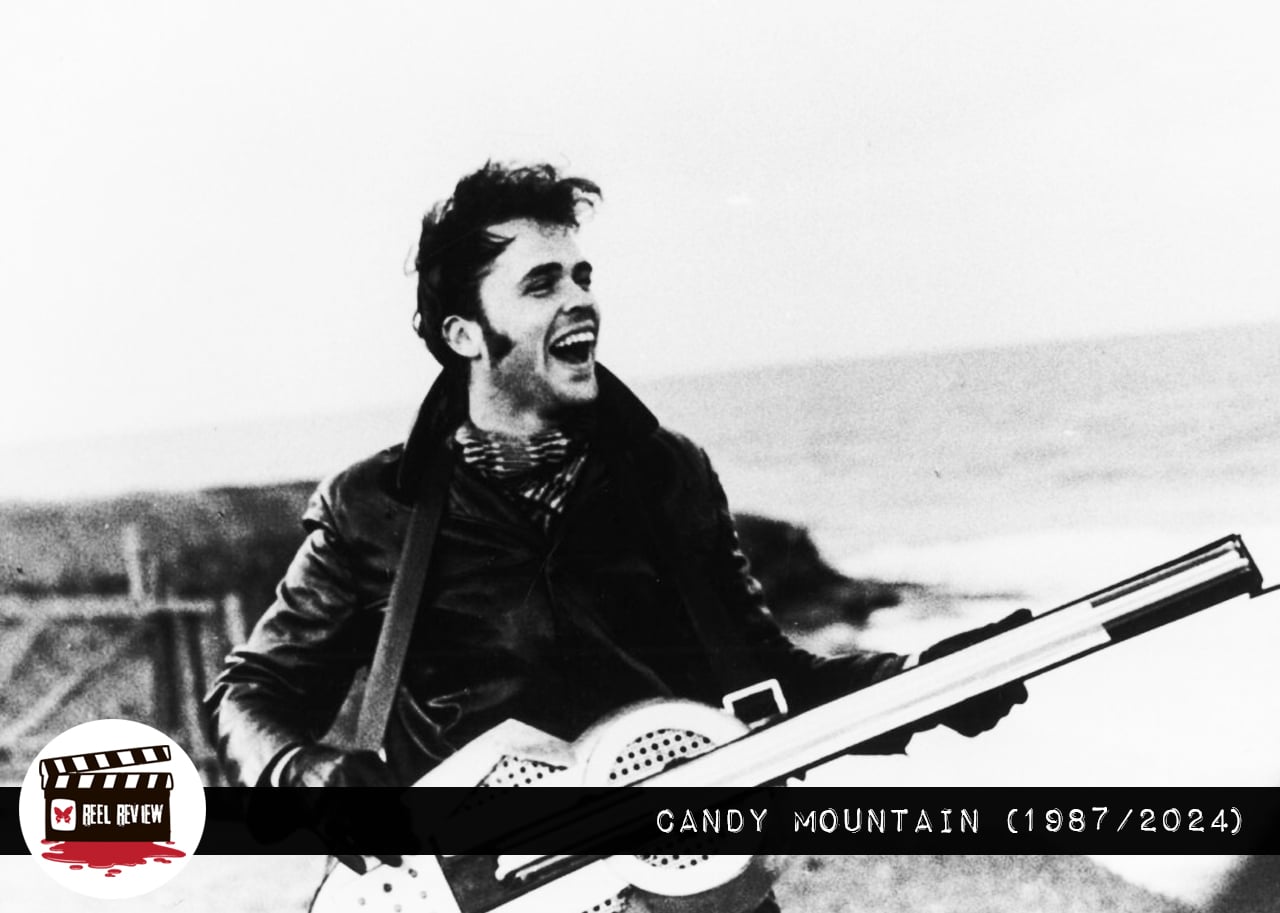
The newly restored 80s cult film “Candy Mountain” is a lackadaisical, musical examination of one man’s journey toward self-discovery… maybe.
No time to read? Click the button below to listen to this post.
Oh, low-budget 80s movies, how I’ve missed them.
There’s a certain charm to be found in the indie and/or arthouse flicks of the mid-80s, those cinematic offerings that bypassed the Hollywood churn entirely, eschewing big budgets and bigger stars for a more personal, DIY approach. Of course, one can’t mention the 80s without conjuring an amalgamation of preconceived notions: big hair, neon spandex, unlaced high-tops, and analog synthesizers dominating the airwaves. But that’s just a small part of what the 80s were truly about.
In fact, when viewed through the lens of 1987’s Candy Mountain, you’d never know those things existed at all.
That’s because Candy Mountain (filmed in 86 but grainy enough to be from 76) dares to look at the other side of that most infamous of decades: the rise of the corporate power, the disenfranchised and disenchanted youth who wanted no part of a regular 9-to-5, the low-fi rock & roll hovering on the mainstream’s fringe, and the subdued color palette of anything that wasn’t originating from Los Angeles or Miami. This is a stripped-down affair, grungy before grunge was a thing.
It’s also just an odd duck of a movie, populated with a “who’s who” of the music industry but defiantly apathetic about possessing an actual plot.
Not that this is anything new; indie films of any decade tend to ignore the expected pacing of traditional cinema, focusing instead on evoking emotions and giving the viewer something to ponder. And I’m ok with that… generally. There are times when aimless movies can be a little TOO aimless, causing the audience to lose interest long before the credits roll. And while Candy Mountain wasn’t boring per se, it still could have used a little more focus when it came to the story being told.
That said, I do believe that aimlessness was intentional.
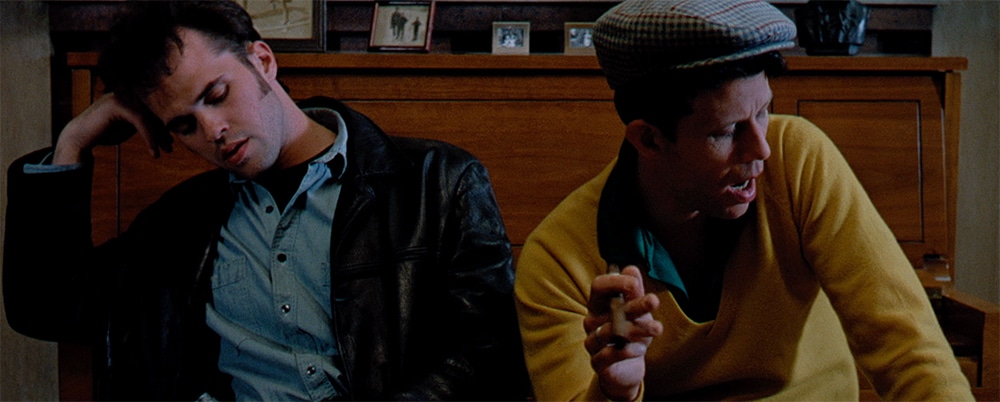
Just based on a few scenes and the overall vibe, I got the impression that directors Robert Frank and Rudy Wurlitzer were offering a quasi-subtle commentary (sometimes scathing, sometimes not) on the state of things in 1987. Young punks, middle-class working men, and “the family unit” all get their time in the unflattering limelight.
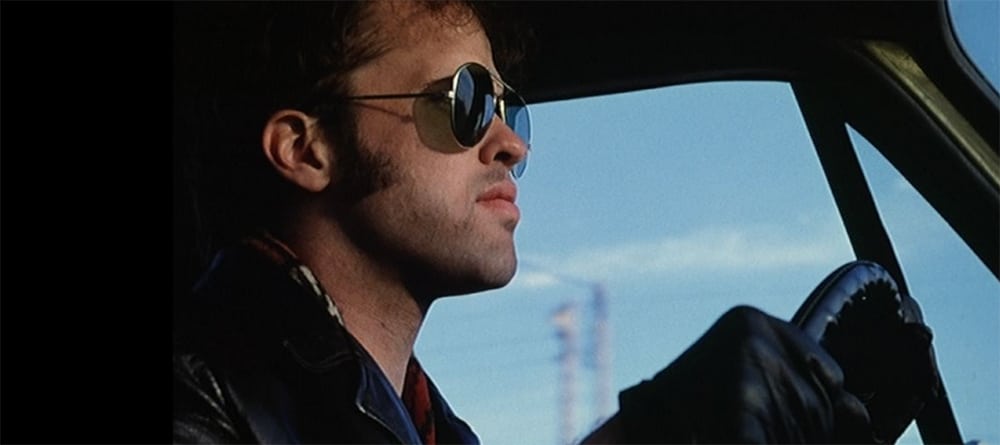
The plot, such as it is, centers around Julius, an itinerate laborer and erstwhile musician, hitting the road in search of Elmore Silk, a skilled guitar maker who has intentionally faded into obscurity. To be fair, that IS the movie we get. But, as the saying goes, “It’s not the destination, it’s the journey,” and Julius’ journey is indeed colorful (figuratively if not literally).
First, there are Elmore’s oddball relatives: the apathetic well-to-do brother, his scumbag brother-in-law, his put-upon sister, and his exasperated granddaughter.
Next up is a kidnapping Canadian father & son duo, who are far too kind to be considered sinister. And then there’s the beautiful French immigrant, who just so happened to let out a room to Elmore for a short while. Julius pinballs between all of these characters and more over the course of the film, growing ever closer to finding Elmore while continually trading down when it comes to vehicular transport.
Seriously, there’s an unusual amount of pink-slip trading going on in this movie—enough to make the Fast & Furious franchise a little jealous.
The good part about all this character chaos is that most of the performers are made up of famous and semi-famous musicians.
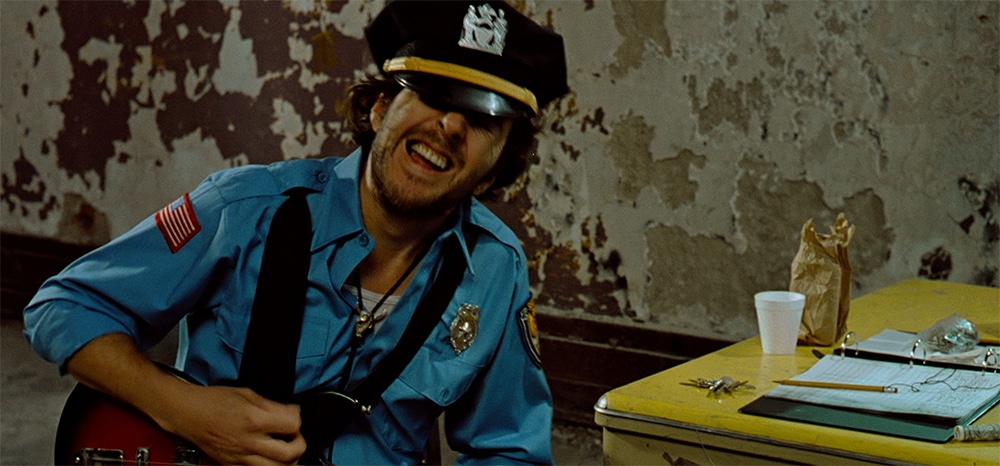
This includes David Johansen (aka Buster Poindexter), Tom Waits, Joe Strummer (yes, of the Clash!), Dr. John, and Leon Redbone. And while their acting may not always be a slam dunk, it’s truly a pure delight seeing these music men playing random characters (who just so happen to all sing or play guitar) throughout the movie. That they’re all musically inclined is never acknowledged on-screen, which just adds to the magic of it all.
Bulle Ogier, as the French ex-pat, might be the odd one out (neither male nor musical), but she is a well-regarded actress in France and makes the movie better simply by being in it.
The BAD part about such a varied stable of characters is that their disparate stories and tones make Candy Mountain feel very disjointed and unfocused.
Again, some of this was probably intentional. A meta-commentary of Julius’ own abstract life, as it were. It’s also a shame that Julius never happens upon any musicians of color in all his musical wanderings. I get it – this was an American film shot in the 80s… representation was hardly a blip on the radar at this point. But good music knows no color, and I think the film’s message and soundtrack could have used a little diversity.
As far as Julius goes, he’s a tough protagonist to root for. Aimless, disrespectful, dishonest, and somewhat misogynistic, he brings a lot of negative qualities to the fore.
He spends the entirety of the film looking for an easy score, trying to make a quick buck. He’s not exactly a criminal, but he isn’t too far from one, either. Maybe that was the intent, but again, such characterization (while at times relatable) does not make for a compelling lead.
If Julius was meant to be a mirror for the film’s target audience, I can’t say for certain whether that aim was achieved; most of these “road trip” style movies generally end with the main character learning something about themselves or coming to terms with something they had been adamantly avoiding.

As far as Julius goes, if he learns anything at all, it’s never really portrayed or acknowledged. Maybe the audience is supposed to find their own conclusions (I didn’t find any).
If you find yourself thinking that star Kevin J. O’Connor, as Julius, looks awfully familiar, know that you’re not alone. I spent a good chunk of the movie trying to figure out what else I’d seen him in before finally just hitting up Google for the info. And the answer, ladies & gentlemen, is that he played Benny, Brendan Fraser’s cowardly sidekick in 1999’s The Mummy remake. Which, duh! Once you see it, you can’t unsee it. Turns out that, this film aside, playing kooky supporting characters was kind of his schtick, and I guarantee you’ve seen him in a few other movies.
The movie culminates in Julius locating Elmore and his stash of custom-made guitars before ending on a somewhat sour note.
To be fair, the ending doesn’t come as much a surprise so much as a “yeah, saw that coming”. It’s probably supposed to be a powerful message about the price of greed and how the journey is the music you make along the way, but it really ends with a whimper instead of a bang. I wanted a more genuine resolution and a legitimate character arc. Alas, such things are not always meant to be.
Regardless of what is transpiring from scene to scene (good or bad), Candy Mountain’s soundtrack is, unsurprisingly, pretty damn good.

It’s mostly just songs from the various musicians making cameos in the movie itself, but there’s a reason they were considered giants in the industry. If the movie was meant to be an homage to the road-trip movies of the 60s, then the accompanying music helps to sell that overall vibe.
Critical reception to the film was largely positive, though some critics disliked O’Connor as a lead. I can’t disagree with that analysis, as I feel he’s much better in quirky, smaller roles. Candy Mountain did receive the Silver Seashell award at the San Sebastian International Film Festival in 1987, so that’s something.
Considered an 80s cult classic, Candy Mountain has received a digital 2K restoration, looking and sounding better than it ever has.
Although I don’t hold the film quite as high a pedestal, I can’t say I hated it either. It’s kind of like an oddball time capsule, offering a glimpse into a bygone era, the likes of which shall never come again. It’s also subtly humorous at times, in a wry way, for those keen enough to pick up on it.
The bottom line is this: when it finds its focus, Candy Mountain can be a truly engaging watch. Sadly, the moments of clarity are few and far between.
However, lovers of old and/or obscure rock music will find plenty to love.
Overall Rating (Out of 5 Butterflies): 3











Follow Us!