

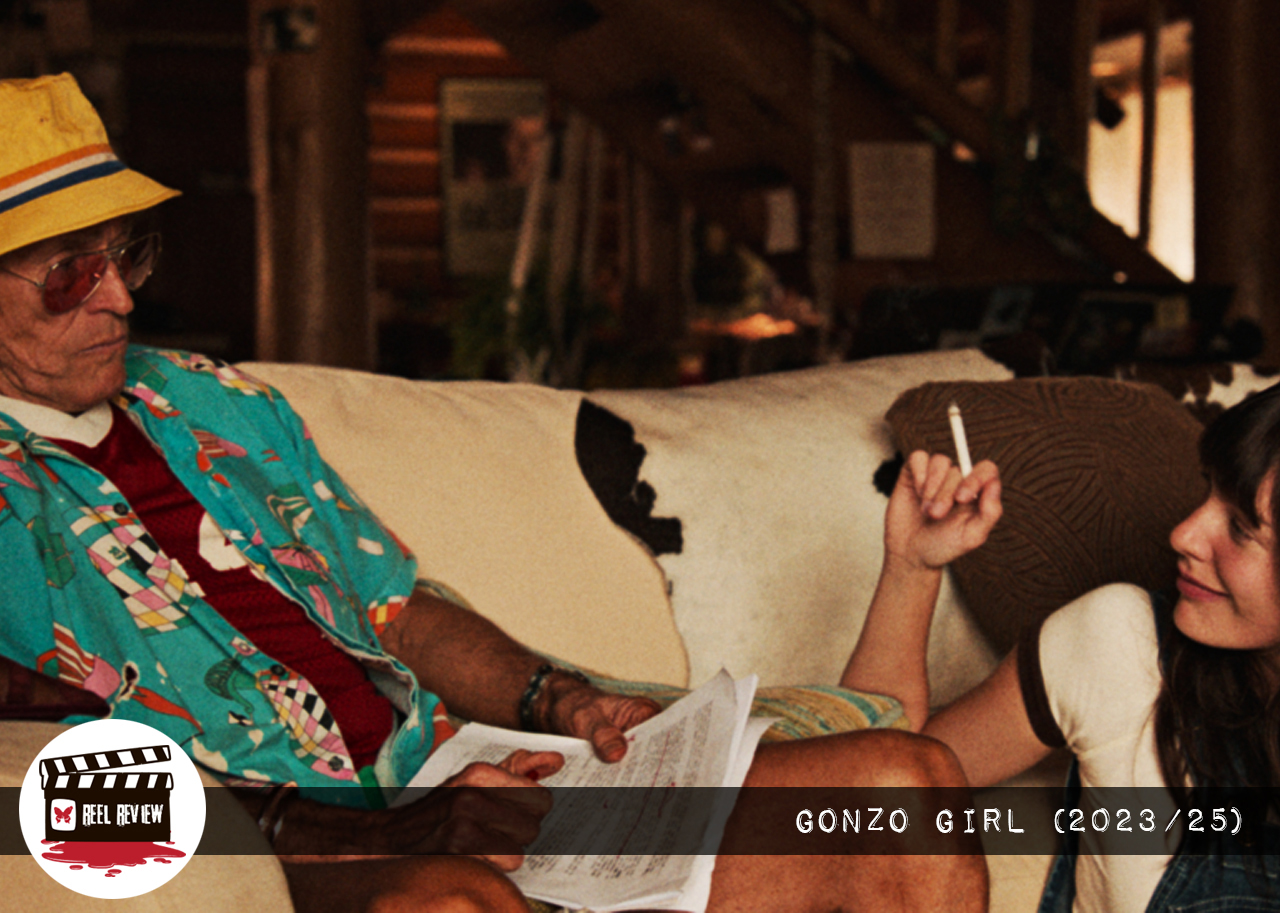
“Gonzo Girl” dismantles the myth of the untouchable male genius, giving voice to women who bore his abuse before reclaiming the narrative.
No time to read? Click the button below to listen to this post.

Historically, there have been many literary giants – almost always white and male – who have had their bad behavior excused because of their genius. Abuse, especially when it came to the women in their lives, has been written off as eccentric and wild behavior. In a post-#MeToo world, more truthful depictions of these men have started appearing from the point of view of women, including Augusta Britt revealing she was the underage “muse” of Cormac McCarthy and Myriam Gurba writing about William S. Burroughs’s abuse and eventual murder of his wife Joan Vollmer.
Gonzo Girl (2023), the first film directed by Patricia Arquette, provides a new and nuanced take on a woman who becomes ensnared in a larger-than-life writer’s web.
The film is based on a novel of the same name written by Cheryl Della Pietra, who worked a short stint as Hunter S. Thompson’s assistant in the early nineties. While her book was a work of fiction, Della Pietra describes it as “a love letter to my former self, to Hunter’s mercurial spirit, and to an experience that profoundly changed my life.”
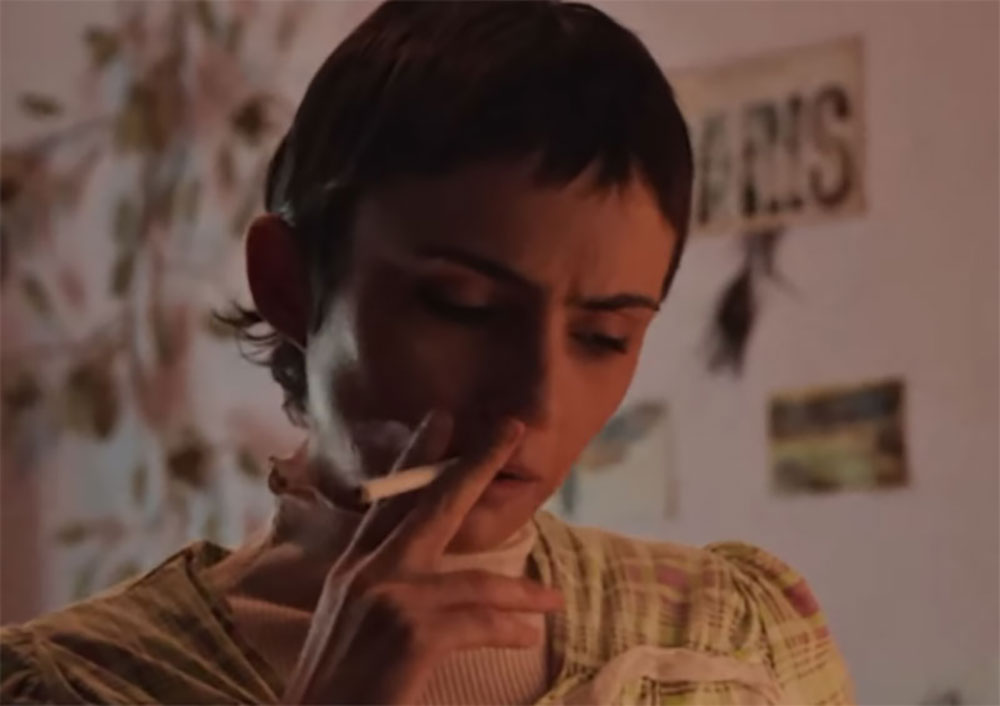
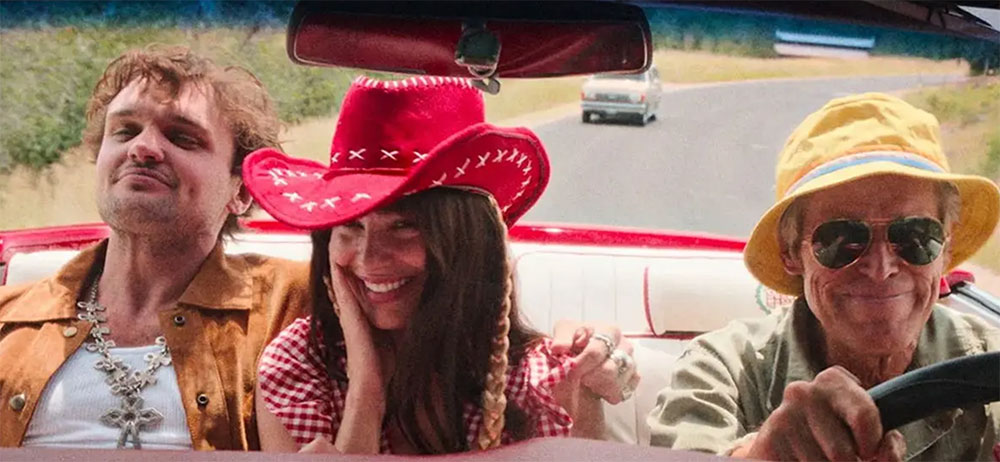
The film is from the point of view of Alley Russo (Camila Morrone), a young writer in her twenties who is scouted to be the new assistant for the Thompson-esque writer Walker Reade (Willem Dafoe). After moving to Walker’s ranch in Colorado, Alley is tasked with ensuring Walker finishes his book, which soon proves to be almost impossible.
The ranch is in a near-constant state of debauchery: Cocaine is the drug of choice, Walker’s favorite activity is target practice with a Ronald Reagan mannequin, and his slimy come-ons practically ooze off the screen.
Near the start of the film, Alley laments she doesn’t have “an original voice” and says, “When you’re gonzo, you become the lead character.” She accepts that Walker is going to be the main character in this story. But as the director, Arquette doesn’t.
Instead, Gonzo Girl is really about the women orbiting Walker.
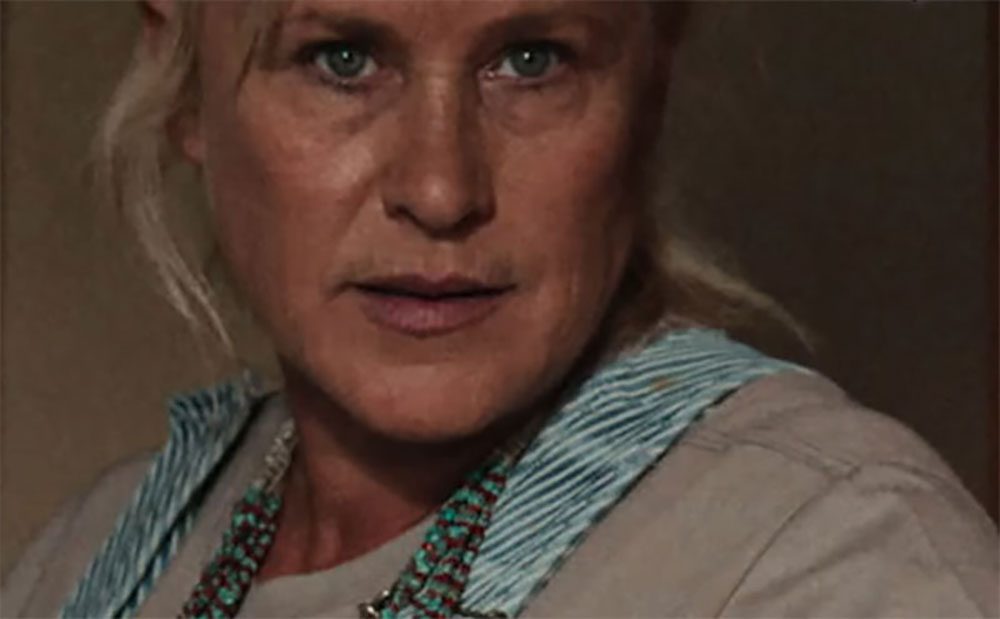
There’s Claudia (played by Arquette herself), the enigmatic and oddly maternal woman who keeps Walker’s life running (even as he does his best to destroy himself); Devaney (Elizabeth Lail), the younger woman who is Walker’s arm candy; and Alley herself, who works a 9 PM to 5 AM shift to babysit Walker as he bangs away at his typewriter.
The women all seem to accept Alley’s original stance: Walker is the star, and they’re all supporting players who need to prop him up.
They’re working tirelessly behind the scenes to ensure Walker’s reputation as a literary genius lives on. Alley takes things one step further. When she realizes Walker’s output is not measuring up, she starts surreptitiously editing his pages, to the delight of his agent Lionel (James Urbaniak).
In addition to diving into Walker’s writing, Alley also does her best to dive into his lifestyle. She lets him pick out her clothes – much skimpier than what she showed up to the ranch wearing – and does his drugs, not to mention his drug deals.
It’s easy to see how Alley slips into the surreal atmosphere at Walker’s ranch.
With Arquette’s careful direction, the drug scenes early on feel fresh and funny.

During an outsized feast at a restaurant, Alley is fascinated by her spaghetti crawling off her plate; later, she hallucinates flowers blooming in splashy, cartoonish reds in a plant store.
She happily proclaims, “I have become a character in a Walker Reade story.”
Back at the ranch, Alley also engages in a fling with a Hollywood actor trying to absorb as much of Walker as he can for a role. Without anyone explicitly saying it, Alley knows that this relationship would displease Walker; after all, he is the star that everyone orbits around. She makes her paramour promise not to tell Walker that they are involved, as she fears she would be fired.
Not only is Walker mentally unstable as a result of his near-constant drug use, but he is also verbally (and in one scene, physically) abusive to the people who are most devoted to him. As Alley notes, he is stuck in the past.
Many of the scenes seem like they could be taking place decades ago, between the plethora of Reagan masks and the rampant misogyny.

Every time a flannel shirt is shown, the viewer is reminded that it’s 1992 and that Walker is unable to move into the future.
Walker also pits the women in the film against each other, especially Alley and Devaney. Devaney sees Walker’s interest in Alley and asks to be more involved in writing the book.
What Alley, Devaney, and Claudia might not be aware of is that their stories are even more interesting than Walker’s, and their complexities are what keep Gonzo Girl so compelling.
While Walker stays the same, the women change.

His attempts to freeze them in time with him – like when he demands to take a picture of Alley floating in his pool surrounded by flowers, like a modern-day Ophelia – are shot beautifully, but make it clear how misaligned the women’s goals are with Walker’s own. As Alley observes, he is stuck in his own myth.
This isn’t to say that Walker is treated as a one-dimensional character in the film.
Gonzo Girl explores the roots of his strange behavior and unhealthy habits, including his devastating childhood. And despite his poor treatment of Alley, there are surprising moments where his genuine care for her shines through. However, Walker isn’t the star of this story – Alley is.
Like many other young women who have become entangled with controversial authors, her story is the most fascinating, and Gonzo Girl tells it beautifully.
With each cast member fully immersed in their character, Arquette’s film keeps viewers engaged and draws back the curtain on what it’s like when someone is pulled into the orbit of a troubled, powerful man.
It also provides hope that, even when it can feel impossible to escape such a dreamy, addictive lifestyle, people can free themselves from it and use the experience for their own artistic endeavors, just as Alley (and Della Pietra) did.
Overall Rating (Out of 5 Butterflies): 4.5











Follow Us!