


“Hostile Dimensions” delivers sci-fi horror and mystery with a grounded approach to found footage that keeps you hooked from start to finish.
No time to read? Click the button below to listen to this post.
Hostile Dimensions bills itself as a twist-filled multi-verse thriller. As selling points go, that’s a pretty strong tagline to run with. However, it’s also one that doesn’t do the film justice, failing to convey how it takes a fairly simple premise of an unsolved disappearance combined with found footage and spins out an engaging tale of sci-fi horror.
Two documentary filmmakers (Sam and Ash) are looking for their next project, which will provide them with a much-needed boost in what appears to be a faltering film career.
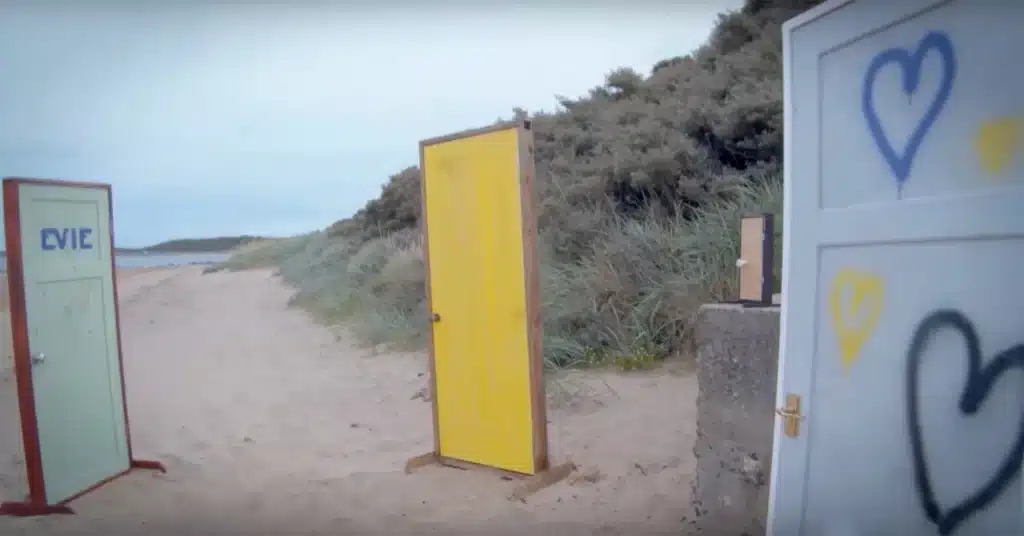
Sam chances upon a tale of a missing graffiti artist (Emily) in Scotland who has just disappeared during a graffiti trip to a dilapidated and run-down building. There is no trace, no signs of struggle, nothing. Stranger still is the video evidence that survived, showing a door in a place where it has no right to be.
Sam is convinced that investigating it and finding out what happened to Emily is not only the right thing to do but also something that would bring reward in its own right.
With found footage films, there has to be some suspension of disbelief to appreciate what is unfolding in front of you; Hostile Dimensions, for the most part, succeeds by making that easy enough to do. You’ll happily follow our central duo with each step they take. Sam (Annabel Logan) is perfect as the more driven of the pair, while Ash (Joma West) conveys a weariness and a sensible approach to what develops as the story progresses.
It’s inventive in using common doors as entry points into the different universes around them and displays a keen sense of humor.

An early foray sees them entering a deserted kids’ play area, which is creepy enough on its own. Add a giant panda to proceedings, and you get nightmare fuel.
Finding Innis, a university lecturer with knowledge of these doors, gives the film a certain amount of realism as he talks through this phenomenon in a totally relatable way. Paddy Kondracki plays Innis, who provides some solid support to the intrepid duo as his own role expands and the true nature of the gateways is revealed.
The remainder of the cast does what is expected of them, and there is a sense that all concerned were committed to raising the material as high as possible. The effects are used sparingly, with quick cuts and long shots that mask any budget deficiencies. To be fair, some of the door locations look as though they use the local area as that world. Again, you can forgive that because, running up to the final act, the film carries itself along at a fair lick without feeling rushed.
I did mention that it works for the most part, but in the final act, you feel as though they ran out of steam as they charged to the conclusion.
I won’t spoil the ending because getting there is so much fun. Although one scene telegraphs what is about to happen in the third act, it doesn’t ruin the enjoyment.
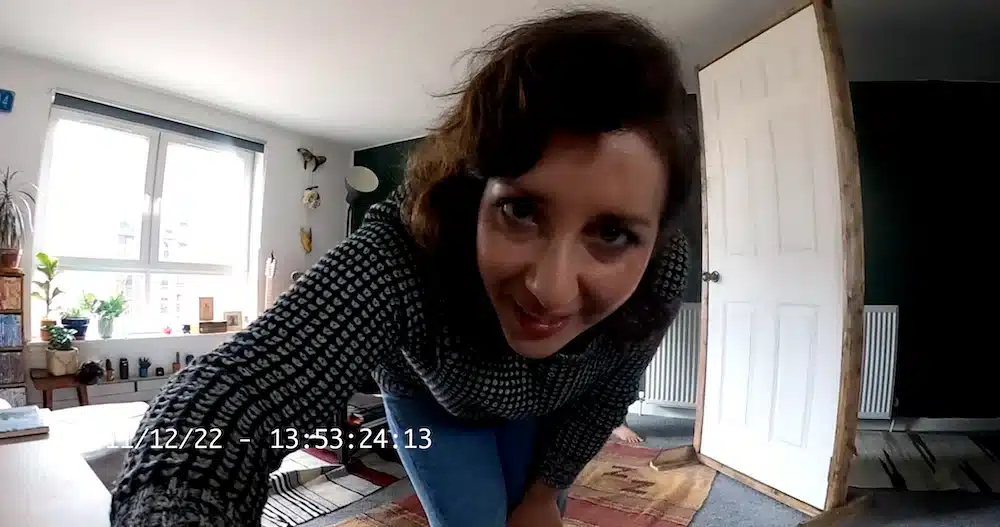
Director (and writer) Graham Hughes demonstrates an impressive knack for telling a compelling story and making it immersive with a limited budget. The way he utilizes different types of footage—handheld cameras, bodycams, etc.—keeps things interesting and enhances the excitement and authenticity of the story.
If the third act had been a little more successful, I would have no hesitation in awarding a higher score. As it stands now, it still receives pretty solid marks from me.
It’s a witty, engaging, well-thought-out, and presented addition to the found footage genre that deserves your time.
Overall Rating (Out of 5 Butterflies): 3.5









Follow Us!