


Intensely thrilling and terrifying with thought-provoking themes and stunning production values, “Shaman” is essential possession horror.

No time to read? Click the button below to listen to this post.
Shaman, the eerie and frequently terrifying new horror-thriller from director Antonio Negret (Overdrive, 2017), wastes precious little time immersing viewers in a world of relentless horror.
Negret takes a minimalist approach to stage-setting, making efficient and effective use of its opening minutes. This is where we meet Candice (Sara Canning), a devout Catholic missionary working to convert an Indigenous Latin American community, alongside her husband Joel (Daniel Gillies) and teenage son Elliot (Jett Klyne). We are introduced to Candice as she is baptizing a local woman. Meanwhile, Elliot is off exploring with a couple of kids from the community.
The kids arrive at a forbidden cave the locals dare not enter for fear of the rumored evil the cave harbors. But Elliot, like the rest of his family, doesn’t believe in superstition or the archaic beliefs of the native population. He enters without trepidation but quickly becomes spooked when encountering the local Shaman.
In his haste to escape, he drops a precious family heirloom, his grandfather’s watch. It’s the day before his confirmation. Candice takes time to remind Elliot to be sure he’s wearing it for the special occasion.
This prompts Elliot to return alone to the cave and attempt to recover the watch. But, by doing so, he breaks a sacred barrier and unknowingly unleashes an ancient evil.
By the ten-minute mark, the film has already provided a couple of potent jolts, ample atmospheric chills, and truly haunting visuals.
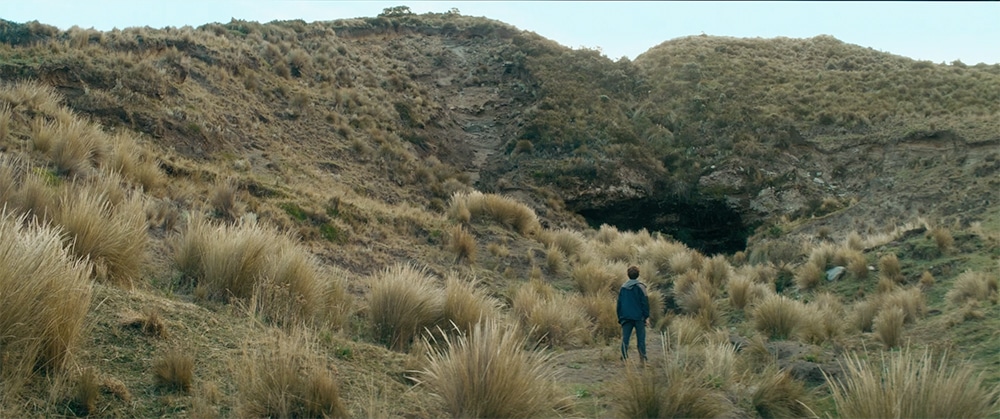
Of course, it only escalates considerably from there.
When things quickly get harrowing for Candice’s family, she suspects the Shaman (Lisandro Morales) of using dark magic to punish the family for their faith. The Shaman insists Elliot is possessed by a force older than Christianity itself. Candice and Joel dismiss the notion that anything outside their belief system could be real.
Instead, Candice turns to a local priest, Father Mayer (Alejandro Fajardo), and requests a non-Church-sanctioned exorcism.
We inevitably get the requisite exorcism scene, and while there are some familiar beats nearly universal to possession horror, there are more than a few surprises. Negret finds inventive and unexpected ways to make his possession sequences truly frightening and memorable.
By offering a compelling clash of religious faith and introducing a non-Christian demon into the equation, Negret makes Shaman feel fresh and exciting.
The film explores some expected themes: questions of faith, doubt, sacrifice, and human frailty.
Shaman also introduces other themes that the genre, at least in the West, rarely explores.
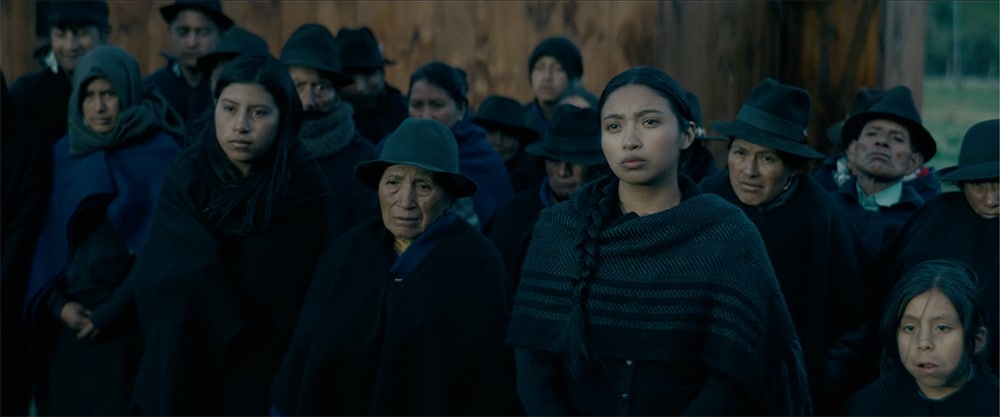
“You Let this drop of poison into Paradise?”
These themes include the White Savior Complex, the ethics of missionary work, and the egocentric embrace of one religion’s myths while mocking and dismissing another’s.
Negret grew up in Latin America, witnessing missionaries’ work first-hand. While he acknowledges that many of the missionaries were kindhearted and had good intentions, he understood the devastating cultural impact their presence had on the Indigenous communities.
Because of this personal connection to the material, he was eager to direct Shaman, penned by his brother, Daniel Negret.
Christianity emerged in the 1st century CE, but many religions, including Native American religions in Latin America, were practiced centuries to millennia before that.
Christian missionary work began during the Roman Empire in the 1st century CE, increasing significantly during the Middle Ages across Europe and exploding during the Age of Exploration in the Americas, Africa, and Asia. Colonialism intertwined with missionary work, and by the 19th century, missionaries were instrumental in Western colonial ventures.
Christian missionary work often disrupted indigenous cultures, languages, and practices. Key harms included cultural erosion, loss of identity, and exploitation—as colonial authorities frequently used missionary networks to pacify populations and make them more submissive to foreign rule.
While some missionary work today focuses on humanitarian aid, it can still present challenges, including using conversion as a perceived requirement for receiving aid, actively undermining traditional beliefs and practices, and influencing political and social systems.
Amplifying the fear through spectacular makeup effects an unholy score, Shaman is ferocious and unyielding in its attempt to unnerve viewers.
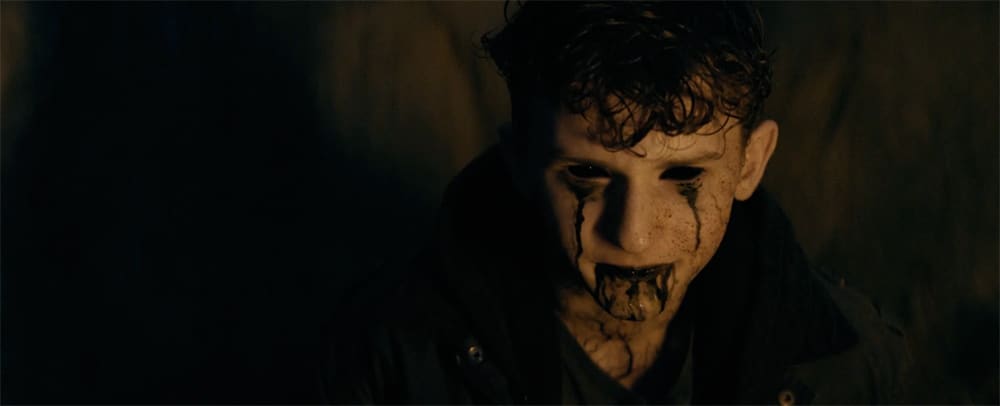
“You thought yourself a savior. Where’s your God now?”
The picturesque natural scenery and breathtaking cinematography sharply contrast the film’s gripping darkness and increasingly disturbing visuals.
As a nightmare unfolds, threatening the safety of her family and the well-being of the local inhabitants, Candice is forced to confront the nature of her belief and the inescapable terror that her faith might not be enough.
The Shaman repeatedly tells Candice, far too stubborn to listen until it’s too late, that her God cannot save her; He isn’t present in this place.
The demon, speaking through the possessed Elliot, repeatedly taunts her faith and reminds Candice of the absence and powerlessness of her deity.
In the end, both Candice’s faith and her humanity will be tested as she must make an unthinkable choice to save her son.
The performances are unilaterally strong, believable, and investing.
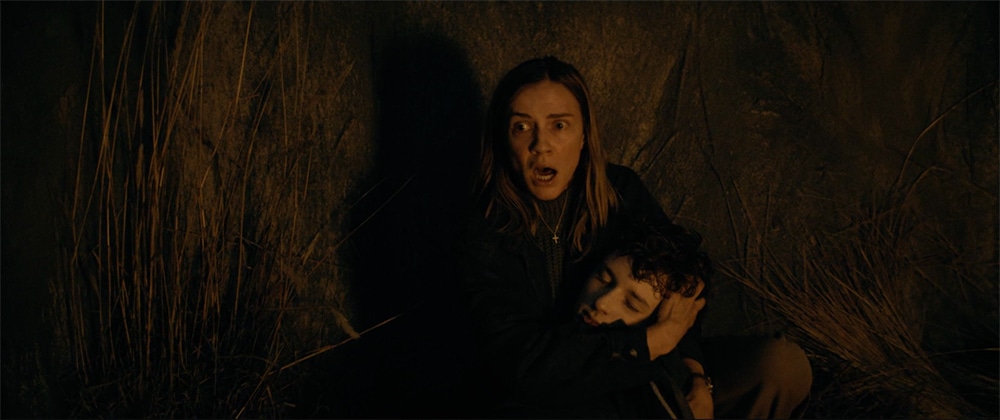
Klyne is especially captivating as the tortured innocent, perfectly conveying both the vulnerability of a child who doesn’t deserve what’s happening to him and the vicious cruelty of the evil that resides within him.
The film contains not one but two equally impressive exorcism sequences. While the first one involving a priest with shaky faith will feel somewhat familiar to fans of the subgenre, it’s expertly executed and appropriately unsettling. The second sequence involving the Shaman and an ancient ritual is significantly more impacting, surprising, and visually haunting—elevating the film above its genre trappings and sending a chilling message.
Nearly every minute of this film is tension-filled, atmospheric, and heart-pounding.
Shaman is utterly mesmerizing—gorgeous to look at, thought-provoking, and unflinchingly bleak and terrifying.
It’s an instant standout in the subgenre that deserves ample praise and attention.
Overall Rating (Out of 5 Butterflies): 5










Follow Us!