


In the deeply intimate “Pratfall”, two lost souls navigate New York City, forging an unlikely connection that bridges grief and loneliness.
No time to read? Click the button below to listen to this post.
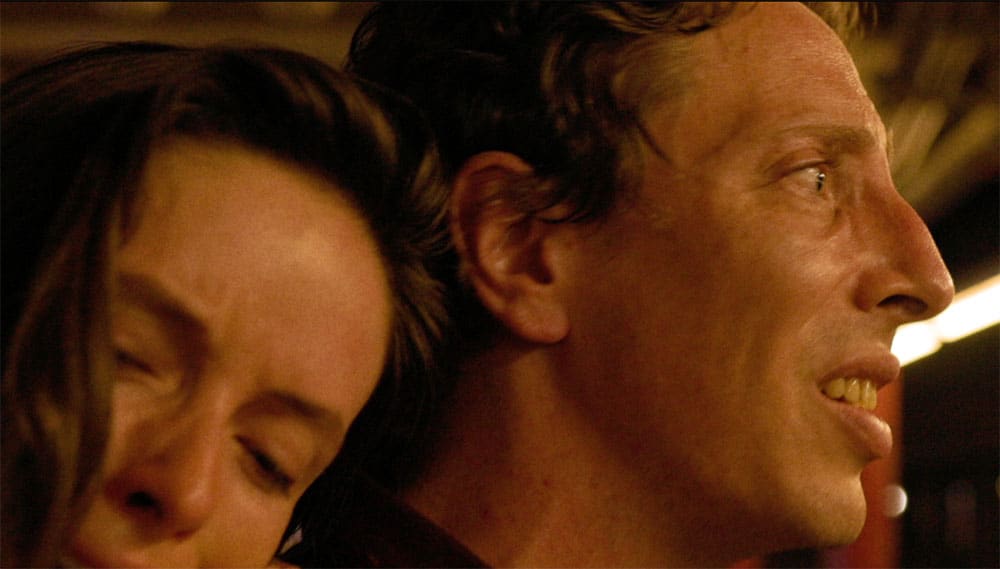
Eli (Joshua Burge) is a native New Yorker, broken by grief and tragedy—a neurotic insomniac who wanders the streets of New York City in a fugue state of pent-up frustration, nervous energy, and inner turmoil.
During a chance encounter in Central Park, he meets a lovely French tourist, Joelle (Chloé Groussard), who feels more than a bit lost in the big city. Eli, frank and unfiltered to a fault, lashes out at Joelle before his guilt causes him to extend a peace offering.
Joelle, feeling lonely and overwhelmed amidst the chaos and cold exterior of New York City, convinces the reluctant Eli to be her tour guide; she’s desperate to see the more intimate side of a place she’s romanticized.
It takes time for the two to form a real connection and for Joelle to chisel through Eli’s gruff exterior.
Eli functions on a short fuse and quickly loses his cool, while the vivacious Joelle remains patient and persistent, deftly navigating his rocky emotional terrain. As Eli eventually softens, their blossoming friendship takes on a sweet and effortless charm.
While Eli has been hardened by the city and poisoned by its toxic underbelly, he begins to see it come alive again through the eyes of Joelle, who is so full of wonder and Joie de vie.
Written and directed by Alex Andre, the film shares much DNA with Richard Linklater’s deeply intimate “Before” trilogy.

Like those films, Pratfall uses naturalistic dialogue, minimalist storytelling, and a real-time approach to capture the beauty and complexity of life’s ephemeral yet profound encounters.
Pratfall succeeds in creating a believable and resonant tale of human connection with its raw emotional honesty and authentic, sometimes meandering, conversations that feel effortlessly improvised rather than tightly scripted.
The handheld cinematography is intentionally raw as Andre seeks to create that fly-on-the-wall immersion. His style mirrors the kinetic energy of a city in constant movement and its tour guide, a man who rarely sleeps.
The ambient sound often threatens to overpower the dialogue, which may distract some viewers. But it adds to a feeling of cinéma verité, placing the viewer squarely in a specific time and place with its characters.
Pratfall is a character-driven story that relies heavily on the simple, organic interactions between the two leads. As much as expressed in shared silence as in varied conversations about everything from food, theatre, and family to existential dread, safe havens, and the building bridges—literally and figuratively.
It requires patience and focused attention, free from distractions.
It demands a willingness to become immersed in this microcosm of humanity as two lost souls share a brief journey of internal and external discovery.
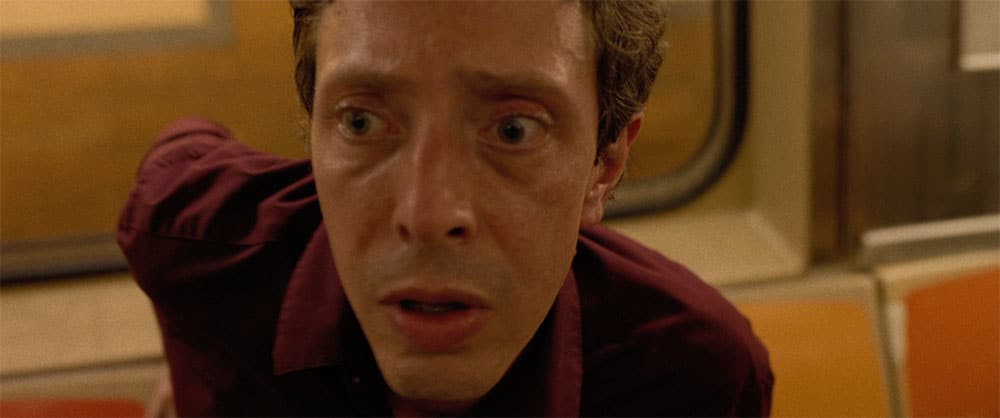
Burge is captivating as the troubled Eli, a devasting blend of fragile, wide-eyed vulnerability and explosive anger. He’s a complex character who isn’t always easy to love but remains exposed and cracked enough to elicit sympathy and reliability.
He has electric chemistry with the ethereal Groussard, a much-needed anchor in Eli’s storm. A free spirit willing and eager to find beauty wherever she can, she’s wonderfully nuanced and as strong as she is sensitive.
An unexpected and potent ending turns the story on its head, leaving us to ponder how many times a human can fall down and still get back up again—and what it takes to pretend it doesn’t hurt.
A slow-burning drama about longing, loss, and the power of human connection, Pratfall is like a quietly mesmerizing melody that delivers one hell of a final note.
Overall Rating (Out of 5 Butterflies): 4









Follow Us!