Viewer Discretion Advised: Freaks (1932)



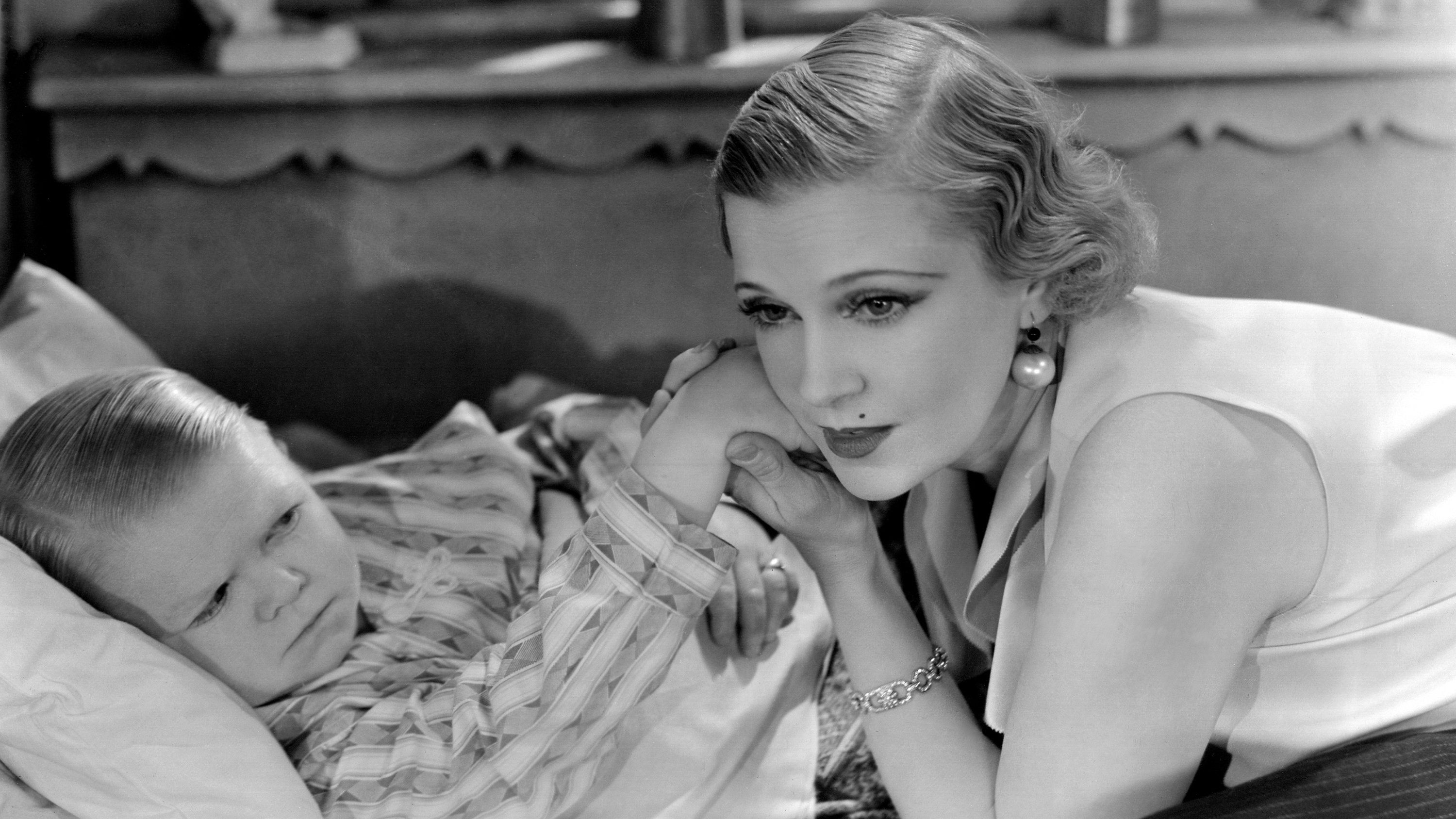
A beautiful trapeze artist named Cleopatra (played by Olga Baclanova) begins seducing a gullible sideshow dwarf named Hans (played by Harry Earles) in the hopes of getting a piece of his immense inheritance. Despite lacking a physical deformity, Cleopatra is accepted by the close-knit sideshow performers, but it’s short-lived when her murderous gold-digging plot is exposed. Wise to her scheme and wounded by her deceit, the “freaks” concoct a horrifying act of revenge.
Directed by legendary silent and sound filmmaker Tod Browning (London After Midnight, Dracula, Mark of the Vampire), Freaks was the director’s first feature film after the smashing success of 1931’s Dracula, the first “talkie” horror film that ushered in the Golden Age of horror. Though not a Universal Studios effort, this MGM classic, which was loosely based on Tod Robbins’ 1926 tale Spurs, was a monumental failure at the box office, ultimately destroying Browning’s career as a Hollywood director. Today, many film critics and scholars agree that Freaks is Browning’s ultimate masterpiece.

Released in the hopes that MGM would have a hit similar to Universal’s Dracula, which solidified Bela Lugosi as a household name, the test screenings for Freaks would prove disastrous. The audience reacted with unbridled outrage and disgust, with many walking – or, in some cases, running – out of the screening. The reports of those who remained inside the theater either became ill or fainted, culminating with one woman threatening to sue the studio because she believed she suffered a miscarriage as a result of viewing Freaks.
The studio reacted by cutting nearly 30 minutes out of the film, footage of which is now considered lost (Freaks is rumored to have had a much darker climax than the one we were left with).
A little over a month later, Freaks debuted at the Fox Criterion theater in Los Angeles, expanding to New York City five months later. Scandal continued to follow Browning’s pre-Code shocker, with critics divided down the middle and many labeling it as “exploitative.” As the film rolled out across the United States, many theaters ceased any showings, while the film was outright banned in the United Kingdom for roughly 30 years.
Finally, in 1963, the U.K. released it, accompanied by an X-rating.
According to Tim Dirks of Filmsite, in the wake of WWII, Freaks largely played to an “adults only” crowd, with the rights acquired by exploitation filmmaker and distributor Dwain Esper (the man responsible for 1936’s Marihuana), paving the way for cult immortality. Touring the film around in a roadshow for Excelsior Pictures Corporation, Esper played it under a handful of titles such as Forbidden Love, The Monster Show, and Nature’s Mistakes. (Filmsite)
As FREAKS entered the 1970s and ‘80s, it became a fixture of the midnight movie circuit, while critics began to change their tune on what Browning had achieved.
And while Browning’s career was snuffed out as a result of the film’s failure, modern critics have rallied around Freaks, praising it as a masterpiece. As Jeffrey M. Anderson of Combustible Celluloid writes:
“Freaks has been written about more than it has actually been watched, but it lives up to the hype. It’s a truly amazing film, not so much horrific as it is funny, touching, and extraordinary; you’d be hard-pressed to find another film like it.”
Over the years, Freaks has been available on various bare-bones physical media, like a skimpy DVD release that was quietly nestled in various horror movie sections at your local retailer.
In October of 2023, Freaks, along with two other Browning sideshow pictures (1927’s The Unknown & 1925’s The Mystic), debuted on Blu-ray in a pristine transfer by the Criterion Collection, an absolute must for any fanatic of silent cinema and pre-Code Hollywood.

“We accept her, we accept her, one of us, one of us…”
It’s a famous line of dialogue that has continued to ricochet off the hallowed walls of horror and cult cinema. Even if you’ve never seen Freaks, you’ve had some smidge of exposure to this squawking ritual of acceptance, one that is eerie, comical, and warm in equal measure.
As time leisurely ticked by, Freaks has been recognized for its unabashed humanity and compassion.
At the tender age of sixteen, Browning joined up with the circus in a variety of roles, an experience that inevitably bled into several of his cinematic ventures. Naturally, there are heaping amounts of regard surrounding the various characters that comprise the fabric of the circus community, revealing a deeply rooted joy for the outsiders, both big and small.
By today’s standards, 1932’s Freaks isn’t particularly a shocking film. It certainly does not reach the heights of commonly cited stuff like Cannibal Holocaust or A Serbian Film.
There’s no consumption of human flesh, and there’s certainly no… uh… atrocities like we glimpse in A Serbian Film (a Google search will answer everything you need to know on that front), but the film still does possess a power not typically seen from the Golden Age of horror.
Given the time FREAKS was released, the public was greatly dismayed by physical disabilities and deformities, something that the modern public is much more sympathetic to, at least on the surface.
No, Freaks emerged at a time when a man in a cape who spoke in a heavy European accent was the stuff of nightmares across America. Of course, on some level, Lugosi’s portrayal of Dracula IS still bad dream fodder, as very few actors have been able to coax the same otherworldly spirit that seemed to inhabit his soul. But Freaks was a different ball game entirely.
In the 1930s, individuals with disabilities faced rampant discrimination (there were even reports of segregation on the set of Freaks), so it’s no wonder that the film caused a stir among the impressionable.
Thus, with the understanding of Freaks’ background, we must ask the question: has anything really changed?
In today’s landscape, the taboo of disabilities is met with far more understanding than they were in 1932, but uneasy and discomfort still lingers. On the spot, most folks would offer a congenial “one of us, one of us” when confronted with someone less fortunate. There is a show of decorum when we glimpse this in public.
Sadly, behind closed doors, this illusion of progress is a slight fantasy, as there is no doubt a stigma that emerges, and even a heartbreaking sense of superiority that rears its ugly head through thoughts of “better them than me.”
But what happened to “one of us”? Aren’t we all flesh and blood, deserving of being treated equally?
Today, a general sense of uneasiness extends beyond the disabled community and is infiltrating communities; the supposed “God fearing” men and women of this great nation are convinced that they have no place in their euphoric box of normalcy.
Here we are, actively regressing in ways I would never have thought possible. Xenophobia is running rampant as ICE patrols a metropolis near you, “rounding up” petrified immigrants and dumping fuel on a raging inferno of racism that shows no signs of cooling. Trump’s mentality? Send ‘em back to their own “shithole” countries as a sea of red hats mindlessly grumble at their TVs illuminated with Fox News and Newsmaxx.
Furthermore, the president has vowed to admonish “woke” sensibilities, which were born to spread a deeper understanding about those around us and how we can be less hurtful as a community.
LGBTQ+ communities face a stream of homophobic vitriol, all because they just ask to be represented in media and culture, even if the dinosaurs of middle America gag into their Donald Trump-branded bibles, a book I’m sure their orange savior has never cracked (watch any interview where he is asked about his favorite passages from the Bible – it’s hysterical).
With offensive anger and misinformation continuing over anything that violates conservative America’s hallowed sense of white picket fence refuge, are we really any better than the audiences who recoiled in horror at the performers of Freaks? No.
The ones we should be aghast about are Cleopatra and her enablers. Cleopatra has eyes for Hans’ fortune, as she’s willing to kill to get it. Her greed extends far beyond Hans’ fate, as other victims are indirectly hurt or cast aside.
The warmth of the “freak” community shatters, vengeance erupts, and violence is the order of the day. But how many times can your kindness be violated before it becomes one time too many?
It is why protests often descend into fiery chaos, and why emotions can sully what could be a peaceful outlet for voices to be heard. It is why business fronts are reduced to razor-sharp shards, cars burn in the streets, and tear gas billows on the concrete. Those beyond the picket fences are sick of being trampled on to the point of having indentations on their skin.
Businesses proclaim they are recognizing Pride month, but does it come from a sincere place? Or how about Black History Month? It’s really no different than Cleopatra’s quest for the almighty dollar. We can’t be surprised when we pull the pin on a grenade, and then it blows up in our faces as we ignore the stupidity of our actions.
Because so many of us are close-minded, the moronic reaction from the right-wing media and its fanatical parishioners is, “Why do they get a full month, and we don’t get anything?” It’s like a chorus of spoiled children who have never heard the word “NO”. The reply should be one of jubilation for our fellow man. We should celebrate each other.
Oh, sure, I know this is a saccharine sweet fantasy fueled by Kumbaya peace and liberal love, so I’ll forgive you as you roll your eyes in sickly disgust over my plea for compassion. Call me Steve Browning! But maybe we ought to take a lesson from Freaks, to embrace a “one of us” approach to our precious time on this earth, even in the face of those we strongly disagree with.
Perhaps the most shocking thing of all about Freaks – that 93 years on, we are still terrified of what we ignorantly refuse to understand.

She’s a lover, he’s a fighter. Together, they’re CHEER AND LOATHING. Tune in to hear your hosts, Stephanie (Cheer) and Casey (Loathing), clash over the films they love — and the ones they love to hate.
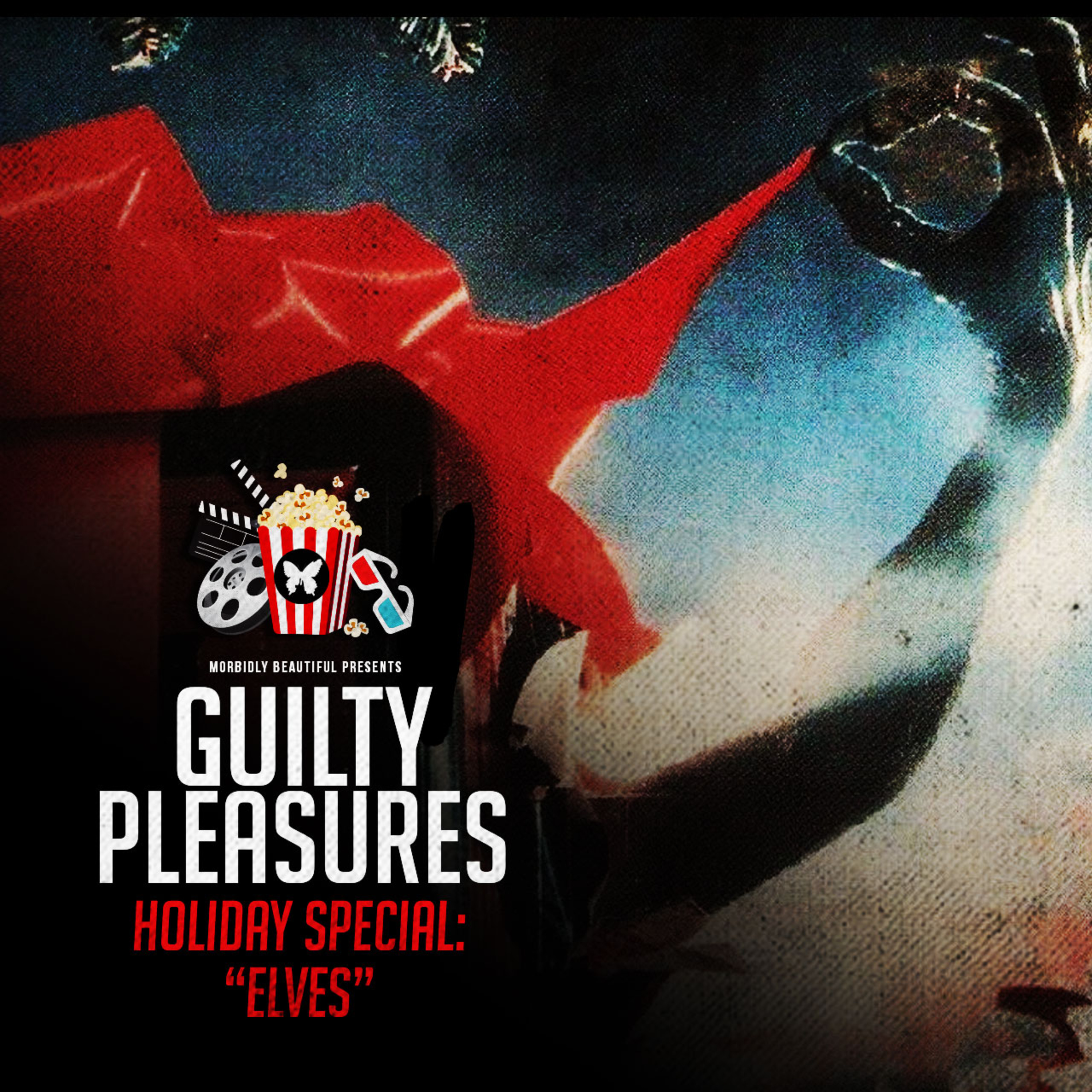
In this holiday extravaganza episode of Guilty Pleasures, join hosts Stephanie, Kelly, and our newest addition, Jonathan (Jack was tied up in tinsel and couldn't join us), as they unwrap the bizarre and unhinged world of holiday cinema. They dive into the depths of Elves, a film that's as chaotic as it is entertaining. It's a sleigh full of questionable decisions, diabolical dialogue, absurd plot twists, wildly offensive antics, and unhinged holiday mischief.
And that's not all! In the second half of the podcast, join your festive cinephile friends for a look at four more ”nutty as a fruitcake” holiday treats: A New York Christmas Wedding, Elf Bowling, A Medea Christmas, and Jack Frost. Plus, we each offer a bonus Christmas flick guaranteed to make you say, ”Ho, Ho, HO-LY Hell!”
Expect laughter, disbelief, and a spirited debate about what truly makes a movie a guilty pleasure. Don't miss this festive journey through the weirdest corners of holiday films!








Follow Us!