

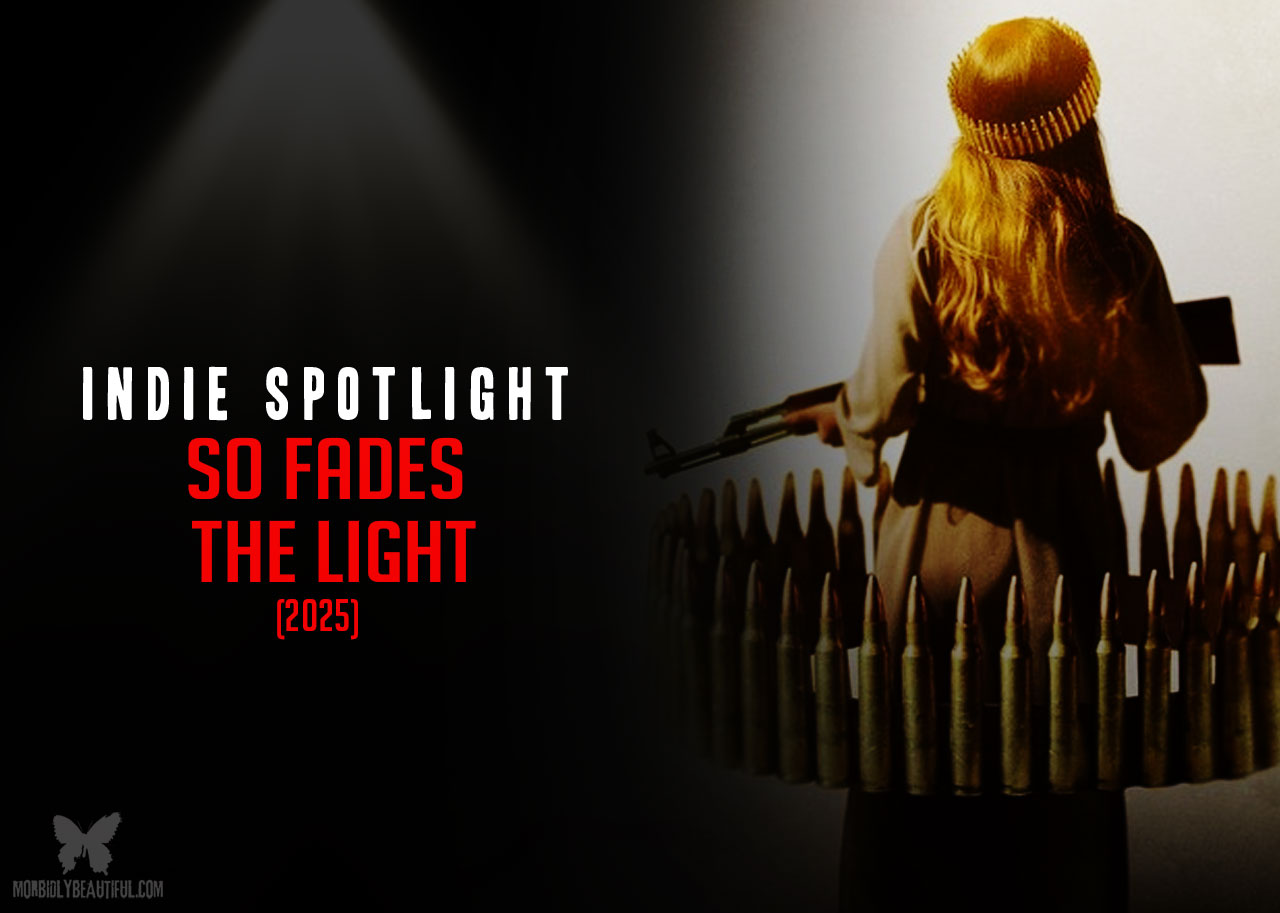
“So Fades the Light” blends cult horror and queer identity in a haunting road-trip film about trauma, survival, and the search for closure.
No time to read? Click the button below to listen to this post.

So Fades the Light (2025) opens with an eerie recording of a reverend’s homily on a VHS tape. He warns his followers in The Ministry of Iron and Fire cult that a “holy war” is upon them and that one of the sins they must fight in this holy war is homosexuality. After the reverend (D. Duke Solomon) finishes recording his hateful rant, police unexpectedly descend upon the cult, echoing the real-life police raid of David Koresh’s compound in Waco, Texas, in the early nineties.
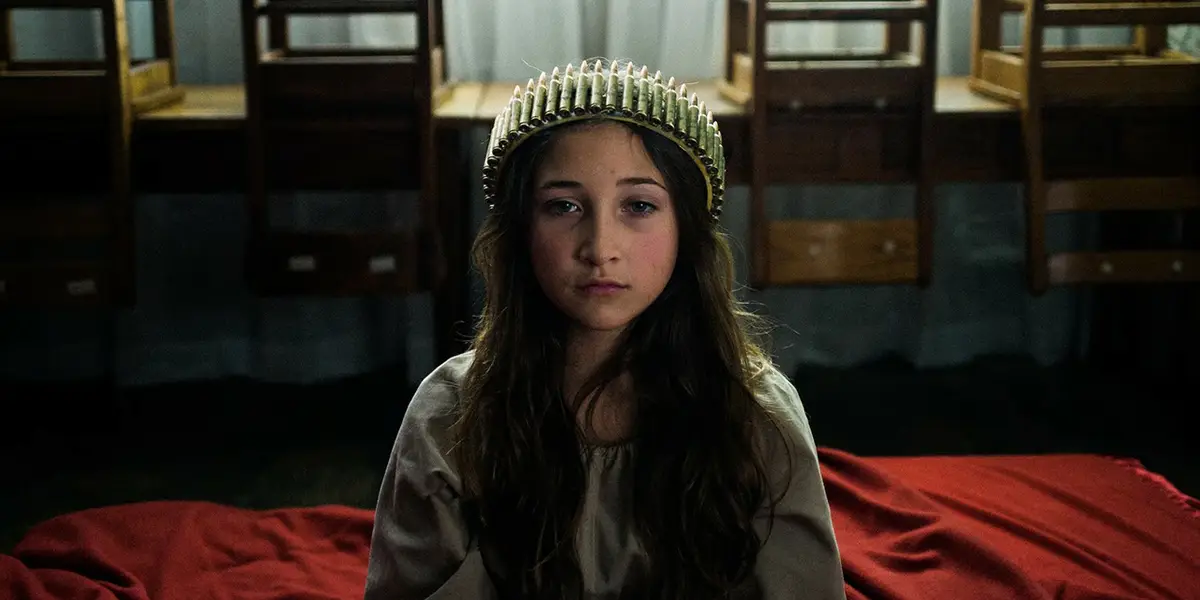
The reverend frantically locates the little girl (Emersyn Smerek) who serves as the cult’s spiritual touchpoint –they call her the God Child Sun – and places a crown of bullets upon her head, as if she is a Christ-like martyr.
The film flashes forward 15 years, and the very human and adult Sun (Kiley Lotz) wakes up in a panic after dreaming of The Ministry of Iron and Fire, revealing that she was able to leave the cult after the police raid.
After her disturbing childhood, she is now living in her van and trying to remain as encumbered as possible to ensure she’s impossible to track down. Although Sun doesn’t know it, the reverend (who deemed her the God Child and forced her to act as a religious figurehead at an early age) has been released from jail, and he’s coming after her.
Sun is plagued by nightmares of the reverend who shaped her childhood.
When she visits an old friend who was also raised in The Ministry of Iron and Fire, they enjoy watching an old tape of themselves as kids. But once the reverend appears on screen, Sun becomes agitated and eventually leaves her friend and continues her road trip.
There is a certain purity to Sun’s time on the road.
She isn’t playing games on her phone or searching the internet for the perfect meme. It’s just rambling Sun, subsisting mostly on snacks from convenience stores along her route, and the open road and music. Near the start of the film, Sun meets an enigmatic young skater named Toni, who asks Sun if she is on a trip or a journey. After Sun realizes she’s on a journey back to the cult compound for closure, Toni gifts her a mix tape for soul-searching that provides the soundtrack to So Fades the Light.
Music acts as a connector in the film, as it brings Sun closer to the people she meets on the road. She stops at a campground for a night and meets a queer couple. One of the women plays the guitar for her and tells her to release her guilt over her past.
(On the darker side, distorted church bells often clang to underscore the creepiness of the reverend’s obsession with Sun. This unnervingly discordant music shows a more twisted kind of connection.)
The camaraderie Sun finds with these women also hints that perhaps Sun herself is queer.

While it’s never explicitly stated, it is suggested that part of the reason Sun has trauma is because she was raised in a cult that saw homosexuality as a sin.
The women at the campground imply that they needed to leave their home because of homophobia and are safer on the open road. There is a quiet look of recognition on Sun’s face; she, too, is safer out on the road.
When Sun was a child, the reverend stressed obeying “God’s laws” over “man’s laws.” Like many people who use religion as a weapon, the reverend’s harmful interpretation of “God’s laws” eventually led to chaos and death.
There are moments in the film when Sun flashes back to their shared past. In one horrifying memory, she and the reverend listen to a woman who may be suffering from post-partum psychosis tearfully admit to abusing her baby.
The reverend says, “We can all be forgiven for the monstrous things this bedeviled world has made us do,” which again harkens back to the dark ideology of many religious cults.

As the God Child of the cult, it is Sun’s job to absolve the mother of her sins. It is impossible not to wonder how many stories of sin (whether real or imagined) young Sun was subjected to.
At one rest stop along her way, Sun sees shirts on sale for a museum dedicated to The Museum of Iron and Fire. She is horrified, but takes the cashier up on his offer to see the museum, which is filled with artifacts from the cult. A stunned Sun stands in front of a projector that shows pictures of her as a child – at one point, her own young face is projected onto her abdomen, allowing both child and adult Sun (who look uncannily alike, in a win for casting) to exist at once.
But Sun cannot abide by the cashier/museum owner’s true crime fetishism. He is celebrating, after all, her own childhood wounds.
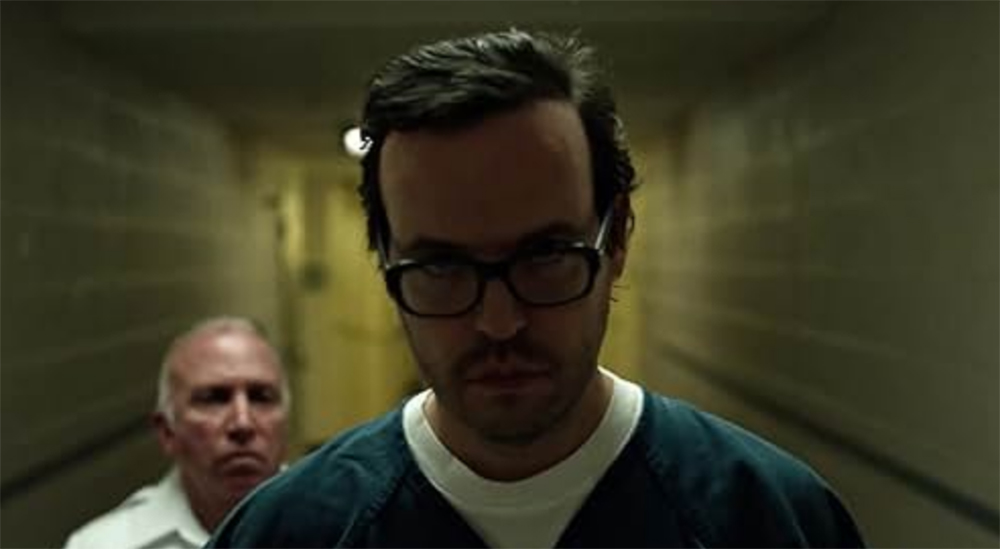
The reverend’s journey is not as momentous as Sun’s, but it provides much of the dramatic tension of the film as he retraces Sun’s steps.
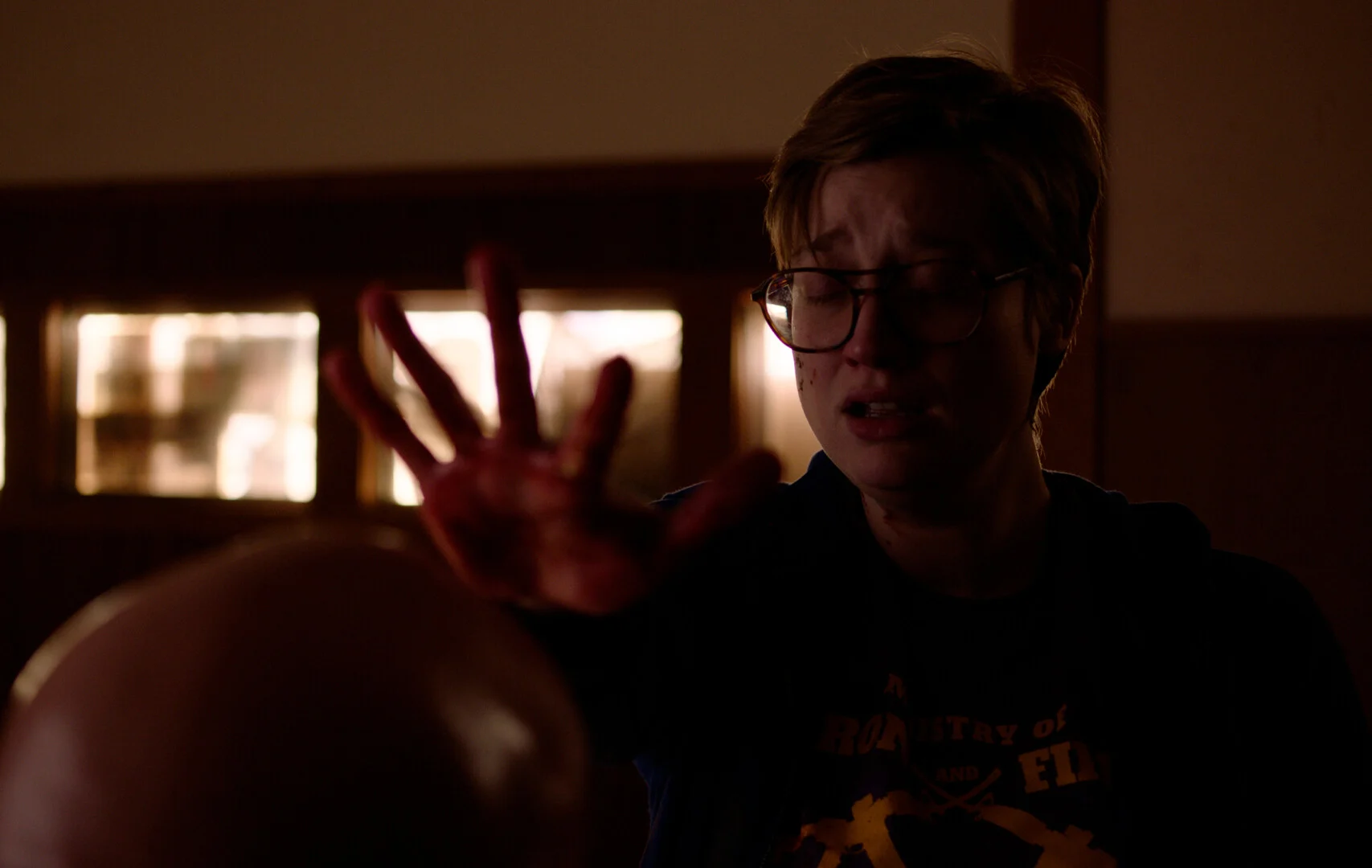
In one karmic twist, he tries to steal from a couple’s car, only to be caught and beaten up by the husband. The scene echoes him “counseling” a couple back in his cult heyday – and for him, counseling meant sending the husband away while he had sex with the wife.
In modern times, though, the couple whom the reverend tries to take advantage of stays united.
So Fades the Light, which was directed by Rob Cousineau and Chris Rosik, written by Cousineau, and features a majority LGBTQ+ cast, almost feels like a slice-of-life film.
While it would have been interesting to learn more about Sun’s life in the last 15 years, Lotz’s expressive face and subtle but effective acting show how her childhood trauma has left her uncertain and unwilling to make more permanent connections.
As the reverend, Solomon is also a standout in a completely different way.

He commits to the reverend’s dead-eyed singlemindedness as he stalks Sun throughout the film. It is easy to understand why his face and voice have haunted Sun’s dreams for over a decade. In this role, he is terrifying.
Sometimes modern horror leans too heavily on trauma to give stories higher stakes and a more emotional core, which can feel forced. But So Fades the Light succeeds with Cousineau and Rosik’s light touch.
By showing the nuances of Sun’s experience, the film paints a portrait of the life-altering extent of her trauma, while also providing the hope that she may be able to overcome her past.
Overall Rating (Out of 5 Butterflies): 4









Follow Us!