

For those who can stomach it, Ari Aster’s “Eddington” might just be the perfect horror movie (yes, horror) for our deeply imperfect times.
No time to read? Click the button below to listen to this post.

Depending on who you ask, Ari Aster’s Eddington is either a whipsmart satirical masterpiece or a chaotic, esoteric misfire. But one thing is certain: it’s not safe, subtle, or sanitized. Furthermore, while many genre fans bemoan Aster’s move away from traditional horror, Eddington may be his most unsettling work to date, as it delves deeply into the festering wounds of modern American life.
Set during the COVID-19 pandemic and rooted in the cultural and political upheaval of the past decade, Eddington is a grimly surreal neo-Western, laced with biting satire, grotesque violence, and psychological torment. It’s also a lightning rod for debate.
Critics and audiences are wildly split on this one.
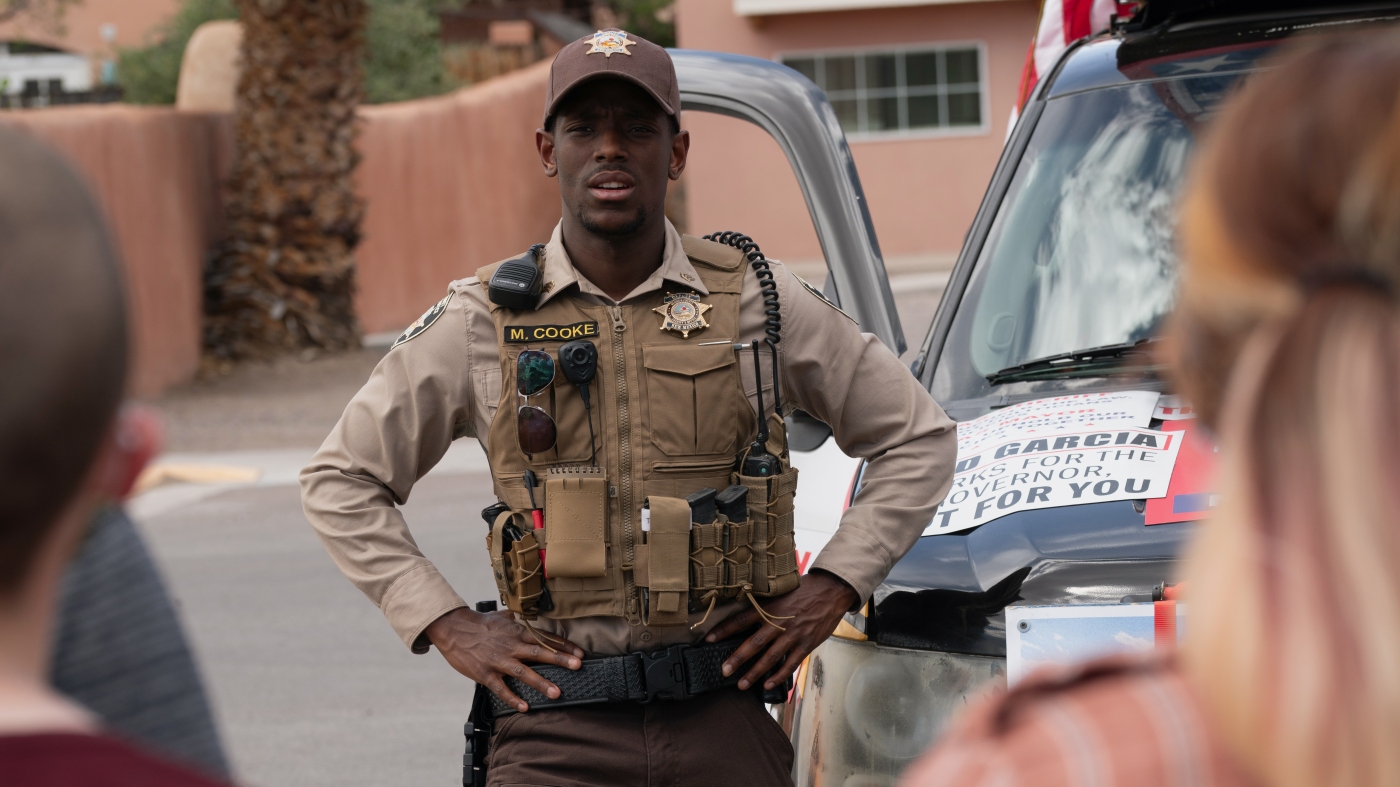
Some hail it as a fearless, genre-bending triumph—a harrowing time capsule of our pandemic-era trauma. That searing social commentary is accompanied by stunning visuals, powerhouse performances, and equal-opportunity political skewering.
Others write it off as overstuffed, condescending, and incoherent, calling it a smug attempt at satire that lacks a moral compass and emotional grounding. It’s been accused of taking a “very fine vile people on both sides” stance in a time when many believe moral clarity is a necessity, not a luxury.
But the discomfort it stirs is exactly the point.
Eddington is here to confront the disturbing absurdity of the world we inhabit.
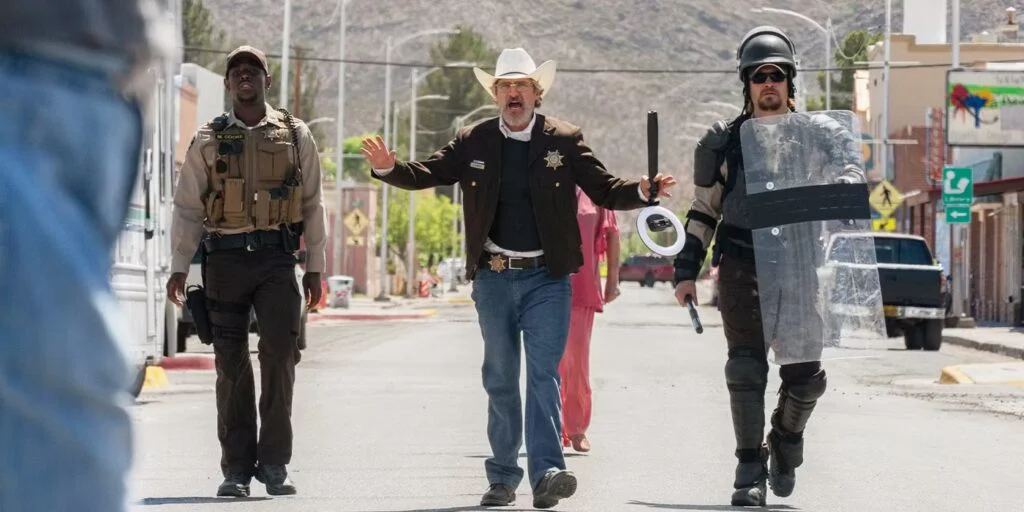
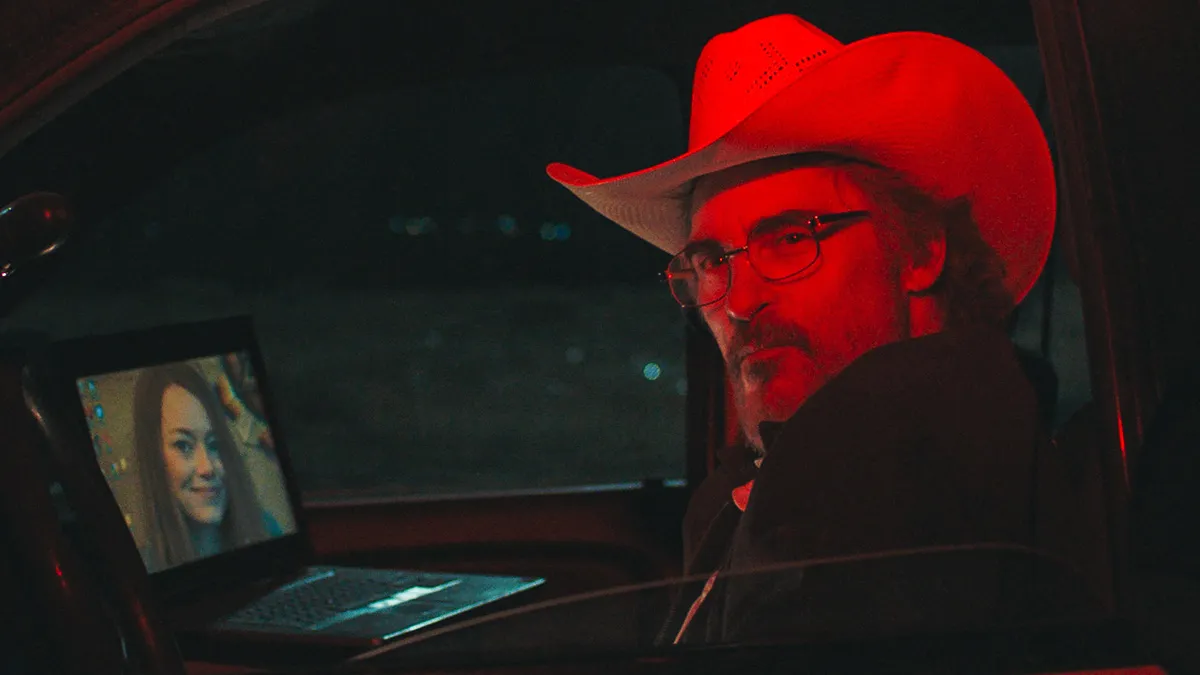
At the heart of the film is Sheriff Joe Cross, played with feral brilliance by Joaquin Phoenix. A conservative anti-masker spiraling into paranoia and violence, Joe isn’t just a protagonist; he’s a provocation. Depending on your politics, he’s either the butt of the joke or its avatar.
But in true Aster fashion, Joe’s descent isn’t played for easy answers. His unraveling mental state and escalating cruelty reflect something more terrifying: a nation breaking down, one unhinged man at a time.
The film’s shifting tone, political ambiguity, and refusal to offer catharsis make Joe’s arc all the more horrifying.
His spiral into delusion and violence recalls the best psychological horror. Think The Shining, but with QAnon and AR-15s. His collapse mirrors the collective mental fray we experienced during lockdowns, riots, and infodemic. It’s the kind of trauma we never really recovered from… because we continue to be bombarded with reminders of these “unprecedented” times we live in, where the unimaginable now seems far more precedent than unprecedented.
The film presents America itself as the monster: paranoid, tribal, self-cannibalizing.
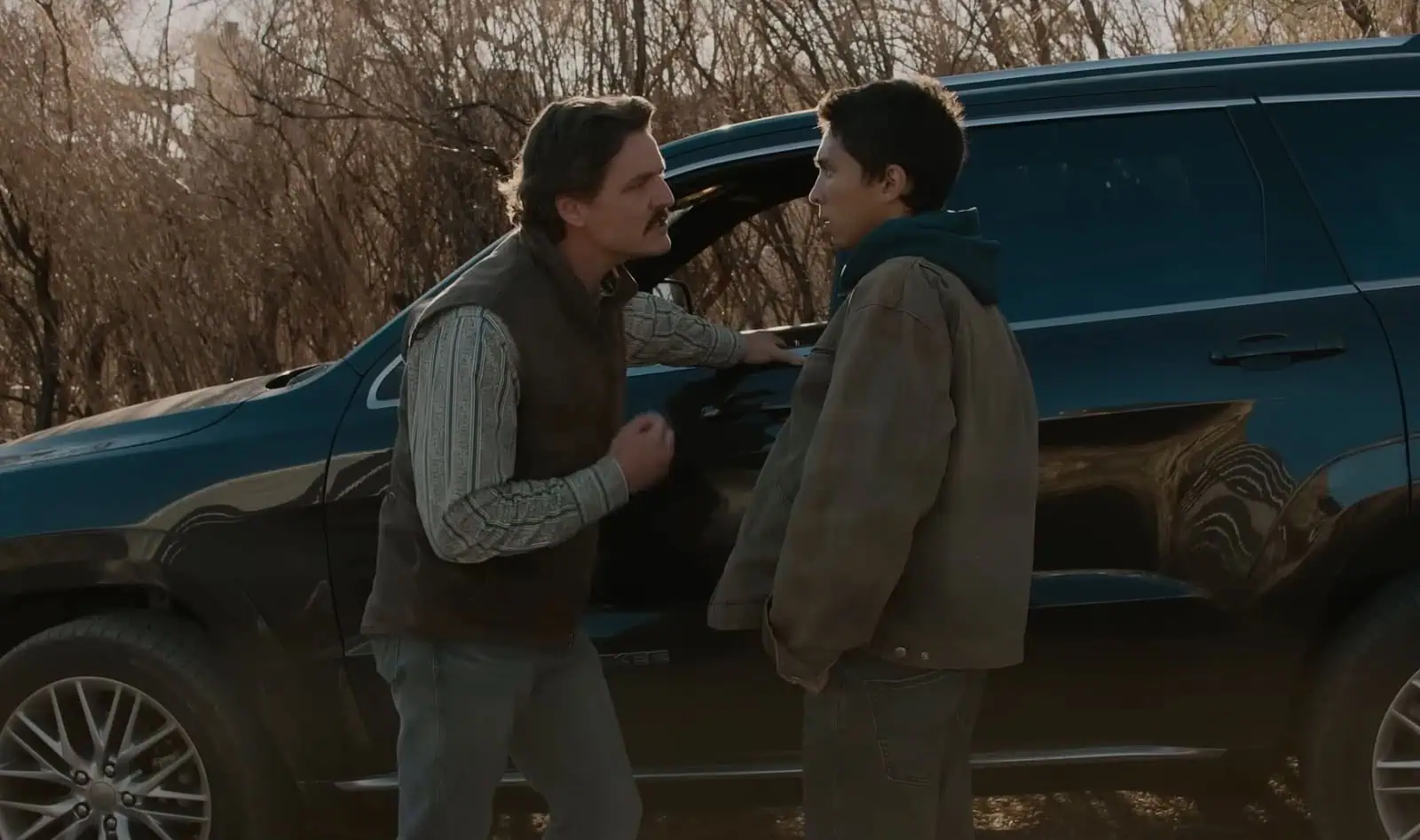
The chaos of pandemic-era discourse, social media vitriol, and community disintegration plays out like a slow-motion apocalypse.
With scenes of mutilation, disturbing violence, and implications of child abuse, Eddington doesn’t hold back. These are calculated assaults on the viewer’s comfort, as any good horror film should be. And beneath the clever and unnerving satire lies an exploration of bodily autonomy, colonialist control, and the trauma of power abuse. While these themes are horror staples, they are repackaged here in the trappings of police uniforms, protest signs, and viral videos.
If HEREDITARY was about the horror of inheritance and MIDSOMMAR about the horror of grief and cult dynamics, EDDINGTON is about the horror of us. Of America. Of what we’ve become.
Aster’s gift for cultivating dread is alive and well here, even without demon possession or chilling cults. The film’s tone is oppressive, chaotic, and deeply unsettling.
Avoid it if you prefer linear narratives and emotional resolution, apolitical storytelling, or clear moral binaries. But don’t miss it if you enjoy films that challenge rather than comfort, social commentary layered with violence and dark humor, and genre-defying experiments that evoke primal dread.
It may not look like horror on paper, but its bleak worldview, disturbing subject matter, and bone-deep anxiety make it one of the most horrifying cinematic experiences of the past decade.
Overall Rating (Out of 5 Butterflies): 4








2 Comments
2 Records
Julian Coronado wrote:
Stephanie Malone wrote:
Thank you so much for reading and for your very kind words. They mean the world!