

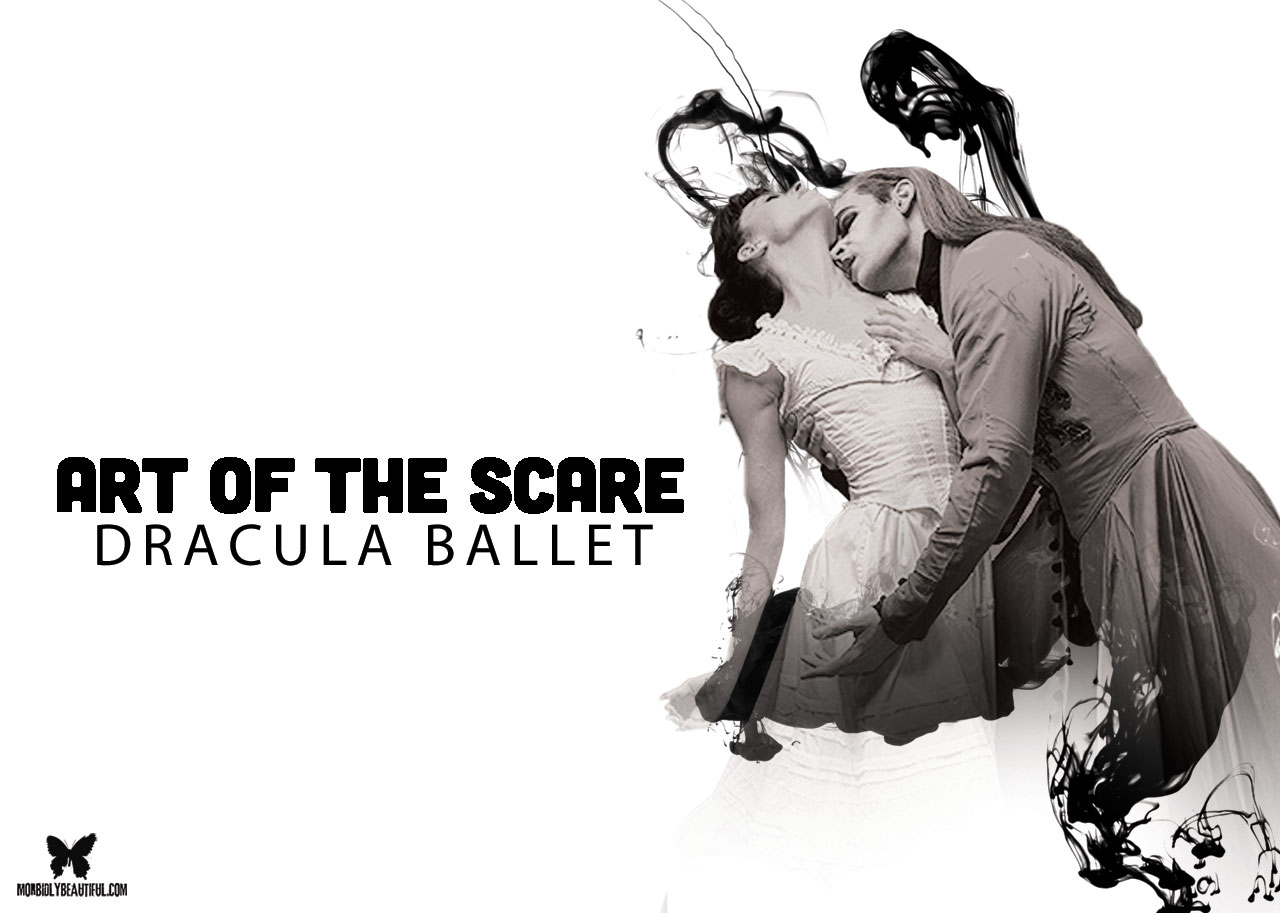
The Colorado Ballet’s haunting revival of Dracula is a spellbinding blend of gothic romance, sensual choreography, and live orchestral dread.
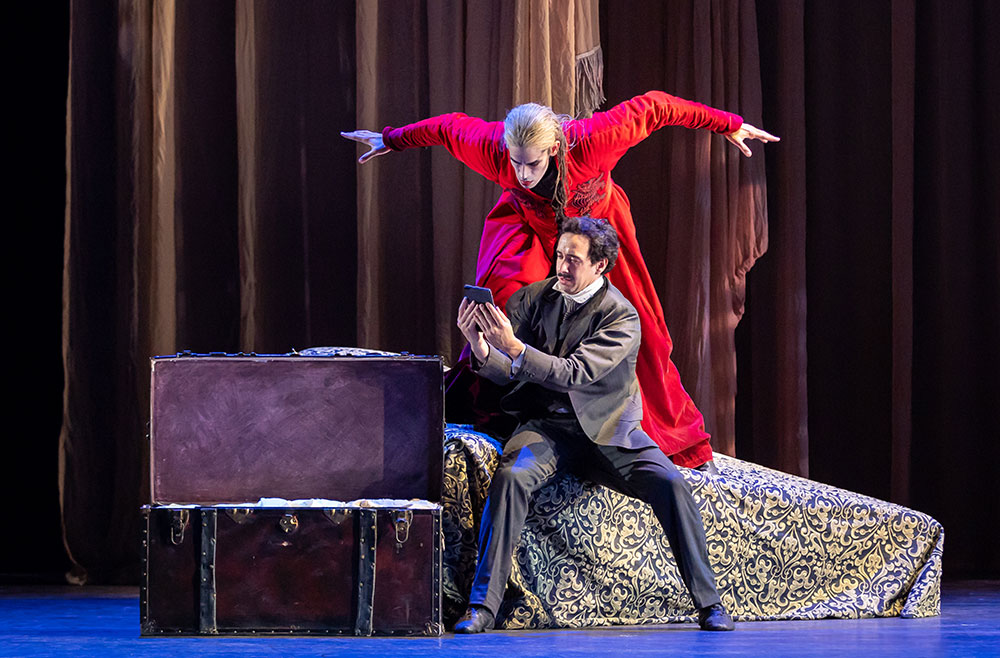
Mario Labrador and Jonnathan Ramirez (Photo by Mike Watson)
No time to read? Click the button below to listen to this post.

The iconic Dracula ballet performance returns to the Ellie Caulkins Theatre in Denver this spooky season.
As expected, the show was extraordinary and dripped with immersive details that guided the audience into a mesmeric universe. This season, expect a gripping, dynamic, pulsing, exquisitely sensual, and emotionally charged performance.
“Frighteningly fascinating” is how the Colorado Ballet describes its celebrated revival of Dracula, a gothic spectacle first staged in 1996 by choreographer Michael Pink. Now in its 65th season, the company returns with 19th-century Victorian-style sets and costumes, a Corps de Ballet of the “undead,” and Philip Feeney’s live score, combined to make the production feel as timeless as Bram Stoker’s novel itself.
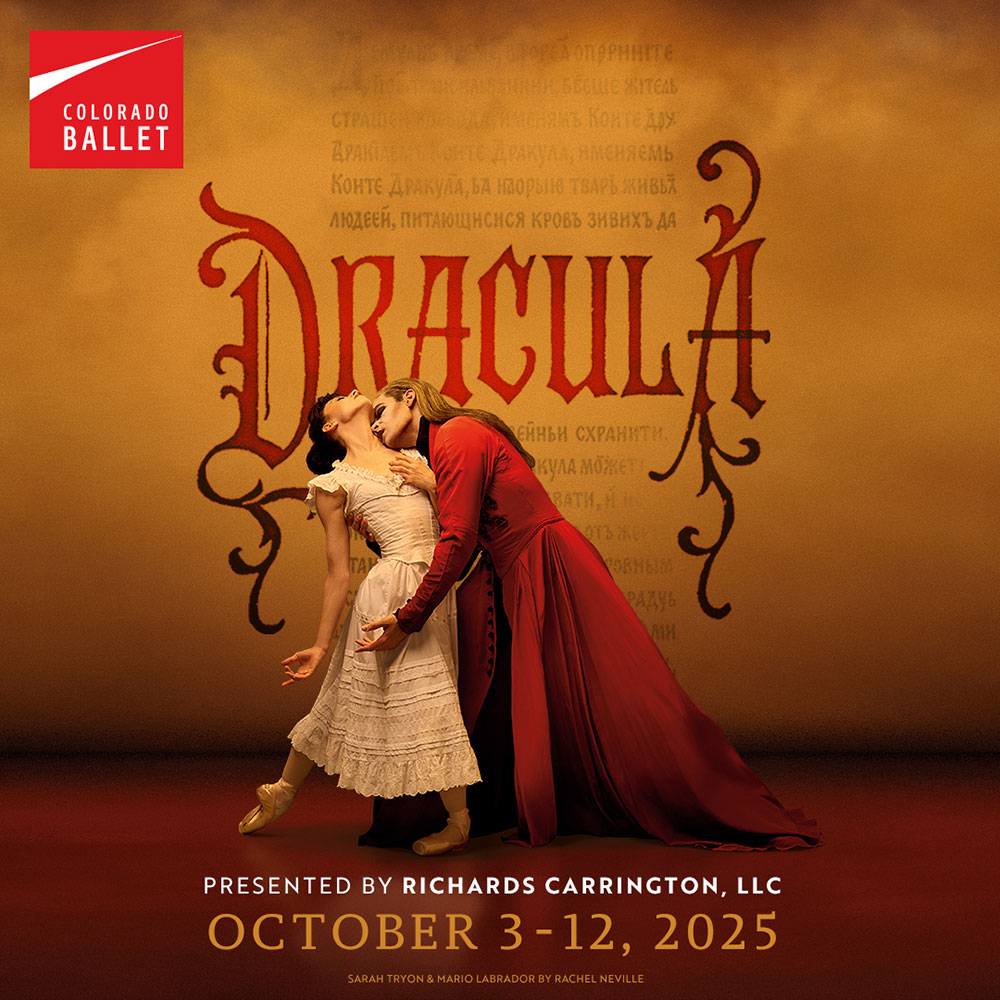
While the performance radiates with its immersive visuals and precise choreography, it is the careful balance of atmosphere, movement, and music that truly sustains its dramatic tension, confirming why this remains a fan-favorite in Denver’s ballet collection.
The atmospheric tension is promptly presented during the opening sequence of Act I when we are introduced to a fever dream of Mr. Harker’s experience with Count Dracula.
Using clever techniques that play on the senses to make the viewer feel as if their vision is dream-like, you are thrust into the realm of Dracula with a screen nodding to vintage movie-theatre cinema.
The storytelling developed for this show is outstanding.
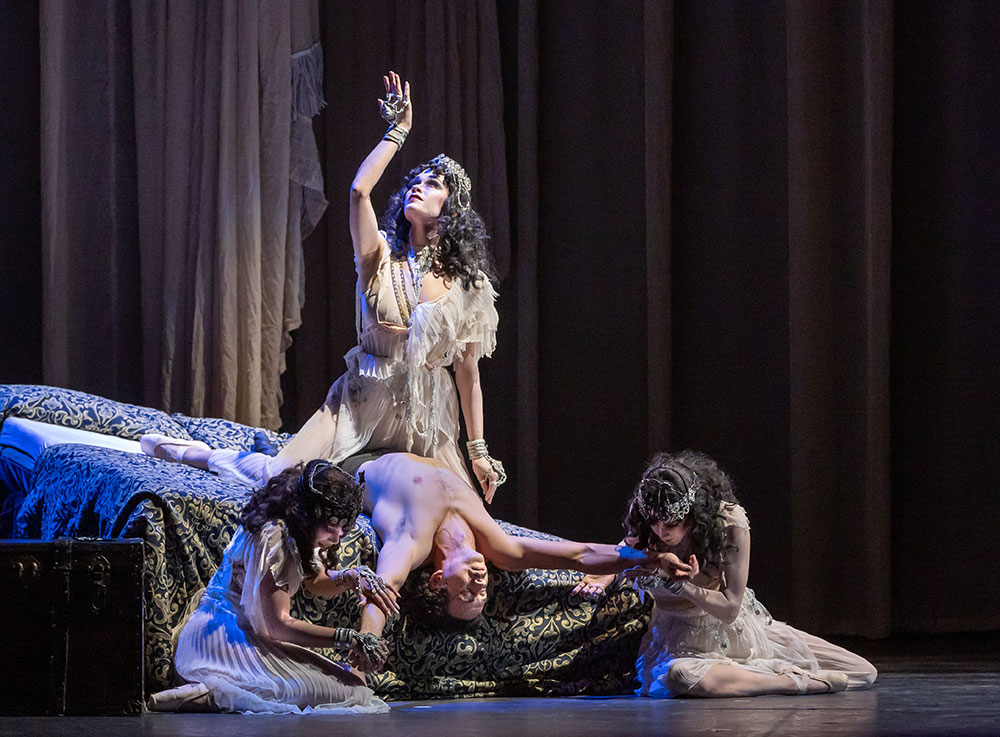
Artists of Colorado Ballet (Photo by Mike Watson)
This revival of the classic Dracula tale is delivered with precision and dedication that stays true to the beloved narrative—making this experience ideal for longtime enthusiasts as well as those new to the account.
The Colorado Ballet makes it easy and fun to follow along with a readable script provided for quick reference, a common detail praised by patrons in attendance.
The synchronized movement, in combination with the costumes, is deliberate and compelling. From every lift to every unison stomp, the Corps de Ballet delivers a spectacle worthy of constant applause. Several moments in the “undead” corps formed jagged lines and chaotic transitions—impressive for an ensemble this large—which helped convey tension on stage.
The clever use of shadow work alongside the flowing, dramatic flutter of the costumes is masterfully crafted, guiding the audience through the performance as seamlessly as the music changes.
The live score fosters a bright and spirited environment, shifting dramatically whenever the Count appears on stage.
The efforts of Count Dracula are a standout in this production, with his presence commanding the audience’s attention even through deliberate and subtle gestures. The choreography for this character feels both intimidating and emotionally charged, emphasized by the figure’s noticeably larger physical presence compared to the rest of the company.
Every motion and facial expression is aligned with the music, creating a magnetic scene of body and sound.
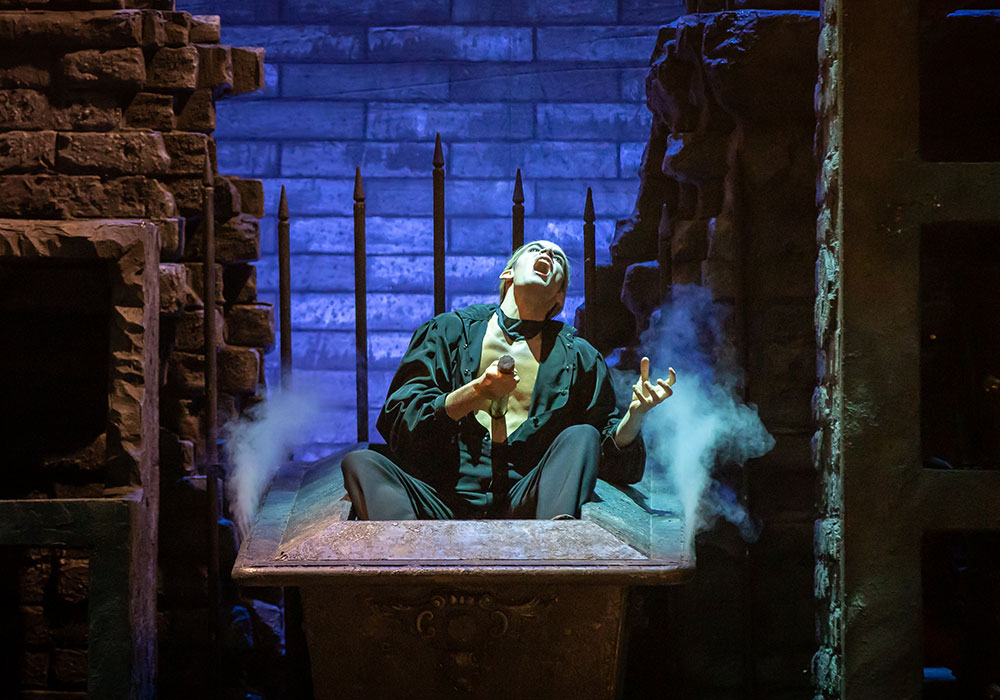
Mario Labrador (Photo by Mike Watson)
It is mesmerizing to watch the Count peel himself from the Gothic set as the fog exposes him, manifesting his eerie presence.
In Act II, during the encounter at the Sanatorium with Lucy, he slowly creeps toward her with remarkable control and discipline in his movements. The sustained interaction between Lucy and the Count generates an erotic and hypnotic duet, as it emphasizes both the predatory nature of the Count and Lucy’s complex willingness to engage with him.
While the show is visually appealing, it conveys a profound sense of suffering. The ability to transgress the pain experienced by Dracula is expressed through steady pacing and never-rushed gestures.
This, accompanied by the haunting voices of the orchestra, truly leaves the viewer feeling unnerved yet drawn to the energy on stage. With each leap and gesture, the performance was gripping with sensuality and fierceness.
It was a magnificent manifestation of the story of Count Dracula. As the music crescendoed, the pulse of the performance grasped the viewer in a delightfully frightening fashion that kept attendees on the edge of their seats and eyes glued to the stage. The sound, in combination with the dread-induced movements of characters such as Mina and Lucy, was primal, heartfelt, and at times, grim.
This is particularly true during Act III when the dead dance ensues, with the Corps de Ballet and Lucy leading the way with her maniacal facial expression, spectral grace, and blood-soaked white dress.
With each thump and scream, the flow of energy on stage intensified.
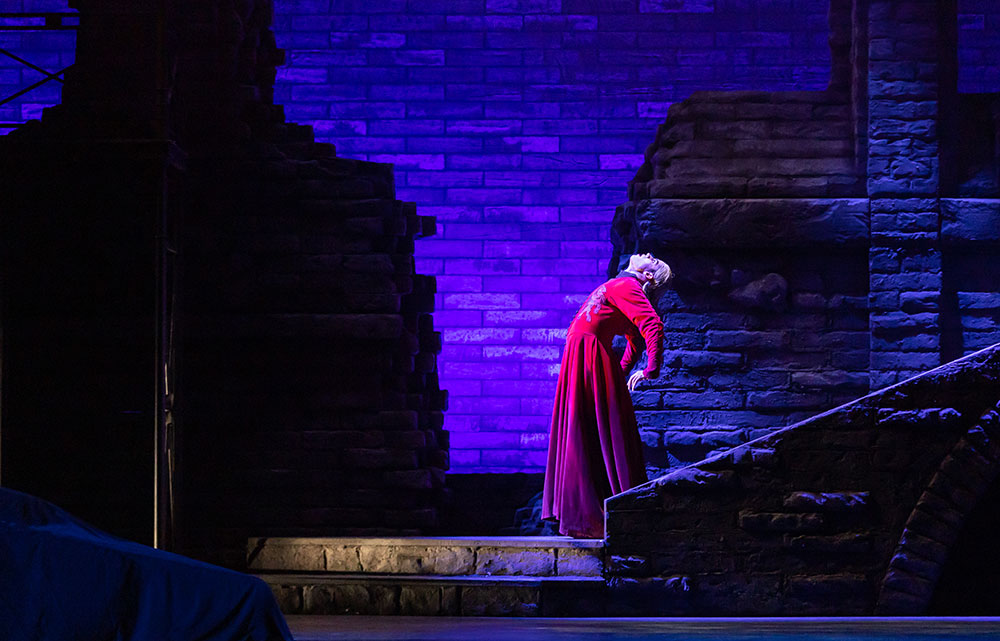
Mario Labrador (Photo by Mike Watson)
The sudden explosion effect during the climactic battle sequence was startlingly loud and bright—undeniably effective in jolting the crowd, but perhaps a little too effective. Several nearby audience members audibly gasped, as the intensity could feel disorienting for older patrons or viewers sensitive to sensory shocks, such as those with PTSD.
While the blast raised the stakes in the finale, a slightly moderated cue might preserve the drama without overwhelming the senses.
Each synchronized movement transitioned the viewer toward its brutal end. The performance concludes with a satisfying yet poignant ending to the Count’s life, as Mina reflects on the ordeal that brought the characters together with open hearts and a fierce spirit of determination.
The way that the set design complemented the environment of each character was spectacular. Subtle movement through white curtains created the impression of an immersive space, transporting the viewer there with the aid of thoughtful color use throughout the entire performance. The aesthetic is primarily conveyed through the interplay of tones and colors, which match the mood. When the Count took the stage, the atmosphere was filled with moody, dark tones and smoke.
In contrast, the party sequence with humans was introduced with industrialized sets and brightly colored garments, reflecting 19th-century everyday wear. The music and the color palettes worked in synchronicity to deliver that emotionally charged ambiance expected of a Dracula performance.
To conclude the evening’s energy, Artistic Director Gil Boggs noted, “The level of passion our patrons show each time we bring Dracula back to Denver is incredible, and our dancers love performing this ballet as much as people enjoy watching it.”
The electric response from the crowd at the Ellie Caulkins Theatre proved his point, confirming Dracula as a seasonal favorite that continues to thrill Denver audiences.
FINAL THOUGHTS
The production runs through October 12th, with a specially themed closing-night performance that encourages attendees to dress in their most elaborate vampire or Victorian-inspired outfits. And so it is that all things must end, yet some of us are granted the blessing—or the curse—of beginning again.






Follow Us!