


“Three Birthdays” is a gripping, character-driven drama about the contradictions of progressivism and privilege in a time of radical change.

No time to read? Click the button below to listen to this post.
You say you want a revolution? But do you really… and at what cost?
It’s easy to advocate for radical social change, especially in an environment where progressive ideals are encouraged and rewarded. But it’s harder to stick to those ideals when radical change lands at your doorstep.
It’s hard to admit that there might be a significant disconnect between your head and your heart.
Jane Weinstock’s investing Three Birthdays (which she co-wrote with Nevin Schreiner) takes place in 1970, a time of deep division, escalating tensions, and a yearning for change.
It was the height of the sexual revolution. There were growing tensions over the controversial Vietnam War, with an anti-war movement that permeated college campuses and cities across the nation.
This conflict, along with other social issues like civil rights and women’s liberation, created a climate of unrest and a yearning for radical change.
In this hotbed of social turbulence, we meet a liberal academic couple, Rob (Josh Radnor) and Kate (Annie Parisse).
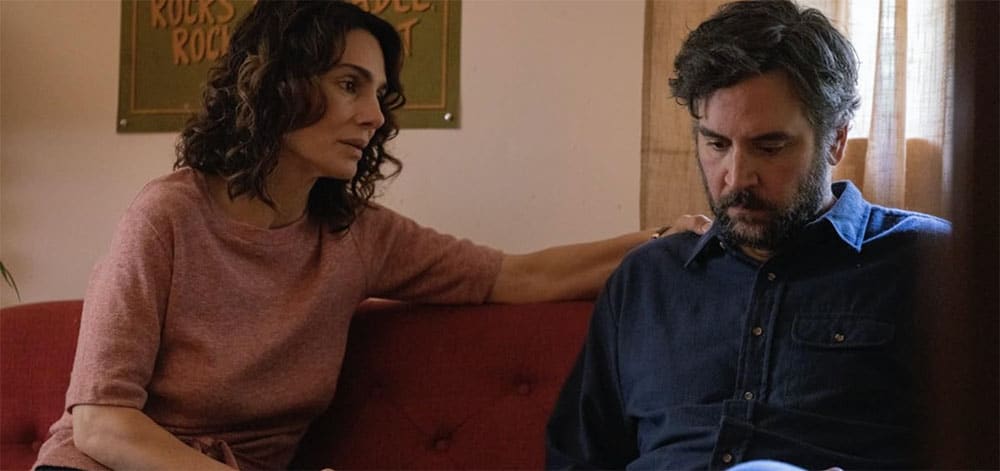
Rob is a Marxist history professor on the verge of tenure and Kate is a published feminist author.
Their daughter, Bobbie (Nuala Cleary), is turning seventeen. An aspiring writer, Bobbie idolizes her parents and is eager to usher in her adulthood.
As a symbol of her burgeoning womanhood, she decides to lose her virginity to her boyfriend at a motel. But the magical moment is ruined when she sees her mom leaving the same hotel after just having loud, passionate sex with someone other than her father.
Devastated by the discovery, her free-spirited best friend Joyce (Gus Birney) tries to remind Bobbie that it’s all part of the sexual revolution. But Bobbie insists that the sexual revolution isn’t for her mom.
When Bobbie finally gets up the courage to tell her dad about the affair, he tells her it’s ok—he already knows about and agreed to an open marriage experiment at Kate’s request.
This does nothing to assuage Bobbie, who insists she no longer loves her mom, referring to her as a “whore”—a painful and pointed reminder of how often women, even the staunchest of self-proclaimed feminists, fail to support other women and willingly uphold patriarchal ideas despite rhetoric to the contrary.
After a disastrous birthday of his own, Rob is forced to come to terms with his own frustrations and insecurities.

He just discovered he lost tenure to a former Black Panther, feels jealous over Kate’s continued career success, and realizes he’s not nearly as ok with Kate’s sexual liberation as he tried to pretend.
Rob has a chance at a new professorship at Princeton, but his wife has no desire to move and leave her comfortable position at a liberal college in Ohio.
In the midst of this increasingly strained relationship, we learn that Rob himself has been having an affair with an ex-student, Nina (Jasmine Batchelor), a black grad student who has just received a job offer from Kent State.
During an argument with Nina, his “good guy” veneer is aggressively stripped away, and we see him for what he really is: a disgruntled, disillusioned white man who secretly enjoys the privileges of being a white male in America, resentful of those privileges being eroded.

Rob is outraged that a brilliant black man is getting a job he wanted, blaming affirmative action.
He is threatened by his wife’s success and furious at her for having an affair—one she has been fully honest about—while he’s been cheating for far longer behind her back.
He keeps the truth from his daughter, allowing her to villainize her mom.
It’s heartbreaking watching Kate realize the personal costs of fighting for sea change against a deeply ingrained status quo.
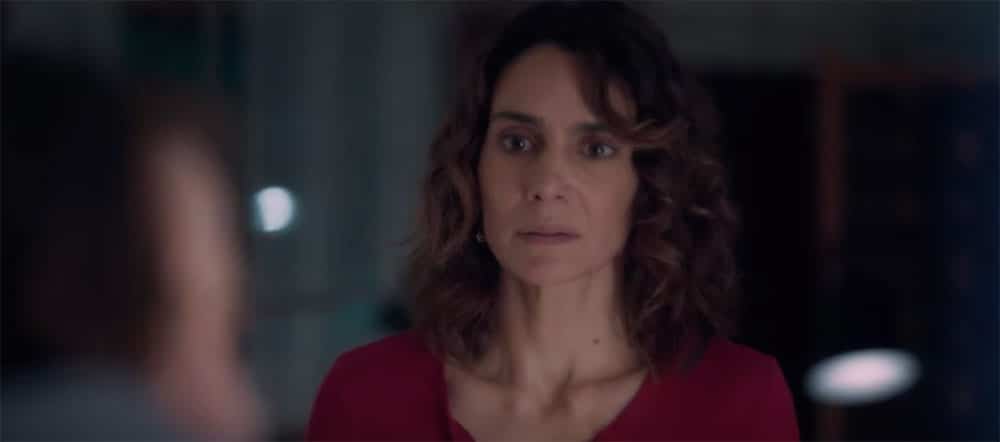
“No matter which way we play it, we just can’t win.”
The film culminates with the third birthday, Kate’s, and we find her struggling with the state of her marriage, regrets over her affair, and her irreparably broken relationship with her daughter.
Her lawyer friend tells her that, if she divorces Rob, she’ll lose custody of her daughter because of the affair, even though he cheated, too—highlighting the inherent sexism of divorce laws at the time (this was on the precipice of the move to nationwide no-fault divorce laws, led by California).
This tense family drama culminates in a real-life tragedy: the horrific Kent State shootings.
Suddenly, we are forced to confront how much some people sacrifice to fight for what’s right and the magnitude of what’s at stake in battles for social change. It’s a tragedy that puts everything in harrowing perspective, reminding us that words are easy but meaningless without action, and actions can have dire consequences.
You say you want a revolution? It won’t come easy.
Given today’s eerily similar sociopolitical landscape, Three Birthdays—with its smart script and strong performances—is a film that feels remarkably relevant, important, and thought provoking.
Overall Rating (Out of 5 Butterflies): 3.5
THREE BIRTHDAYS won the Award for Excellence in Directing a Narrative Film from the New York Women on Film and Television. It won the Best Feature Director award at the LA Femme Film Festival. It’s now available to stream on digital.










Follow Us!