

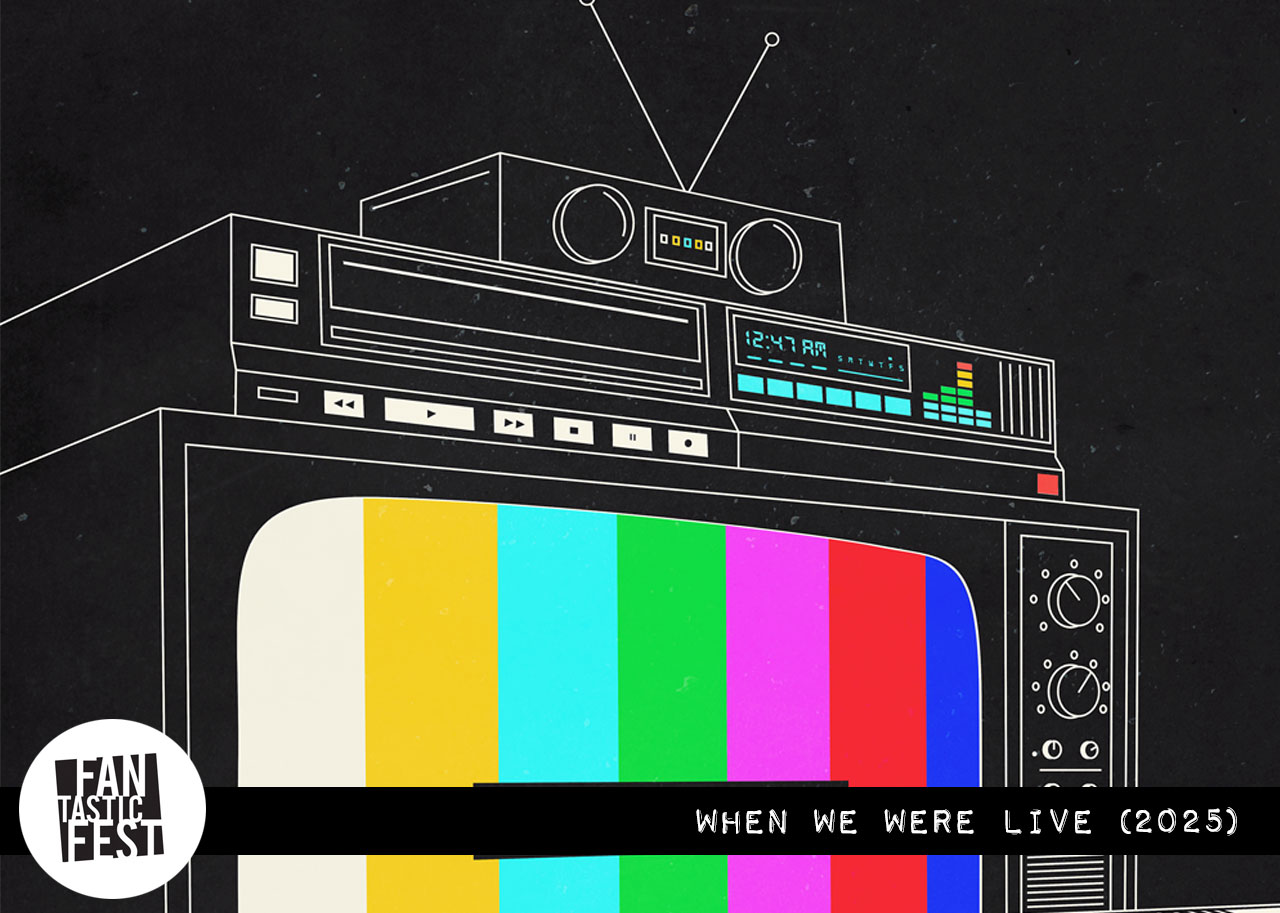
“When We Were Live” is a celebration of creativity, activism, and the fight for authentic voices in a commercialized media landscape.

“The more people see, the more people understand, the more people are going to say, ‘We need to change these things.’ Isn’t that what the dream is about?” – Gilbert Rivera (Austin activist)
No time to read? Click the button below to listen to this post.

Fantastic Fest has always been about discovery—films that celebrate the fringe, the radical, and the uncompromisingly weird. So it feels deeply fitting that John Spottswood Moore’s When We Were Live should have its premiere here in Austin, Texas.
The documentary captures a piece of Austin’s soul that is both a love letter and a eulogy: the golden age of public access television, when Austin Community Television (ACTV) turned everyday people into broadcasters, artists, and activists.
As someone who came to Austin to study radio, television, and film at UT, I couldn’t help but feel this film on a personal level. I fell in love with the city’s creative scene, its hippie roots, and its radical inclusivity—and I never wanted to leave.
Watching Moore’s documentary felt like both a celebration and a heartbreak, a reminder of what Austin once was and a plea not to forget.
The documentary vividly charts the history of Austin’s public access boom in the 1980s and 1990s, a moment in time when television was truly democratized.

Public, Educational, and Government (PEG) channels, protected by the 1984 Cable Communications Policy Act, gave ordinary citizens a direct pipeline into the living rooms of their community.
Unlike today’s hyper-monetized YouTube or algorithm-driven social platforms, ACTV was about community, not commerce. Anyone could sign up, take a short training course, and suddenly find themselves with a TV show. There were no network executives, no advertisers, no gatekeepers.
It was raw, uncensored expression: eccentric comedy, political debates, punk shows, experimental art, and call-in advice lines. The result was messy, glorious, and profoundly human.
Public access was our town square—a place where people from all walks of life shared space, clashed, and created something together.

Moore wisely grounds the archival footage with intimate interviews with the era’s most memorable personalities:
- David Haun, better known as Carmen Banana of Carmen’s Banana Cooking, whose flamboyant culinary anarchy epitomized ACTV’s creative chaos.
- Gilbert Rivera, an activist whose words resonate as urgently today as they did in the 1980s.
- Livia Squires, who guided lonely hearts through her call-in show Ask Livia Live.
- Local producers like Dave Prewitt, Keith Kritselis, Adela Mancias, Branda Malik, and Travis Lindenbaum, who collectively built a cultural archive second only to New York City’s.
Together, they represent a period when art, protest, and radical inclusivity were inseparable.
What makes When We Were Live so effective is its balance of joy and heartbreak.

“People ask, is the show stopped? There’s no stopping. It just migrated to something else.” – David Haun, aka Carmen Banana
On one hand, the archival footage is hilarious, vibrant, and often surreal—a kaleidoscope of what true creative freedom looked like in its purest form.
But much of that freedom unfolded against a turbulent sociopolitical backdrop. Public access wasn’t just eccentric variety shows and call-in oddities; it was also a battleground for civil rights, gay activism in the age of AIDS and gay panic, and unflinching coverage of police brutality.
A haunting sequence revisits a 1983 Waterloo Park protest, when peaceful demonstrators clashed with the KKK and police who seemed disturbingly aligned with the hate group. Cameras captured police brutality against a minority protestor. Officers were later acquitted despite overwhelming evidence.
One woman’s words cut like glass: “We can’t forget, because when we forget, it can happen again.” Watching this in 2025, it’s impossible not to draw parallels with our current political and cultural climate.
The film doesn’t hammer these themes with a heavy political hand, but by showing what people chose to put on air, it reveals just how radical unfiltered expression could be in a time when mainstream media often looked the other way.
Watching it today, in an era of shrinking public access funds and escalating censorship, the joy of those chaotic broadcasts carries a sobering weight. It’s impossible not to think about what we’ve lost—and how much we need it back.
In many ways, its urgency lands like a gut punch.
Moore’s film also functions as a time capsule of a city in transition.

Austin in the ’80s was cheap, weird, and overflowing with creativity. It was a mecca of live music, outsider art, and grassroots political movements.
Today, Austin is a city of glass towers, tech campuses, and skyrocketing rents. But the tension between corporate gloss and stubborn DIY grit still defines it. In a sense, ACTV’s legacy lives on in that struggle. It’s proof that Austin’s radical spirit refuses to die, even if the mediums change.
Ultimately, the film asks us to imagine what it would mean to return to that radical openness. To a time when content was made because it needed to be said, not because it could go viral. When creators weren’t chasing monetization or brand deals but were instead chasing truth, joy, or simply the thrill of weirdness.
In an age of government interference in mainstream news and algorithmic suppression on social media, WHEN WE WERE LIVE feels less like nostalgia and more like a manifesto. We desperately need voices that are authentic, unfiltered, and free.
In this way, it’s not just an entertaining history lesson; it’s a call to arms.
It reminds us that media can be pure, that communities thrive on diverse voices, and that art means more when it isn’t shackled to capital. Watching it at Fantastic Fest felt like a homecoming, a reminder of why I choose to call Austin home —and why the spirit of this city and of art itself still matters in a world that feels increasingly commercialized and divided.
If public access of the 80s and 90s reflected, as one commentator notes, “the last breath of hippie Austin,” then this documentary is its afterlife: a spirited, unruly ghost urging us not to forget.
Overall Rating (Out of 5 Butterflies): 4.5


Follow Us!