

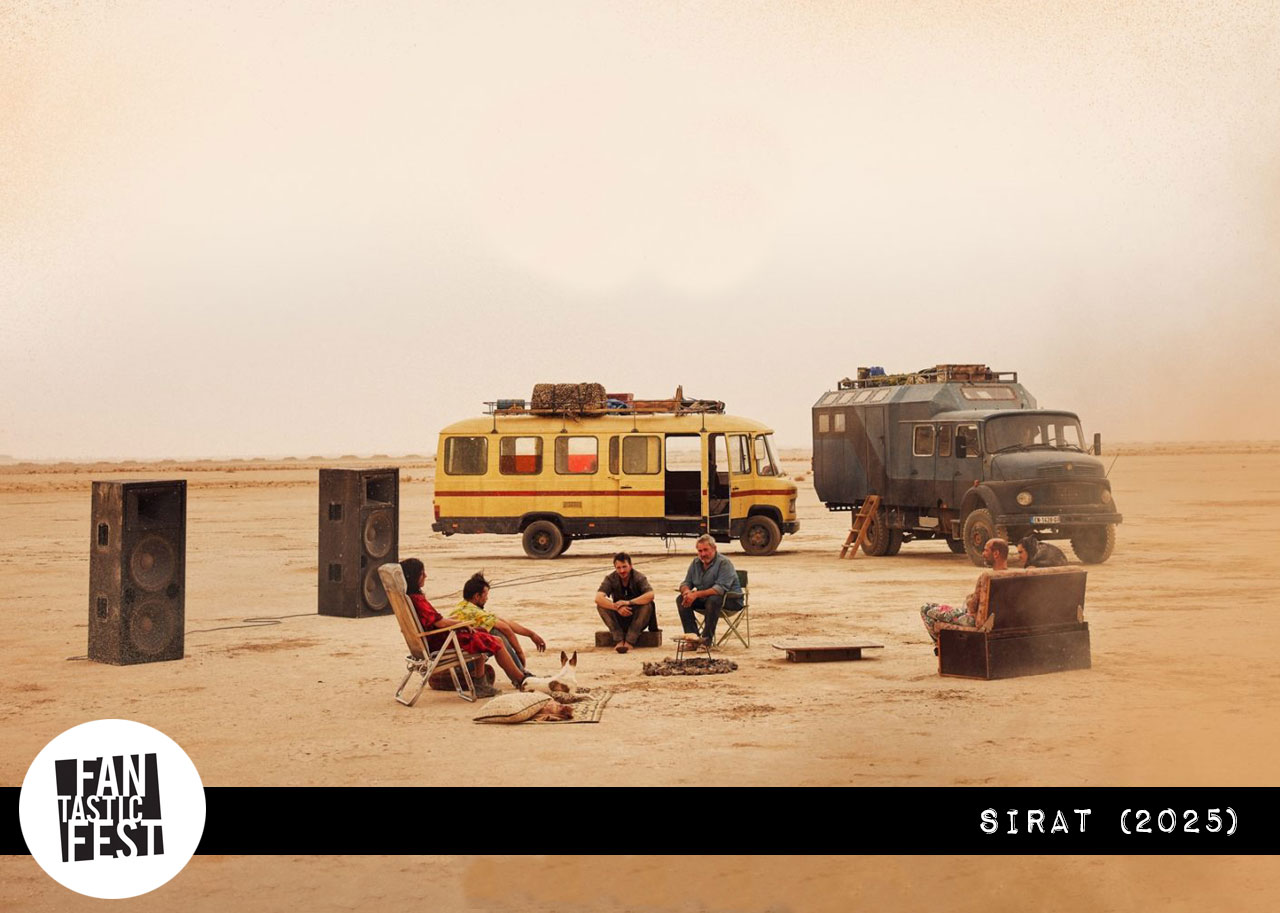
“Sirāt” is a devastating yet transcendent film steeped in allegory and existential horror—an unforgettable cinematic experience.
No time to read? Click the button below to listen to this post.

I’m always chasing what I call the Hereditary high—that rare, electric feeling when a film subverts your expectations, punches you in the gut, and leaves your jaw on the floor. It’s the essence of movie magic, the kind of cinematic experience that guarantees a lasting impression in ways both unique and unforgettable. It doesn’t happen often. Few films catch me so completely off guard and leave me breathless.
Sirāt gave me that high.
Oliver Laxe’s extraordinary, unflinching vision is an earth-shattering experience—one best approached with as little foreknowledge as possible. If I could convince you to watch it without reading another word, I would. But for those who need more, I’ll tread lightly as I unpack why this particular road trip into the unforgiving Moroccan desert is one you won’t soon forget.
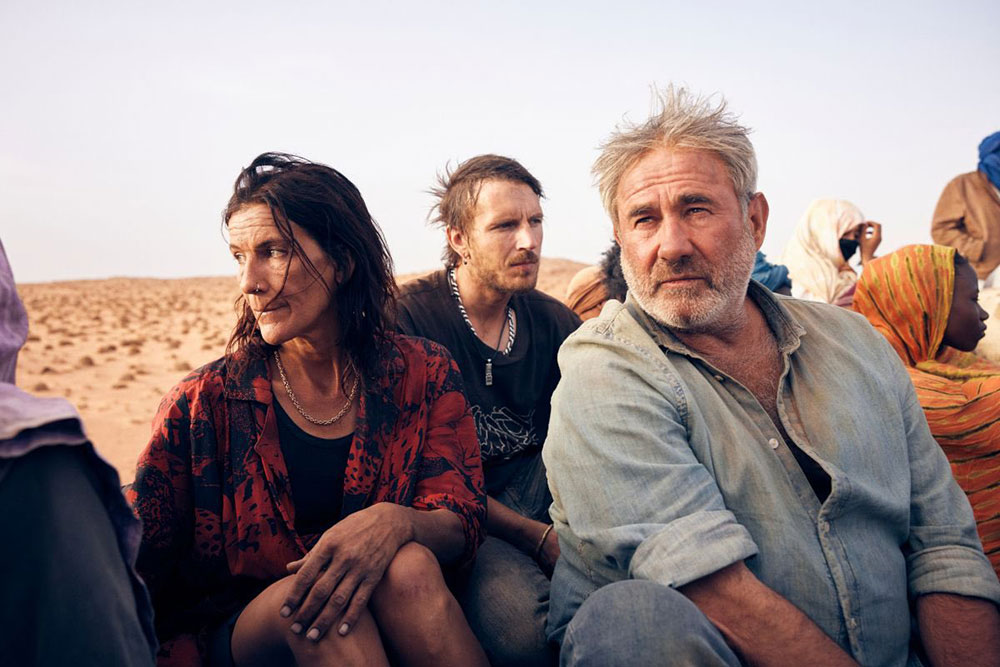
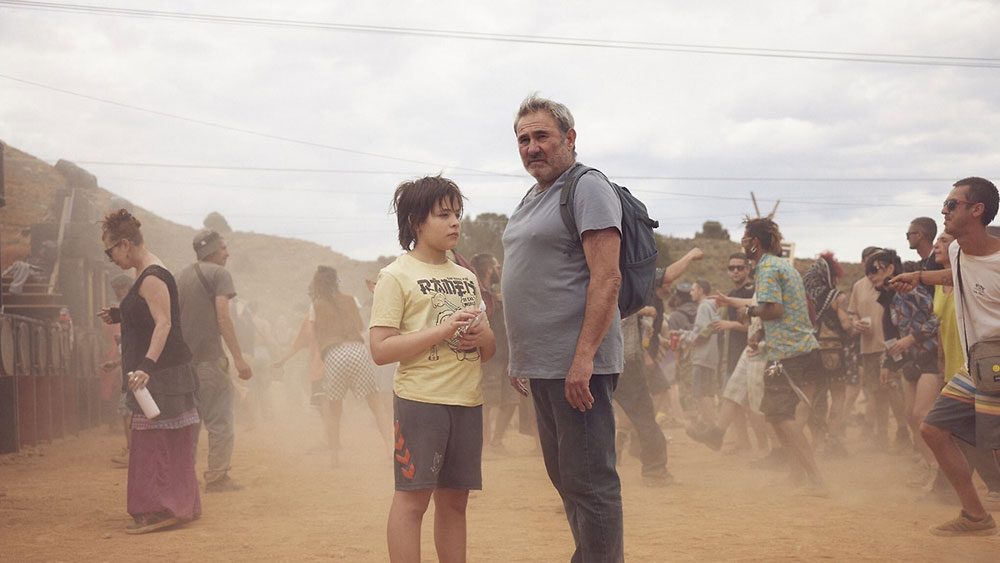
At its surface, Sirāt tells the story of Luis (Spanish veteran Sergi López), a weary father searching for his missing daughter, Mar. With his son Esteban (Brúno Nuñez) in tow, Luis follows rumors that she might surface at a desert rave.
Their pursuit leads them into a hallucinatory odyssey through vast, hostile terrain, where the search for one girl becomes a search for meaning itself—purpose, belonging, a reason to keep going in a world teetering on collapse.
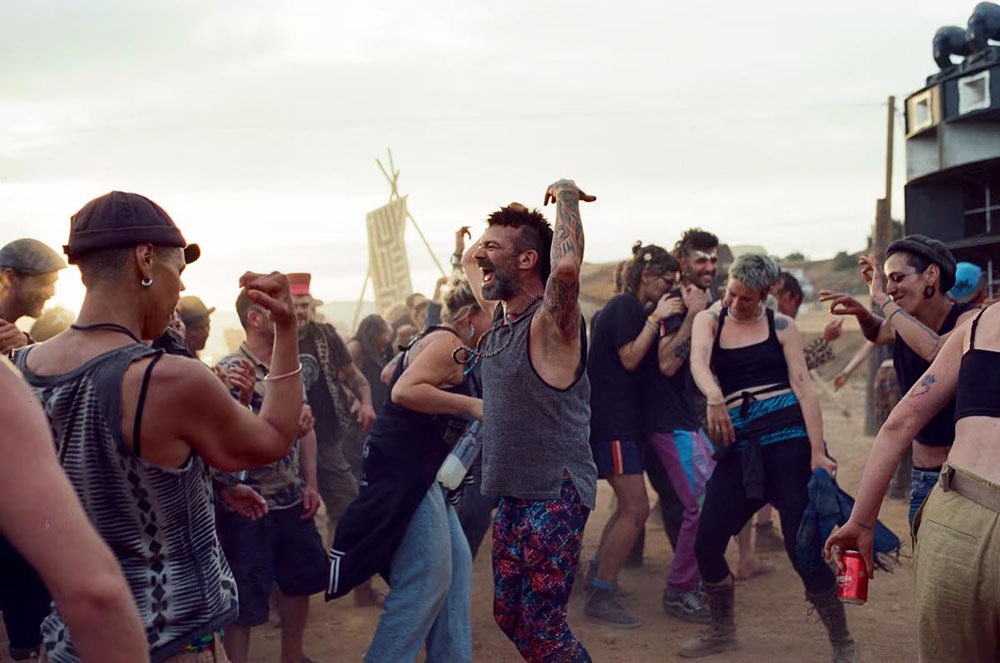
The film begins with a sound system rising from the desert floor, its first bass-heavy pulses from Kangding Ray rumbling with soul-shaking intensity. Viewers are immediately struck by the impressive and immersive sound design that remains a constant, powerful presence throughout the film.
Mauro Herce’s camera captures dancers in all their authentic beauty—real, weathered souls, shaking off the weight of existence in a fleeting, euphoric communion. This isn’t about influencers showing up at the latest trendy gathering to create content or acquire online validation. It’s about a transcendent, religious experience through dance, community, and mind-altering drugs.
When Luis encounters Jade (Jade Oukid), a sympathetic raver with punk-etched tattoos, he learns of another gathering deeper across the desert. Civilization, however, is unraveling. The military storms in, forcing evacuations, and we learn that the globe is bracing for World War III. Yet for Luis, the world has already narrowed to one desperate quest: finding his daughter.
Luis follows Jade and her ragtag cohorts deep into the desert, despite their warnings that the journey is treacherous, and his minivan is ill-equipped to navigate the hostile land.
Jade’s group, played by a stellar cast of non-professional actors, includes Steffi (Stefanian Gadda), Josh (Joshua Liam Henderson), Tonin (Tonin Janvier), and Bigui (Richard Bellamy). Between them, they bear the scars of hard living—missing limbs, weathered faces, and a rootless existence spent drifting from one industrial truck to the next, chasing raves across the wasteland.
What begins as a wary alliance gradually evolves into something more intimate, as these unlikely companions form a rough-edged surrogate family for Luis and Esteban. Their kinship reminds us that even as civilizations collapse, the small worlds we cling to—love, connection, survival—remain profoundly human and profoundly vital.
Then something happens…
At roughly the midpoint, Sirāt transforms.
To reveal how would be a crime.
He forces us to stare into the abyss and hold the gaze. He makes us confront the darkness, measure what we’re made of, and wrestle with the weight of loss—what strengthens us, what shatters us, and what gives us a reason to keep going.
This is a ride you don’t predict—you just surrender to it. Think you know what kind of story you’re in? You don’t. Think you’re prepared? You aren’t. If you find yourself lulled by stretches that feel intimate or deceptively quiet, brace yourself. The shocks are coming, and when they arrive with brutal force, you’ll long for the safety of the slow burn.
The tonal shifts are wild, but never sloppy. Everything feels deliberate, executed with a kind of supernatural precision.
Even when the climax rips open with an intensity that might seem unhinged in less capable hands, the film remains calibrated and devastatingly effective.
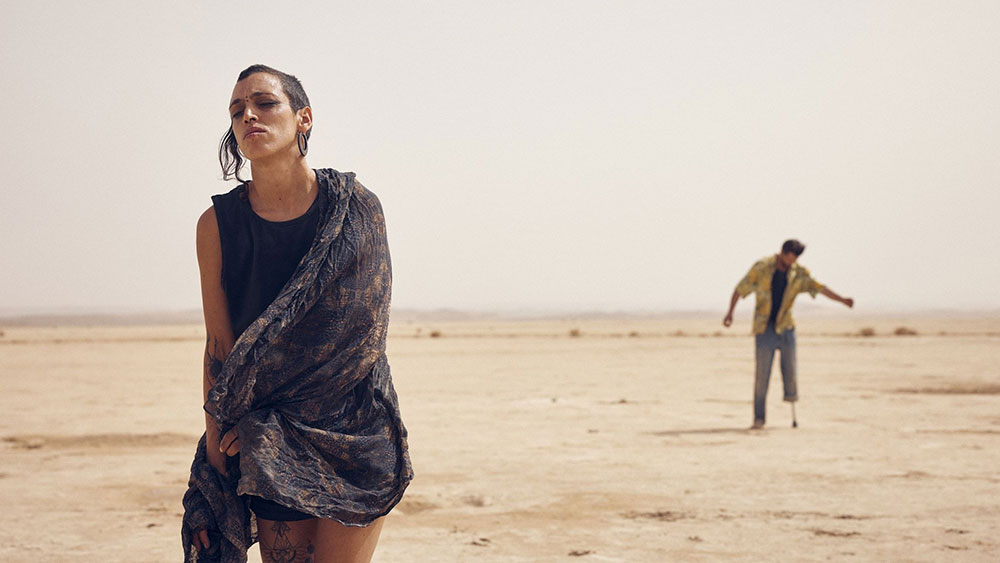
That whiplash is the point—it’s exhilarating, disorienting, and grinds on your body like escalating tension made flesh. At times, it feels like an endurance test, daring you to keep watching even as every nerve in you begs to look away. And still, you can’t.
“Is this what the end of the world feels like?” one character asks. “I don’t know,” comes the reply. “The world has been ending for so long.”
That line encapsulates the essence of Sirāt: a meditation on collapse, both global and personal, where apocalypse is not sudden but chronic, drawn out, lived.
The film’s title is derived from the razor-thin Islamic bridge that connects paradise and hell.
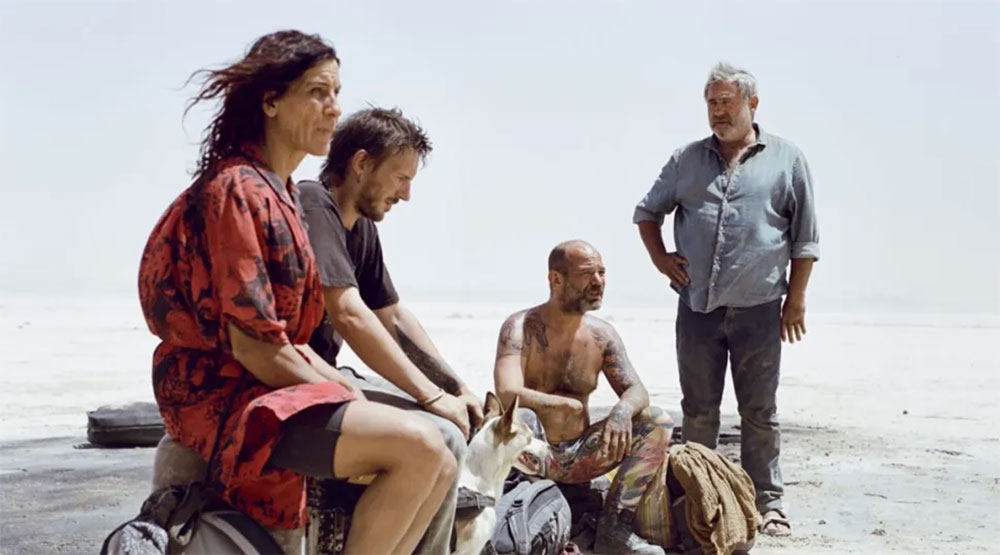
That’s fitting given how much it feels like a purgatorial descent, equal parts existential horror and allegorical nightmare. Every beat of Sirāt is steeped in symbolism. It’s about migration, loss, the fragility of hope, and the razor-edge tightrope we all walk as our societies tremble.
The ravers embody fragile utopias of joy and community, contrasted against the backdrop of civilizational collapse. A televised mass prayer resonates with the same religious fervor as the rave’s ecstatic bodies, bridging spiritual ritual and dancefloor transcendence.
Most strikingly, Luis’s search evolves into something larger: a metaphor for refugee crises, displacement, and survival in the face of annihilation. The film forces empathy by immersing us in a reality where every step forward is on the brink of death.
Kangding Ray’s award-winning score pounds like a heartbeat, equal parts rave euphoria and death knell. Herce’s Super 16mm cinematography renders Morocco’s deserts with breathtaking menace.
López gives a quietly monumental performance as Luis, the reluctant pilgrim whose devotion is both tender and tragic. Nuñez radiates innocence, his openness balancing Luis’s world-weariness. Non-professionals like Oukid and Bellamy embody their sun-scorched lives with disarming authenticity.
Sirāt walks with you like a kind friend, guiding you across the sand, secretly escorting you to the cliff’s edge. Then it drop-kicks you into the void—and still, impossibly, you’re grateful for the journey.
Overall Rating (Out of 5 Butterflies): 5











Follow Us!