Found Friday: Final Prayer/The Borderlands (2013)


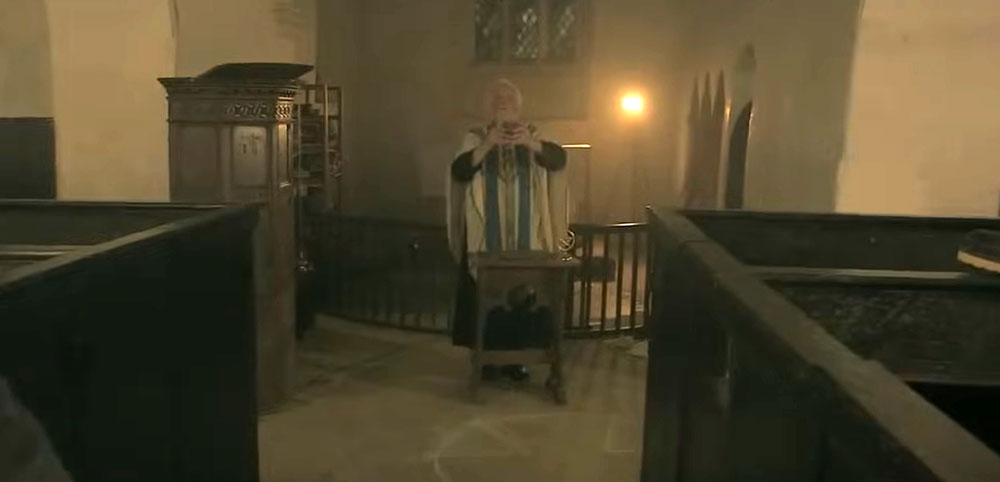

Note: I’ll be referring to The Borderlands by its U.S. release title, Final Prayer, since that’s how I found it streaming on Tubi. But no matter what you call it, this 2013 British found footage film is one of the most underrated entries in the subgenre. It’s a slow-burning nightmare that creeps under your skin before hollowing you out from the inside.
The story follows a small Vatican-sanctioned team dispatched to a remote English village to investigate supposed miracles occurring at an old church. Deacon (Gordon Kennedy), a world-weary priest with a biting edge, is joined by Gray (Robin Hill), a sarcastic and tech-savvy layman responsible for documenting the investigation.
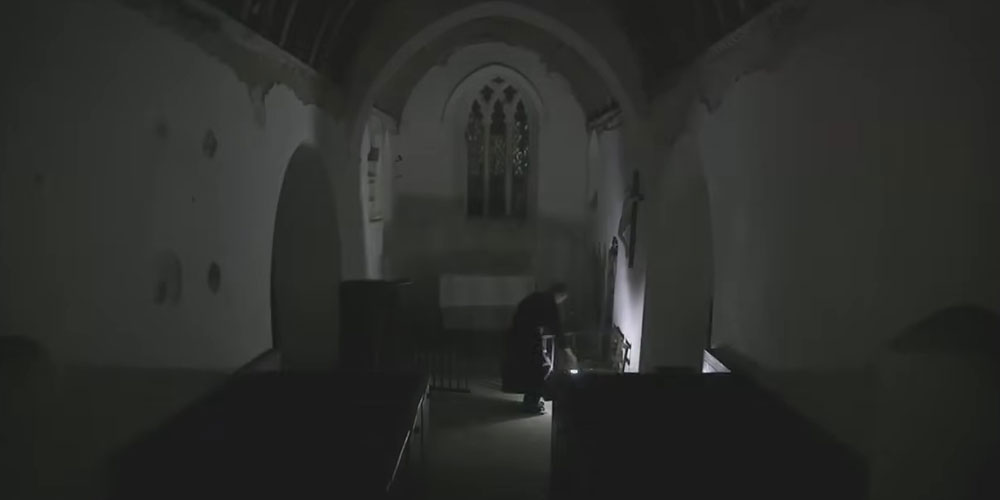
As the two set up surveillance and begin probing the site’s past, their skepticism is tested by increasingly bizarre occurrences that suggest something much older and far less holy than divine intervention.
This is a film that truly understands the power of slow, deliberate pacing. While the found footage space is crowded with imitators chasing the high of Paranormal Activity, this film chooses atmosphere over adrenaline, dread over spectacle.
Watching it recently after the derivative Its Name Was Mormo, which tries to mimic that quiet, creeping terror and instead collapses into cliché, only made Final Prayer‘s success feel more impressive.
Where Mormo felt like reheated leftovers, Final Prayer builds tension with purpose: eerie ambient noises, sudden silences, and the friction between two men who don’t quite trust the other — and who definitely don’t trust what’s hiding inside those ancient stone walls.

Their chemistry is natural, and their banter provides the rare gift of humor without undercutting tension.
More importantly, their dynamic feels lived-in: Deacon is gruff and haunted, Gray is curious and irreverent, and both slowly unravel in the face of something they can’t explain. It’s this human element that makes the horror hit so hard. You believe these men. You feel their fear. You watch the skepticism erode in real time, and it’s terrifying.
While the concept of a Vatican investigation isn’t groundbreaking in horror, the way Final Prayer frames it is.
This isn’t your typical possession story. This is about old gods. About things buried… not just physically, but beneath centuries of religious dominance. There are no spinning heads or Latin incantations here. Instead, the horror is primal, pagan, and disturbingly organic. The film quietly builds a mythos of ancient forces predating Christianity, suggesting that the church may be just another visitor in a land long claimed by older, hungrier powers.
Rather than relying on jump scares, it weaponizes the silence. There’s the hum of static, the sudden cut of ambient noise, the soft echo of a whisper where no voice should be. The chilling sound of an unseen baby crying.
Auditory unease becomes one of the film’s most powerful tools.
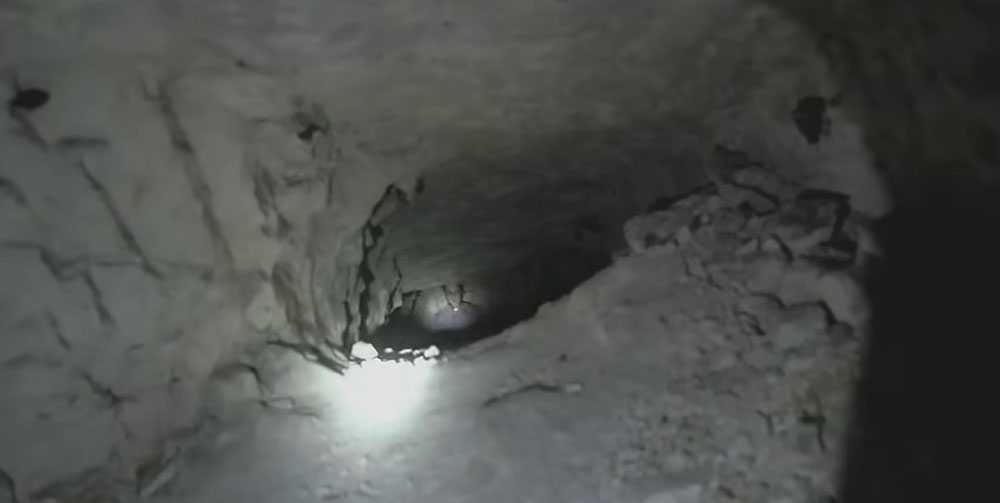
It’s impossible to talk about Final Prayer without mentioning its ending, and don’t worry, I won’t spoil it. But I will say this: it’s one of the most jaw-dropping finales in all of found footage horror.
Visceral. Claustrophobic. Existentially terrifying. The film subverts your expectations and then plunges straight into the abyss, delivering a final act worthy of worship, offering a physical and philosophical horror that lingers.
In a subgenre infamous for fizzling out in the final stretch, Final Prayer barrels straight into the unknown and dares you to follow.
The film won’t work for everyone, as evidenced by its baffling audience score in comparison to a respectable critics’ score on Rotten Tomatoes (as The Borderlands). The first half can feel overly restrained for viewers expecting immediate scares. Some may mistake its patience for a lack of purpose. Others may crave more concrete answers, and Final Prayer doesn’t spoon-feed them. Its horror is mysterious by design, and for some, that ambiguity will frustrate.
The blandness of its U.S. title and misleading marketing certainly haven’t helped its visibility. Final Prayer sounds like another formulaic exorcism flick, and the generic poster art reinforces that assumption.
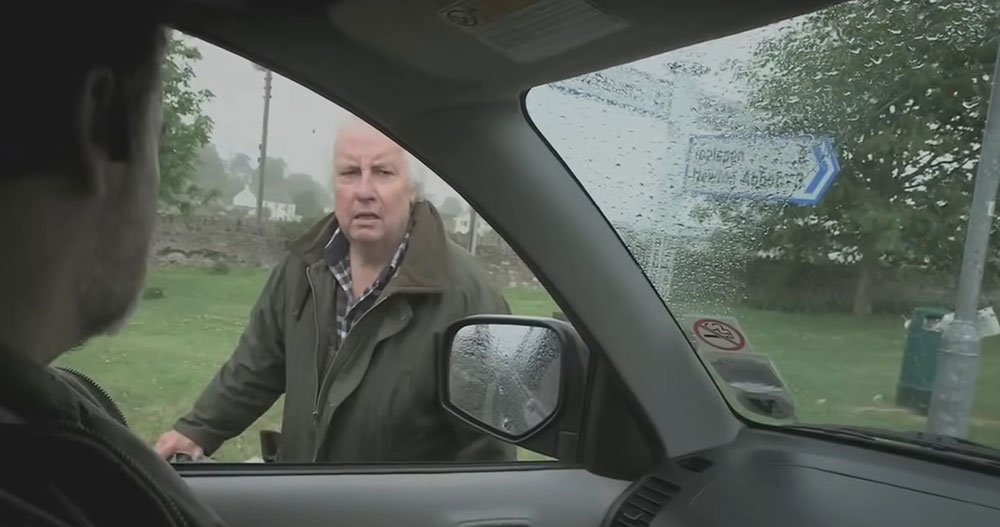
Final Prayer is what happens when found footage is done right, when it’s used not as a gimmick, but as a storytelling tool that enhances dread, tension, and character. It blends the sacred and the profane, the mythic and the modern, and delivers a finale that will leave your soul squirming.
Unlike many of its contemporaries, it earns your fear. It doesn’t just show you something scary; it drags you down into the dark and makes you feel it. Boy, oh, boy, does it make you feel it.
If you’re patient and willing to follow the ghostly cries and brave the unholy crawlspace, you’ll find this to be so much more than just another predictable found footage flick: it’s a revelation.

She’s a lover, he’s a fighter. Together, they’re CHEER AND LOATHING. Tune in to hear your hosts, Stephanie (Cheer) and Casey (Loathing), clash over the films they love — and the ones they love to hate.
In this holiday extravaganza episode of Guilty Pleasures, join hosts Stephanie, Kelly, and our newest addition, Jonathan (Jack was tied up in tinsel and couldn't join us), as they unwrap the bizarre and unhinged world of holiday cinema. They dive into the depths of Elves, a film that's as chaotic as it is entertaining. It's a sleigh full of questionable decisions, diabolical dialogue, absurd plot twists, wildly offensive antics, and unhinged holiday mischief.
And that's not all! In the second half of the podcast, join your festive cinephile friends for a look at four more ”nutty as a fruitcake” holiday treats: A New York Christmas Wedding, Elf Bowling, A Medea Christmas, and Jack Frost. Plus, we each offer a bonus Christmas flick guaranteed to make you say, ”Ho, Ho, HO-LY Hell!”
Expect laughter, disbelief, and a spirited debate about what truly makes a movie a guilty pleasure. Don't miss this festive journey through the weirdest corners of holiday films!





Follow Us!