The Short Horror Magic of Happenstance Horror Fest


I’m not at all surprised that the Otherworldly block ended up being my favorite of the festival. Given my love of international horror, this lineup was practically engineered to make me swoon. These films came from all over the world, each one proving that the language of fear needs no translation. Every short in this block offers something fresh, imaginative, and deeply human, capturing the universal pulse of terror through wildly different cultural lenses.
This block reminded me why I love global horror so much. It’s bold, unpredictable, and unconcerned with convention. It’s also proof that short-form filmmaking remains one of the purest ways to experience cinematic storytelling at its most primal and fearless.
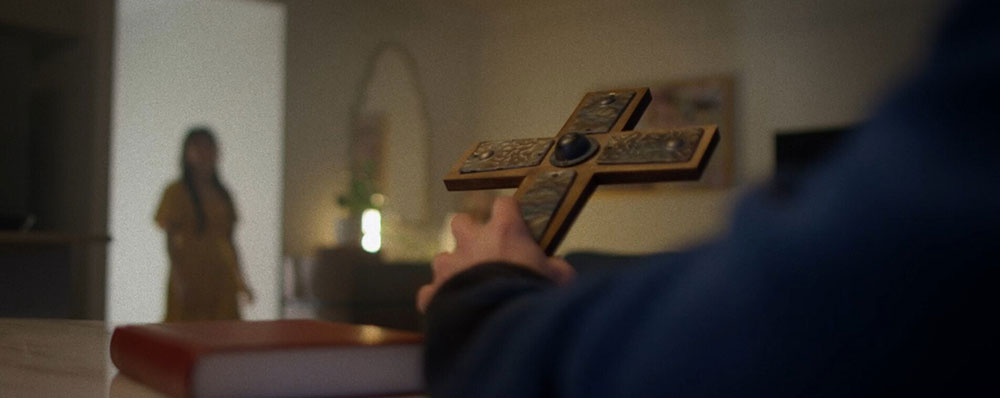
It’s Halloween night at an Italian haunted attraction, and just before closing time, a reviewer slips in, determined to explore the maze and record her impressions. But what begins as a simple walkthrough of rubber props and staged scares quickly transforms into something much darker.
Micky Graeter’s The Maze is a masterclass in escalating tension. The cinematography is striking, the lighting moody and oppressive, and the editing is tight enough to evoke a sense of panic. When the attraction’s attendant starts behaving oddly—like he’s possessed by the very haunt he’s meant to close—you know you’re in for something special. The film slowly unravels into a surreal nightmare that perfectly captures the spirit of Halloween: the thrill of surrendering to fear and no longer knowing what’s real.
Graeter pulls triple (or maybe quintuple) duty here as director, producer, editor, cinematographer, and colorist. The result feels handcrafted and feverish, alive in a way only passion projects can be. It’s got old-school horror energy, the kind that grabs you by the collar and drags you screaming through the dark.
Australian filmmaker Charnstar Anderson delivers one of the most unexpectedly funny and poignant vampire stories I’ve seen in years. Doghouse opens on a couple fighting, the kind of shouting match that ends with him on the couch and her in the bedroom. But as he stews in resentment, something knocks at the door—a mysterious woman asking to come in at 2 a.m.
From there, Anderson subverts every expectation. The conversation that follows plays like a darkly comic therapy session, equal parts flirty and philosophical. She admits she’s a vampire but insists she doesn’t want to kill him. Instead, she’s offering “freedom”—from guilt, from God, from a life he no longer wants. He’s ready to accept, but the final twist hits like a perfectly timed punchline and turns everything on its head.
Doghouse works because it understands that horror is most effective when it’s about something real. Beneath the laughs and blood, this is a story about regret, disillusionment, and the seductive pull of escape. I loved every second of it.
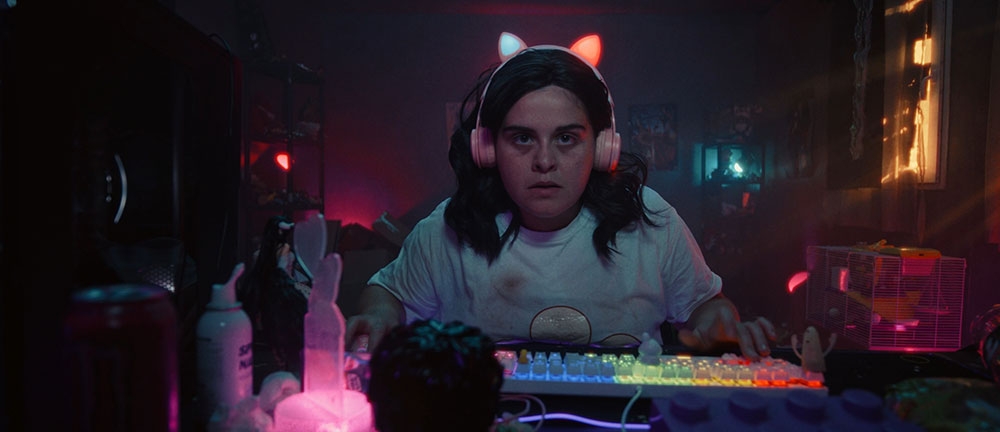
A dark comedy from France that manages to be horrifying, hilarious, and heartbreakingly relatable all at once. Eva is a devoted geek glued to her computer, distracted only occasionally by her loyal gerbil, Koki. When the collector’s figurine of her dreams finally goes on sale, she spirals into obsession—and straight into chaos.
Renaud Parra’s short nails the desperation of fandom gone feral. The lighting and set design are immaculate, creating a neon nightmare of consumerist anxiety. Morgane Frioux’s performance is electric, turning Eva into both the victim and villain of her own self-inflicted horror show. This one made me laugh, cringe, and gasp out loud.
Shot on Super 8, Worm is a slimy, retro sci-fi homage that channels the best of classic creature features. Set aboard a spaceship in crisis, the crew finds one member trying to extract a parasite from her brain as the infection spreads. The result is gory, claustrophobic, and wildly satisfying.
It’s impressive how much tension Thomas squeezes out of four minutes and a single, confined location. The handmade effects and old-school aesthetic make it feel like a long-lost VHS from the 1980s. It’s a love letter to analog grime.
Even before the rotary phone rings in this grotesque little story, you know you’re fishing in devious waters. An eccentric bait shop worker prepares a special order for a customer. His methods are unspeakable. Doubling down on the horror, McInnes keeps gore hounds and those with a taste for the twisted, writhing on the hook.
This perverse little short strikes the perfect balance between pitch-black humor and genuine revulsion. It’s one of the most viscerally effective shorts of the festival.
What begins as a casual hookup turns into a nightmare when a man wakes to find his partner whispering in Latin and contorting in unholy ways. Night Whispers uses its simple setup—a one-night stand gone terribly wrong—to deliver an escalating series of scares that build to a killer payoff.
The escalating horror is unnerving, and the ending flips the entire premise in a way that’s both unexpected and thematically satisfying. It’s a stellar setup/subversive payoff combo that elevates the short above standard horror far and delivers something surprising, creative, and memorable.
A nostalgic horror short that feels like a lost Goosebumps episode. This one comes complete with mysterious bookshops, eccentric shopkeepers, and the creeping sense that something very bad is about to happen. Emily Anne-Fraser captures that perfect blend of whimsy and dread, grounding it with a stellar performance from Beth Cantor as the enigmatic bookkeeper.
Lucky the Bookkeeper has a timeless quality, the kind of story you could imagine discovering on a worn VHS in your childhood attic. It’s pure comfort horror with an edge.
Even without English subtitles, the Spanish-language Umbra transcends language barriers. Set in a hospital at night, the short follows a twelve-year-old girl who, while waiting for her mother to recover from childbirth, tries to contact the spirit of someone who died there. The result is eerie, sad, and unforgettable.
The cinematography is beautiful, and the mood is suffused with quiet melancholy. You can feel Otero’s background in visual effects. He’s worked on Alita: Battle Angel, Thor: Ragnarok, and Avengers: Endgame. Here, he channels that technical prowess into something small, intimate, and deeply haunting. This one lingers.

She’s a lover, he’s a fighter. Together, they’re CHEER AND LOATHING. Tune in to hear your hosts, Stephanie (Cheer) and Casey (Loathing), clash over the films they love — and the ones they love to hate.
In this holiday extravaganza episode of Guilty Pleasures, join hosts Stephanie, Kelly, and our newest addition, Jonathan (Jack was tied up in tinsel and couldn't join us), as they unwrap the bizarre and unhinged world of holiday cinema. They dive into the depths of Elves, a film that's as chaotic as it is entertaining. It's a sleigh full of questionable decisions, diabolical dialogue, absurd plot twists, wildly offensive antics, and unhinged holiday mischief.
And that's not all! In the second half of the podcast, join your festive cinephile friends for a look at four more ”nutty as a fruitcake” holiday treats: A New York Christmas Wedding, Elf Bowling, A Medea Christmas, and Jack Frost. Plus, we each offer a bonus Christmas flick guaranteed to make you say, ”Ho, Ho, HO-LY Hell!”
Expect laughter, disbelief, and a spirited debate about what truly makes a movie a guilty pleasure. Don't miss this festive journey through the weirdest corners of holiday films!

Follow Us!