

A compelling premise inspired by chilling true events ultimately falls short due to budget constraints and too little meat on the bones.
No time to read? Click the button below to listen to this post.
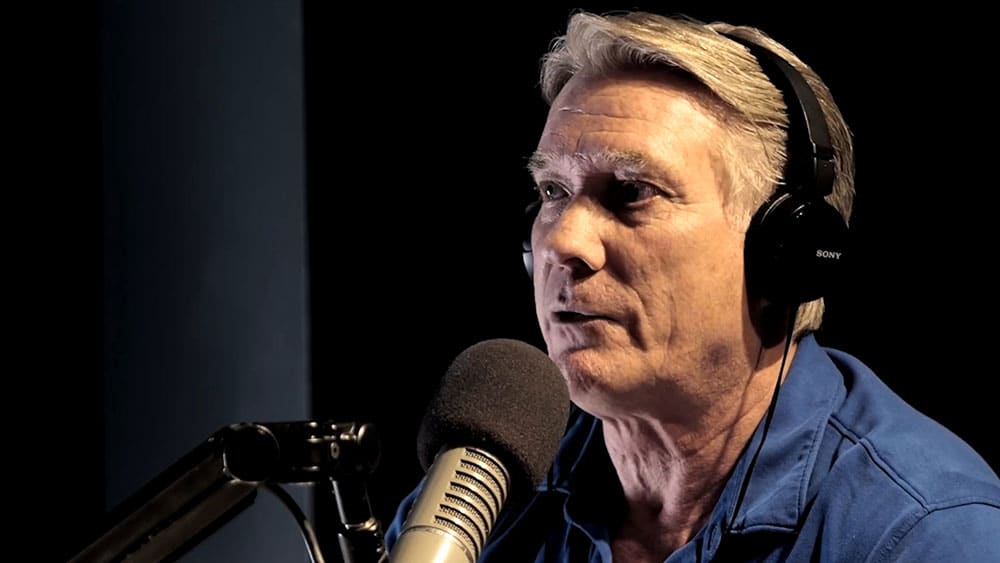
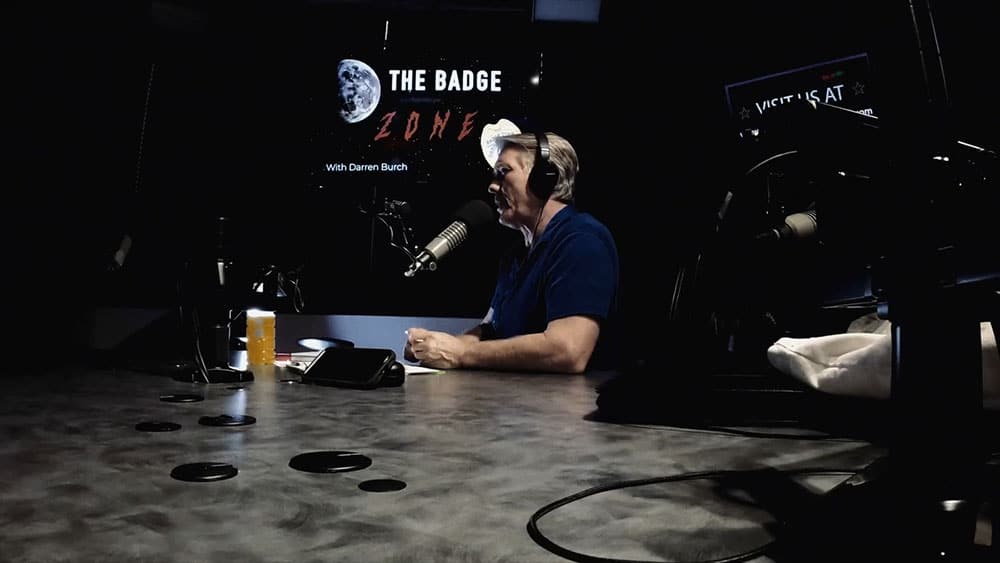
The story begins with The Badge Zone, a live televised radio program where they “talk about stuff no one wants to talk about.” It appears to be a true crime show with a host who has extensive experience with law enforcement and discusses strange and unusual cases. There’s a long segment where the host, Sergeant Darren Burch (Darren Burch), an author and retired detective, discusses cases involving a potential serial killer at large.
It’s a dense and scholarly discussion explaining the psychological traits and behavioral patterns of serial killers, sexual predators, and sexual deviants.
The host explains that these serial killers are driven by a pathological need for notoriety and recognition; they want their crimes to be discovered and dissected. This sets up an incoming call to the show’s producer from a man named Jeff, who claims to be a serial killer, desperate to talk about his crimes on air.
Buried Alive: The Clay Killer is based on the shocking true story of Clay the Serial Killer, who famously called into the Howard Stern Show in 1997 to confess to the murder of 12 women in the New Orleans area. He only refers to himself as “Clay” in an on-air interview that lasts about 15 minutes.
Though causing a minor stir when it first aired, the call was quickly forgotten until internet sleuths resurfaced interest in the case in 2019. As true crime aficionados began to dig into the details of the case, they realized that “Clay” might have been seriously claiming responsibility for a series of unsolved crimes.
The film spends ample time on the details of the call in a way that feels authentic.
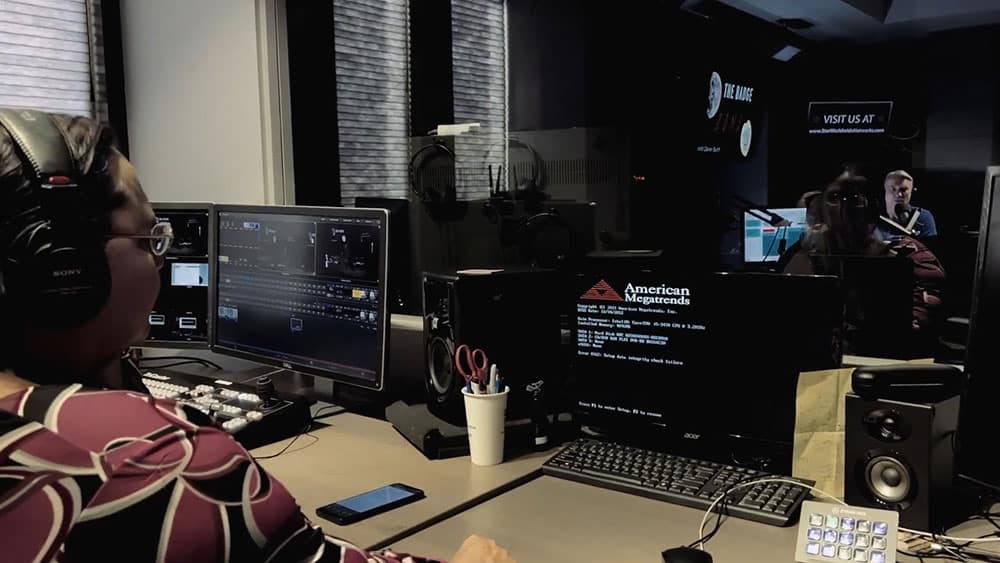
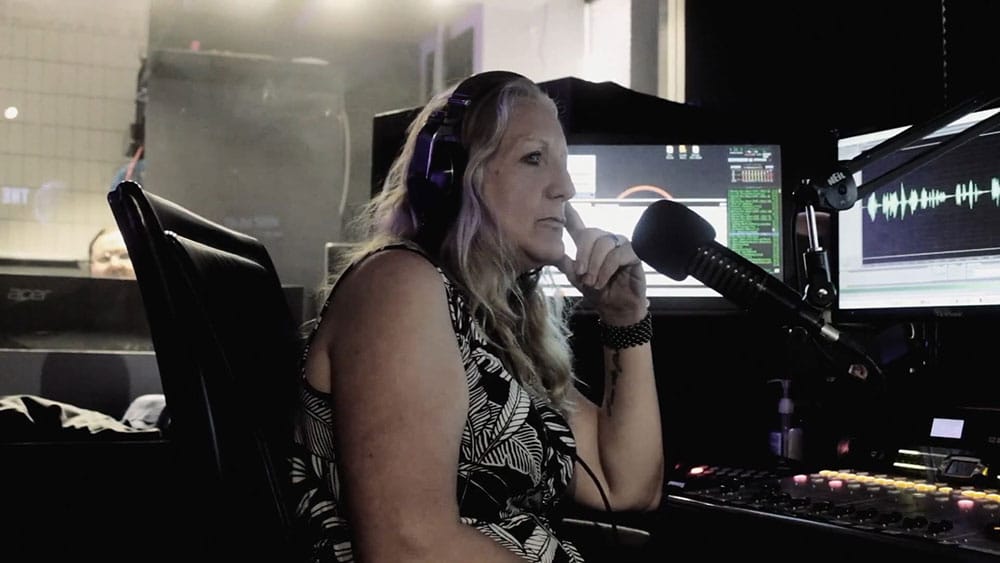
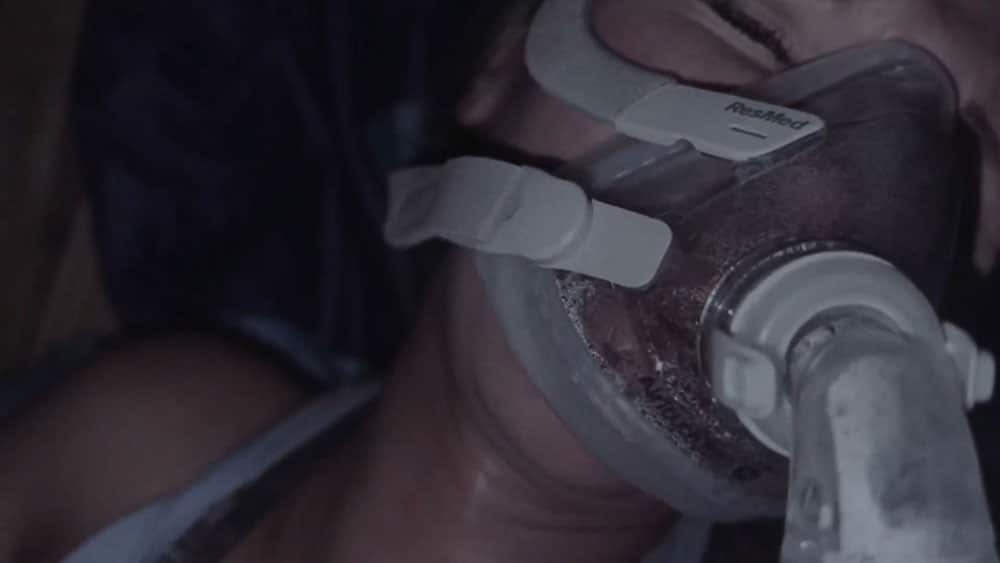
We stay locked into the studio with Burch, his co-host Robin (Robin Coté), and the producer in the booth. Periodically, we cut to shadowed glimpses of the mysterious caller on the other line and quick flashes of the victims, but those cuts are sparing, especially in the first half of the film.
Much of the conversation feels exactly how it would feel to the hosts and the listening audience. Burch seems to take the call very seriously, without any sarcasm or mocking expressions to reveal he doubts the caller’s story.
He remains fully engaged as he silently holds up signs for his producer to try to investigate the authenticity of the call based on the information being shared. The actor playing the host is quite convincing, which helps to immerse viewers in the chilling effect of the call that feels eerily similar to the real-life call it’s based on.
At about thirty minutes, the show’s producers convinced the FBI to listen in on the ongoing call and attempt to trace its origins.
This is where the film diverges significantly from the true story, as the real “Clay” was never found, and there is no way to be sure if it was a legitimate call or an elaborate prank.
However, in the film, there is little reason to include this, as we are never shown the killer being caught, though there is ample time for a trace to be completed.
In fact, in the digital age (assuming this film takes place in the present day; the timeline is unclear), phone carriers can immediately identify the location of a call from a landline. In 1997, it wasn’t instantaneous like it is today, but it would not have taken longer than a few minutes at most—often happening within seconds.
After alerting the FBI, the host keeps the caller on the line for another thirty minutes (well past the 15-minute length of the real call), trying to get the supposed killer to reveal where his victims can be found.
As for the confusion regarding when the film’s events take place, in many ways, it feels like it’s meant to be happening in 1997, but there are many clues that it’s happening in 2024—based on the tech being used, the killer’s reference to working remotely, and a Trump 2024 hat in the background. We even get a stock video scene of delivery drivers (the killer says he is a delivery driver) unloading a van with the help of a human-sized AI robot.
The host refers to his show as a podcast at the end, though it’s clearly presented as a televised radio show with significant production resources throughout the show, mirroring closely what the Stern show would have looked like at the time.
Ultimately, it’s difficult to know what’s intentional and what is just a result of a lack of budget and attention to detail.
While in the radio booth, the low-budget aspects of the film work to its advantage, creating an unsettling bit of cinéma vérité that makes it easy to suspend our disbeliefs and hang on every word of the ominous phone call.
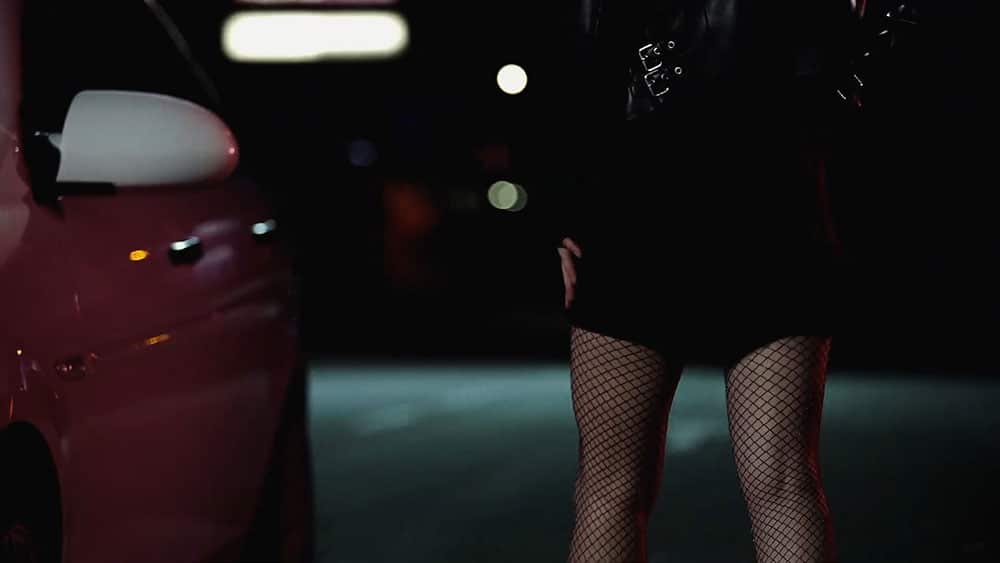
Once we leave the booth, whether to center on the FBI agents or provide glimpses of the killer’s victims and recreation of the crimes, director Clive Christopher’s limited resources are painfully glaring, and the film feels very cheap and amateurish.
These scenes are almost entirely unnecessary and range from what appears to be primarily low-quality stock video footage combined with poorly filmed and badly acted vignettes that immediately pull you right out of any level of investment you might have otherwise had in the killer’s captivating story.
Actors Darren Burch and Robin Coté occupy the vast majority of the screentime and share writing credits with the director. Their naturalistic dialogue and believable reactions are the film’s biggest strengths.
The film’s title makes very little sense, as the caller calls himself Jeff, never mentioning Clay, the name the real caller provided Howard Stern. The “Buried Alive” part of the title is a reference to the fictionalized story in which the killer confesses to recently burying a woman alive by the beach, eventually telling the podcast host where to find the still-alive victim.
The confusing mishmash of fact and fiction is emblematic of the film’s core failures.
While it recreates some details to strongly echo the real-life facts, it deviates enough to be its own story while offering little that feels cinematic or worthy of a film adaptation.
This creates a lack of clarity between what is meant to be a dramatization of the actual event and what is meant to be a story merely inspired by true events. A textual screen at the end of the film describes the details of the potential on-air confession and the murder victims, only serving to really muddy the waters, given how much of the film has no basis in reality.
The scene with the victim found buried alive at the end is confusing, and Jeff’s M.O. is extremely murky throughout. It’s established he is sometimes a merciful killer with empathy, who doesn’t want the victims to suffer, yet he clubbed a victim to death and hit another upside the head with a hammer. He also buried his last victim alive, which refutes his claims that torture is not his style.
Buried Alive: The Clay Killer is a scant hour and fifteen minutes, and even that feels significantly stretched for time.
This perhaps could have worked much better as a short film, keeping the focus entirely on the call itself.
The truth is, the interview is reasonably compelling, thanks primarily to the sincere performances from Burch and Coté and the intrigue of the caller’s calm, detailed, and methodical confession. Though it’s presented in film format, it feels very much like listening to a legitimate podcast interview.
While the film’s premise is strong and begins by adhering relatively closely to the details of the real event, it’s honestly more satisfying simply listening to the Howard Stern interview—which is horrifying if you consider that it might be a real serial killer confessing his crimes, psychological state, and motives.
Buried Alive: The Clay Killer is a film with significant potential. Sadly, it falls flat due to resource limitations, inconsistent story elements, and sloppy execution in some places. It pushes its runtime and can’t maintain the intrigue it establishes early in the film.
Still, much of the film is engaging, especially for true crime enthusiasts and those familiar with the real story—but its lack of visually stimulating onscreen action coupled with an ultra-low-budget aesthetic is likely to test viewers’ patience.







Follow Us!