

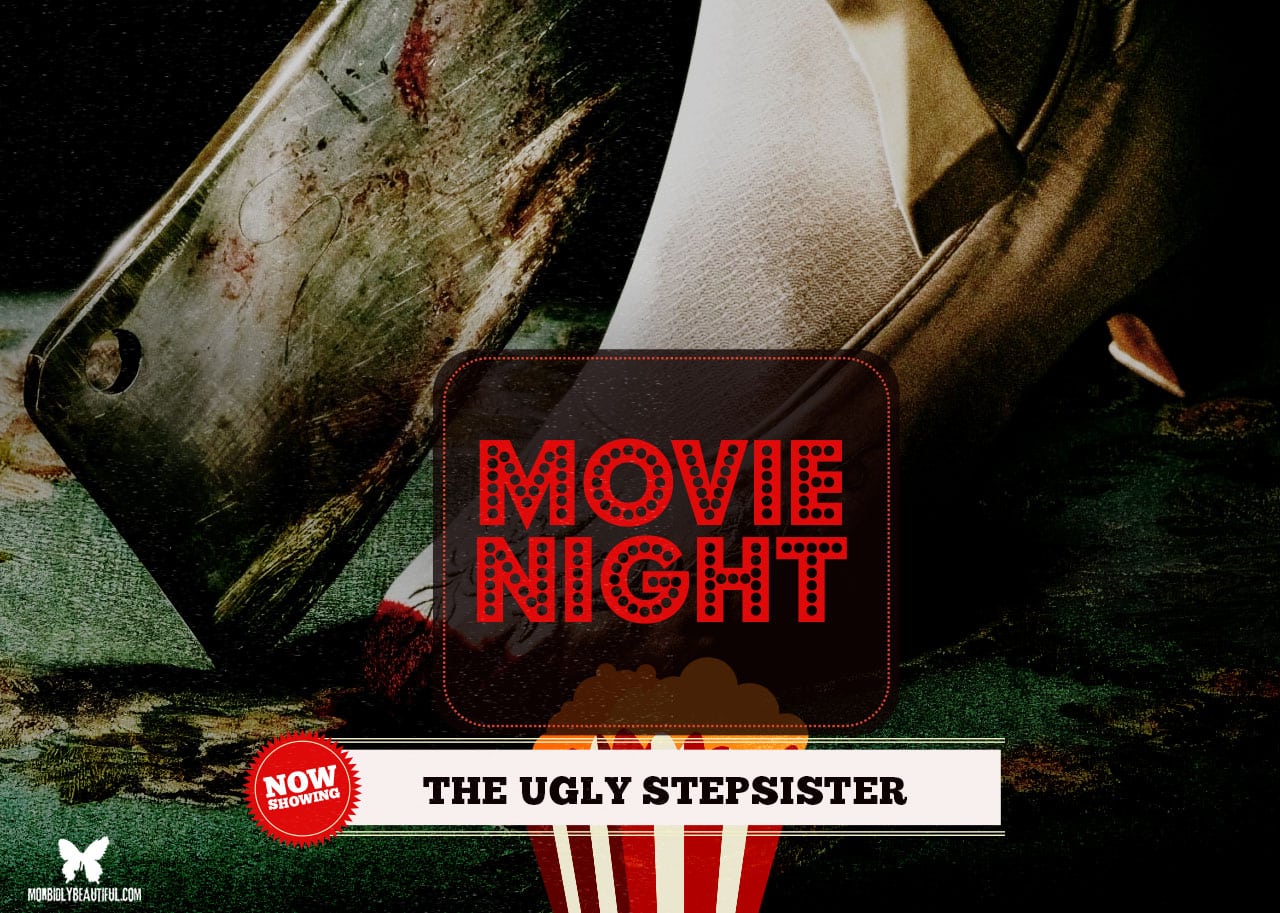
“The Ugly Stepsister” delivers a witty and deeply discomforting reimagining of a well-worn myth that sharpens beauty standards into scalpels.

No time to read? Click the button below to listen to this post.
The word fairytale often conjures images of glittering castles, enchanted forests, and the inevitable triumph of true love. We’re taught to expect whimsy, beauty, and the comfort of a happily ever after—often in the form of a sparkling transformation or a royal kiss.
But dig a little deeper beneath the polished surface, and you’ll find that fairytales were never meant to be pretty.
Long before Disney softened their edges, these stories were oral traditions passed from adult to adult—fables forged in the fires of fear, survival, and moral reckoning. Magic existed, yes, but so did murder, mutilation, betrayal, and beasts that looked suspiciously human.
The Brothers Grimm, who famously collected these tales in the 19th century, didn’t shy away from the grotesque. In their version of Cinderella, for instance, the wicked stepsisters carve up their own feet in a desperate bid to fit the enchanted slipper. Their reward? A pair of pecked-out eyes, courtesy of some very judgmental birds.
While modern retellings often favor sanitized morals and pastel aesthetics, perhaps it’s the darker versions that offer something more honest. Life, after all, doesn’t always end in a golden carriage. It ends in consequence. And sometimes, a little carnage.
The Ugly Stepsister, a twisted entry into the body horror canon, leans hard into this blood-soaked lineage.

Emilie Blichfeldt’s twisted retelling of Cinderella leans into the bloodied bones of the Brothers Grimm. This is a full-throttle plunge into obsession, sacrifice, and the monstrous price of beauty.
From the very first frame, Blichfeldt gleefully subverts expectations, telling the tale not from the perspective of the beleaguered belle but from the woman history has written off with a sneer: the so-called ugly stepsister.
What begins as a familiar tale quickly contorts into something far more macabre—and far more honest. Told through the eyes of Elvira (a fearless and transformative performance by Lea Myren), this isn’t a story about beauty triumphing over cruelty. It’s about the cruelty embedded in our very definition of beauty.
Elvira is an awkward, painfully earnest young woman who dreams of marrying the dashing Prince Julian (Isac Calmroth)—a loathsome cad cloaked in the trappings of a sensitive soul. He pens vapid poetry and waxes romantic about love, but his charm is skin-deep, much like the world around him.
When Elvira’s opportunistic mother Rebekka (a deliciously icy Ane Dahl Torp) marries the aging Otto (Ralph Carlsson) under the illusion of shared wealth, she uproots her daughters and drags them to the lavish estate of Swedlandia.
But fairy tales thrive on cruel turns, and Rebekka soon discovers Otto was just as broke—and just as calculating—as she was.
Enter Agnes (Thea Sofie Loch Næss), Otto’s daughter and a living embodiment of classical beauty.

Blonde, ethereal, and poised, she seems destined for the crown. But Blichfeldt delights in flipping the script: we don’t root for the beautiful princess; we’re primed to cheer for the so-called stepsister—less flawless, less favored, and more fully human.
The film slyly weaponizes our expectations, making us complicit in the judgment Elvira faces at every turn.
When news spreads that the prince is throwing a ball to choose his bride, Rebekka sees her golden ticket, not in the obvious choice, Agnes, but in her own daughter. Desperate to mold Elvira into a viable contender, she enrolls her in a twisted finishing school and enlists a plastic surgeon whose “treatments” more closely resemble torture.
The phrase ‘beauty is pain’ is taken to its logical—and stomach-churning—extreme.
As Elvira undergoes a transformation so gruesome it borders on surreal, we’re treated to fantasy sequences in which the prince professes his undying love, whisking her off to a storybook ending.
These daydreams, bathed in soft light and sweeping music, stand in brutal contrast to the mutilations she endures in reality. And still, she clings to the dream.
After all, isn’t this what society promised her?
Meanwhile, Agnes is revealed to be far more complex than her perfect exterior suggests.

In love with a humble stable boy (Malte Gårdinger), she’s uninterested in the prince, but forced to play the game to escape the squalor and abuse that followed her father’s death.
While Elvira is being sculpted into an ideal, Agnes is being stripped of everything that once protected her.
There are no fairy godmothers here—only predators disguised as benefactors, and sinister whispers offering salvation at a cost. Elvira, cast as the “ugly” one despite her perfectly healthy, curvy body, becomes a canvas for societal violence.
A tapeworm she willingly ingests to shed weight becomes the film’s most overt metaphor: she is being hollowed out from the inside, her body literally consumed by the pursuit of perfection.
And yet, we stay in her corner. We root for her, even as her inner light dims and her outer beauty intensifies.
Agnes seems to have had it too easy. She didn’t suffer. She didn’t earn it. So when the tables turn and she becomes the true protagonist, we’re forced to confront our own biases—how easily we’ve internalized the idea that beauty must be paid for in blood.
The Ugly Stepsister is, without question, a horror film.

The body horror is visceral, squirm-inducing, and unrelenting. It will test the mettle of even seasoned gorehounds.
But it’s also riotously funny and razor-sharp in its social commentary. Like the critical darling The Substance, it weaponizes the grotesque to critique the systems that prey on women, but it never buckles under the weight of its message.
Visually, the film is a feast. Lush production design, opulent costuming, and saturated fairy tale colors contrast gorgeously with the decaying bodies and psychological rot.
There are moments of jaw-dropping audacity—sex, violence, and exploitation collide in ways that are both shocking and heartbreakingly sincere.
Ultimately, this is not a story of heroes and villains. No one is purely good or wholly evil. Everyone here is caught in a machine that values women only as ornaments, as prizes, as proof of male success.
When the world itself is the villain, there’s no such thing as a fairytale ending.
Overall Rating (Out of 5 Butterflies): 5








Follow Us!