“Sinners” argues that liberation cannot be gifted by oppressive structures—it must be seized through unyielding creativity and community.

No time to read? Click the button below to listen to this post.
This in-depth analysis contains plot spoilers and is best read after viewing the film.
Ryan Coogler’s Sinners reimagines vampire mythology as a visceral allegory for cultural exploitation and the paradoxes of liberation, set against the brutal backdrop of 1930s Mississippi. Through its fusion of historical realism and supernatural horror, the film interrogates systemic oppression, artistic resilience, and the corrosive allure of assimilation.
Horror, when done right, bleeds truth. It sinks its teeth into generational pain, buried histories, and cultural trauma with more bite than a thousand documentaries. And in the recent release Sinners, it does exactly that—offering a vampire film that’s not only dripping in blood but rich in symbolism, subtext, and soul.
Directed with gothic grace and revolutionary rage, SINNERS is a film that reclaims the monster mythos.
Its vampires don’t simply represent age-old evil. They carry with them the echo of colonized voices, silenced songs, and a hunger for freedom that is more metaphysical than monstrous.
THE LOW DOWN SOUTH
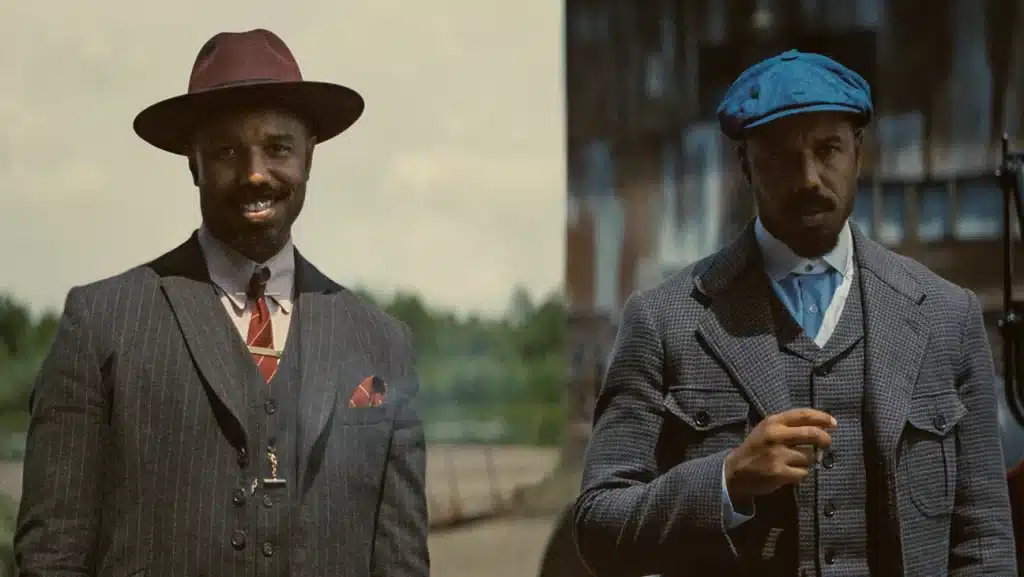
The film introduces audiences to twin brothers, portrayed by Michael B. Jordan, who return to their hometown only to confront a malevolent presence that evolves into a chilling vampire narrative. Set against the oppressive backdrop of the Jim Crow South, the film strategically blends supernatural horror with the palpable historical tensions of the era.
At its core, Sinners grapples with fundamental thematic dichotomies: the yearning for freedom against the crushing weight of oppression, the insidious manifestations of hatred and intolerance within a specific historical context, and the complex, multifaceted role of art, particularly music, as a response to these forces.
The establishment of a juke joint as the central location for much of the film’s action immediately signals the importance of Black culture, the vibrant energy of Blues music, and the creation of a vital space for freedom and self-expression within the confines of an intensely oppressive society.
In the Jim Crow South, juke joints were far more than mere entertainment venues; they functioned as crucial community hubs, providing a sanctuary where Black individuals could experience a degree of autonomy and cultural expression that was systematically denied to them in the wider society. The symbolism of the sawmill, the location of the club, as a former site of racist violence where white supremacists murdered Black people, adds a profound layer of historical trauma to the film’s setting.
This imbues the space with the lingering presence of the past, suggesting that the present struggles for freedom and joy are deeply rooted in historical injustices.

The community’s attempt to build a place of celebration and resilience on grounds haunted by such violence underscores their strength and determination.
The choice of introducing vampires in this particular setting symbolizes the predatory nature of systemic racism, the parasitic relationship that exists between oppressors and the oppressed, and perhaps other insidious forms of societal “blood-sucking” that drain the life and spirit from marginalized communities.
Coogler’s statement that the film is fundamentally about “identity” offers a crucial lens for analyzing the characters’ motivations and struggles, particularly in relation to race, culture, and the choices they make when facing oppression and supernatural threats.
Vampires as Colonial Shadows

The vampire Remmick (Jack O’Connell) and his clan are explicitly tied to Irish pagan history, with roots in 5th-century Christian persecution.
This background mirrors the Black protagonists’ experiences under Jim Crow, creating a twisted kinship between oppressor and oppressed. Remmick’s “empathy” for Smoke and Stack stems from his own cultural erasure, yet his solution—assimilation through vampirism—demands the surrender of individuality and heritage.
His Irish identity critiques how marginalized groups can perpetuate cycles of exploitation, weaponizing shared trauma to justify predation.
The vampires in Sinners function as perfect embodiments of colonial power—parasitic entities that extract life from their hosts while offering nothing in return. Yet these vampires also represent a tragic dichotomy. They are simultaneously oppressors and the formerly oppressed, having transformed their victimhood into a weapon.
This complex positioning asks viewers to consider how cycles of violence perpetuate themselves, and how readily the formerly oppressed can adopt the methods of their oppressors when given the chance
Additionally, their seductive offer of immortality and freedom from racial strife could symbolize the dangerous allure of assimilation.

It suggests a Faustian bargain where cultural identity is sacrificed for a precarious form of acceptance.
This shared history of marginalization might explain Remmick’s attempts to entice the Black community into vampirism by promising an escape from the pervasive racism they face. This offer, however, can be seen as a complex commentary on assimilation, suggesting that the “freedom” offered comes at the cost of one’s humanity and cultural identity.
This forces the Black characters, and by extension the audience, to confront the profound desperation created by systemic racism and to consider the seductive allure of escaping it, even at a horrific and irreversible cost.
It also raises fundamental questions about the true meaning of freedom and whether it can genuinely be found by abandoning one’s own identity and embracing a form of existence rooted in darkness and the taking of life.
The Symphony of Fear and Hope: The Role of Music
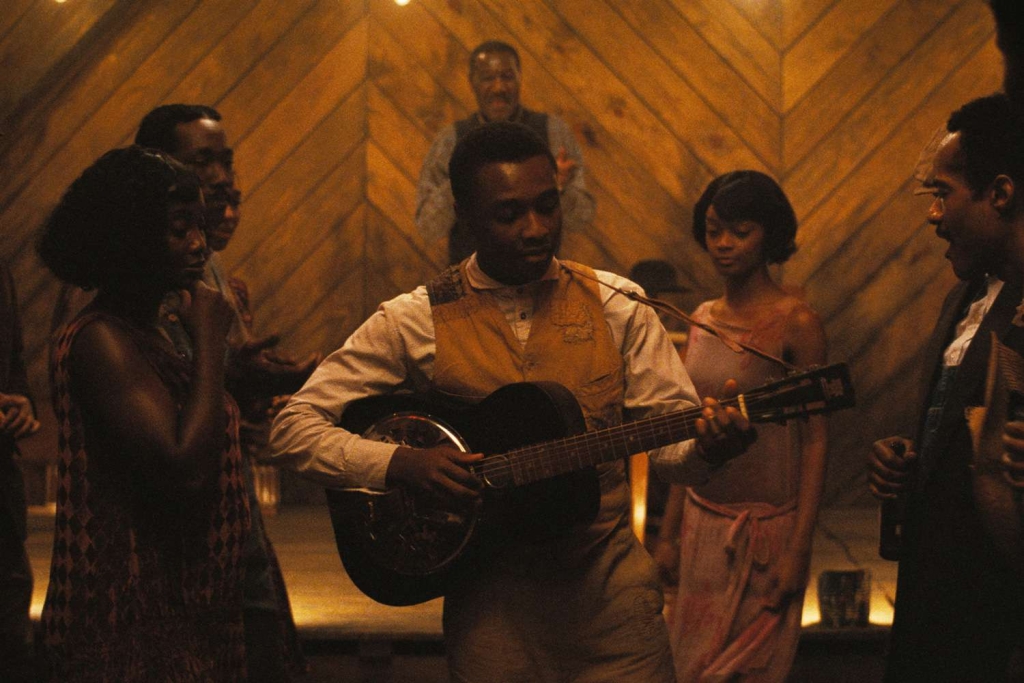
Music is not merely a backdrop in Sinners; it is an intrinsic element of the narrative, deeply woven into the film’s fabric. The soundtrack features a diverse collection of Blues musicians alongside performances by the cast members.
The score, composed by Ludwig Göransson, a frequent collaborator with Ryan Coogler, further enhances the film’s emotional landscape. Specific musical pieces, ranging from traditional Blues to Irish folk tunes, play crucial roles in shaping the atmosphere and underscoring the film’s thematic resonance.
The music is instrumental in creating the film’s atmosphere, skillfully building suspense during moments of terror, amplifying the emotional impact of key scenes, and consistently reinforcing the underlying thematic concerns. Several scenes highlight the pivotal role of music, most notably Sammie’s powerful Blues performances that captivate the juke joint patrons and even attract the attention of the vampires.
The film explicitly portrays music as a form of magic, possessing the power to bridge the divide between life and death, and to connect the past with the future.
This concept is visually realized in a stunning sequence where Sammie’s music conjures visions of past and future Black musicians and dancers, highlighting the enduring legacy and interconnectedness of Black musical traditions.
The recurring motif of music acting as a magnet for both joy and peril suggests a complex relationship between artistic expression and the oppressive forces at play.
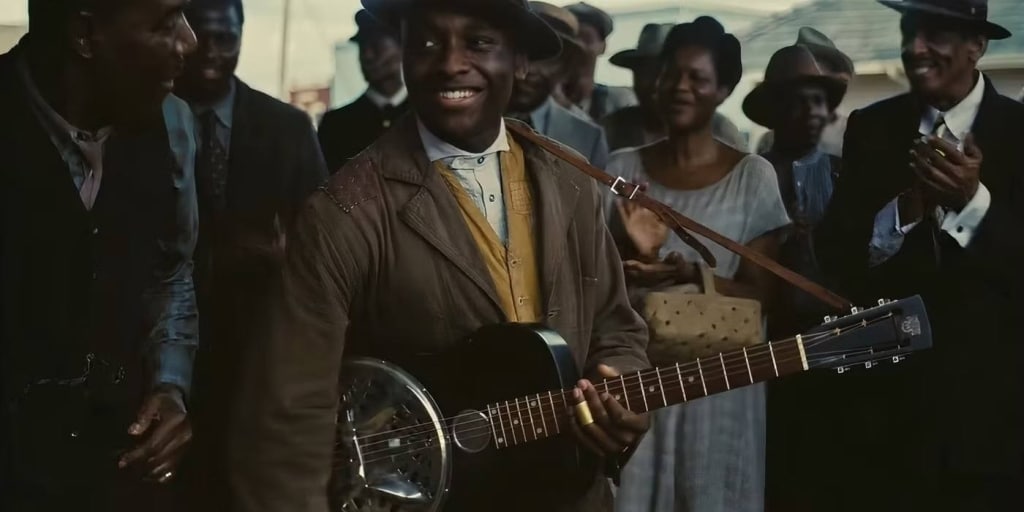
While music provides solace, strength, and a sense of community, it also draws the attention of those who seek to exploit or suppress marginalized communities.
The film’s opening scene, depicting Sammie’s battered return to the church clutching the broken handle of his guitar, immediately establishes a central tension. This visual represents the conflict between the secular, expressive world of music and the spiritual expectations of the church.
As the film progresses, Sammie’s guitar becomes a talisman of defiance. His music, rooted in West African griot traditions, attracts both communal healing and vampiric exploitation, symbolizing how Black artistry has historically been mined by oppressive forces.
The post-credits sequence, featuring Sammie singing alone, underscores music as an act of survival. As Coogler suggests, blues emerged from post-Civil War Black resilience, making it inherently resistant to white appropriation.
Freedom’s Double-Edged Sword

Sinners presents a complex and nuanced understanding of freedom. It contrasts the superficial allure of the “freedom” offered by vampirism with the more profound and meaningful freedom found in self-expression, community solidarity, and active resistance against systemic injustice.
The film deconstructs freedom as a contested ideal. The vampires promise liberation from racism but demand conformity. Their bite grants immortality yet erases cultural specificity, mirroring real-world pressures on marginalized artists to dilute their identities for mainstream acceptance. ‘
Beyond the overarching societal and supernatural conflicts, individual characters grapple with their own desires for freedom. Sammie, the young blues musician, yearns to pursue his musical passion, a path that clashes with his father’s religious beliefs and warnings about the dangers associated with Blues music.
Smoke and Stack, the twins, are trying to escape their own troubled pasts, seeking a fresh start in their hometown.
Annie, connected to Hoodoo practices, represents a form of spiritual and cultural resistance against the dominant forces of oppression, drawing strength from traditions that predate and exist outside the white supremacist structures of the time.
The film’s ending, particularly Smoke’s courageous final stand against the Ku Klux Klan, serves as a powerful act of resistance against both the immediate supernatural threat and the deeply entrenched forces of racial oppression.
Further, Sammie’s refusal to abandon his music—even as it attracts danger—embodies Coogler’s thesis: true freedom lies in self-expression unmediated by oppressive systems.
Art as Joy, Resistance, and Resurrection
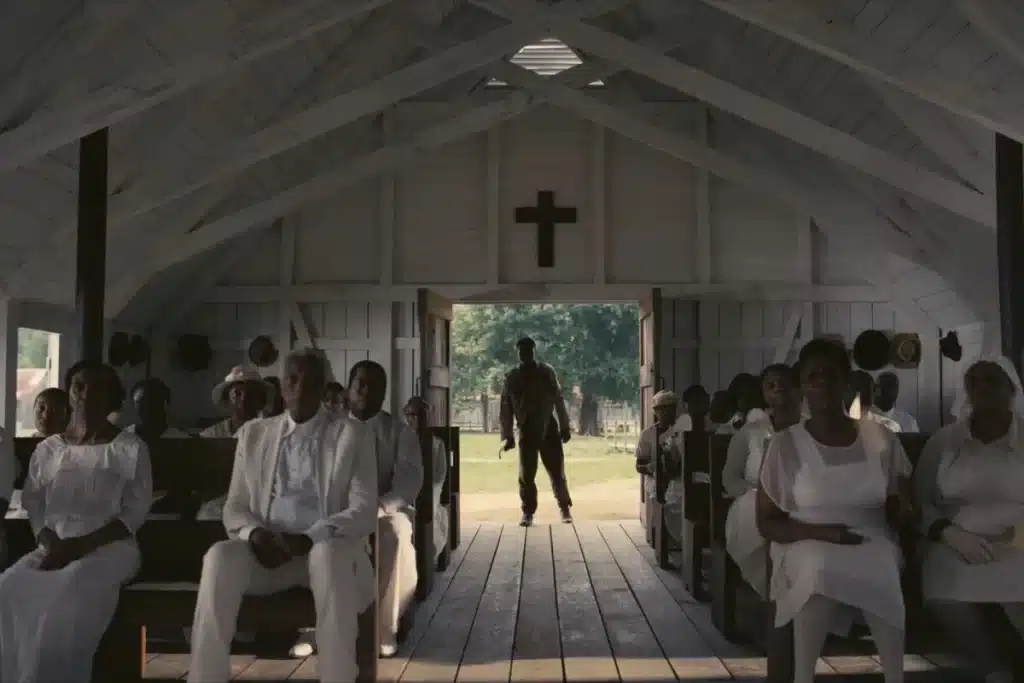
If vampirism in Sinners is a metaphor for identity suppressed, then art—especially music—is the resurrection. The act of creating, of expressing beauty in a broken world, is portrayed as the ultimate form of resistance. These vampires are not just undead—they are unsilenced. And that makes them dangerous in the eyes of any system built on silence.
This is a horror film, yes. But more than that, it is a hymn for the hunted. It is a requiem for the repressed.
It’s a reminder that even in the darkest night, some voices—like ancient songs and old blood—cannot be extinguished.









Follow Us!