


Read two takes on “Blink Twice” — a stylish and unsettling thriller that hopes to enter the hallowed halls of social horror like “Get Out”.
No time to read? Click the button below to listen to this post.
POINT: ONE TAKE FROM WRITER VL JONES

Blink Twice takes a unique approach to a trope that other directors have explored. In an interview with NBC, first-tie director Zoë Kravitz responded to the statement that Blink Twice is Get Out for women, a reference to Director Jordan Peele’s 2017 film. She answered that she wanted to explore ‘power’ and its effect on people.
And this film is undeniably a narrative about power and its abuse.
Frida (Naomi Ackie) and her friend, Jess (Alia Shawkat), are cocktail servers at one of Slater King’s (Channing Tatum) fundraising galas, and Frida is smitten. What’s more, the handsome tycoon seems as interested in her as she is in him. He invites Friday and Jess to hop on a plane (without bags or preparation) and accompany him and some friends to his private island for sun and fun. The girls accept the wild offer without hesitation.
At first, it feels like a pampered Paradise. But little things begin to give Frida pause. One of the housemaids seems to be subtlety signaling her, prompting another comparison to Get Out. The island is crawling with snakes that must be gathered and exterminated (making it feel reminiscent of a corrupt Garden of Eden, with snakes representing sin).
Then there’s the ‘traveling lighter,’ which belongs to Jess. Every day, someone else has it. Nobody remembers how they got it. One day, someone has the lighter, but there is no Jess. Worse, only Frida remembers her. Another ominous sign is that nobody knows what day it is or how much time has passed on the island.
The viewer can’t stop the wiggling doubt from entering their minds, looking for that crack in this perfect world.

Slater King asks Frida every night, “Are you having fun?” Too soon, hearing that question will begin setting off alarm bells. Why is he asking that question every day?
The tension builds as Frida struggles to remember and begins to ask questions, trying to piece reality from fantasy. She cannot remember anything after she arrives on the island. There is dirt under her nails, bruises on her body, and dirt on her feet, but no memories.
Kravitz, not trusting her viewers to see the clues to things not being right, injects an eerie, haunting music strand throughout that alerts us that something ‘bad’ is happening, leaving us with an uneasy feeling.
The movie’s core strength is the outstanding cast.

The characters are well-developed, and the actors excel at making them feel real and relatable. You either like them or hate them, but you have budding feelings for them. Your feelings intensify as the plot continues down its twisting, winding road. That’s one of the strengths of this film: You can’t help but become emotionally involved.
Ackie, Shawkat, and Adria Arjona (as Sarah) breathe life into their strong characters. Their performances skillfully depict a wide range of believable emotions, adding depth to the film that intrigues you. Tatumdelivers such a convincing performance as a sensitive, caring man that it isn’t until near the end of the movie when the script is flipped, and our jaws our left agape. It’s such a satisfying turn, thanks to the strength of Tatum’s delivery and range as an actor.
Kravitz’s greatest strength as a director is her ability to stay focused on her message. She pays laser-tight attention to what each scene will tell us.
Unfortunately, the climax is predictable, but the stellar performances ensure you’re never taken out of the film, which remains engaging to the very end. A final twist at the end delivers the icing on the cake, giving viewers much to chew on as they leave the theater.
Bottom Line: It’s hampered by an overused storyline and predictability, but the solid acting, foreboding clues, and gorgeous backdrop elevate it. 3/5 Stars
COUNTERPOINT: A DIFFERENT TAKE FROM EDITOR-IN-CHIEF STEPHANIE MALONE (EDITOR-IN-CHIEF)
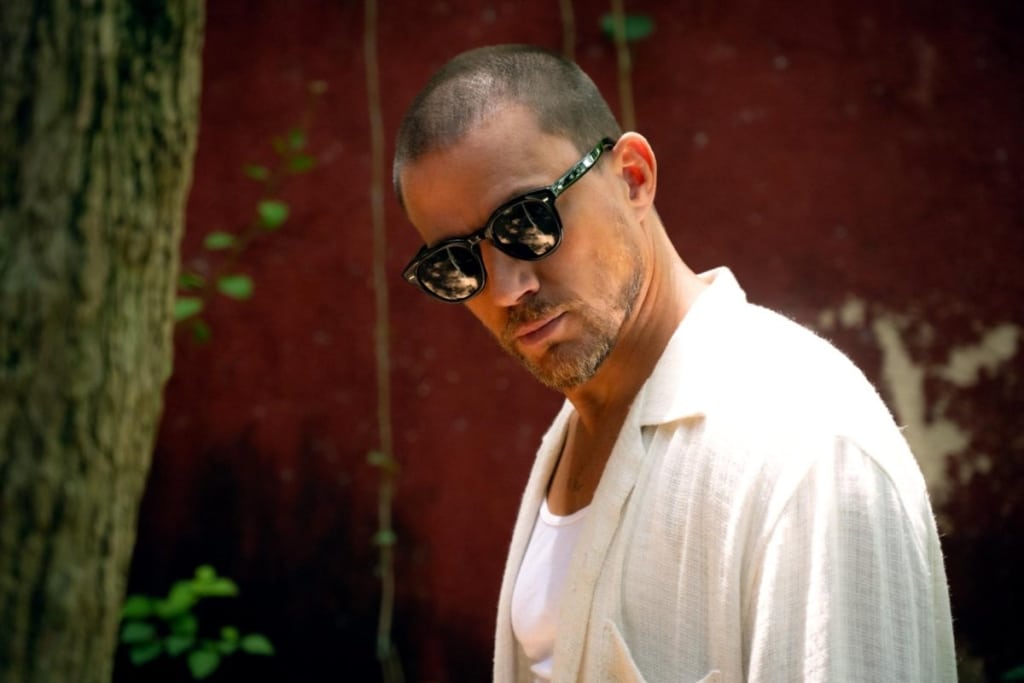
Blink Twice marks Zoë Kravitz’s triumphant directorial debut. This gripping thriller masterfully blends dark social commentary with tense, unpredictable storytelling, delivering a fresh and exhilarating take on the genre.
The film follows Frida (Naomi Ackie), a struggling cocktail waitress who impulsively accepts a last-minute invitation to an exclusive gathering on a private island owned by tech billionaire Slater King (Channing Tatum). What begins as a seemingly luxurious getaway quickly descends into a nightmarish scenario as Frida uncovers the sinister intentions behind her invitation.
Kravitz’s direction is nothing short of masterful. She deftly subverts audience expectations, seamlessly blending familiar thriller tropes with unexpected twists that keep viewers on the edge of their seats. The film’s initial setup as an “eat-the-rich” satire evolves into something far more sinister, delivering sharp social critique and all-too-real horror undertones.
Naomi Ackie delivers a tour-de-force performance as Frida, grounding the film’s escalating tension with raw emotional depth.

Her portrayal guides the audience through the unsettling experience, allowing us to feel every moment of dread and revelation.
Channing Tatum, in perhaps his most nuanced role to date, is mesmerizing as the charismatic yet deeply disturbing Slater King. His performance adds layers of complexity to the antagonist, making him both alluring and terrifying.
The supporting cast, including Alia Shawkat as Frida’s best friend and Christian Slater as a fellow tech mogul, round out an ensemble that crackles with tension and chemistry. Each character brings a unique energy to the film, contributing to the palpable sense of unease that permeates every scene.
Blink Twice‘s visual style perfectly complements its narrative, with subtle shifts in lighting and framing mirroring the characters’ psychological states.
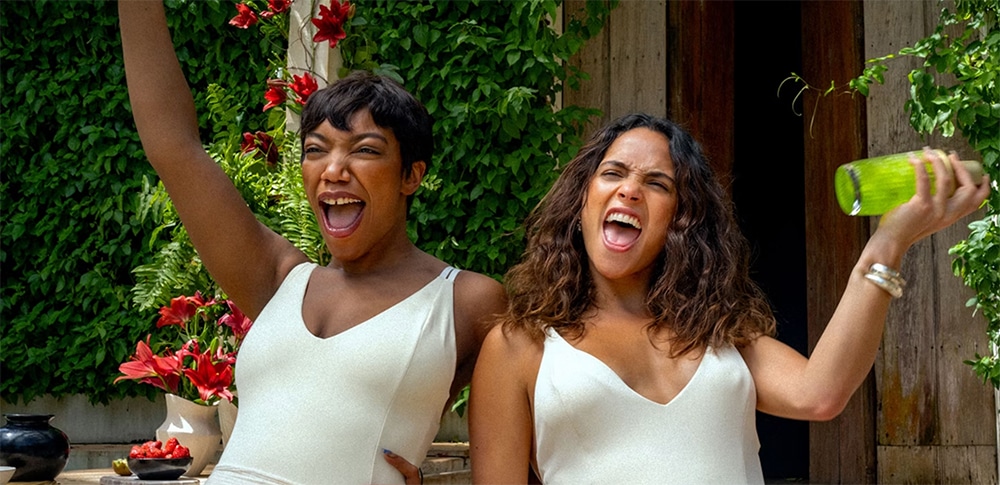
Adam Newport-Berra’s cinematography is a visual feast, capturing both the opulent beauty of the island setting and the growing sense of claustrophobia as Frida’s situation becomes more dire.
Kravitz’s skill as a director shines in her ability to balance the film’s disturbing themes with moments of dark humor. This tonal dexterity keeps the audience off-balance, enhancing the overall sense of unease while providing necessary moments of levity. The script, co-written by Kravitz and E.T. Feigenbaum, is razor-sharp, filled with biting dialogue and clever misdirections that keep the audience guessing until the very end.
The sound design and score play crucial roles in enhancing the film’s tense atmosphere and psychological depth.
One of the most effective aspects of the sound design is its use of silence. Kravitz isn’t afraid to let moments of quiet tension linger, making sudden bursts of sound all the more impactful. The integration of diegetic sound is also masterful. Everyday noises — the clink of glasses at a party, the hit of a vape — are amplified and distorted at key moments, reflecting Frida’s increasing sense of alienation and danger in this unfamiliar world of wealth and privilege.
Blink Twice fearlessly explores themes of gender dynamics, privilege, and power without ever feeling preachy or heavy-handed.
The film’s social commentary is seamlessly woven into its narrative, allowing viewers to draw their own conclusions about the toxic nature of unchecked wealth and influence.
The third act is a particular standout, delivering a satisfying, intense, and darkly humorous payoff that will leave audiences buzzing long after the credits roll. The film’s twist ending forces viewers to reconsider everything they’ve seen up to that point.
Ultimately, Blink Twice stands out as one of the boldest and most innovative films of 2024.
Bottom Line: With its strong performances, smart writing, and unique twist on modern social thrillers, Kravitz has announced herself as a formidable new voice in cinema. 4/5 Stars










Follow Us!