Brooklyn Horror Film Fest 2024: The Last Sacrifice (2024)


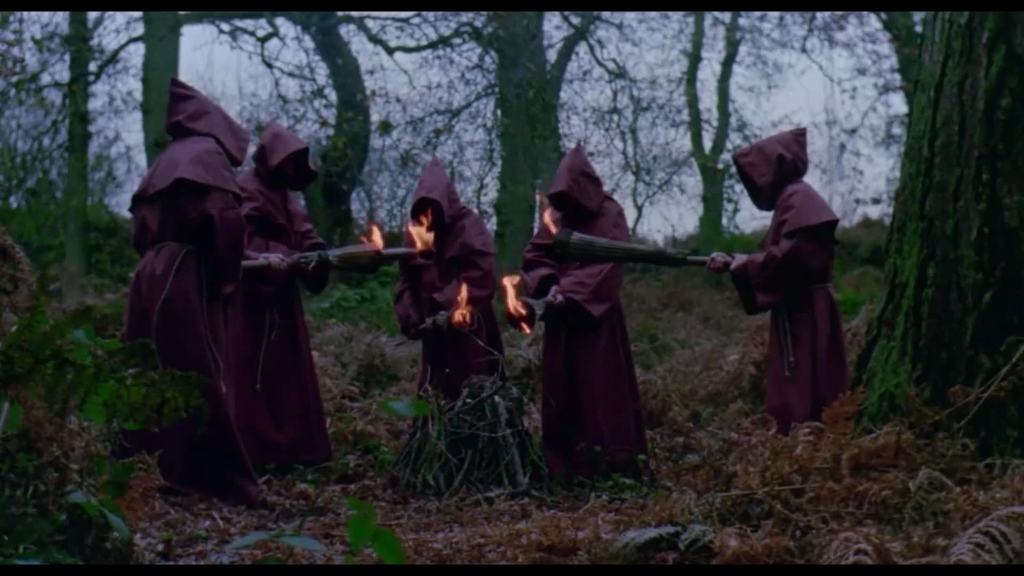
Folk horror is a hugely popular genre, and recent films like The Witch (2015), Midsommar (2019), and Men (2022) have brought even more fans into the fold. One of the most iconic folk horror films is The Wicker Man (1973), which tells the story of an uptight policeman who travels to a Scottish island village to search for a missing girl, only to be thwarted by the reclusive pagan people living on the island.
What spawned the folk horror genre in Britain, where many of these films took place? Writer and filmmaker Rupert Russell dives deep into British history and sociology to answer this question in his astoundingly comprehensive documentary The Last Sacrifice (2024).
The film examines the death of Charles Walton, an elderly English farmworker who was murdered on Valentine’s Day in 1945.
The killer (or killers) beat him with a stick, drove a pitchfork through his neck, and cut him with a slash hook. Despite the assistance of the accomplished detective Robert Fabian, the murder was never solved. Fabian was stymied by the local townspeople who did not cooperate with the investigation; he said, “They do not take easily to strangers.”
The gruesome nature of Walton’s murder and the closed ranks of the tiny town where he was killed (Lower Quinton in Warwickshire, England) had people suspecting that witchcraft was involved in his bloody demise.
The anthropologist and folklorist Dr. Margaret Murray was also intrigued by the case; she visited Lower Quinton and suggested that Walton’s killing was part of a black magic ritual to ensure the village’s crops grew.
The connection between a sacrificial killing and the earth’s fertility maps directly onto The Wicker Man, as does the distrust of strangers.

As interest in drugs, sexual liberation, and the counterculture grew, so did the popularity of witchcraft.
To get a clear picture of the sociology of the British at the time, Russell interviews everyone from the film historian and actor Jonathan Rigby to Geraldine Beskin, the owner of London’s oldest occult bookstore, to Dr. Diane A. Rodgers, a professor, and co-founder of the Centre for Contemporary Legend at Sheffield Hallam University.
The amount of archival footage in The Last Sacrifice is wildly impressive, and scenes are stitched together so that the narrative always feels smooth and continuous, thanks to Alexander McNeill’s meticulous editing.
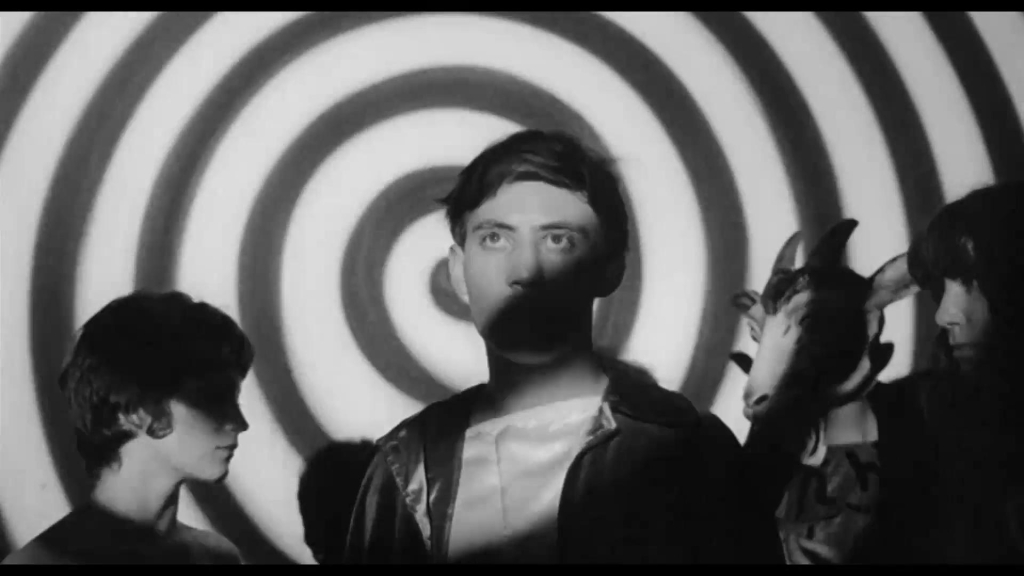
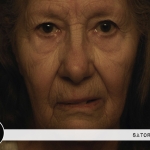
Throughout the film, the lower-thirds on screen indicate whether the audience is seeing something factual or something fictional. While these labels provide helpful context for the audience, they also serve another purpose. Some of the factual and fictional scenes are almost identical: The recording of a young Janet Farrar being initiated into a coven in Last Rites (1971) is eerily similar to how folk horror movies like Virgin Witch (1971) portrayed the initiation process.
These “FACT” and “FICTION” labels made it all the more clear there is a thin line between fact and fiction when it comes to the story of witchcraft in Britain.
(Farrar, who is also interviewed in The Last Sacrifice, is a screen-stealer. She discusses her initial skepticism about joining a coven, her family’s reaction to her appearing in the local paper, and her involvement in the Highgate Cemetery Vampire frenzy. Although she is shocked by the request that she be nude for her initiation ceremony, she wryly says, “In for a penny, in for a pound.”)
A woman-on-the-street interview early on in The Last Sacrifice perfectly portrays the tension between people who practice witchcraft and those who do not.
When a woman is asked why she is uneasy about witches living in her area, she answers, “Lack of knowledge, I should think. If you don’t know anything about anything on the subject, what do you do? You get nervous. You get frightened.”
Her candid answer covers not just fear of witchcraft but a fear of the outsider that is the backbone of many folk horror films – and unfortunately, something that is part of human behavior.
Russell’s film not only gives viewers a crash course in mid-1900s British history and culture, folk horror, and witchcraft, but it also provides a guide to understanding how and why people either isolate themselves or align themselves with others.

She’s a lover, he’s a fighter. Together, they’re CHEER AND LOATHING. Tune in to hear your hosts, Stephanie (Cheer) and Casey (Loathing), clash over the films they love — and the ones they love to hate.
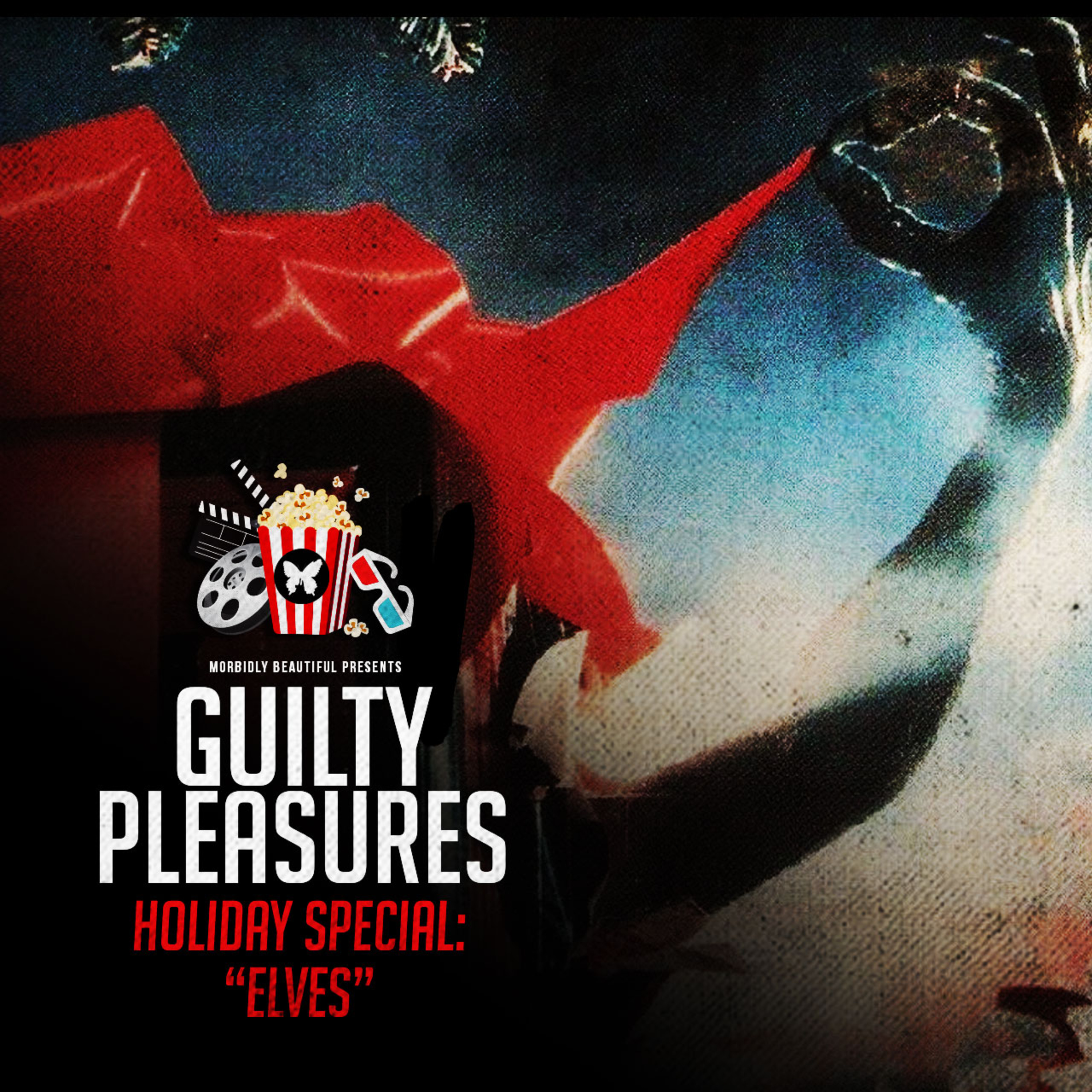
In this holiday extravaganza episode of Guilty Pleasures, join hosts Stephanie, Kelly, and our newest addition, Jonathan (Jack was tied up in tinsel and couldn't join us), as they unwrap the bizarre and unhinged world of holiday cinema. They dive into the depths of Elves, a film that's as chaotic as it is entertaining. It's a sleigh full of questionable decisions, diabolical dialogue, absurd plot twists, wildly offensive antics, and unhinged holiday mischief.
And that's not all! In the second half of the podcast, join your festive cinephile friends for a look at four more ”nutty as a fruitcake” holiday treats: A New York Christmas Wedding, Elf Bowling, A Medea Christmas, and Jack Frost. Plus, we each offer a bonus Christmas flick guaranteed to make you say, ”Ho, Ho, HO-LY Hell!”
Expect laughter, disbelief, and a spirited debate about what truly makes a movie a guilty pleasure. Don't miss this festive journey through the weirdest corners of holiday films!
 Movies and Casinos Are a Natural Fit in the Philippines
 Fresh Screams: Five Horror Films to Stream (July 20-July 27)
 Fresh Screams: Five Horror Films to Stream (July 13-July 19)
 Fresh Screams: Five Horror Films to Stream (July 6-July 12)
 When Monsters Reflect Us: The Psychology of Modern Horror Villains

Follow Us!