Eerie Essentials: Martyrs (2008)


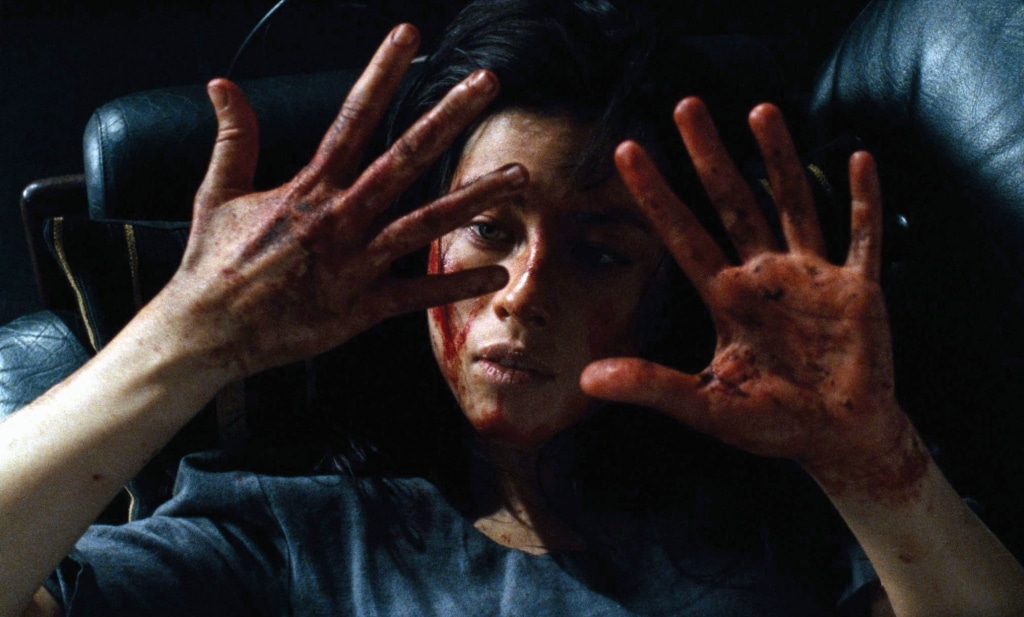
I recently rewatched Martyrs, Pascal Laugier’s 2008 French extreme horror film. This film burrowed into my soul upon first viewing and continues to chill me to my core. I watched it with a friend who was seeing it for the first time, anxious to introduce her to one of the most visceral and unforgettable genre essentials.
To my dismay, she found the film unaffecting, even a bit monotonous, and took issue with its intentionally ambiguous ending.
This reaction prompted me to write a heartfelt defense of the film, highlighting why I think it’s such an important piece of cinema and why the film’s deeper themes resonate profoundly.
Of course, I will address that controversial ending in an attempt to counter the suggestion that failing to give concrete answers is in any way a cop-out or a decision that cheapens the film’s thematic themes.
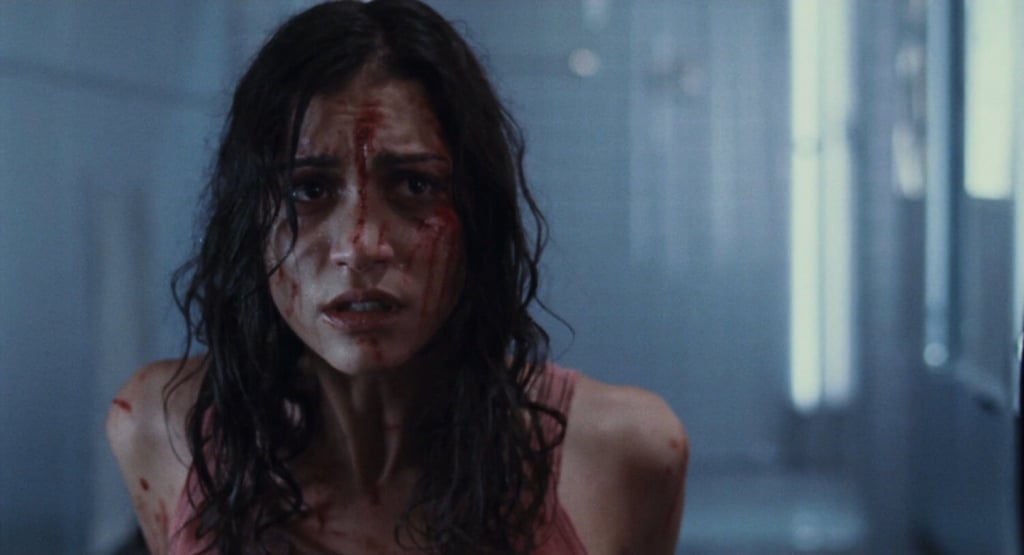
Its power to leave an indelible mark on a viewer’s psyche lies not in cheap scares or gratuitous violence but in its unflinching portrayal of human suffering and its willingness to confront the darkest aspects of human nature.
Narratively, the film is split into two distinct acts. It begins as a revenge thriller before morphing into something far more complex and unsettling. This sudden shift serves to disorient the viewer and subvert expectations.
In full disclosure, the film does not pull any punches regarding its portrayal of monstrous violence, especially in its final act. It’s exceedingly difficult to watch and may be too much for those not accustomed to extreme horror.
With that said, the violence is not gratuitous; this is not torture porn. Instead, the violence serves the narrative in a very real and profound way.
The stark, almost clinical presentation of violence in the latter half of the film serves to underscore the systematic nature of the cruelty being inflicted, elevating it from mere shock value to a powerful commentary on institutionalized brutality.
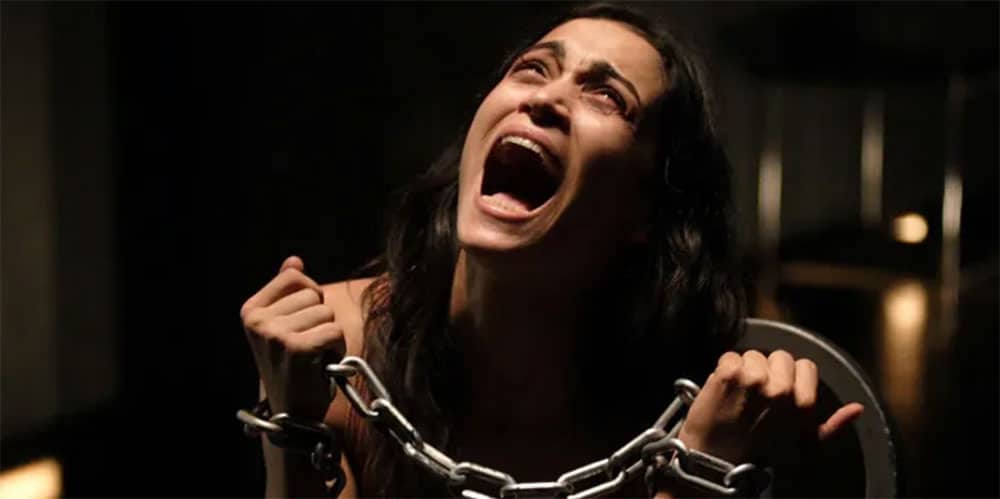
Martyrs follows two young women, Lucie (Mylène Jampanoï) and Anna (Morjana Alaoui), who represent the effects of extreme trauma.
The harrowing idea that individuals who have experienced profound agony can transcend normal human limitations and glimpse something beyond raises profound questions about the nature of religious and mystical experiences. Are they truly divine revelations or the product of extreme psychological and physical states?
The film doesn’t provide easy answers but invites the viewer to grapple with these weighty philosophical questions.
Furthermore, Martyrs delves deep into the cyclical nature of abuse and trauma. The character of Lucie, traumatized by her childhood captivity, becomes an agent of violence herself.
This portrayal challenges simplistic notions of victims and perpetrators, illustrating how trauma can perpetuate itself across generations and individuals.

The film’s ambiguous ending is perhaps its most brilliant stroke.
WARNING: SPOILERS AHEADAfter enduring unimaginable torment, Anna whispers something to the society’s leader, Mademoiselle, the content of which is never revealed to the viewer. Mademoiselle’s suicide suggests that whatever Anna told her about the afterlife was too overwhelming, terrifying, or perhaps even void of meaning.
One interpretation is that Anna revealed there is nothing after death, which shattered Mademoiselle’s beliefs and hope.
The cult’s entire purpose was centered on the afterlife, and discovering its absence may have driven her to despair—especially realizing the extent of the horror they inflicted on so many young women without any reason or higher purpose. At this point, the guilt may have been too much to bear.
Another possibility is that what Anna experienced in her martyrdom was something beyond human comprehension, something that cannot be put into words.
Mademoiselle may have realized that no one would understand or be able to grasp the truth of what lies beyond, so she chose to end her life, possibly to experience it herself or because the revelation was itself tantamount to a transfiguration from which she could not return.
Alternatively, she might have understood that pursuing certainty about the afterlife is futile. The film leaves viewers with the notion that the mysteries of life and death should remain uncertain, and any attempt to grasp ultimate knowledge is inherently flawed.
Anna’s journey to martyrdom may have revealed a profound truth about the limits of human endurance and the transcendence that comes from pushing beyond them—yet the film denies us the satisfaction of knowing exactly what that transcendence entails.
Ultimately, the ending of Martyrs is a philosophical statement on the unknowability of death and the limits of human understanding. It presents a nihilistic or existential outlook on the afterlife, leaving the audience to grapple with the implications of suffering and what might (or might not) lie beyond death.
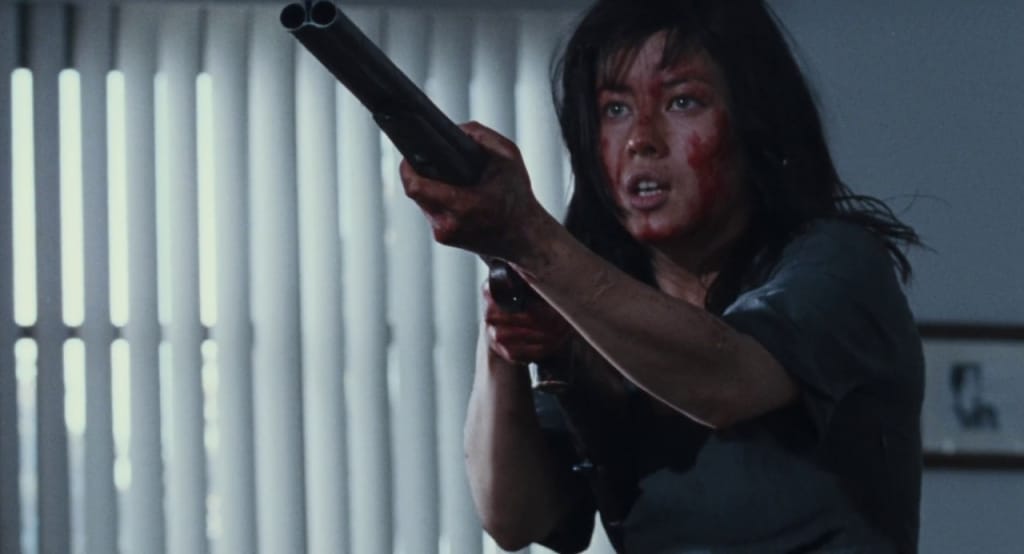
At its core, Martyrs is an exploration of the nature of suffering and the ways in which it forever changes us.
It elevates itself by confronting the most challenging aspects of human existence without flinching and without offering easy consolations—using the visceral power of horror to explore philosophical depths.
Far from cheapening the viewing experience, the ambiguity of the film enriches it immeasurably. By refusing to provide easy answers or a clear resolution, the film respects the complexity of its themes and the intelligence of its audience. It suggest that the pursuit of absolute uncertainty in matters relating to life, death, and what lies beyond is folly and can lead to monstrosity.
Martyrs is a film that pushes the boundaries of what the medium can accomplish and, reinforcing the film’s themes, transforms those brave enough to endure its harrowing journey.

She’s a lover, he’s a fighter. Together, they’re CHEER AND LOATHING. Tune in to hear your hosts, Stephanie (Cheer) and Casey (Loathing), clash over the films they love — and the ones they love to hate.
In this holiday extravaganza episode of Guilty Pleasures, join hosts Stephanie, Kelly, and our newest addition, Jonathan (Jack was tied up in tinsel and couldn't join us), as they unwrap the bizarre and unhinged world of holiday cinema. They dive into the depths of Elves, a film that's as chaotic as it is entertaining. It's a sleigh full of questionable decisions, diabolical dialogue, absurd plot twists, wildly offensive antics, and unhinged holiday mischief.
And that's not all! In the second half of the podcast, join your festive cinephile friends for a look at four more ”nutty as a fruitcake” holiday treats: A New York Christmas Wedding, Elf Bowling, A Medea Christmas, and Jack Frost. Plus, we each offer a bonus Christmas flick guaranteed to make you say, ”Ho, Ho, HO-LY Hell!”
Expect laughter, disbelief, and a spirited debate about what truly makes a movie a guilty pleasure. Don't miss this festive journey through the weirdest corners of holiday films!






Follow Us!