

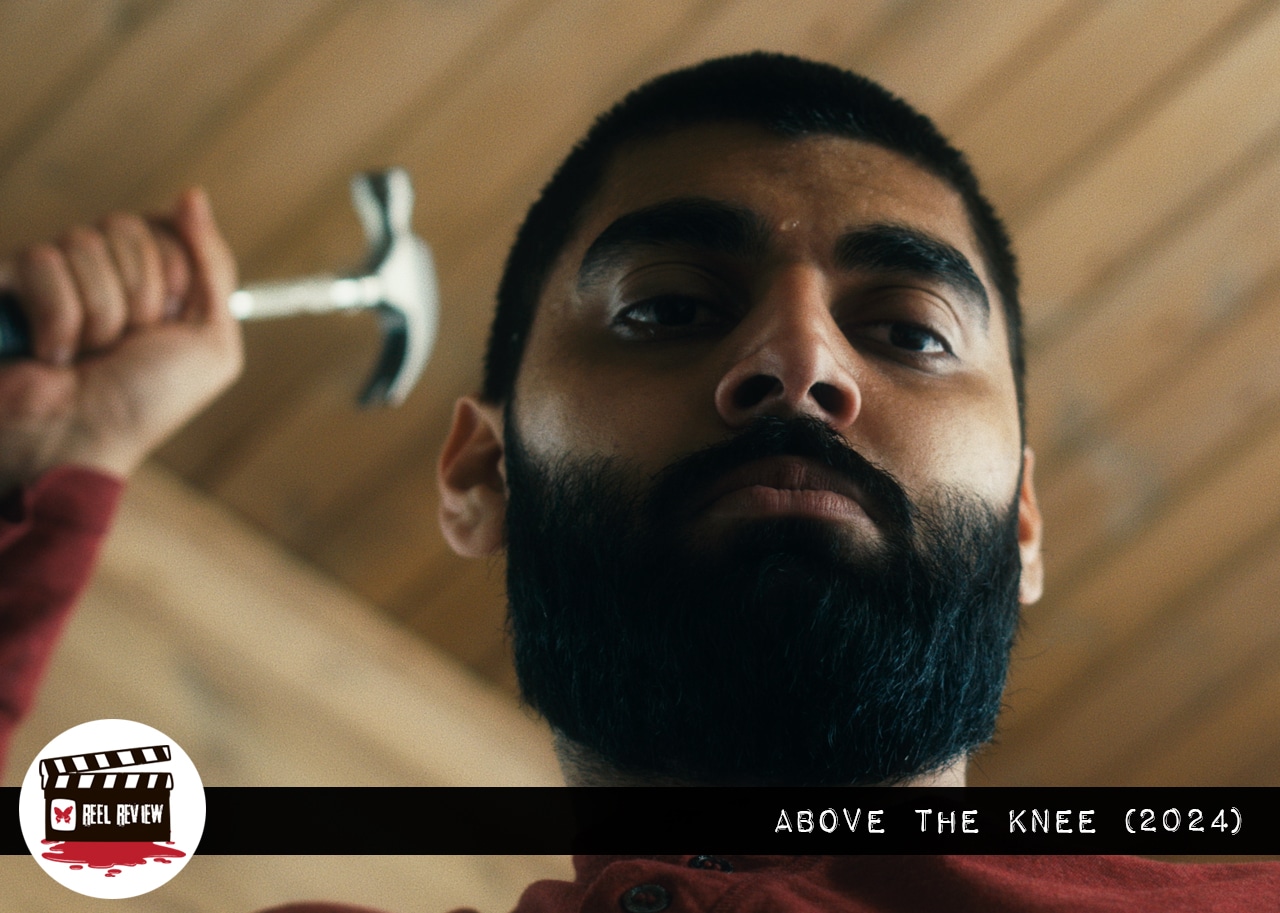
“Above the Knee” is a spiraling story about a man’s descent into mental illness and despair that left me on the edge of my seat.
No time to read? Click the button below to listen to this post.
Amir knows something is wrong with him. He suffers from Body Integrity Dysphoria or BID, and he cannot tell a soul.
Directed by Viljar Bøe, Above the Knee begins with Amir (Freddy Singh) seeing his toes start to turn black with rot. A hallucination, but a terrifying one nonetheless. He watches a documentary on television with his girlfriend Kim (Julie Abrahamsen) about BID, in which a woman who wishes to be blind is interviewed. When Amir asks Kim what she thinks about it, she says it is weird and offensive to “real” disabled people.
After this moment, the countdown begins: 24 days until an unspecified “accident.”
Amir contacts the woman from the documentary, Rikke (Louise Waage Anda), under the guise of needing an interview for informational purposes. Rikke sees right through Amir’s lie and notices how he sits with one leg tucked in. She tells him that the only cure for BID is to become disabled. This begins a friendship between the two, as BID is an incredibly rare disorder.
There isn’t any backstory on Amir besides the time when he explains that he no longer drinks alcohol because one night, he blacked out and attempted to saw off his own leg. Doctors saw this as a suicide attempt rather than a much deeper cry for help. Some extra backstory would be nice because BID typically develops in ages 8-12. BID sufferers are predominantly male, and they also have a small correlation with personality disorders.
I would be fascinated to see more of this story in Amir’s character develop, but the mystery also helps keep the movie shrouded in darkness, only letting the viewer see the story piece by piece.
There is no way to guess what will happen next.

The cinematography is fantastic, using flashbacks to portray how mentally ill Amir truly is without demonizing his illness.
This story, written by Bøe and co-written by star Freddy Singh, is told in many different covert ways. I ended up watching it twice just to soak up all of the implied storylines. The existence of BID is prevalent but viewed as factual and accurate rather than a reason for Amir to be cruel to the people around him. And my oh my, does he ever become a cruel man as the rot begins to creep up his leg.
Another way the story is told is through the very subtle score.
High-pitched noises ring out during Amir’s flashbacks, making the audience aware of how hard it is to live with his thoughts and how heavy the BID weighs on his mind.
The score creeps gently throughout the film, leaving a sense of tension that doesn’t let up.
Rikke explained to Amir in their initial interview that in order to pull off a self-amputation, he has to make it look like an accident.
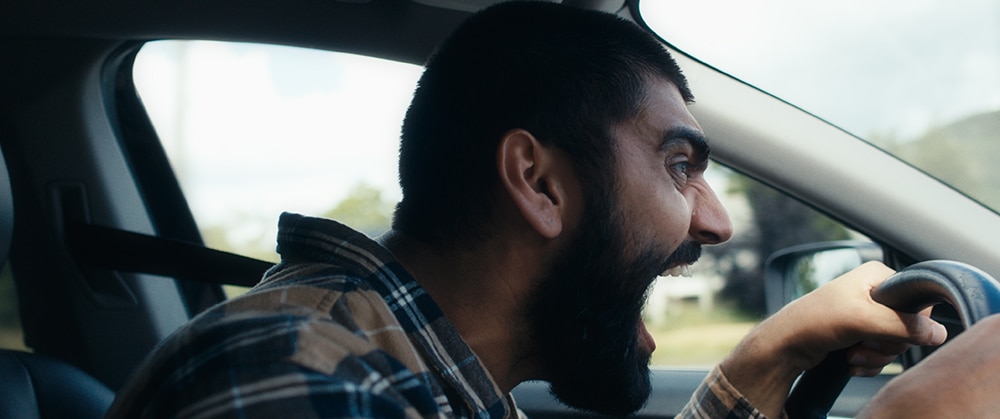
Amir begins to grow irritable the more he lives with his BID. He is snippy with his boss, his girlfriend Kim, and his new friend Rikke. Rikke even comes onto him and suggests they be together, and Amir’s response to this is to grab her face and threaten to pour chemicals into her eyes to actually blind her. This is the first time we see Amir display a possible antisocial personality—and it gets worse from there.
At this point, the rot has reached his knee and has only gotten worse. The images of the bloody saw continue to haunt him.
The real question we all have from the beginning of the film is this: Does Amir find peace and remove his leg? And if so, how does it affect his life?
Revealing any more would take us into serious spoiler territory. Thus, the only thing I have to say is that the ending is a cliffhanger, but not in the sense that I was left wanting a sequel.
The ending reveals exactly what we want to know at that moment; it’s a fitting finale to a riveting film.
Overall Rating (Out of 5 Butterflies): 4
ABOVE THE KNEE premiered at Beyond Fest 2024, where it was screened for this review. It has been picked up for worldwide distribution by Blue Finch Films.











Follow Us!