Reversing the Victim Stereotype: “Teeth” and Female Agency


Vagina dentata. Toothed vagina. Folk tales of this monstrosity have long since been told across the globe, from South America to East Asia to the Pacific islands.
The stories were told as cautionary tales to young men in hopes that it would deter them from raping the women in their community. Wouldn’t it be wonderful if men were taught not to rape simply because it is one of the most violent, degrading, and heinous acts you could do to another person? Rather than because it could demasculinize you?
I suppose if it works, it works. I merely find it interesting that while women are usually the ones classed as hysteric, there are few things that make a man as uncomfortable as the prospect of female genitalia having teeth. I wonder how one would react if they came face to face with one. I imagine it would result in an increased heart rate, excessive emotion, and maybe even fainting. Sounds familiar.
Castration anxiety is still very much alive among the modern male population, although it is usually less literal.
Castration anxiety and the fear of emasculation are perhaps more prevalent now than ever, with more and more men donning the uber-macho alpha male persona, attempting to use high levels of intelligence, assertiveness, and physical power to solidify their social status and dominance over women.
Of course, anyone with half a brain would watch an Andrew Tate video and see this as simply a new wave of misogyny neatly packed into a 90-second Instagram reel for 12-year-old boys’ consumption. But, the impact that this content has had on the modern male psyche is undeniable.
The fear of emasculation is not usually rooted in the actual fear of women with gnashing, hungry teeth in their genitalia.

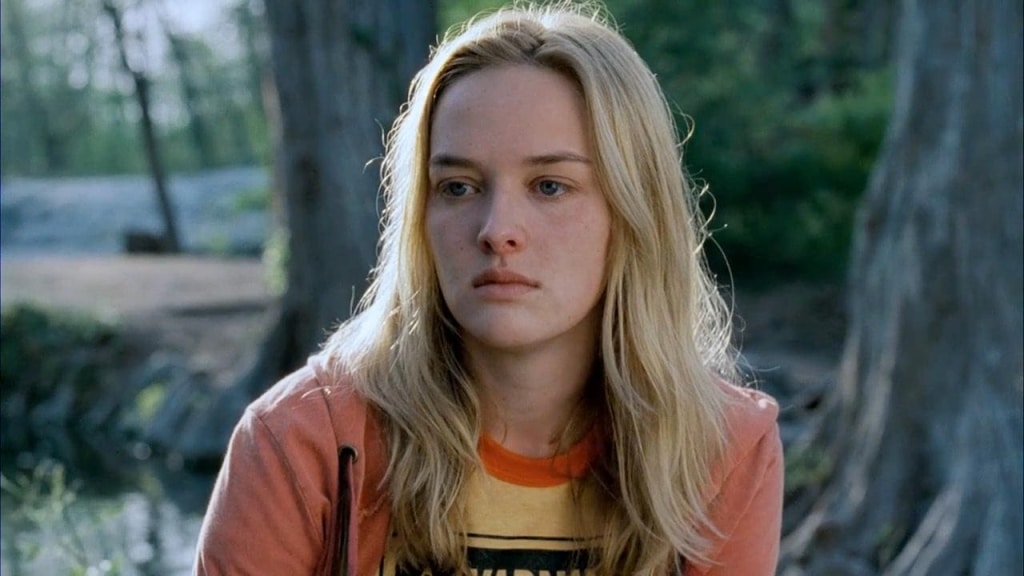
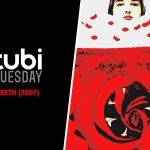
2007’s Teeth, written and directed by Mitchell Lichtenstein, received mixed reviews from critics at the time of its release and was a box office bomb. 17 years on, Teeth has become a cult classic and, surprisingly, a bit of a hit with feminist film critics, despite the fact it was made by a man.
It falls into the 2000s weird women canon, alongside films like May and Jennifer’s Body, each of which has also received greater appreciation over time.
Teeth tells the story of Dawn, a suburban teenager, devout Christian and member of her local abstinence group. Dawn, initially quite a shy and subdued character, flourishes throughout the film as she learns about her own body and gains more agency.
It is revealed early on in the film that, as children, Dawn’s stepbrother Brad attempted to molest her, resulting in the tip of his finger being bitten off by Dawn’s vagina. Years pass, and both Dawn and Brad seemingly forget this incident, although it is clearly very much present in Brad’s subconscious, as he refuses to engage in vaginal sex with his girlfriend, despite his girlfriend sharing her own wishes to do so.
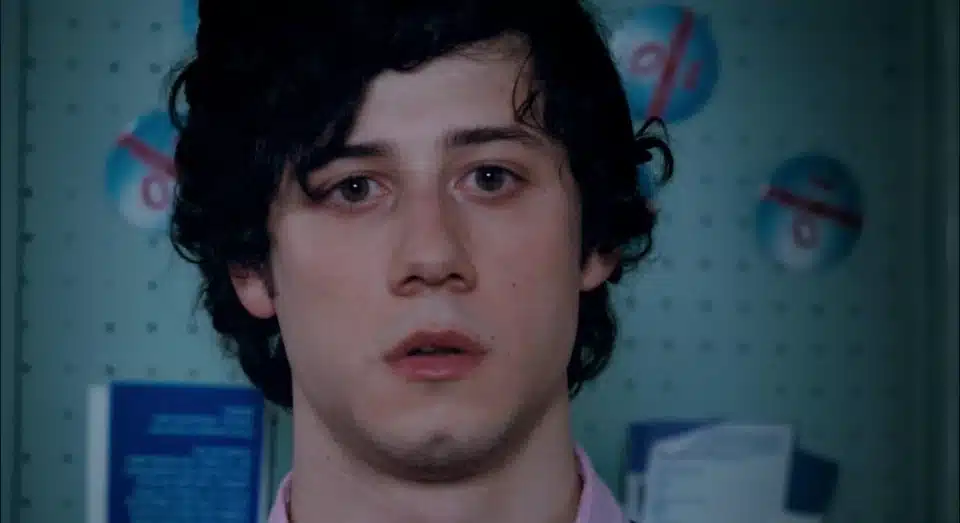
Later in the film, Dawn meets Tobey. We all like Tobey! He has a curly mop of hair that 2000s teen girls would die for and little dimples, but most of all… he really likes Dawn. He can’t help but glance at her during class, sneak secret phone calls, and even watch a children’s film at the cinema with her when it is clear she does not want to watch anything. Rated R. We really like Tobey!
That is, of course, until he attempts to force himself on Dawn after the two go swimming, smacking her and knocking her to the ground when she tries to flee.
A concussed Dawn wakes to Tobey beginning to rape her, and as she begins to understand what is happening and understandably begins to panic, Tobey lets out a scream of pure terror. Dawn’s vagina dentata is back and better than ever, slicing Tobey’s penis off in the act of self-defense. Horrified, Dawn runs home, leaving our once beloved Tobey to bleed to death by the water.
As a character, Dawn could have easily been portrayed as a hysteric and manic character.
I can see a film where Dawn mirrors Isabelle Adjani’s performance in Possession or Mia Goth’s in Pearl, and while I would certainly watch that film, I think the decision to make Dawn grounded is much more interesting.
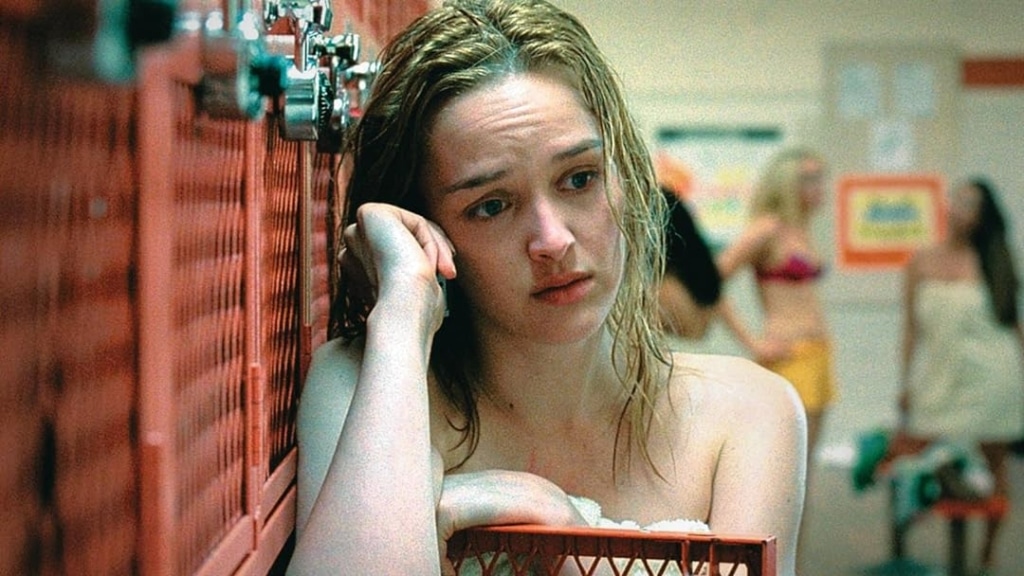
Dawn is absolutely affected by Tobey’s assault, her brother’s molestation, as well as a number of other incidents of sexual violence and harassment she faces in the film, but Dawn is a fully realized character. She is not an archetype of a deranged woman with a grotesque body. She is a force to be reckoned with. Dawn becomes more powerful and confident with each scene, not because of her attacks, but because she is gaining control over her own body and finally has knowledge pertaining to it.
I have no personal opinion on abstinence; to each their own when it comes to their sexual activities or lack thereof. Yet, I do absolutely think that it is important that all young people are taught about their own bodies so that they can make informed decisions for themselves.
In Teeth, the female genitalia in the student’s science books are even covered with stickers, while the male’s are on full display.
Dawn is an example of this, but so are all of the statistics that prove that girls and women who have knowledge of their bodies and the correct language to speak about them are less likely to become victims of sex crimes and more likely to feel comfortable enough to speak out, if it does happen to them.
The genre itself is full of more duds than triumphs, but more recent entries like Revenge, The Nightingale, Hunted, and Promising Young Woman have shown audiences that these films can absolutely be nuanced and have female characters that are equally strong as they are flawed.
Teeth has its fair share of scenes that have not aged well in the time of Me Too and Time’s Up, which even the director himself recognizes. But that does not change the fact that, as a whole, way before it was cool, Teeth gave us a story of a woman using her own body as a weapon to fight male-perpetrated sexual violence. It flipped the script and turned men into the helpless, delirious victims that horror often teaches us to expect women to be.
The film doesn’t even tell the audience how Dawn managed to get her vagina dentata—whether she was born with them or they developed as a physical defense to her molestation—or whether the looming power plant in the background of many shots has caused some mutation in Dawn.
I like to think that these specifics are up for interpretation and that I, too, could will myself to have this formidable weapon if need be. Thanks, Dawn!
…
She’s a lover, he’s a fighter. Together, they’re CHEER AND LOATHING. Tune in to hear your hosts, Stephanie (Cheer) and Casey (Loathing), clash over the films they love — and the ones they love to hate.
In this holiday extravaganza episode of Guilty Pleasures, join hosts Stephanie, Kelly, and our newest addition, Jonathan (Jack was tied up in tinsel and couldn't join us), as they unwrap the bizarre and unhinged world of holiday cinema. They dive into the depths of Elves, a film that's as chaotic as it is entertaining. It's a sleigh full of questionable decisions, diabolical dialogue, absurd plot twists, wildly offensive antics, and unhinged holiday mischief.
And that's not all! In the second half of the podcast, join your festive cinephile friends for a look at four more ”nutty as a fruitcake” holiday treats: A New York Christmas Wedding, Elf Bowling, A Medea Christmas, and Jack Frost. Plus, we each offer a bonus Christmas flick guaranteed to make you say, ”Ho, Ho, HO-LY Hell!”
Expect laughter, disbelief, and a spirited debate about what truly makes a movie a guilty pleasure. Don't miss this festive journey through the weirdest corners of holiday films!


Follow Us!