


A wholly original and profoundly unsettling plunge into humanity’s darkest depths, “Solvent” is as consequential as it is chilling.
No time to read? Click the button below to listen to this post.
Did you ever watch a film that bowled you over in such a profound way that you couldn’t wait to tell everyone you knew about it—except you had no idea how to describe the visceral viewing experience, nor were you confident that most would appreciate its surreal approach to storytelling?
That’s Solvent in a nutshell.
After falling in love with Austrian filmmaker Johannes Grenzfurthner’s bizarrely hypnotic Razzennest, I was eager to watch his latest offering, the socio-political experimental horror Solvent, which he co-wrote with Benjamin Roberts.
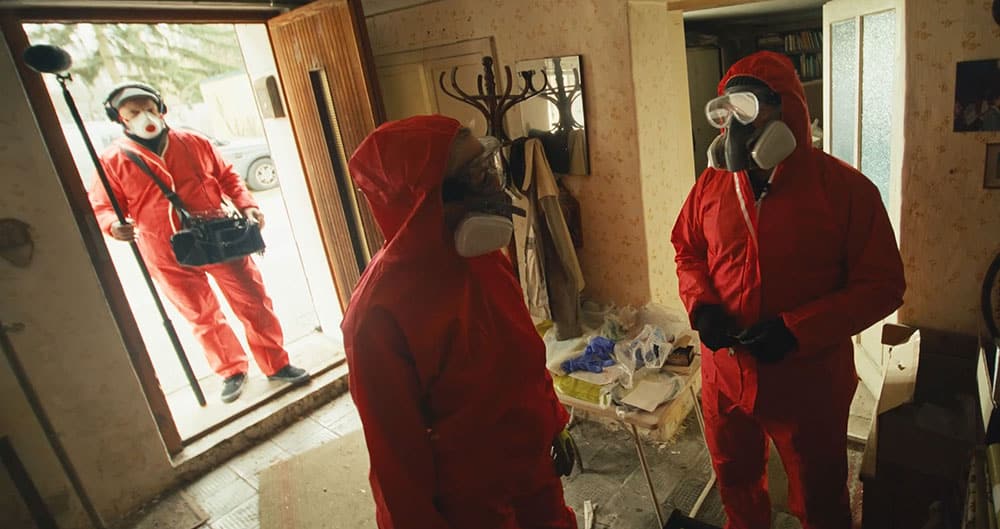
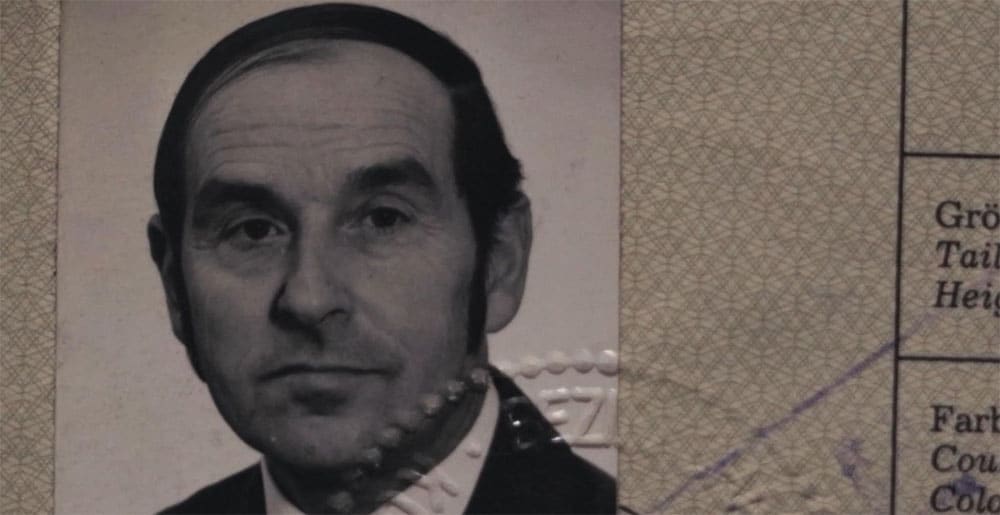
This found footage-body horror shot largely in POV style follows a group of experts led by an American expatriate with severe PTSD, Gunner S. Holbrook (Jon Gries). They are searching for important Nazi documents—related to a hidden mass grave—in an abandoned Austrian farmhouse owned by missing Nazi war criminal Wolfgang Zinggl (played via archival footage by Grenzfurthner’s real grandfather).
While exploring an underground bunker next to the property that a neighbor directs them to, tragedy strikes.
Polish academic historian Krystyna (Aleksandra Cwen) is examining a pipe protruding from the ground using a sewer camera. However, she discovers something so horrifying that she accidentally kills another crew member as she frantically flees the building.
It causes the project to be abandoned and keeps Gunner’s ex, Krystyna, locked in perpetual fear, madness, and self-imposed isolation.
However, Holbrook can’t let the mystery go and returns independently to the scene to further his investigation against the vehement objections of the property’s owner, Wolfgang’s grandson Ernst (played by Grenzfurthner himself).
As Holbrook confronts the monstrous evil buried in the bunker, he must reconcile the horrors of the past with his own actions.

Solvent opens with a quote from Norman Maclean’s autobiographical novella A River Runs Through It (1976):
“Eventually, all things merge into one, and a river runs through it. The river was cut by the world’s great flood and runs over rocks from the basement of time. On some of the rocks are timeless raindrops. Under the rocks are the words, and some of the words are theirs. I am haunted by waters.”
The deeper Holbrook digs for answers, the further he descends into a hell formed by the waters that flow between humanity’s dark history and its not-so-distinct present.
When confronted with the unimaginable cruelty and inhumanity of Nazi war crimes, he reflects on his own questionable actions in modern wars like Kuwait and Bosnia, realizing he’s complicit in the same kind of monstrosity as Wolfgang and those like him.
As that devastating reality takes hold, his sanity starts to slip, and he unwittingly becomes one with Wolfgang—mentally and physically—while a virulent solvent flows through his veins.
In a grotesque display of squirm-inducing body horror, his body slowly liquefies to reflect the metaphorical dissolution of the façade we all hide behind: the one that tells us we could never be a part of such evil and that falsely reassures us such atrocities could never be repeated.
Holbrook falls down a rabbit hole of humanity’s darkest nature and faces a baptism via a poisoned well that offers no salvation or absolution, only bleak answers and acceptance.
“There’s no bottom,” Gunner acknowledges, “to what people do to one another.”
Solvent was born out of a deeply personal response to the current political landscape in Austria.

The far-right Freedom Party (FPÖ), led by Herbert Kickl, rose to power on a campaign marked by strong anti-immigration rhetoric and opposition to EU support for Ukraine.
The rise of far-right political parties in Europe, including Austria’s FPÖ, reflects a broader global trend where populist, nationalist, and conservative movements have gained traction, often in response to issues like immigration and cultural change.
This shift can be observed in recent elections in various countries, including the United States, where political divides have deepened around similar themes.
This political shift is not just a response to contemporary issues but also a potential reawakening of unresolved tensions from Austria’s—and Europe’s—turbulent past.
This historical context provides a stark reminder that the past rarely stays buried, and those who forget it are doomed to repeat it—a frightening aphorism that Solvent exploits in truly unnerving, often humorous, sometimes terrifying ways.
Even if Solvent didn’t have something profound to say, it would still be a chilling exercise in immersive terror.
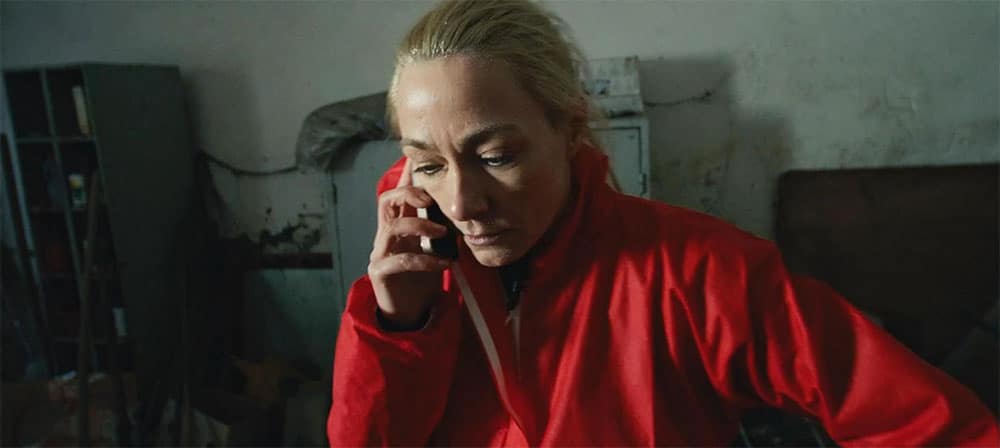
The film’s brilliantly executed POV style, seeing most of the film unravel through Holbrook’s eyes (via his helmet camera), keeps us locked with him in an escalating nightmare. We feel his deterioration (again, physically and mentally), with uncomfortable, raw, and visceral impact.
The combination of dreadful sound design (if you’ve seen Razzennest, you know how masterfully Grenzfurthner uses sound to terrorize viewers), meticulous set design, and haunting imagery—from the archival footage and photographs to the grotesque organic material that feels like it’s seeping into every pore—is potent.
SOLVENT is a film that gets under your skin and burrows with an unholy ferocity that’s hard to shake long after the film has ended.
It’s a film that skillfully uses its found footage conceit, feeling like a thoughtful narrative necessity rather than a cheap gimmick designed for budget cuts and jump scares. A pervasive sense of realism keeps the tension amplified, even as the surreal body horror takes hold.
Solvent is oddly funny while wallowing in darkness, and the disorienting tonal dissonance only heightens the horror.
This is the unusual low-budget, found footage horror film that feels remarkably polished and gorgeously edited, making the harrowing most out of its limited resources.
Gries is extraordinary as a tortured man coming undone, crumbling under the weight of historical horror. His moral reckoning makes us wrestle with our own discomfort and complicity in systems of oppression and cruelty.
Solvent hit me like a ton of bricks.
It may not be for everyone and requires patience—even multiple viewings to wade through its depth—but it’s a plunge into our collective monstrosity worth taking.
Overall Rating (Out of 5 Butterflies): 5











Follow Us!