


We journey into the bowels of “Hell’s Hospital” for a look at good and evil, sin and punishment under the Christian gaze of “Room 6”.
No time to read? Click the button below to listen to this post.
EDITOR'S NOTE
The following article contains an in-depth analysis of the film Room 6. As a result, you are strongly encouraged to watch the film, which is currently available on Tubi or Prime Video (among other platforms), before reading this analysis to avoid any significant plot spoilers.
2006 was a fun year, considering lots of people thought the world was ending on 6/6/06. I remember that day. It was deeply uneventful, though interesting, because many people believed the Number of the Beast signaled the apocalypse. I’d already been through this with Y2K, so I figured it probably wouldn’t end. And reader, obviously, I was right.
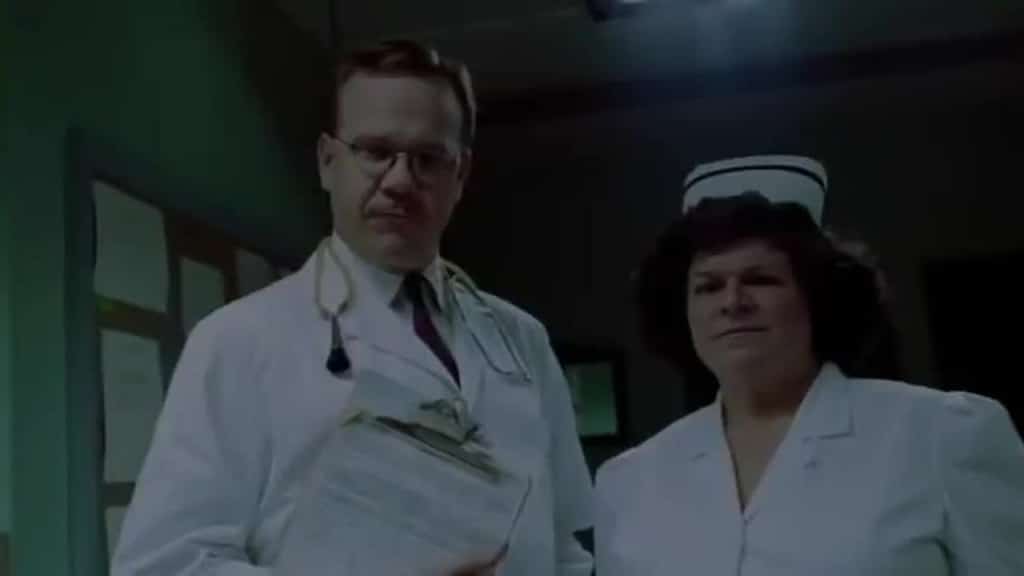
That brings us to my analysis of the religious horror film Room 6 from 2006. It is about a schoolteacher named Amy (Christine Taylor) who has a phobia of hospitals and finds herself searching for her boyfriend, Nick (Shane Brolly), inside one while teaming up with a man suffering the same ordeal that she’s in.
At first, I thought the hospital in this movie was a maze for psychics where the building itself feeds off of them the deeper into the place they go. I was wrong—it’s both somehow more and less interesting than that. This is where the living can be pulled into a sort of hell-limbo.
Now, hospitals are no picnic. They can be places of sickness and death. Yet, this movie takes that fear further. What if a hospital was a place you couldn’t escape? What if it was a sinister institution where those you entrusted with your care only took from you (specifically, your blood), dried you up, and disposed of you?
The fact that this isn’t just a place for the dead but rather somewhere anyone could be taken to is terrifying. This limbo is happenstance, not punishment. It’s also a time-warp, with outdated language like “merry prankster”. The nurses are wearing outfits closer to Halloween costumes than legitimate scrubs. Not only are you trapped in this place and sucked dry, your family can’t find you, so you very literally disappear.
Add the “we know you’re awake” surgery scene, and it’s the scariest sentence in the world for people with fears of hospitals and surgery.
Clearly, this is a place of pain and suffering.
Christian Gaze

Here, we have a great setup for a horror movie, and yet it’s overcome with a Christian gaze, which is what I call it when it seems like a film caters only to Christian belief.
This was 2006, so it was not the most progressive year in the world; gay marriage was still illegal, and “gay” was still being used as a slur to insult others. So when you come upon the lesbian blood-drinking monster women having the orgy, it can be pieced together that this orgy act is being condemned. Sex here is being equated with hedonism, and with lesbians being so out of the hegemonic norm, it’s just another indicator of their “badness” and monstrosity.
I feel this is a male-focused scene because other than the blood-drinking, most men would be interested in what they’re seeing (since all the nurses are attractive) instead of being taken aback and clearly disgusted as the fiance, Nick, is.
The blood is gross, but it’s the only giveaway that something’s wrong. Sure, it’s maybe not the best place to have an orgy, but this isn’t a real hospital. Whatever these women are, demons, maybe, them being lesbians is being judged. It’s a gratuitous scene that doesn’t serve the narrative. There were other ways to denote the weirdness of the nurses. Drinking blood alone would have qualified. But, alas, it was a different time, and the film felt it necessary to condemn lesbians as well.
We also see the Christian gaze again in the church scene, where the main character goes to get help, and demons end up tormenting her in a vision.
We are given many terrible precognitive scenes of death, hideous creatures, and disfigurement, making me think Amy is some psychic. The true psychic, however, is Melissa (a tiny Chloe Grace Moretz), who helps Amy find Nick.
Taking Nick in the first place is a trap to lure Amy there, and it’s revealed that it’s because she escaped them as a child. She’s “one of them”, according to the blood-drinkers.
Demonic Folklore

Whatever demons are (we’re not really sure), they aren’t human and never were.
Sometimes, in Christian-led storylines, people become demons if they’re bad enough, and that isn’t true at all. Demons have abilities that far transcend humans in death, so it’s unlikely they’re very similar to us at all. When a demon is around a human, it causes irreparable damage to the person; their mere presence breaks our minds and bodies down before possessing people in demonic folklore. The damage, however, starts long before possession takes place.
Stories like Room 6 promote fear instead of faith, which is the main problem with the Christian gaze.
Satanic Panic

When we get into the lore of how this hospital came to be, it’s unfortunately riddled with Satanic Panic, which is a phenomenon that started in the 1980s in the U.S. The media became obsessed with protecting their children from ritual abuse by Satanists that was supposedly happening. The FBI even investigated it and found nothing; people even went to jail who didn’t commit crimes because a new form of witch hunt began happening with people turning on each other.
Satanic Panic can be recognized in movies by a clear dichotomy of good (Christians) versus evil (Satanists). Evil exists in many forms, most of them very human, so it can be irritating to watch the same narrative, especially when sex abuse exists so prevalently in churches.
Naturally, I became impatient with the old “it’s because they were Satanists” explanation of the workers’ villainy.
The employees of St. Rosemary’s Hospital burned the place purposefully to the ground and stayed inside to burn because of “devil worship” and “eternal youth rituals”. Essentially, they gave the hospital to Satan as a sacrifice. It seriously stretches credulity, forcing us to believe people wouldn’t run out of a burning building as a survival reflex. This act cements these people as the monsters Christianity is painting them as.
Of course, sacrificing people and draining blood is monstrous, but real Satanists don’t do this sort of thing. They don’t believe in hurting other people, which is clearly stated in their doctrine.
Satanic Panic, at its core, is an overinflated fear of what Christians think Satanists are doing in the dark instead of what they actually do.
Weird Programming
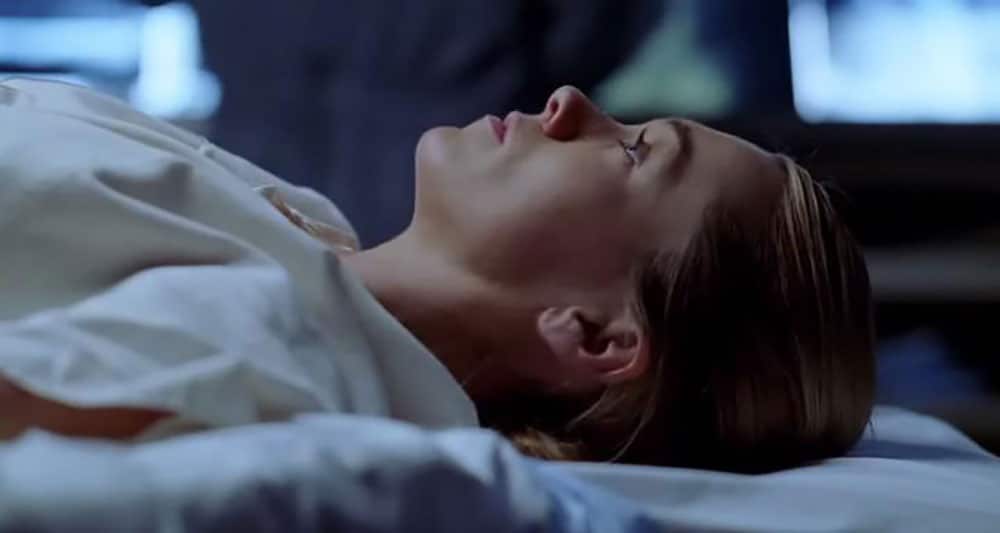
The big reveal is…
The ending is a gut punch that’s both cruel and nihilistic. Yet, it’s shown through a Christian lens that encourages us not to fear death because something better is waiting on the other side.
I think this was a great premise that went wayward and devolved into a purely Christian and inaccurate demon narrative. It’s lazy writing to blame everything on Satanists who, more likely than not, aren’t doing much to take down Christianity. Atrocities are often done in the name of God, while fingers are pointed at other religions like it somehow justifies anything.
I wanted to like this one, but things got very weird very quickly.
I don’t hate Christians as long as they aren’t judgmental or hateful toward others. Jesus wouldn’t have liked that, and God loves everyone; there’s a lot of condemnation of difference and not a lot of loving thy neighbor. What I hate is Satanic Panic, hatred of others, and lazy writing.






Follow Us!