Viewer Discretion Advised: Saló, or the 120 Days of Sodom (1975)


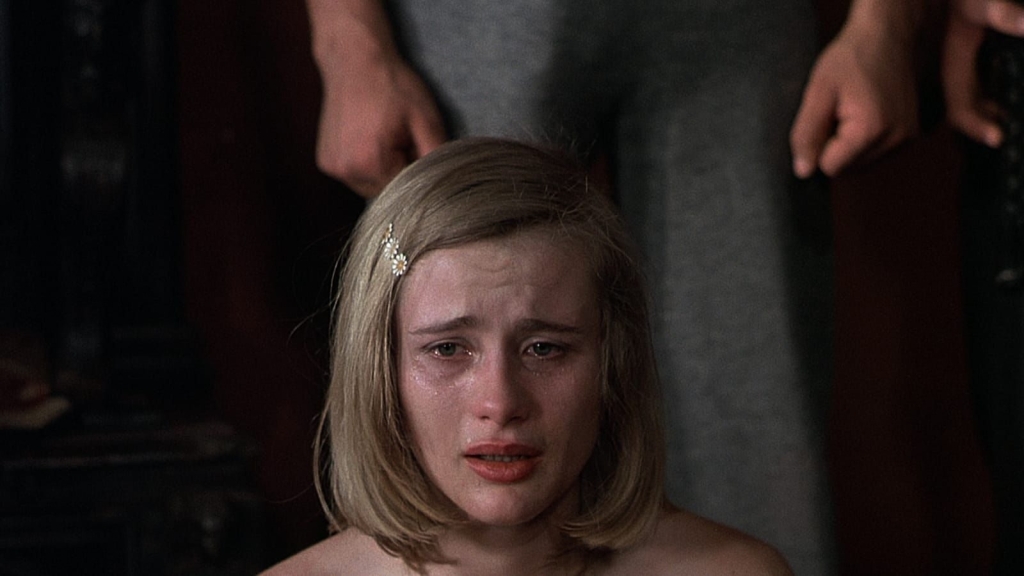
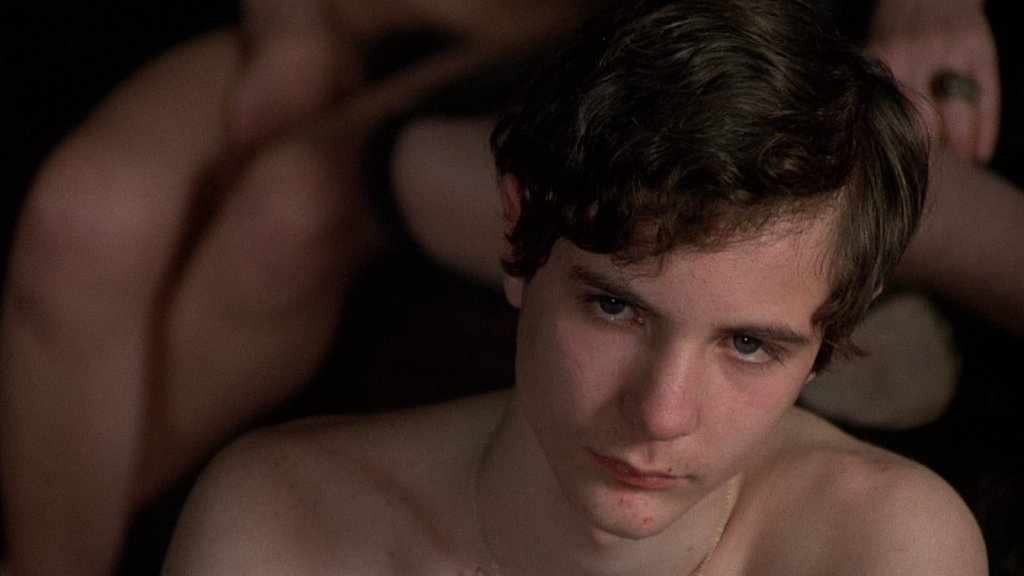
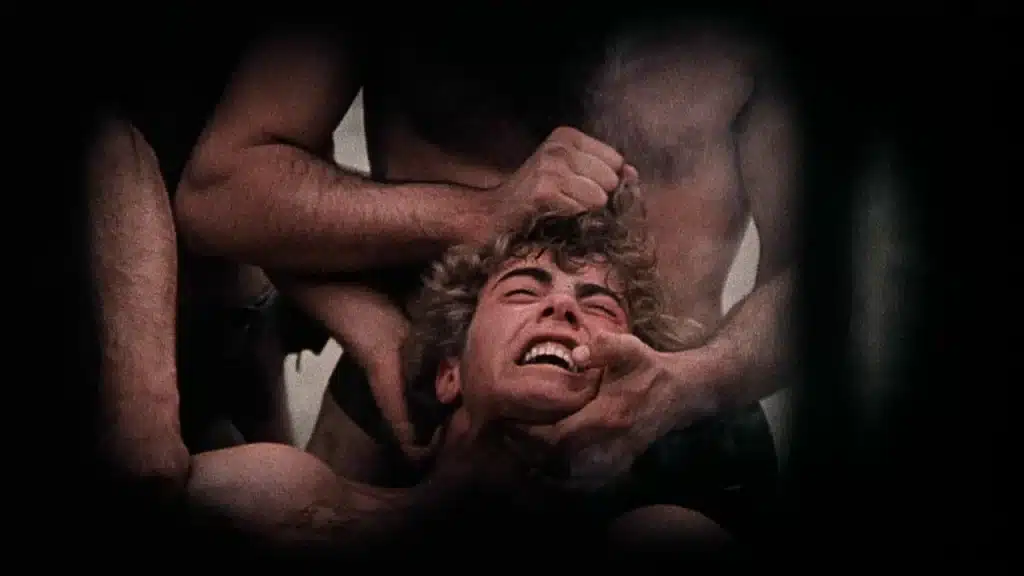
During WWII, four fascist libertines – the Duke (played by Paolo Bonacelli), the President (played by Aldo Valletti), the Bishop (played by Giorgio Caproni), and the Magistrate (played by Umberto Paolo Quintavalle) – kidnap nine teenage boys and girls and retreat to a secluded mansion in the Italian countryside. Aided by a slew of fanatical henchmen and four aging prostitutes, they begin subjecting the youths to a wide array of sexual abuse and torture, which grows more and more depraved by the hour.
The final film from polarizing writer/director Pier Paolo Pasolini, Saló, or the 120 Days of Sodom is loosely based on Marquis de Sade’s novel, The 120 Days of Sodom, with Pasolini and collaborator Sergio Citti updating the story and moving the setting from France to fascist occupied Italy. Igniting a wave of controversy upon its release and eventually winding up banned in multiple countries (some still to this day), the debate continues to rage (from both critics and cinema elite alike) over the film’s artistic merit, which has since led to its reputation as the “sickest film of all time.”
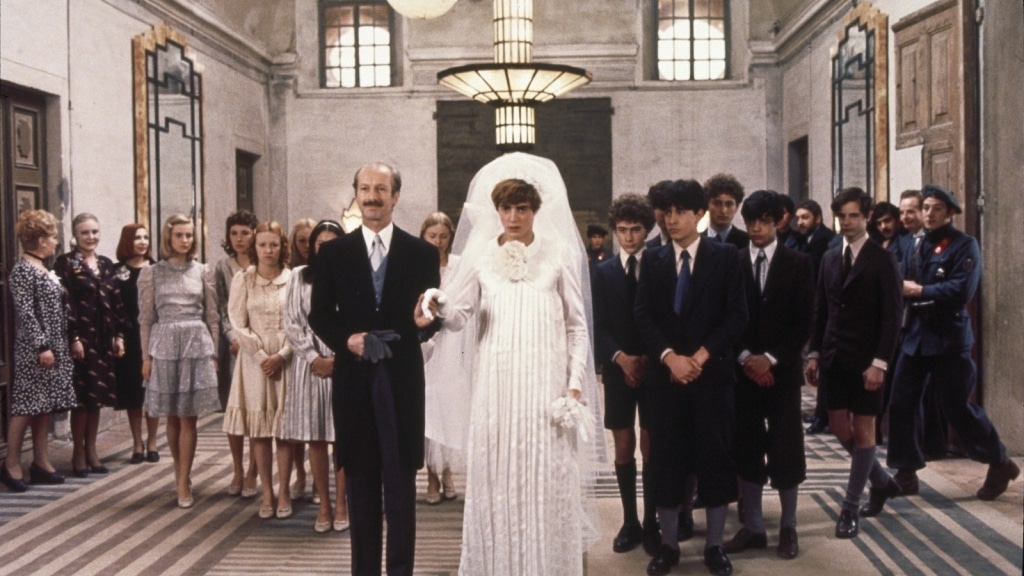
Released just three weeks after his gruesome murder, Pasolini’s Saló, or the 120 Days of Sodom’s existence has been a bone of contention since first unspooling in 1975.
While the film never officially found itself in hot water in the States (the film was released limited in the U.S. in October of 1977), other rating boards would not be so kind to Pasolini’s final picture. Saló would ultimately end up banned in places such as Australia, Canada, Germany, and even its home country of Italy, which would find the rating board yanking it from theaters just a few short weeks after approving its release.
In the U.K., the British Board of Film Censors would refuse the release of the film, but a local theater sneakily offered showings in 1977. A few days later, the theater was raided, and the print was seized by authorities. They placed it in the hands of BBFC secretary James Fremen, who heavily edited the film and released it several years later.
In 1994, Saló finally came under fire in the United States, specifically in Cincinnati, Ohio. An undercover police officer rented the film from a gay bookstore, only to then arrest the owner of the business for “pandering.” A flurry of film scholars and prolific Hollywood names including Martin Scorsese would rush to defend the owner and argue in favor of the film, with the charges getting thrown out by the Ohio court.
Over the years, Saló, or the 120 Days of Sodom has faced an uphill battle in various markets, with certain countries refusing to make the film available to the public. In 2011, the Criterion Collection released the film on Blu-ray in a prestigious package that includes multiple essays on Saló’s themes and political undercurrent.
There are still many who deem the film “pornographic” and refuse to entertain please to give it the credit it deserves. It continues to be named one of the most shocking and controversial films ever made.
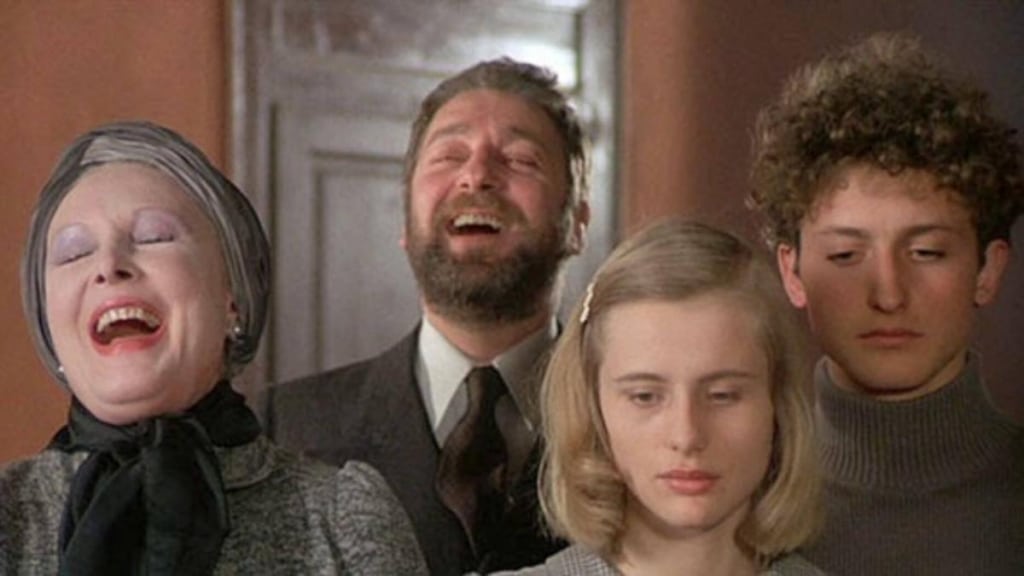
For a film to wind up branded as the “sickest film of all time,” let us first answer the obvious question on your mind. Yes, Saló, or the 120 Days of Sodom ruthlessly lives up to this label, and then some.
The depravity that unfurls in the grand halls of the exquisite Villa Sorra will undoubtedly have you covering your mouth in utter disbelief, whether you’re a novice to extreme cinema or one jaded by enough grisly imagery that you’re convinced you’d be able to stomach a mouthful of polenta laced with a jagged nail. This one is a real toughie.
What may be the most disarming aspect of Pasolini’s Saló – which possesses a structure modeled after Dante’s Divine Comedy – is just how picturesque this venture into hell turns out to be.
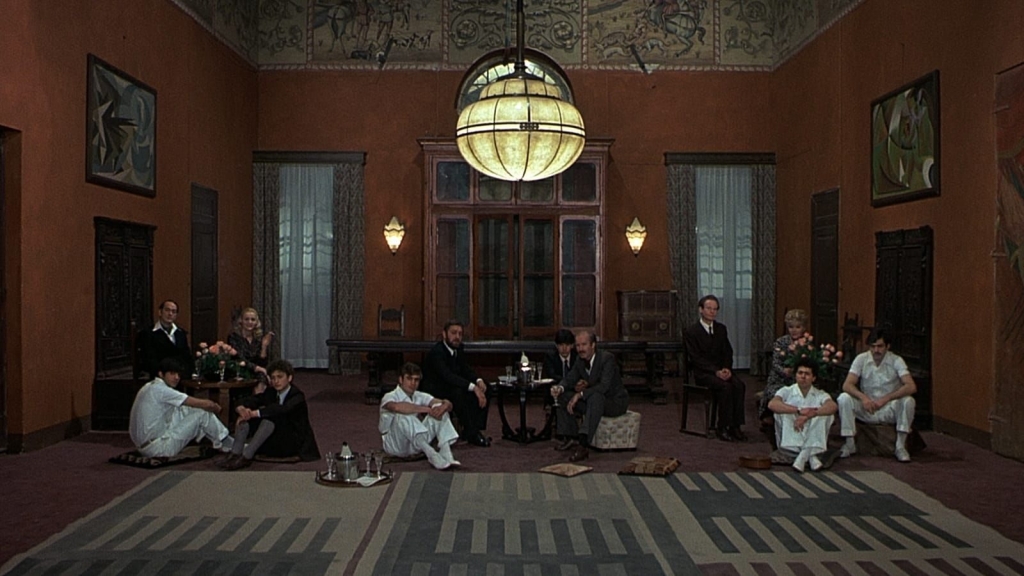
Through sumptuous cinematography from Tonino Delli Colli, who collaborated with Passolini twelve times over the course of his career, we bear witness to an endless assault on eighteen youths through crisply static long shots that pay tribute to the linear perspective of the Italian Renaissance movement. The arrangement within the frames is staged with such surgical precision and widescreen splendor that they threaten to morph into a lost oil painting by Giovanni Bellini or Titian if they hopped into a time machine and ended up in the throes of war-torn Europe.
You’ll be amazed how artful the image of a wealthy libertine shitting on a tile floor with handfuls of onlookers can actually be.
I believe it’s essential to enunciate the truly visual grandeur of the film because it’s so easy for the common viewer to violently reject Pasolini’s final vision as nothing more than vomitous drivel.
The tremendously gifted director, who cut his teeth during the neorealist period, was far from a stranger to controversy. Oh no, the dear boy kicked the beehive more than a few times, both in his art and in his personal life (the director was charged with “corruption of minors and obscene acts in a public place” in 1949). It’s only fitting that he should depart this world (under appalling circumstances, might I add) with a gift that keeps exploding in our faces.
And while his tableau bore a feast for the eye, it’s really become about the way he magnifies the rise of fascism and the dehumanizing tactics that were applied to make an entire nation(s) complicit.
We’ve all heard the metaphor of looking at something from “30,000 feet”, something commonly kicked around when someone doesn’t fully grasp the minute details. Over eighty years on from WWII, it’s safe to say this is how we look back on what transpired between 1939 and 1945. We glimpse the newsreels of surging crowds bellowing “Sieg Heil” and “Duce” to a pair of glowering dictators in fancy garb adorned with tassels and medals, locked into our “Monday morning quarterback” response of ‘how could all these people back such appalling monsters?’
With Saló, or the 120 Days of Sodom, Pasolini provides the queasy answer.
Cut into four acts (Ante Inferno, Circle of Manias, Circle of Shit, Circle of Blood), the atheist and communist-leaning director would peel the skin back on both the old fascism of WWII and what Pasolini perceived to be the “new” fascism – bourgeoise consumerism or fascism in its “total” form (The Nation, Behind the Myth of Pier Palo Pasolini).
Pasolini shoves our faces into the tactics by corrupt regimes applied to strongarm their nations into being complicit.
After the foundations of the libertines’ sick game are laid, we see them selecting a “master race” of sorts, eighteen unblemished youths that will act as the libertines’ unholy playground, at least until the ever-advancing allies (who are heard through the low rumble of bombers and the distance sounds of gunfire) arrive to liberate the captives.
Their teenage vessels could be classified as “the neutrals” from Dante’s Inferno, the “sad souls who lived a life with no blame or praise.”
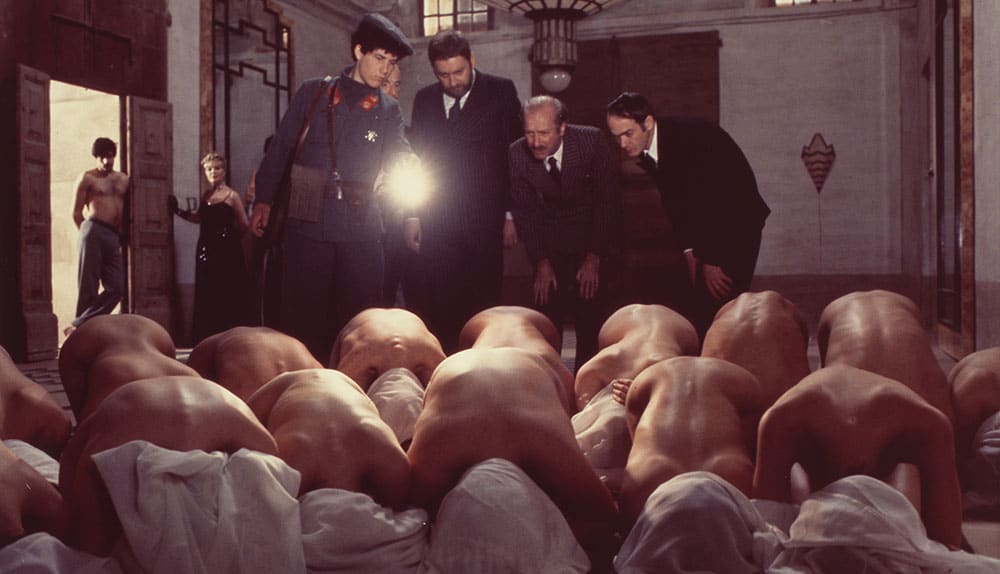
Once isolated away and armed with their own SS and cabinet of propaganda, which manifests in the form of four prostitutes who are tasked with stirring the sexual imagination of the four men and their perpetually nude prisoners, the breaking of the will begins in the Circle of Manias. Their spirit is fondled and humiliated by the prostitutes’ tales that the libertines obsessively deconstruct (no detail is left unspoken), what fight the group may possess distorted through an audio diet of increasingly horrific escapes of sexual assault and barbarism.
They represent a fresh-faced populace, with boundless freedom before their crystal-clear eyes, only to find their cherubic facades soiled – quite literally in the Circle of Shit. You won’t have to strain hard to imagine what this entails, and it’s somehow more repulsive than what your mind is calling up.
The soiling of their sullied souls inevitably collapses into an orgy of violence in the Circle of Blood, but not before the desperation of the prisoners emerges.
Betrayal becomes the order of the day, a strained attempt at trying to stay alive, considering that the libertines have been keeping a list of all the ways their prisoners have broken their “rules.” Minor slights open the doors to various forms of torture while libertines and their co-conspirators unleash horrors that are best glimpsed at the blessed distance staged by Pasolini.
This bloodletting finds itself woven with a dance between two men, seemingly convinced they have saved their hide. Throughout Saló, we occasionally hear the sounds of bombers off in the distance, the implication that the ground is quite literally shrinking under their feet. They all stop, listen to the commotion and then continue to ramp up their sins.
Salvation can’t arrive soon enough, but then the sickening revelation sets in that there were many victims of the fascist regimes who weren’t lucky enough to be rescued from the deadly grip of these monsters.
And then there are the ones whose guilt encompassed their soul, the dawning recognition that when the Allies arrive, the ground that has shrunk will topple them into the depths of the Inferno. The only out is suicide.
And what of the consumerist angle? It’s evident in the libertines’ unwavering desire for more, more, more, their darkest desires becoming increasingly insatiable as they continue to gorge themselves on their prey. And they have means to make sure their demands are met, at least until it’s time to answer for the harm they have caused.
Pasolini conveys this through increasing extremes, but it’s not far off from the way the middle class always needs to have the latest and greatest.
Of course, when Pasolini confronts us with this idea, we have to stop and ask ourselves if we are as guilty as the libertines (on a much smaller scale). But are we also the teenage prisoners? One could argue that the libertines are a stand-in for the companies and corporations who break OUR will and cajole us to blindly hand over our earnings for the things that do not fulfill our lives.
They continue to fill our impressionable minds that life will be so much better with that fancy new car, that spiffy new smartphone, and the lavish new wardrobe, at least in the short term. And we then become the libertines as we greedily snag a cart and barrel down the store aisles, cramming new TVs, video game consoles, and other luxuries that stave off impending realities around us, both politically and existentially.
We’ve ceased to truly live in the name of glimmering glass and stainless steel—or in the case of the libertines, flesh and orgasmic ecstasy with droplets of blood.
And after the credits roll on those two men locked in a lazy dance to a crackling waltz, and we’ve crammed our jaws back into place, you understand why the “sickest film of all time” has been fervently defended by many big names in entertainment.
There is a portent message woven in between the golden showers and all-you-can-eat shit buffets. You may be outraged at what Pasolini just showed you, but you should be more outraged by what the sadism is quietly telegraphing back to you.
Our humanity has been systematically assaulted and manipulated, and we have been too anesthetized to see it. It’s so much easier to dance obliviously.

She’s a lover, he’s a fighter. Together, they’re CHEER AND LOATHING. Tune in to hear your hosts, Stephanie (Cheer) and Casey (Loathing), clash over the films they love — and the ones they love to hate.
In this holiday extravaganza episode of Guilty Pleasures, join hosts Stephanie, Kelly, and our newest addition, Jonathan (Jack was tied up in tinsel and couldn't join us), as they unwrap the bizarre and unhinged world of holiday cinema. They dive into the depths of Elves, a film that's as chaotic as it is entertaining. It's a sleigh full of questionable decisions, diabolical dialogue, absurd plot twists, wildly offensive antics, and unhinged holiday mischief.
And that's not all! In the second half of the podcast, join your festive cinephile friends for a look at four more ”nutty as a fruitcake” holiday treats: A New York Christmas Wedding, Elf Bowling, A Medea Christmas, and Jack Frost. Plus, we each offer a bonus Christmas flick guaranteed to make you say, ”Ho, Ho, HO-LY Hell!”
Expect laughter, disbelief, and a spirited debate about what truly makes a movie a guilty pleasure. Don't miss this festive journey through the weirdest corners of holiday films!




Follow Us!