

In horror, evil can consume more than human souls; it often seeps its way into objects and places that become a reflection of human darkness.

No time to read? Click the button below to listen to this post.
To possess means to become, to take over, to take who one was and make them into itself—the presence of two faces at once: the original and a dark, new entity. Essentially, it is to consume another and absorb them into oneself as food. Possession is a feeding from to the point of two things coexisting uncomfortably in the belly of the beast.
This rumination on the nature of possession comes from my long-standing horror obsession with houses, objects, and towns being taken over by evil entities. People being possessed is boring to me, probably because it’s been done many times in horror. For many, that’s the epitome of fear: having one’s consciousness taken over by something malicious.
To me, however, the true terror is the idea that an innocent object, a house, or a place could be infiltrated and turned against a person–because it’s nobody’s first instinct that it’s the house (except in demon movies) or the thing you brought home from the thrift store and especially not a town.
That is the pinnacle of fear; one can’t escape if trapped there, in that mortgage, in that town, because there isn’t enough money or freedom.
Places, Objects, & Possession
It’s clear a place can be haunted, but can a place be possessed? I don’t think most people think that way, as a house or object having a living presence, but I would argue they do. Such things may stand lifeless, but spaces absorb us, our energy and life force to become what they are now.
A terrible place will have its history written on its walls in blood—maybe not to the visible eye, but with a feeling of heaviness, negativity, and darkness that permeates it.
Objects have much the same process of darkness leeching into them. Maybe the object had a nefarious purpose, like a murder weapon, forever tainted by the violence it was used to perpetrate. It now exists in irrevocable darkness, unwashable, usually flung away as provable evidence. Not only because of evidence but also because of a memory of our inner darkness that possessed a person for so long that they did something terrible.
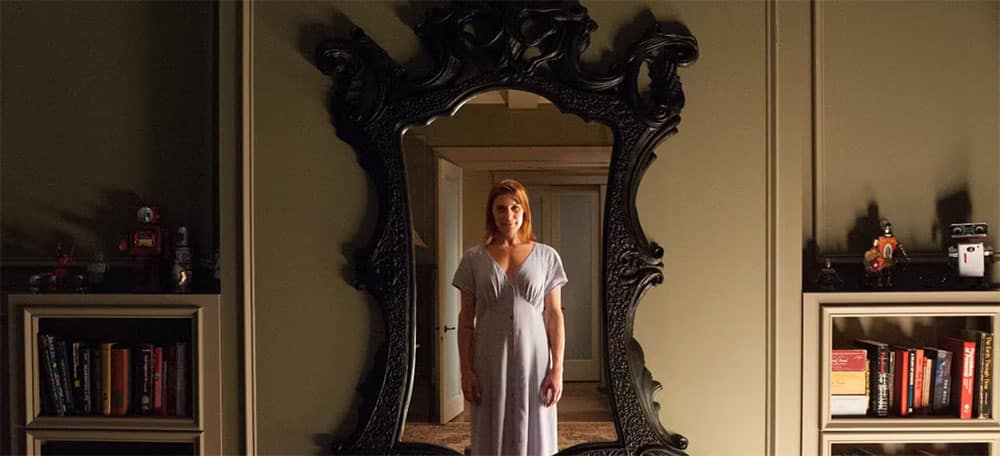
Possession is also a taking of innocence in terms of objects—that pretty mirror you found at a flea market now exists as more than a mirror. That cute doll is not just a doll. They become inanimate enemies, a force you don’t recognize somewhere within or around it, threatening oneself.
When possessing the living, it is the taking of one’s freedom and choices that is feared.
In the world of horror, we can argue that a house or object can become possessed because the act of taking a space or thing over, turning it into an extension of a malevolent entity, makes it a possession. Also, the house, ship, or object is usually used to help possess people as well, producing hostile environments with illusions to drive the person (or people) into insanity.
Possessing a Ship
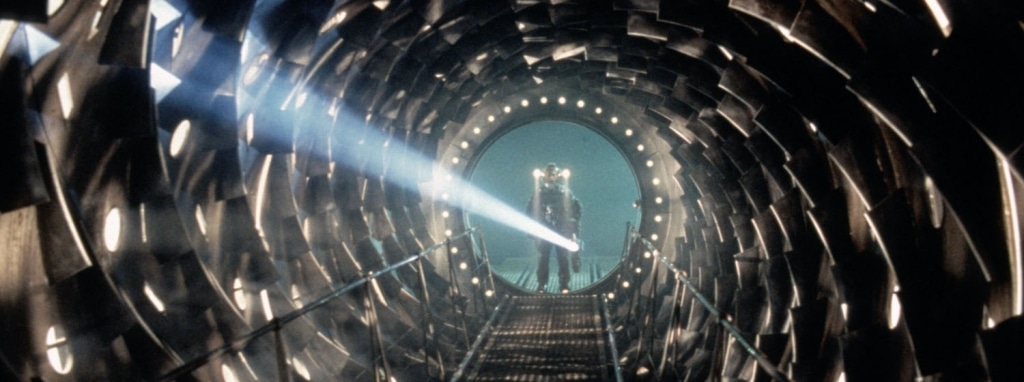
Event Horizon (1997) explores the farthest reaches of space but with extreme consequences. Justin (Jack Noseworthy) and Dr. Weir (Sam Neill) become possessed with what is described as “darkness” inside them—it shows them horrible, tactile hallucinations from literal hell. It is a possession because that darkness takes you, turns you inside out, and absorbs your consciousness into itself through your death, so the crew becomes an unwilling extension of it. Captain Miller (Laurence Fishburne) had never told anyone about his worst experience, but the ship knew about it and exploited it in illusions.
I love that someone thought about possession in terms of a place and Hell leeching into an area to absorb others; we, after all, don’t know what exists in the farthest reaches of space or Hell.
The ship had a portal open; it reached Hell, and when possessing the ship, it had the intention of taking more bodies back for torture. The Event Horizon, once possessed, functions much like the Overlook Hotel in The Shining—it drives your fears into the open, feeds on them, kills you, and absorbs you into itself for further torture.
Stephen King

Possession functions similarly in Stephen King’s fictional world—whatever the possessing entity is, it pulls out the darkest parts of the character outside themselves to plunge the character into insanity. The dark finds a foothold in a person’s unique madness and then hooks deeper within the sickness it spreads in your mind like a virus.
The Shining features a nameless, faceless demon that desires young Danny Torrance’s (Danny Lloyd) “shine”; this term is shorthand for psychic ability, of ways people can receive information they shouldn’t be able to. The Overlook Hotel, in effect, becomes an entity—it swallows people, takes death into itself as food, and transmits terrible things to the living person it’s currently feeding on, which happens to be Danny’s father, Jack (Jack Nicholson). It takes one’s worst memories—that inner darkness—so that it can turn a person into himself for consumption like a parasite.
Derry, Maine, always fascinated me with this idea of an entire town being sucked on like bone marrow.
IT (2017) centers around a dark entity from another world using humans as a meat factory to feed itself, specifically kids, because their fear makes them tastier. Pennywise the clown, a shape it often assumes to hunt children, makes his victims as dark as himself by festering on the town’s underbelly, so not even the adults truly escape unscathed. While IT sleeps, its poison bleeds into everyone and everything.
The Haunting of Hill House

We see this a very similar process of possession in the iterations of The Haunting of Hill House, especially Mike Flanagan’s version—a place with a dark past that encourages death, produces ghosts of all kinds, and eventually, madness in those who shine the most.
First, Olivia, the clairvoyant mother, and then her gifted daughter, Nell. The red room is a shifting place of permanent liminality, one that changes to fit the person and imprisons them there. Houses like this once represented freedom, and as they fed on their psychic inhabitants, they opened farther and offered more within their walls than previously existed.
Once consumed, the house is a prison they cannot escape. The house wants them. The house generally takes them and uses the spirits in it to do so, driving the inhabitants insane.
The Haunting (1999) is another offshoot of The Haunting of Hill House story. Hugh Crane is an entity that has leeched into the walls, controlling the way the house moves. He responds mainly to a psychic, Nell, who also happens to be his long-lost granddaughter. The house (as Hugh) feeds on her abilities to power its evil carnival to come to life.
Inanimate Objects Now Animated
A very common theme in horror is when a normally inanimate object comes alive, often in the form of a doll or multiple dolls.
In Dead Silence (2007), a woman named Mary Shaw creates her many ventriloquist dummies from scratch, which later leads to murder because of her twisted mind. The lead, Jamie (Ryan Kwanten), ends up having to confront Shaw’s spirit as she uses her many, many creepy dolls as a conduit or as a physical channel to reach into our world.
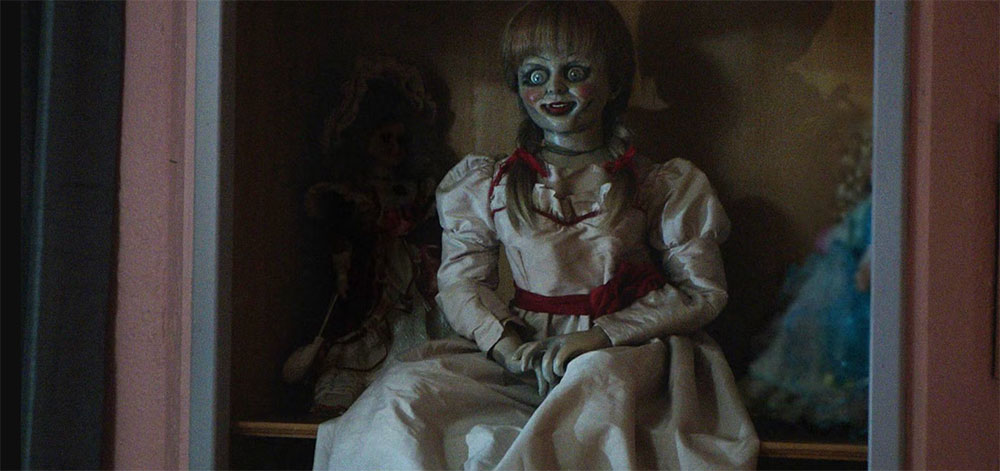
The Annabelle doll from the Conjuring Universe features a very dangerous demonic entity attached to it and uses the creepy porcelain doll as a conduit, modeled after a real-life story of a possessed Raggedy Ann doll. Annabelle, as a doll, may not have life, but the demon who moves her around makes it seem like she does. She is seemingly possessed, though it’s merely the appearance of life to fool unsuspecting humans instead of something animating her from within.
In Don Mancini’s Chucky Universe, the storyline is that Charles Lee Ray, a deranged serial killer, uses voodoo to escape death into a doll. As Child’s Play (1988) progresses, the innocent plastic face of the Chucky doll changes to closer resemble Charles Lee Ray because he possesses it. His blood comes out of the doll; his pain is felt through the plastic shell. Ray possesses that doll as a living entity, making it into himself.
He was trying to escape death, and in escaping it, he is bound to a plastic prison that can harm and even kill him if he spends too much time in it.




Follow Us!