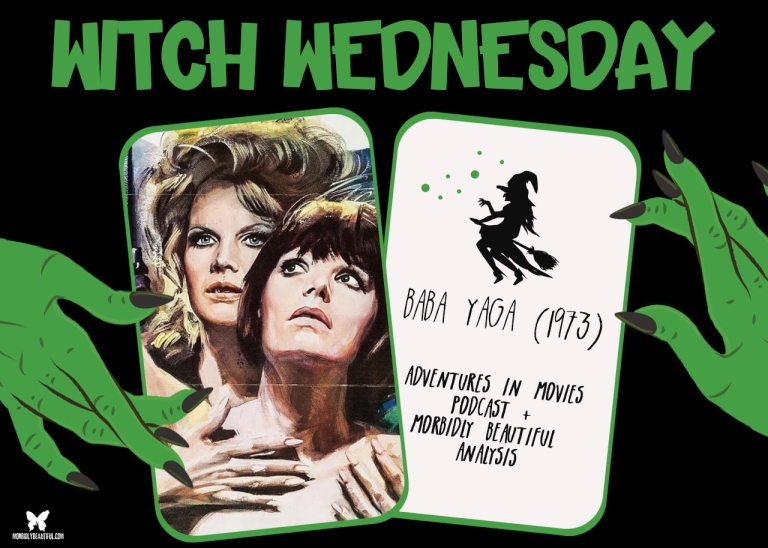
Witch Wednesday: Baba Yaga (1973)


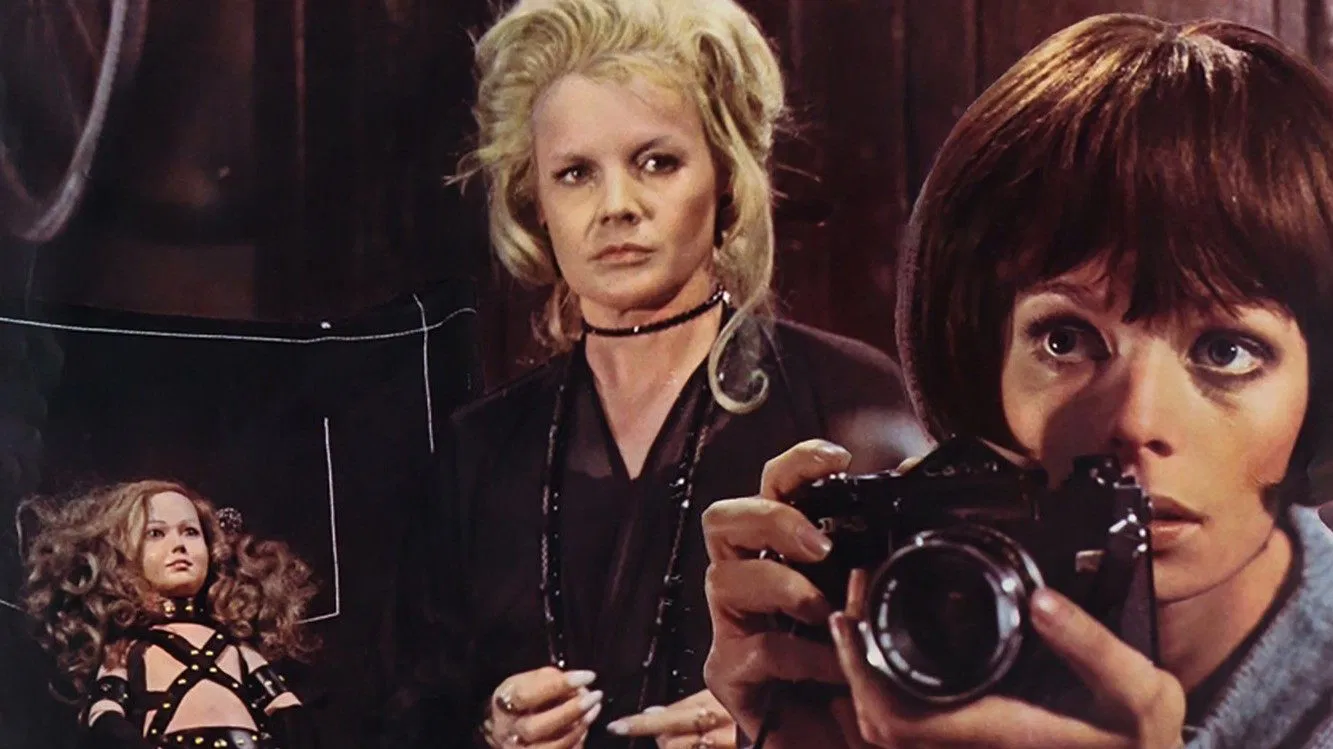

In a recent episode of Adventures in Movies, the hosts discuss Corrado Farina’s Baba Yaga (Kiss Me, Kill Me in its U.S. release), the kind of film that feels like a half-forgotten dream—fragmentary, hypnotic, and suffused with the charged eroticism of a comic book panel stretched into cinema.
Released in 1973 and based on Guido Crepax’s celebrated Valentina comics, the film is as much about style and sensation as it is about story. But beneath the gauzy dream sequences, soft surrealism, and European cool lies something richer: a reworking of the witch figure as a queer seductress, a challenge to patriarchal dominance, and a mirror of the turbulent feminist and sexual revolutions of the early 1970s.
From the hosts:
The film is unabashedly arthouse, name-dropping Fellini while mixing animation and psychedelia. There also seems to be a message about consumerism and why supposed intellectuals are not as smart as they think they are. It is also a straight-up horror movie with a witch, a creepy S&M doll, and a whole lot of nudity. It is an intriguing, if not always entertaining, watch. It is a strange mix that is confusing, but also hard to turn away from. As if it is casting a spell on you…
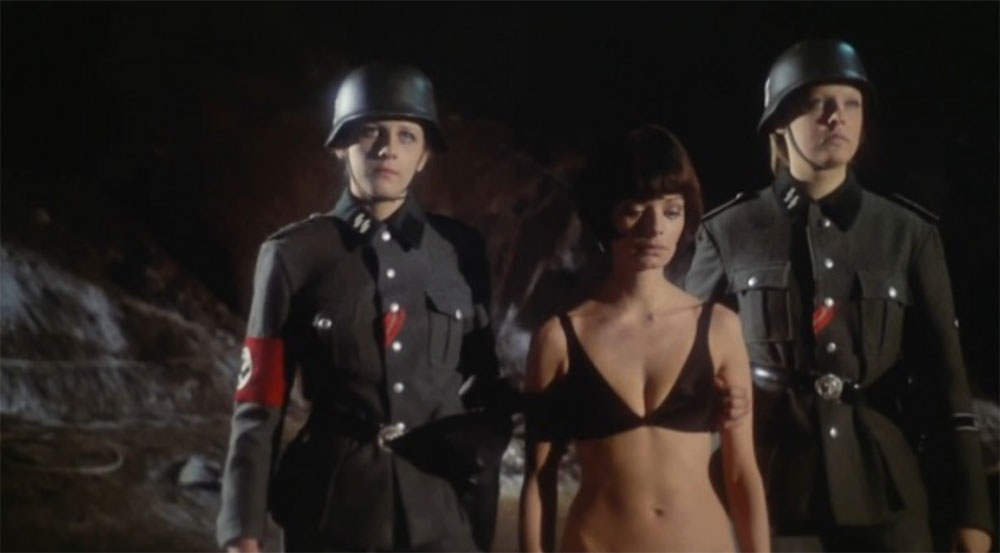
Unlike folkloric depictions of Baba Yaga as a crone who lives in a hut with chicken legs, Farina reimagines her as a chic, coldly sensual blonde in haute couture (Carroll Baker). She is not a grotesque outcast but a glamorous predator, one whose power derives not from grotesquery but from erotic control.
This transformation marks a crucial evolution in cinematic witchcraft: in a decade increasingly defined by sexual liberation, witches became less about diabolical bargains and more about female power, desire, and the fear those provoke.
Valentina (Isabelle De Funès), a young photographer, becomes Baba Yaga’s obsession—a relationship that blurs mentorship, predation, and seduction. The witch’s fascination is not merely supernatural but explicitly queer. Her gift of a bondage-clad doll, the sexualized dreams Valentina suffers, and the coded language of possession all point toward a vision of lesbian desire filtered through exploitation cinema’s lens.
Yet the film also resists reducing this to simple titillation. By placing a powerful older woman in the role of aggressor, Baba Yaga reframes same-sex desire not as weakness or pathology but as a destabilizing force that threatens heteronormative order.
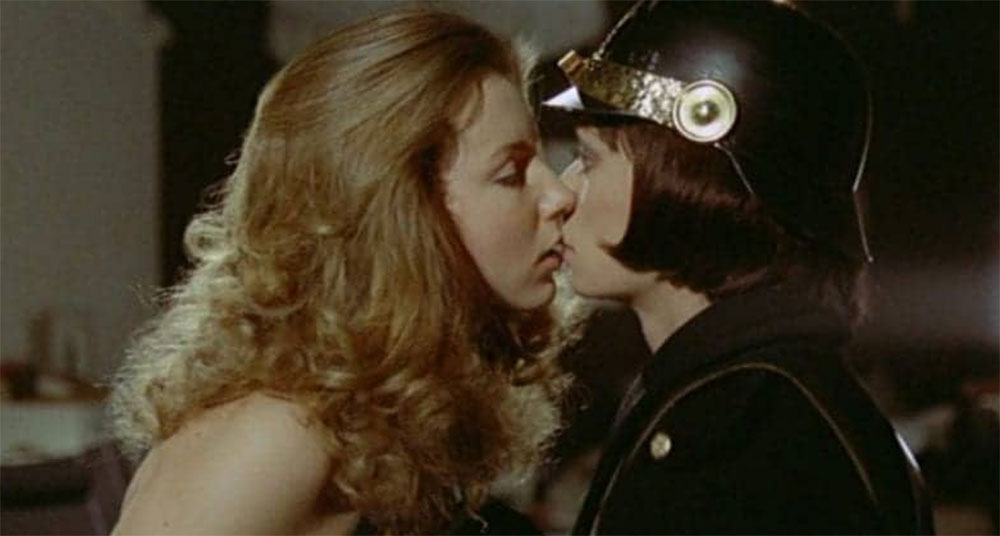
In its time, Baba Yaga’s lesbian undertones were both scandalous and marginalized.
The censors excised nudity and sapphic intimacy, nervous about what they perceived as moral danger. Today, however, the film sits more comfortably in the lineage of queer horror, alongside Daughters of Darkness (1971) and The Hunger (1983). Like those films, it recognizes queerness as both taboo and tantalizing, tethered to witchcraft’s historic reputation as an alternative community for outsiders.
At the same time, the film reflects anxieties around feminism. Valentina is an independent, working woman: sexual, stylish, politically engaged. Baba Yaga’s desire to dominate her body and creativity reads not only as queer seduction but also as a parable about male fears of women’s liberation.
In Farina’s fractured narrative, liberation itself becomes a contested battleground: is Valentina a free agent resisting control, or another woman trapped in a power structure she cannot escape?
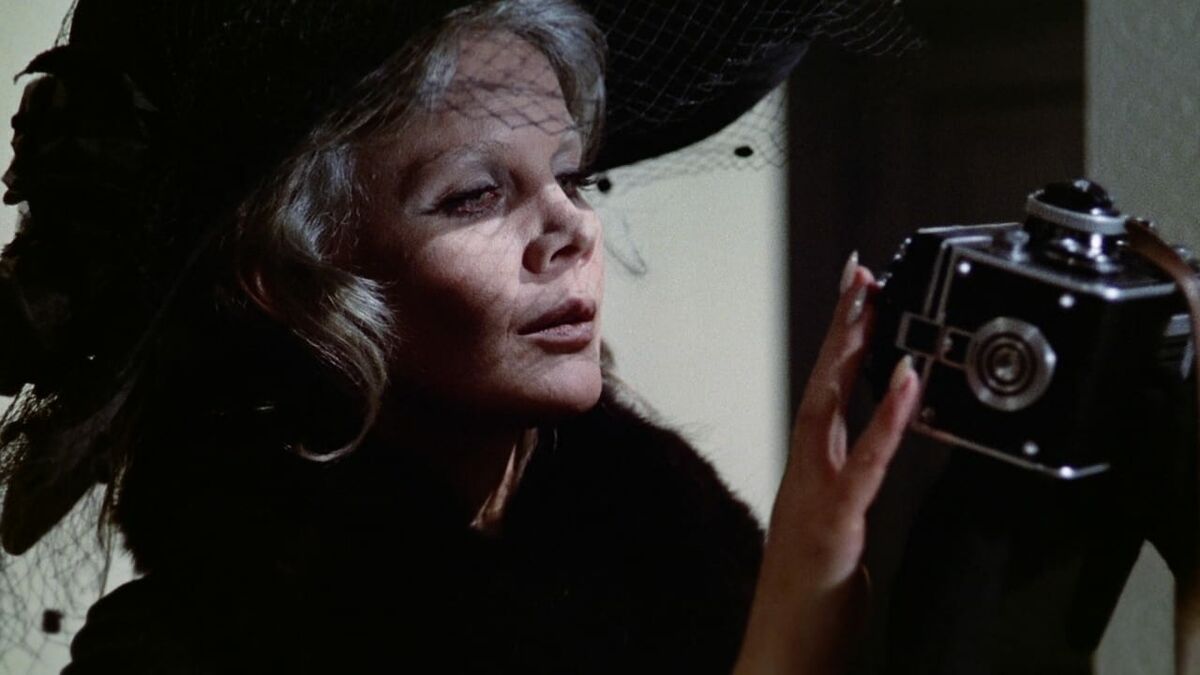
The decision to name this character “Baba Yaga” ties Italian pop-culture chic to Russian folklore. Traditionally, a figure of both menace and maternal ambiguity, Baba Yaga straddled the line between villain and guide. Farina’s version maintains this ambivalence. Yes, she manipulates Valentina, but she also offers her “cosmic secrets,” promising access to a reality beyond the ordinary.
In this way, the film aligns with other 1970s witch narratives—Suspiria (1977), Season of the Witch (1972), Alucarda (1977)—in using witchcraft as a metaphor for both repression and liberation.
Visually, the film’s witchcraft is conveyed not through rituals or spells but through objects imbued with uncanny power: the garter clip, the cursed doll, the camera lens itself. These fetishistic items blur desire and danger, aligning witchcraft with cinema’s own magic of capturing and transforming reality.
The result is less a horror movie than an atmosphere piece, a meditation on seduction where witchcraft is more about psychological entrapment than literal sorcery.
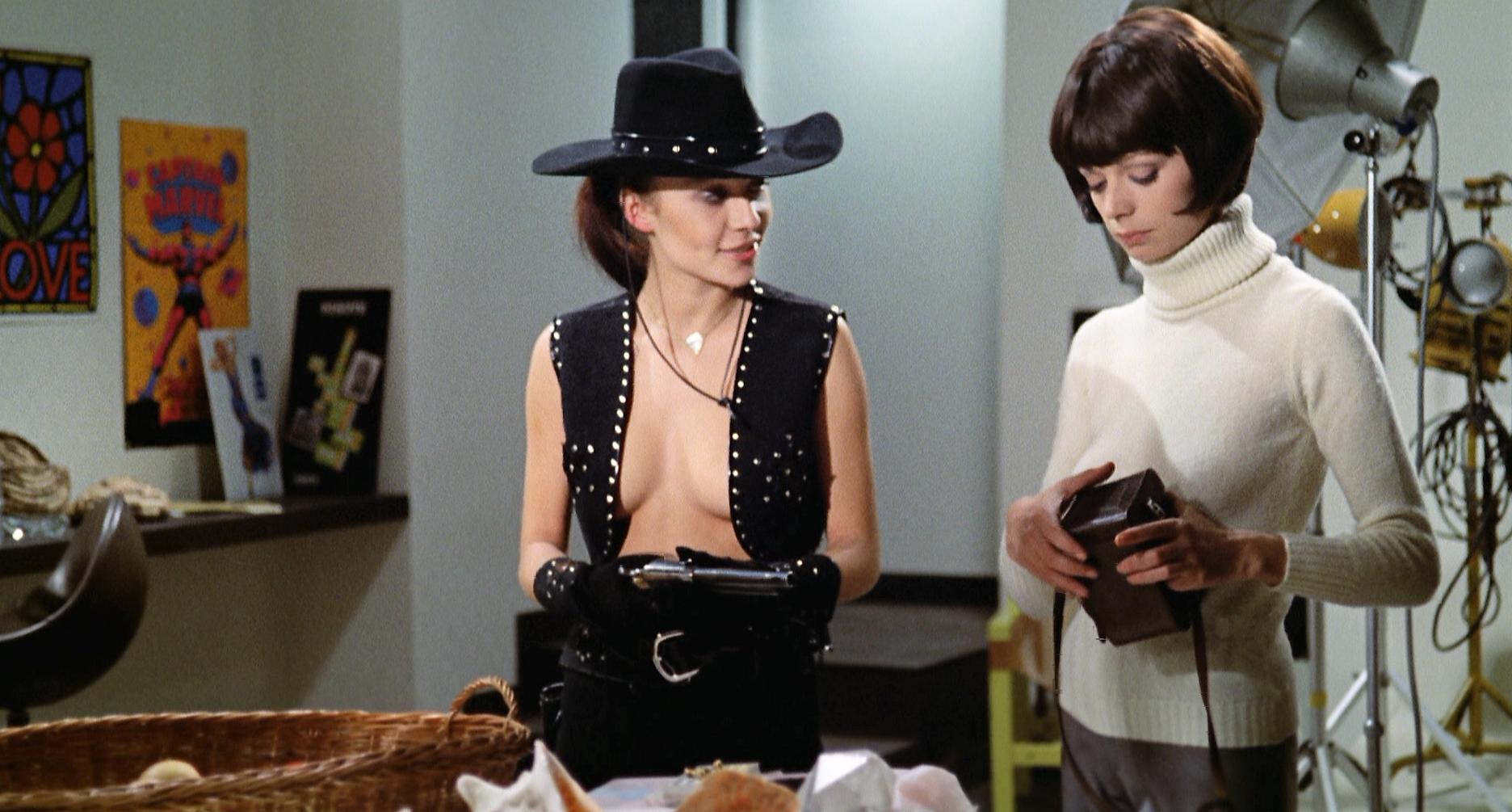
Much has been made of the producer’s cuts, which excised nearly half an hour of Farina’s original film and left the narrative fractured. But this fragmentation arguably adds to the film’s dreamlike quality. Its logic is dream-logic: bodies transform, dolls come to life, eroticism slips into violence. The film’s hallucinatory sequences, punctuated by Nazi imagery and surreal sadomasochistic tableaux, recall both Polanski’s Repulsion and the experimental fervor of European art cinema.
The tension between exploitation and arthouse gives Baba Yaga its lasting allure.
It is undeniably “style over substance”—but its style is substance. The lush interiors, velvet and leather textures, the gothic mansion full of bats and taxidermy, the pop-art framing lifted from Crepax’s comics; all of it is a spell. Watching Baba Yaga is less like following a story than like being hypnotized by a series of images that oscillate between fashion photography and fever dream.
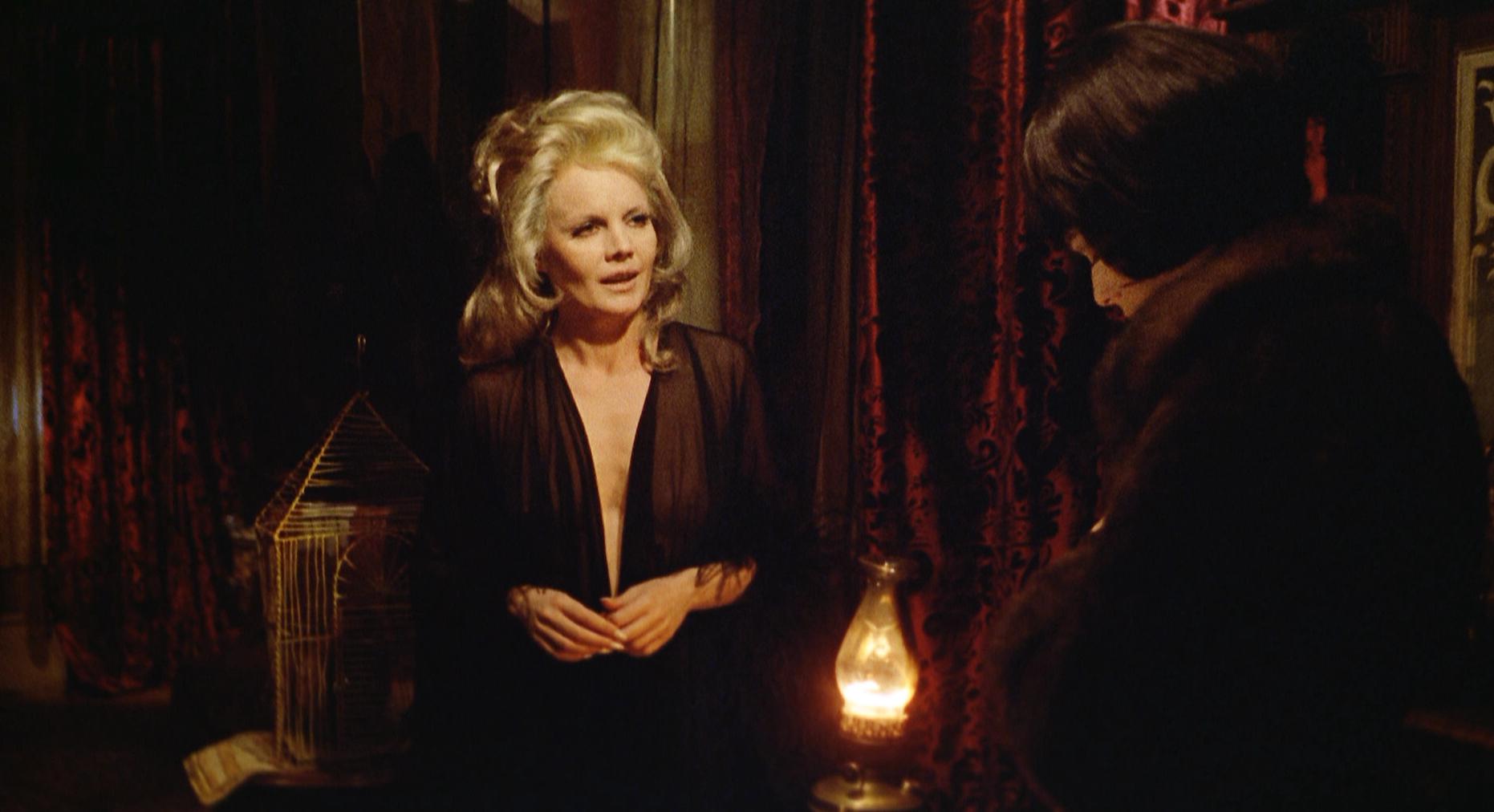
It’s a hybrid of Euro-horror, comic book adaptation, feminist allegory, and queer cinema. It remains an imperfect but fascinating entry in the cinematic history of witches.
Unlike the satanic covens of the era, Baba Yaga operates as a lone seductress whose power derives from desire rather than diabolism. In this, she foreshadows later witches who disrupt normative sexuality, from Catherine Deneuve’s vampiric Miriam in The Hunger to the witchy seductress of The Love Witch (2016).
If witchcraft has historically embodied fears of unruly women, Baba Yaga embodies a specifically 1970s anxiety: the independent woman who resists both male control and heteronormative expectations.
For that reason, it is a film worth revisiting not just as a cult curiosity but as a case study in how horror, erotica, and witchcraft intersect with feminist and queer histories.
Every week AIPT Movie Editor Nathaniel Muir and his cinema partner in crime Blake Heath discuss indie and genre movies you have have never heard of, the ones you cannot hear enough about, and the ones you never want to hear about again.
It is impossible to have a horror podcast and not talk about ‘Friday the 13th’ and ‘A Nightmare on Elm Street’. And most of our time has been spent wondering how there has not been a new entry in either of the fan favorite franchises for decades. We finally have a little bit of news on both of them.
We also talk about the surprising success of Widow’s Bay. If you take a 10,000 foot view of Rubberhead: The Life and Monsters of Steve Johnson, you will think you know exactly what it is about. And you would not be completely wrong. The documentary surprised us by being one of the most emotional and information watches we have ever had.
If you grew up as a horror fan in the 1980s or early 90s, chances are you have seen Johnson’s work. He invented Slimer, worked on ‘Species’, created the arms for Doctor Octopus in ‘Spider-Man 2’, and worked on the still outstanding special effects for ‘An American Werewolf in London’. And that is just the very tip of the iceberg.
But along with being an incredible genius, he is also incredibly self-destructive. This makes Rubberhead one of the most frustrating watches of the year. His work is amazing, but he also knows what is shortcomings are and has no interest in fixing them.
Adventures in Movies! is a part of the Morbidly Beautiful Podcast Network. Morbidly Beautiful is your one stop shop for all your horror needs. From the latest news and reviews to interviews and old favorites, it can be found at Morbidly Beautiful.
Adventures in Movies! is hosted by Nathaniel and Blake. You can find Nathaniel on Instagram at nathaninpoortaste. Blake can be found on Twitter @foureyedhorror and on Instagram at foureyedhorror. You can reach us personally or on Twitter @AdventuresinMo1.
Music in the background from https://www.FesliyanStudios.com

Adventures in Movies! is hosted by Nathaniel and Blake. You can find Nathaniel on Instagram at nathaninpoortaste. Blake can be found on Twitter @foureyedhorror and on Instagram at foureyedhorror.

She’s a lover, he’s a fighter. Together, they’re CHEER AND LOATHING. Tune in to hear your hosts, Stephanie (Cheer) and Casey (Loathing), clash over the films they love — and the ones they love to hate.
In this holiday extravaganza episode of Guilty Pleasures, join hosts Stephanie, Kelly, and our newest addition, Jonathan (Jack was tied up in tinsel and couldn't join us), as they unwrap the bizarre and unhinged world of holiday cinema. They dive into the depths of Elves, a film that's as chaotic as it is entertaining. It's a sleigh full of questionable decisions, diabolical dialogue, absurd plot twists, wildly offensive antics, and unhinged holiday mischief.
And that's not all! In the second half of the podcast, join your festive cinephile friends for a look at four more ”nutty as a fruitcake” holiday treats: A New York Christmas Wedding, Elf Bowling, A Medea Christmas, and Jack Frost. Plus, we each offer a bonus Christmas flick guaranteed to make you say, ”Ho, Ho, HO-LY Hell!”
Expect laughter, disbelief, and a spirited debate about what truly makes a movie a guilty pleasure. Don't miss this festive journey through the weirdest corners of holiday films!







Follow Us!