


In a time when women’s rights are threatened, “Don’t Worry, Darling” imagines a retro-inspired utopia for proponents of the patriarchy.

No time to read? Click the button below to listen to this post.
EDITOR'S NOTE
The following article contains an in-depth analysis of the film Don’t Worry, Darling. As a result, you are strongly encouraged to watch the film, which is currently available to rent on VOD, before reading this analysis to avoid any significant plot spoilers.
In an idyllic world romanticizing the ’60s era of pretty dresses and heels—living by Billie Holliday’s words: “smoke, drink, never think”— is where our story begins.
Jack and Alice, along with their friends, are enjoying a party. Eventually, the party ends, and all the couples return to their boxes. The men go off to work in the mysterious business of whatever Victory is built on (their wives have no idea) while the women cook, clean and wait for their men to come home again.
Tradwife Romanticization
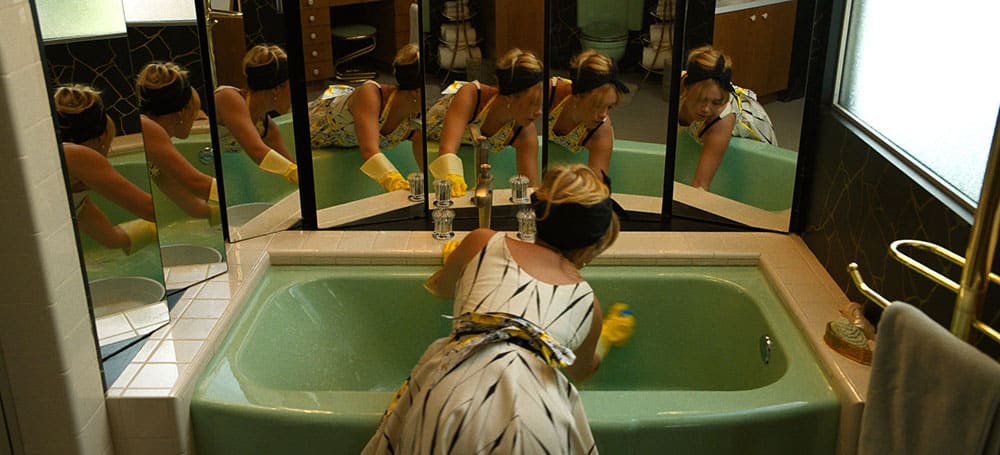
It was a simpler time, or so people say who are prone to rosy retrospection.
Gender roles were strictly reinforced. Women stayed home with the kids while the men worked. The reality of this “ideal” life is downsized: women were bored as hell, drinking and downing Valium or Qualuudes to get through the day.
The community of Victory in Don’t Worry, Darling is a fantasy, pure and simple. This perfect, gorgeous vintage world is a fallacy, a lie to distract from the real issues of such a place.
There is no substance or purpose to these women’s lives: they are perpetually relaxing, merely pretty things to dress up for display. There’s the neverending charging to their accounts for things desired because women have nothing else they think about, according to men. Yet, these women cannot question their surroundings or even ask their husbands about their day.
In 2024, I’m sad to say people still romanticize the idea of the tradwife — a “traditional housewife” who opts to stay home, make food, clean the house, and care for the children.
Another movie, Swallow (2019), has similar themes about being trapped as a tradwife in a beautiful, gilded prison. The fantasy is being in love with the man who put them there, happy in one’s utter boredom and restrictive control.
With the increased use of AI and Roe v. Wade being overturned, it isn’t hard to imagine something like the horrors presented in Don’t Worry, Darling actually happening. It’s a fear response from insecure men to modern women becoming more selective and independent. Many desire a return to male control, power, and dominance.
Sexism as Fantasy
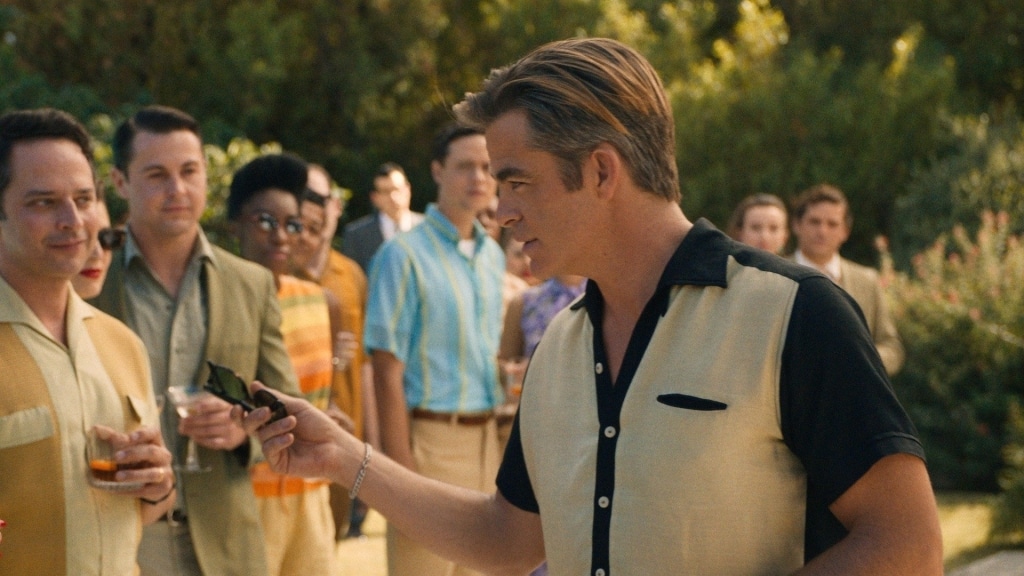
In Don’t Worry, Darling, Victory is a fantasy oasis in a desert of nothing: a Matrix-like world that becomes a man’s dream and a woman’s nightmare. Jack even shops for Alice, the pretty little doll wife who perpetually smiles and is sexually obsessed with him while her mind fights off the programming. When she calls attention to the cracks present in the program, Jack gaslights her.
Alice continually rejects what sight, sound, smell, and feeling tell her: something is wrong in this world.
There’s nothing worse than the feeling that someone is messing with your mind. This terror is amplified by the feeling that your “loving” spouse either doesn’t believe you or, worse, they are in on the manipulation.
A woman calls Alice a “spoiled brat—[with her]selfish, pampered whining” simply because Alice tries to resist the programming.
Alice was a brilliant surgeon who loved her job. Jack took that away from her because he believed he knew what was best for her. He often acts like a small child, like refusing to pick up food because his wife doesn’t text him back fast enough. Jack convinces himself Alice was never happy with her previous life, always stressed out from work. The truth is, she was happy. Her frustrations resulted from Jack’s inability to add anything to her life or help alleviate her stress in any way.
Jack got rid of what he viewed as the true problem in the relationship without realizing he had been the problem all along.
Freedom is Slavery

Victory is a pretty little prison built to hold the minds of women. Yet, there’s a flaw in this “perfect” system.
Frank says to Alice at one point, “Good girl.” Girls are taught to be sweet, warm, and non-confrontational when there are times when coldness would save our lives. In other words, to be a good girl, we must accept the programming the patriarchy has shoved down our throats our entire lives. Alice had that moment when she decided to reject it, and that moment changed everything.
It’s disturbing to watch the god-worship of the community’s incel leader, Frank; they’re all just pieces in Frank’s game.
“A better way,” he broadcasts, “freedom from society’s arbitrary regulations” — meaning the subjugation of others through mental slavery. According to him, our world is chaos because women can choose for themselves and aren’t choosing men that would control them. Women are slaves because, in this world Frank built, they’re forced to be at home doing their “wifely duties” while men are off doing “important things.” Meanwhile, their actions have set women’s rights back 70 years.
The women are celebrated as having a role “just as vital” as the men, but, somehow, they are meaningless and mediocre in the shadow of their husbands.
There’s a striking scene in Don’t Worry, Darling where Alice suddenly wraps her head again and again in Saran wrap, and it occurred to me that that must be what it feels like to be in Victory—like having your youth Saran-wrapped so your beauty can be used at the pleasure of men. This idea is present in The Stepford Wives movie iterations, another storyline using this idealized version of reality to control women into doing what men want.
Missing the Point
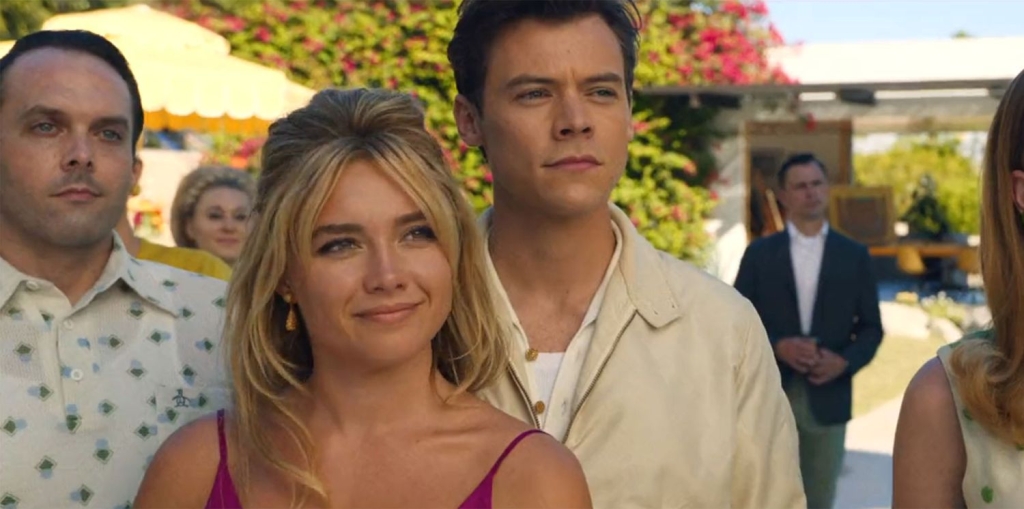
The story of Don’t Worry, Darling has significant plot holes and forces viewers to suspend their disbelief in ways that hamper full immersive viewing.
Though it is utterly gorgeous in its cinematography and costuming with solid acting, the story fails because it’s not as deep as it pretends to be. At best, it simply reinvents the wheel by pulling elements of other groundbreaking films without adding much to the discussion. It’s a fantasy. Director Olivia Wilde said it was about the pleasure of women and the female orgasm onscreen, but these circumstances automatically make it rape because the women lack awareness and agency.
Don’t Worry Darling can also be viewed as a metaphor for an abusive relationship, exploring the way a partner will gaslight, isolate, and suffocate you—even kill you if things go too far. Yet, the metaphors are shallow, and the audience is left baffled at the end. It’s a film full of good ideas that culminates in a messy finale. Despite that, the concepts explored are terrifying.
Subjugation is not love; Alice is Jack’s slave, as are all the women except one woman who elected to have this done to her. This knowledge makes that lone woman complicit in the other women’s subjugation. It’s very different when it’s a choice, but you don’t get to choose what’s best for someone else.
Ultimately, however, I love that all it takes is one stubborn woman who trusts herself to bring everything crumbling down.










Follow Us!