


“Bleeding” defies easy categorization and challenges viewers, offering a visceral exploration of addiction’s vampiric grip.
No time to read? Click the button below to listen to this post.
In Andrew Bell’s provocative film Bleeding, vampirism transcends its supernatural trappings to become a devastating metaphor for addiction, trauma, and human exploitation. This is not your typical vampire narrative—instead, it’s a raw, unflinching tale of survival and systemic predation, a descent into the darkest corners of human desperation.
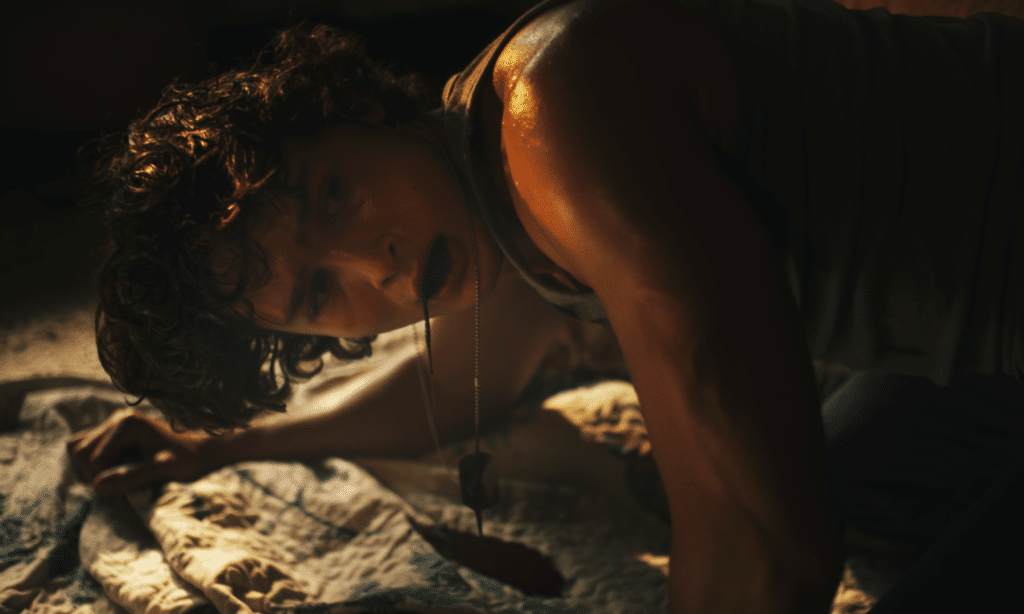
Set in an alternate timeline haunted by a devastating drug crisis, Bleeding follows cousins Sean (Jasper Jones) and Eric (John R. Howley), two teenagers trapped in a world where survival means navigating treacherous personal and systemic landscapes.
The film’s premise is deceptively simple: Sean’s addiction to “Blood,” a vampire-essence-infused drug, spirals into a dangerous journey that threatens to consume both him and his cousin.
These vampires are not mythical monsters but living metaphors for the marginalized. They are victims of circumstance and a system designed to prey on the vulnerable.
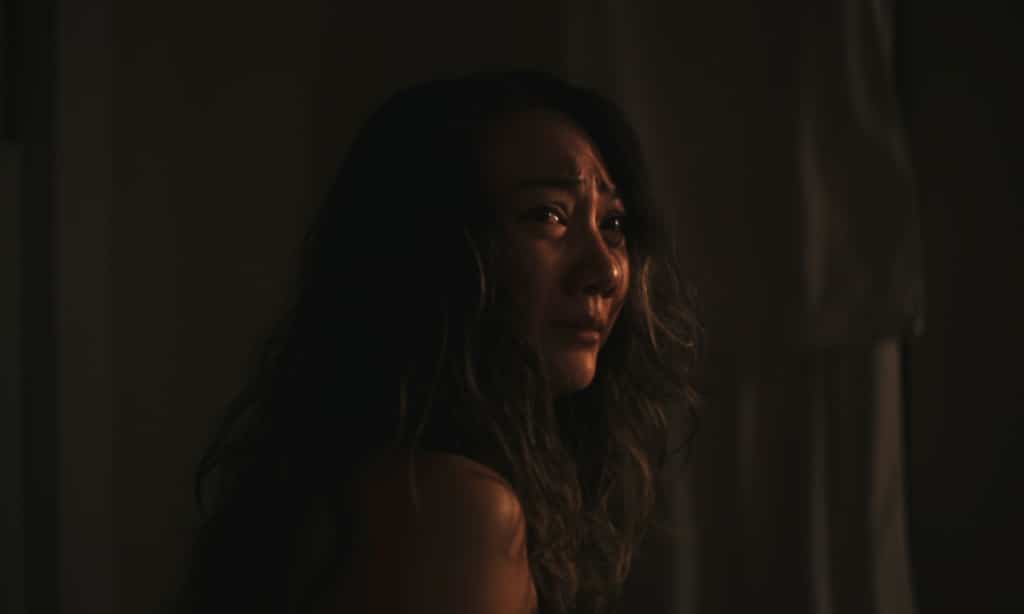
The film draws stark parallels to the ongoing opioid crisis, transforming a genre piece into a pointed social commentary.
Jasper Jones delivers a breakthrough performance as Sean, capturing addiction’s raw, destructive essence with gut-wrenching authenticity. His portrayal is neither romanticized nor simplistic but a complex study of desperation and survival. John R. Howley complements this with a nuanced performance as Eric, embodying the collateral damage of addiction—the helpless witness struggling to maintain humanity in an increasingly hostile world.
The film’s most profound achievement is its compassionate gaze. Where many would sensationalize or demonize, Bleeding offers understanding.
The vampires are not monsters but individuals caught in a cycle of exploitation, much like those battling addiction in our own world.
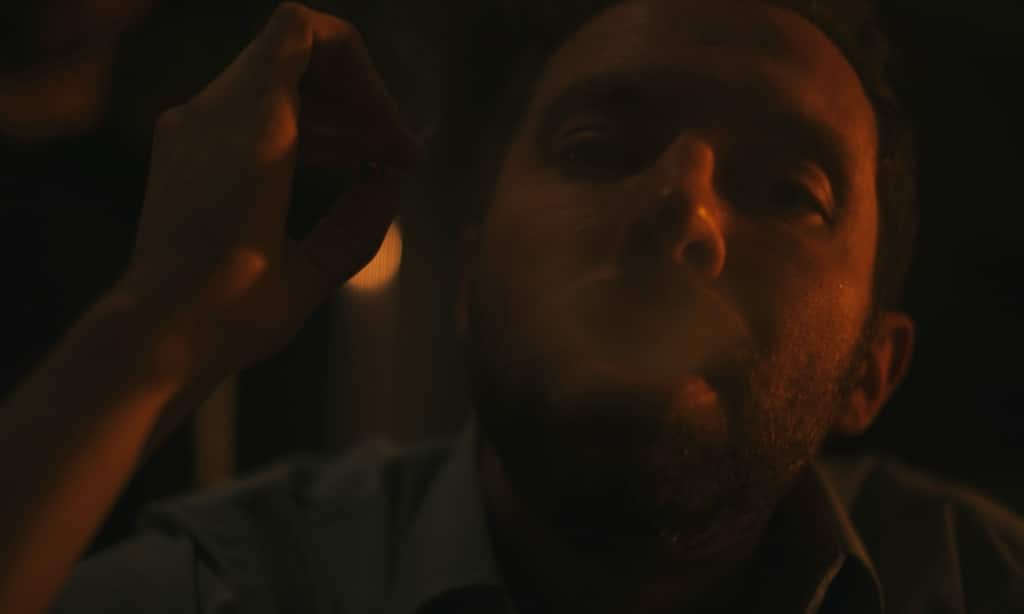
The film’s bleakness is not constructed through gratuitous gore but through an oppressive psychological landscape.

Each frame is carefully composed to communicate the characters’ internal struggles, creating a sense of suffocating dread.
As Bell himself articulates, “We wanted to tell you a story about vampires, but show that the real monsters were there all along, preying on the young, feeding off the people that trusted them.”
Beyond its personal narratives, Bleeding offers a scathing critique of systemic violence.
The drug trade, represented by the ruthless dealer, becomes a metaphor for larger societal predation. Parents battling their own demons—Sean’s abusive alcoholic father and Eric’s grieving mentally ill mother—create a generational cycle of trauma that feels devastatingly real.
It’s a film that defies genre expectations—simultaneously a vampire story, a crime drama, and a profound meditation on addiction, exploitation, and human resilience.
It uses vampirism to mine the depths of human despair, exploring the horror of feeling trapped—by circumstance, by addiction, by an endless cycle of trauma and hopelessness.
The world inhabited by the unfortunates of Bleeding is devastatingly dreary. There are no options, no lifelines, no brighter days ahead. Consumed by darkness and haunted by an unquenchable thirst for something more, they are drained of potential.
Bleeding is bleak, nihilistic, and heartbreaking.
While that may not sound like a fun time at the movies, it’s also a riveting watch and a beautiful piece of filmmaking that deserves your attention.
Overall Rating (Out of 5 Butterflies): 4









Follow Us!