

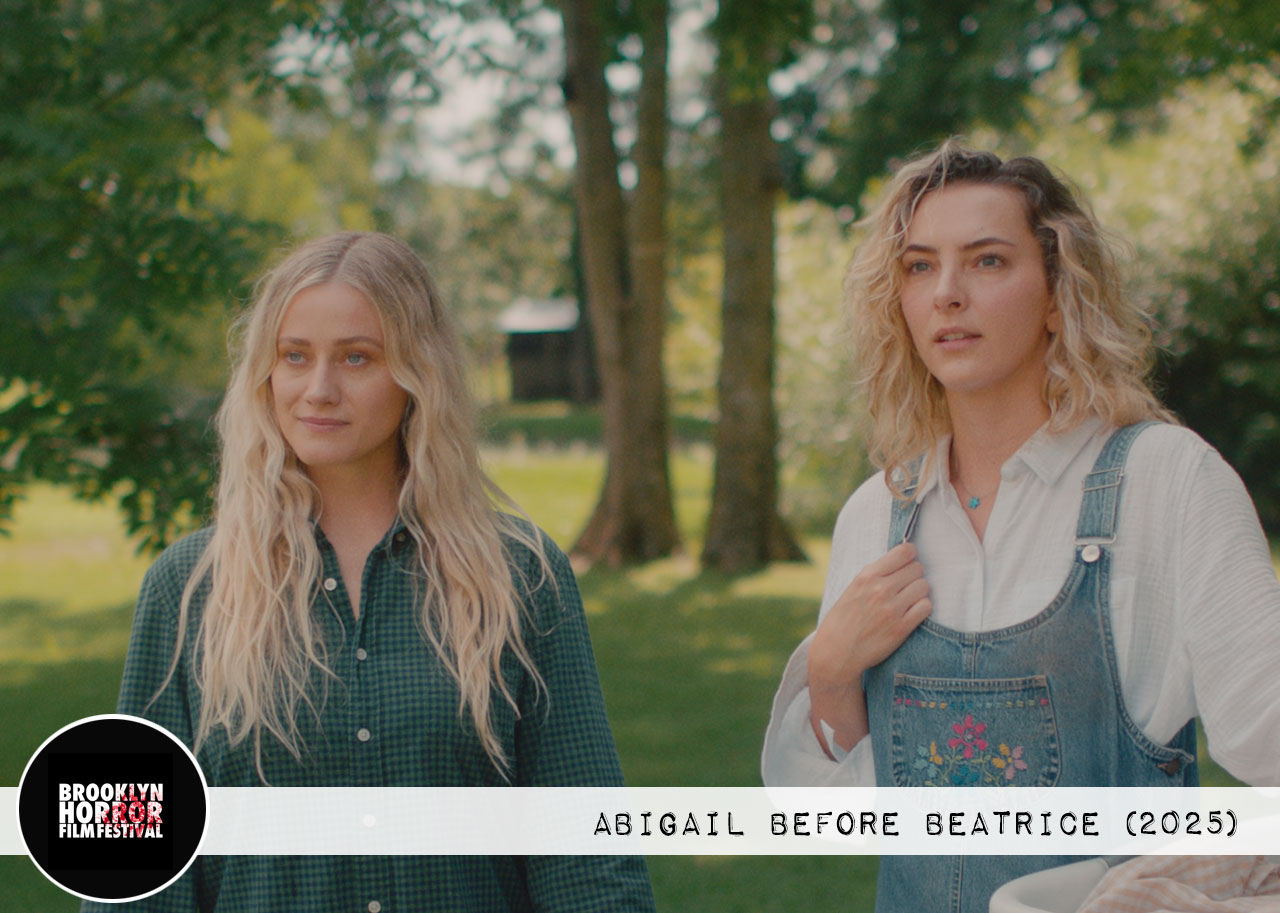
A haunting portrait of devotion and delusion, “Abigail Before Beatrice” explores the sinister side of chosen family and faith as fanaticism.
No time to read? Click the button below to listen to this post.

The phrase “chosen family” originated within the LGBTQ+ community. Many queer people who didn’t fit in with their biological families—or were kicked out of their biological families—formed loving, supportive families of their own with friends. Now the term is more widely spread; anyone can create a chosen family to feel safe and happy.
Cults are an insidious twist on the idea of a chosen family. While people in a cult may technically operate as a family, the idea of their having a choice is questionable. Even if the leader of their group tells them they have choices, cults often strip people of financial resources, connections with the outside world, and their sense of self. As their lives become smaller and more restricted, the head of the “family” gains control.
Writer and director Cassie Keet explores what happens when this kind of “chosen family” explodes in her haunting psychological horror film Abigail Before Beatrice.
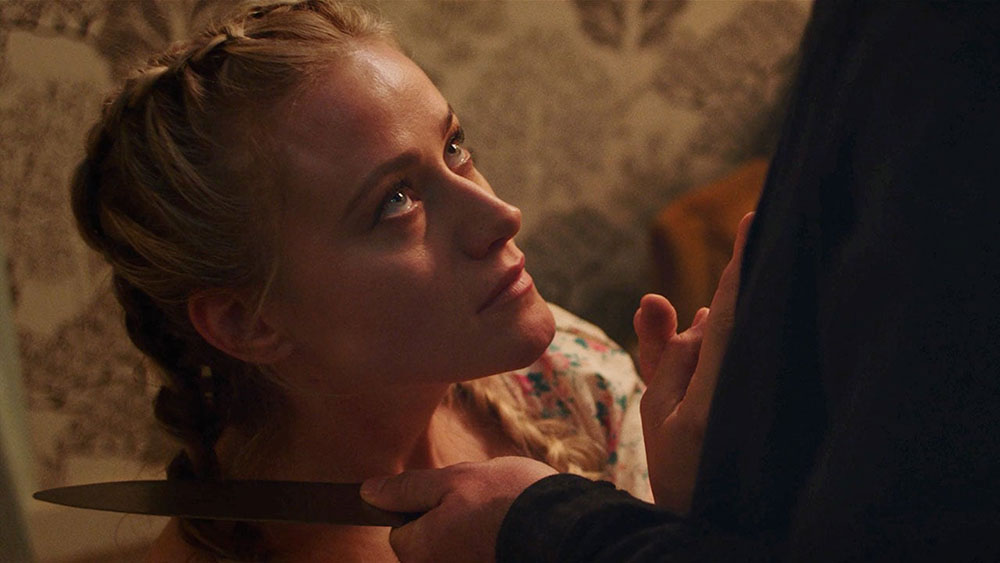
The movie focuses on the eponymous Abigail (Riley Dandy) and Beatrice (Olivia Taylor Dudley), two women who were members of a small cult run by the violent and manipulative Grayson (Shayn Herndon).

Years after the cult falls apart, Beatrice (whose real name is Maddy; Beatrice is the name Grayson bestowed on her) is still living in the same neighborhood where the cult was headquartered.
In fact, she befriends the family who buys the cult’s old farmhouse and continues working in their garden, growing strawberries for her jam just as she did when she was living under Grayson’s thumb. She’s the one who reveals to the new homeowner that the chicken coop on his property is decked out with blankets, candles, and a string of lights from her time in the cult—and she still sleeps in there on occasion.
After getting a text from fellow former cult member Abigail (whose real name is Sarah), Beatrice agrees to meet her for coffee.
Very quickly, we understand that some of Beatrice’s troubling behaviors—sleeping in the chicken coop, having self-arm scars on her arms, looking for connections with anyone from her neighbor to someone she speaks to in her role as a telemarketer—are the tip of the iceberg.

While Sarah quickly shuffled off the name Abigail, Beatrice refuses to answer to Maddy, even years after the cult was disbanded. Sarah moved away from the small town in Arkansas where the cult was based; Beatrice still lives only minutes from the farm.
It’s not very common to see a portrayal of a former cult member who actively wishes they were still in the cult.
Every revelation by Beatrice, who still thinks Grayson is a god and refuses to believe he murdered someone (which is what he is in prison for), horrifies Sarah, who has a very different viewpoint: Grayson was an abusive murderer, and they were in a cult. It wasn’t a chosen family, as Beatrice sees it.
Beatrice and Sarah’s chemistry at their reunion bubbles up around their anger, even leading to a passionate yet fraught kiss in the coffee shop bathroom.

But the two women are living in completely different realities, and Sarah is here to bring urgent news to Beatrice: Grayson is being released from prison. (She wryly notes that if anyone could charm their way into an early release, it would be him.)
Sarah wants to save Beatrice. It’s clear from flashbacks to their time together in the cult that they were very close, with both their kiss and their tenderness toward one another hinting at a deep bond. While Sarah wants to erase her experience under Grayson’s spell from her memory, Beatrice is clinging to the hope that they’ll all go back to the farm someday.
Distraught when Sarah calls Grayson a murderer and their “family” a cult, Beatrice asks her, “How could we both have two completely different experiences?”
Abigail Before Beatrice searches for the answer to that question.
The acting by the three leads is solid, and their relationships feel real and lived-in, albeit dysfunctional.
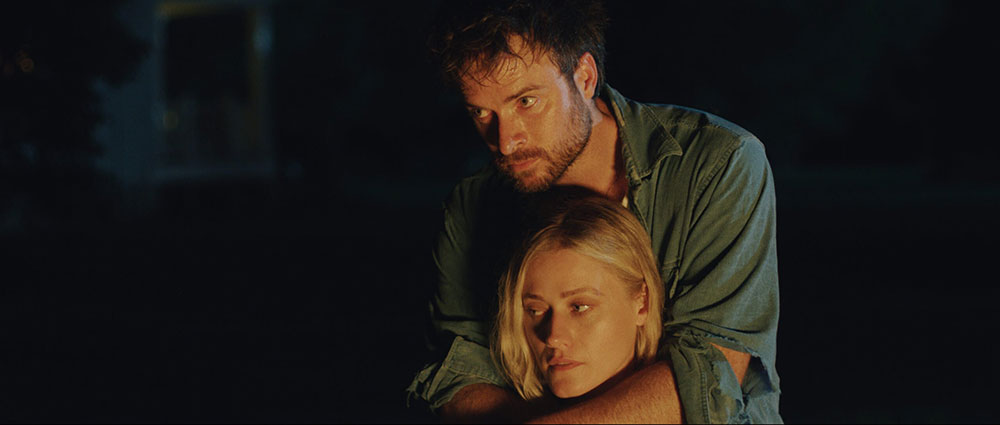
As Beatrice, Dudley is particularly captivating.
Watching her is like watching an exposed nerve. She brings so much vulnerability and sweetness to Beatrice, who is not without her own morally dubious behavior. Dudley’s intensity and earnestness combine to bring the viewers into Beatrice’s world; while we may not understand her, we care about her. (Dudley was recognized with the Best Performance Award at the Brooklyn Horror Film Festival for her portrayal of Beatrice.)
There are also deep levels of symbolism that can be read into many elements of this thoughtfully constructed film.
Beatrice’s infamous strawberry jam is a constant throughout the story. As she prepares the sweet strawberries while listening to a true crime podcast, the glistening red chunks catch the viewer between attraction and disgust. Beatrice cuts her finger at one point, and it’s impossible not to wonder if she feeds her own blood—thick with pain and trauma—into the jam she sells.
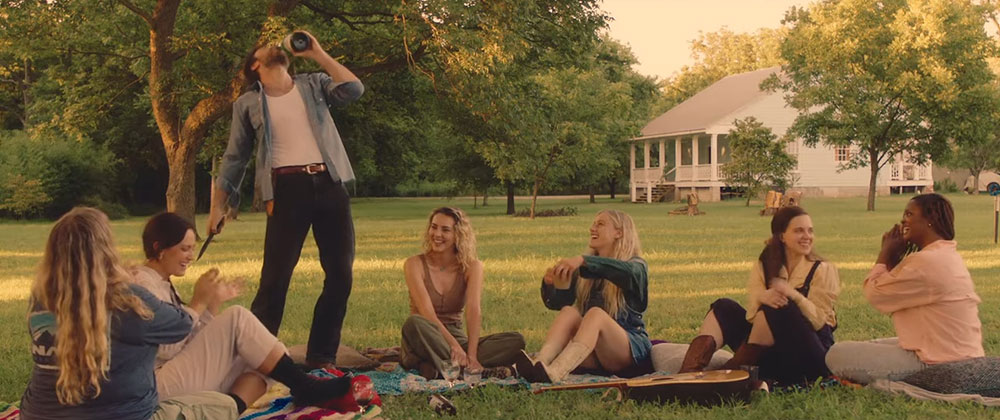
There are scenes of the women sitting in a love-drunk circle around Grayson, with a strumming guitar, and peaceful scenes of them working in their garden. There are also scenes of them sitting around the house, bored and listless, and they almost seem like women who are simply killing time together in the outside world.
As they begin to walk on eggshells around Grayson and his volatile moods (he abuses them one moment and then expresses faux concern the next), cracks start to appear. This is not a healthy “family.”
Will Beatrice ever shake off her devotion to Grayson and realize just how traumatic her time in the cult was? Abigail Before Beatrice doesn’t give viewers any easy answers, and it’s part of why it’s such an excellent film.
Just like in life, there are no easy answers or plots that can be tied up neatly with a bow.
Overall Rating (Out of 5 Butterflies): 5









Follow Us!