“Perfect Blue” explores the fragile boundaries of the self with thought-provoking themes that have only grown more pertinent with time.
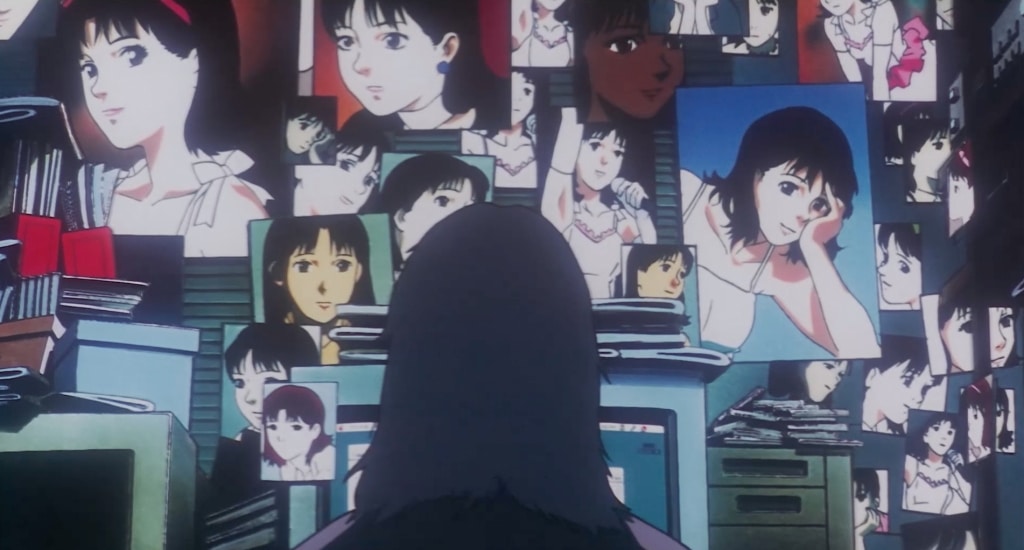
Perfect Blue, directed by Satoshi Kon and released in 1997, is an anime psychological thriller that stands out as one of the most unsettling and influential films of its genre. Often hailed as an existential masterpiece, the film delves into the fractured psyche of its protagonist, Mima Kirigoe, as she grapples with the loss of identity, the dangers of celebrity, and the distorted lines between reality and illusion.
Adapted from the novel Perfect Blue: Complete Metamorphosis by Yoshikazu Takeuchi, this film has left an indelible mark on both the anime landscape and the broader world of psychological thrillers.
Perfect Blue was ahead of its time, predicting the psychological consequences of an increasingly image-driven society. The film’s exploration of identity and the illusion of reality continues to resonate.
Film History and Development

Perfect Blue began as a relatively modest project, initially conceived as a live-action film. However, due to budget constraints, the decision was made to pivot to an animated format. This shift proved serendipitous, as it allowed Satoshi Kon’s directorial vision to flourish.
Kon, who made his feature directorial debut with this film, brought his background as a manga artist and experience in working with directors like Katsuhiro Otomo to the project, imbuing it with a unique visual style and narrative complexity.
The film’s release coincided with a surge in global interest in Japanese animation, which had begun to gain a foothold in Western markets thanks to the success of films like Akira (1988) and Ghost in the Shell (1995).
Yet, Perfect Blue distinguished itself from its contemporaries by eschewing sci-fi or fantasy settings in favor of a grounded, psychological narrative that felt intensely real and disturbingly intimate. This pivot towards psychological realism and horror contributed to the film’s lasting impact.
Major Themes
Identity and Self-Image
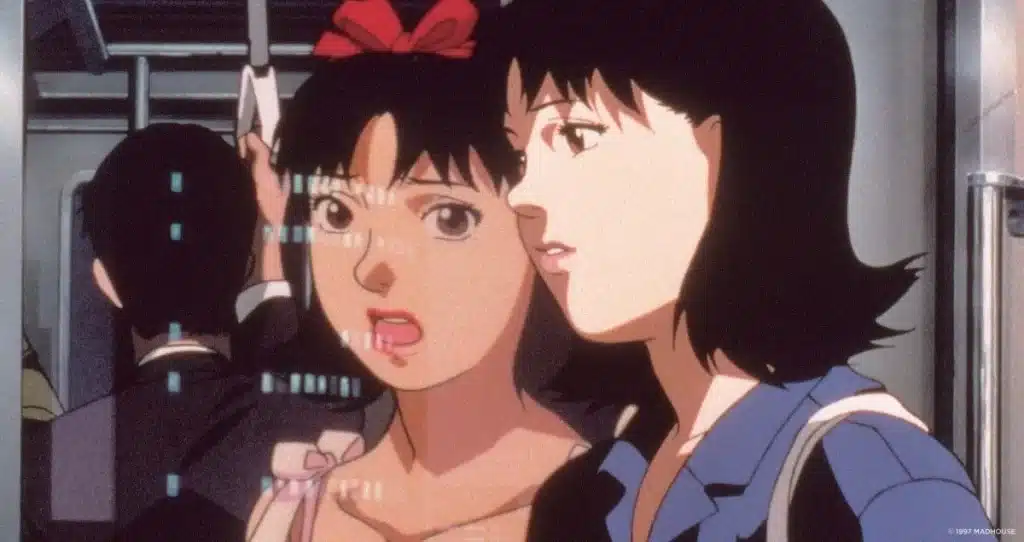
The core of Perfect Blue revolves around Mima’s struggle with her identity. As a pop idol transitioning into an actress, she finds herself torn between her past persona as a member of the J-pop group “CHAM!” and her new, more mature image. This dichotomy becomes a breeding ground for existential conflict as Mima grapples with the societal expectations placed upon her and her personal desires.
The film explores how identity can be fragmented, especially in the public eye, where the line between the performer and the person blurs dangerously.
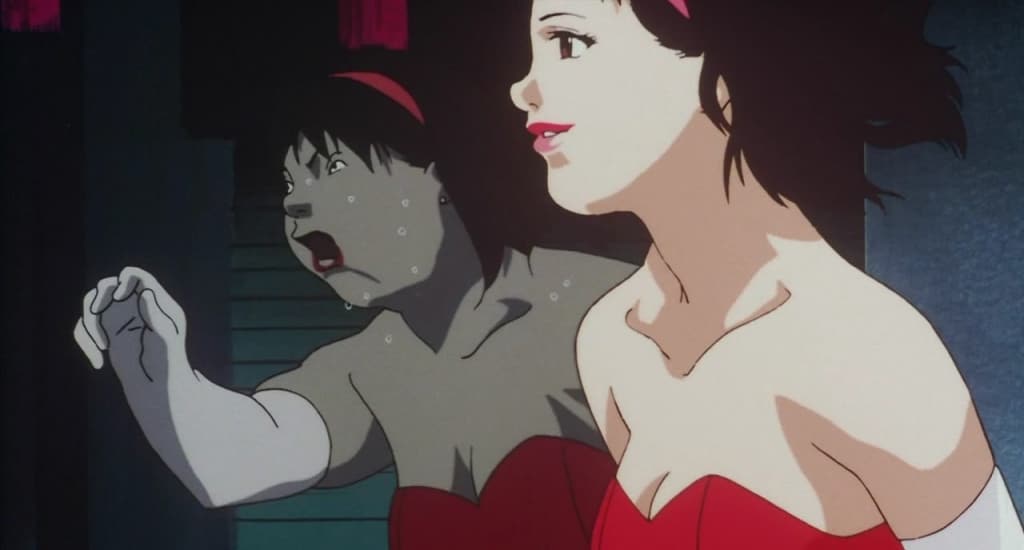
It uses mirrors and reflections to emphasize Mima’s fractured identity. Mirrors are a recurring motif, often depicting the conflict between Mima’s public and private selves. These reflective surfaces symbolize the duality of her existence, showing her two conflicting personas. At times, her reflection acts almost as an independent character, haunting her with the image of her past self, representing her inner turmoil and fear of losing control over who she is.
Mima’s struggle is also depicted through her interactions with the internet, particularly through a website called “Mima’s Room,” which contains diary entries written by someone impersonating her. This digital doppelgänger knows intimate details about Mima’s life, causing her to question her own memories and sense of self.
The rise of the internet in the late 1990s plays a crucial role here, foreshadowing the modern era’s obsession with social media, digital personas, and curated self-image.
The Dangers of Celebrity and Fan Culture
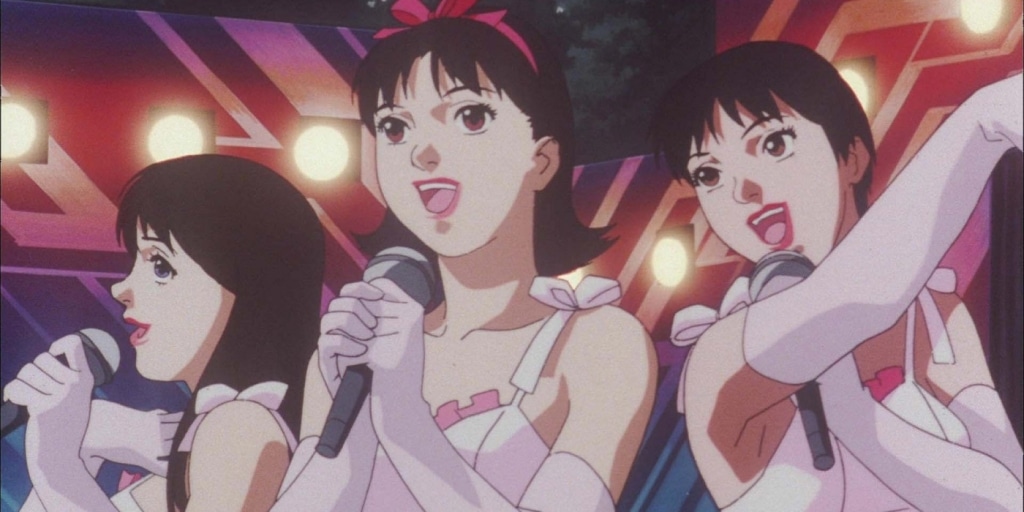
Perfect Blue offers a scathing critique of the entertainment industry, particularly the Japanese idol industry, where young performers are often molded into idealized versions of femininity to satisfy fan expectations. Mima’s transition from a “pure” idol to an actress who takes on more adult roles—including a graphic rape scene in a TV drama—represents the industry’s objectification and exploitation of female performers. Her management team, more interested in profit and publicity than her well-being, pushes her into increasingly compromising situations.
This exploitation is mirrored in her fans’ reaction, particularly in the character of Me-Mania, a deranged fan who becomes obsessed with the “perfect” image of Mima as an idol.
He rejects her transformation into an actress, feeling betrayed by her departure from the innocent persona he idolized. Me-Mania’s fanaticism represents the darker side of celebrity culture, where fans project their fantasies onto public figures, often treating them as objects rather than real people with agency.
This theme examines the parasocial relationships fans develop with celebrities and how these relationships can become dangerously possessive.

Mima’s journey also involves the loss of agency. As she tries to assert control over her career, she is met with resistance from all sides—her management, the industry, and her fans.
Her manager, Rumi, exemplifies this conflict. Rumi once dreamed of being an idol herself but failed to achieve that success. She projects her desires onto Mima, attempting to control her career and preserve her pure image. Rumi’s eventual breakdown and impersonation of Mima highlight the extreme consequences of living vicariously through someone else and the inability to relinquish an idealized self-image.
The idol industry, as portrayed in the film, is not just about entertainment; it’s about crafting and selling a fantasy. Mima, as a product of this industry, loses her sense of self as she is forced to conform to the ever-changing demands of her audience.
The film critiques how the entertainment industry commodifies individuals, stripping away their humanity to present a marketable image, and how this can lead to the disintegration of one’s sense of identity.
Reality vs. Illusion
Perfect Blue masterfully blurs the line between reality and illusion, leaving both Mima and the audience questioning what is real. The narrative frequently cuts between scenes of Mima’s daily life, her fantasies, and scenes from the TV drama she is acting in. This deliberate narrative ambiguity creates a disorienting experience that mirrors Mima’s mental unraveling.
This blurring of fiction and reality heightens the psychological horror and mirrors Mima’s experience of losing her sense of self. It forces the audience to inhabit her confusion and anxiety, making us question the reliability of what we see.
Mima’s hallucinations, particularly her interactions with her idol doppelgänger, are central to the film’s exploration of reality versus illusion. These visions represent Mima’s subconscious guilt and self-doubt about her career choices. As her mental state deteriorates, these hallucinations become more frequent and intense, leading her to question her sanity.
The film argues that our perceptions of reality are subjective and can be manipulated, especially when our mental state is compromised.

The theme also extends to the audience’s relationship with media.
Just as Mima struggles to distinguish between her real self and her public persona, the film challenges the viewer to discern between what is real and what is not. It’s a commentary on how easily media can distort reality, shaping perceptions and manipulating emotions, which resonates strongly in today’s world of deepfakes, filtered realities, and digital personas.
Final Thoughts

Perfect Blue delves into fundamental questions about the nature of identity and self-perception. It forces viewers to confront the idea that identity is not a fixed construct but a fluid, malleable concept shaped by both internal desires and external pressures. The film’s exploration of the fragility of the self, especially under the microscope of celebrity and media scrutiny, resonates on a deeply human level.
Moreover, the film’s narrative structure, which intentionally disorients and confuses the audience, mirrors the disintegration of Mima’s psyche. This innovative storytelling technique has made Perfect Blue a subject of academic study and discussion, particularly in film studies, psychology, and media criticism.
Through its unsettling atmosphere, complex themes, and masterful direction, Perfect Blue has solidified its place as an existential masterpiece that is as relevant today as it was in 1997.
















2 Comments
2 Records
Reinaldo Gotierrez wrote:
Stephanie Malone wrote:
Thanks so much!