


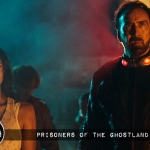
Nicolas goes full Cage in the dazzling fever dream that is “Prisoners of the Ghostland”—a visual and sonic spectacle, glorious and chaotic.
No time to read? Click the button below to listen to this post.
It’s Dystopian Wasteland Week in the Cage. The random number generator gave us the under-the-radar, politically-minded The Humanity Bureau, and we asked our social media followers to help us choose between the 2021 American horror Western film Prisoners of the Ghostland and the 2009 science fiction thriller film Knowing for our second film. By a sizeable margin, voters demanded we enter the Ghostland, a journey intended for the bold and the brave.
IN THIS CORNER: KELLY MINTZER
The Lowdown
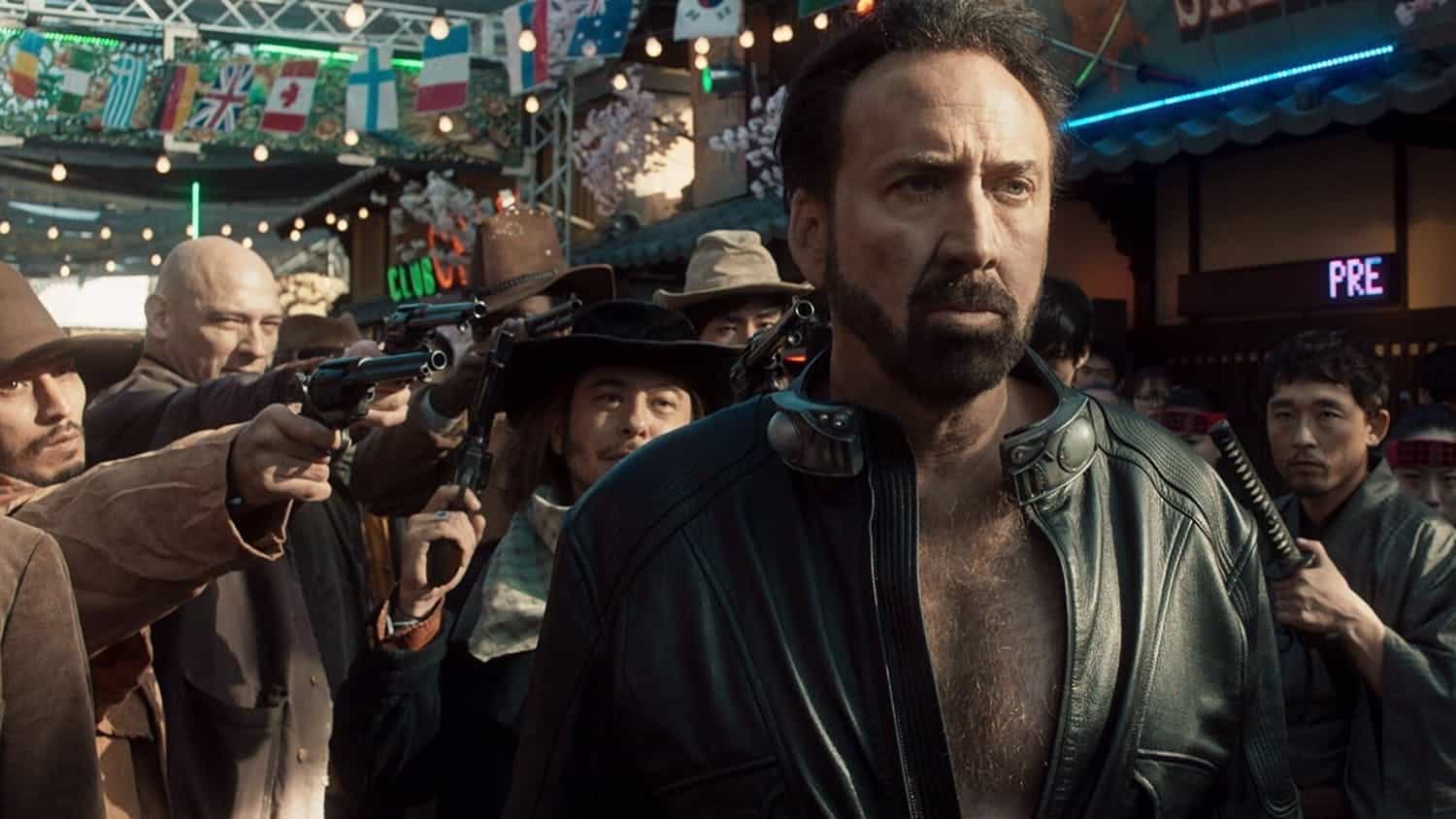
So, I want to get this out of the way, early and succinctly, because I’m afraid very little else in this review will be able to be this simple or clear: Prisoners of the Ghostland is fucking rad. Stylish, cool, absolutely ridiculous, super fun, perfectly paced, deeply goofy—it’s got it all.
Giving a plot synopsis will hardly do the movie justice, but I’ll give it a go.
Prisoners of the Ghostland follows a bit of the classic Western formula: a lone hero (in this case, Nic Cage playing the INCREDIBLY subtly named “Hero”) is sent to rescue the girl and eventually leads the townfolk to overthrow the tyrant.
Prisoners muddies the morality; Hero is employed by the stone cold piece of shit Governor to retrieve one of his sex slaves. Granted, Hero doesn’t have a whole hell of a lot of choice; Governor has sprung him from the clink and pretty quickly garbed him in a murder suit set to blow him to holy hell if he fails to retrieve the young woman in question.
From there, it’s a Hero’s quest (whomp whomp) through a genuinely, beautifully realized world. The movie looks fantastic, and this is some of my favorite use of latter-day Nicolas Cage. He’s really good in these sorts of lone-wolf roles.
Governor is played by the beautifully hammy Bill Moseley, who threatens to steal the movie from Cage.
I don’t necessarily want to accuse this movie, fueled by its myriad surface charms, of having too many profound points hidden up its sleeves. But as a casual observation, I do think there’s something pretty interesting about making Governor a shitty white guy who fetishizes Japanese culture. It’s a more common occurrence than I realized before I went to college, but it is a very real phenomenon.
The Cage Factor:
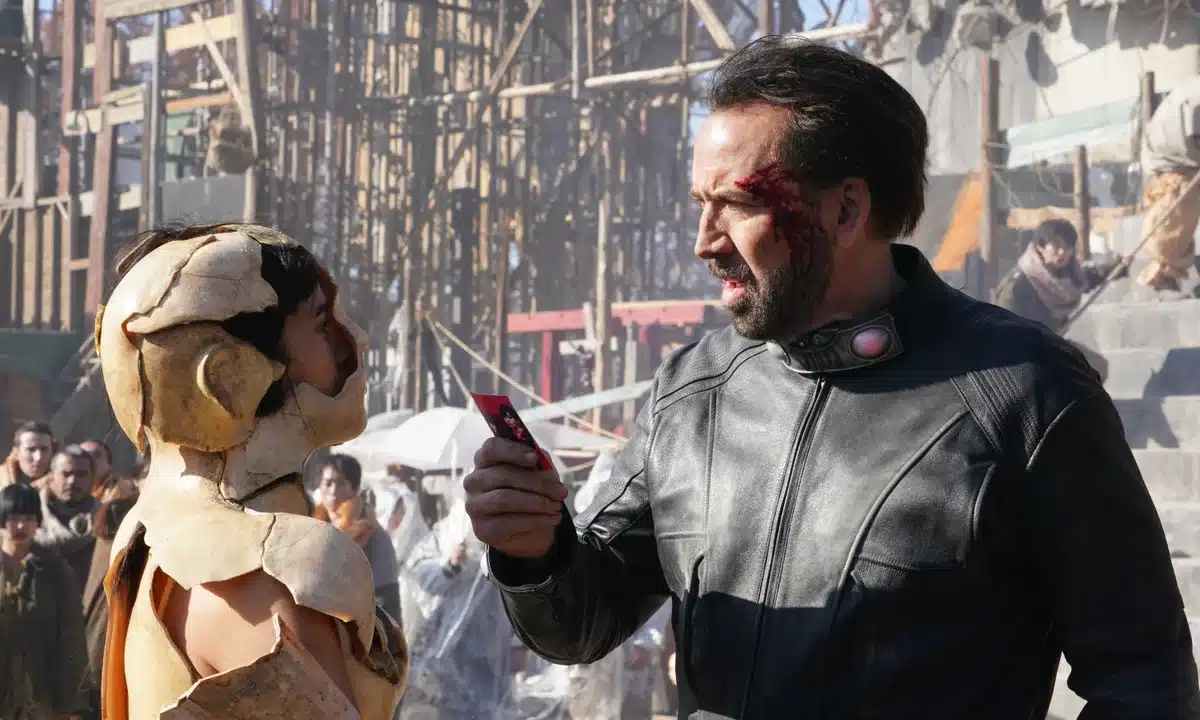
Oh, this is most certainly a Cage Fighter. This movie fucking rules! And Nic Cage is great in it. There’s just no reason not to watch this film.
I have two schools of essential latter-era Nicolas Cage movies: 1. the thoughtful, unexpected character study and 2. The absolutely insane, high-concept lone wolf. This is the absolutely perfect encapsulation of the latter. Just, you know… watch out if ball violence bothers you.
AND IN THIS CORNER: STEPHANIE MALONE
The Lowdown
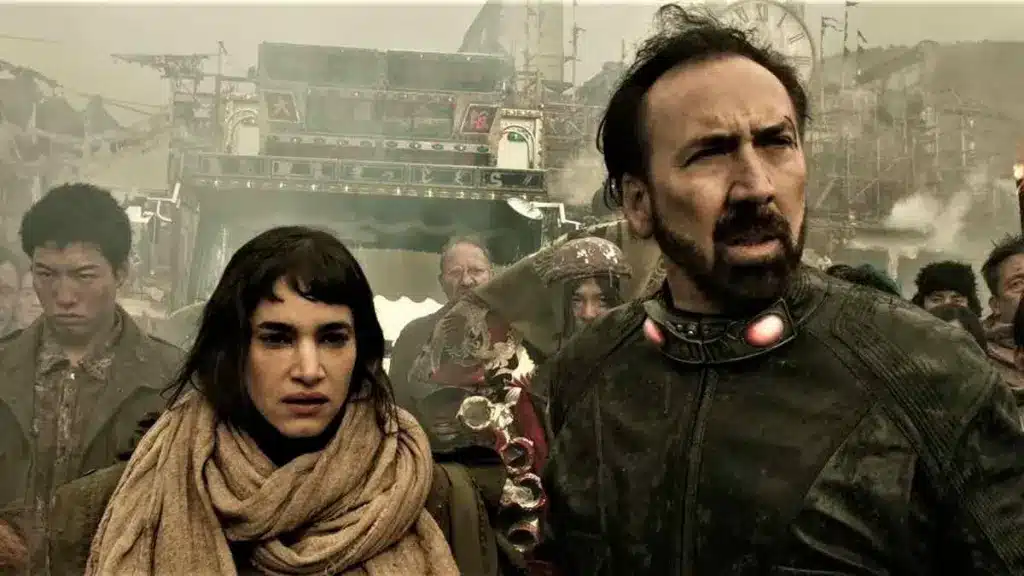
A wild fusion of post-apocalyptic western, samurai showdown, and neon-drenched nightmare, Prisoners of the Ghostland dares to be exactly what it wants — and thanks to a fully unchained Nicolas Cage, it succeeds in ways that are hard to describe but impossible to forget.
Director Sion Sono, known for his wildly inventive work in Japanese cinema (Suicide Club, Love Exposure), brings his maximalist, genre-bending sensibility to every frame of Prisoners of the Ghostland. This is a movie where East meets West meets fever dream, all splashed in eye-popping colors and surreal production design. From neon kimonos to wasteland warriors covered in broken clock faces, the film crafts a world that feels like a mythic mashup of spaghetti western grit, samurai elegance, and dystopian decay.
The cinematography by Sôhei Tanikawa balances striking compositions with chaotic energy — every shot feels like it could be an album cover for a band you’re not cool enough to know. And the score, composed by Joseph Trapanese, mixes haunting Eastern melodies with pulse-pounding synth, adding to the film’s immersive, dreamlike atmosphere.
If you’re looking for a tightly wound plot, this isn’t the ride for you. The story of Prisoners of the Ghostland is more a skeleton for visual invention and thematic exploration than a driving force. But that’s part of the point.
This is a mood piece, a gonzo fairy tale about redemption, time, and cultural collision.
It feels like Sono is using genre elements like a DJ samples beats: blending, remixing, and distorting until something hypnotic emerges.
While Cage rightfully devours the spotlight, the supporting cast brings texture and intrigue to the madness. Sofia Boutella (Climax) brings ethereal gravitas as the kidnapped Bernice, grounding the chaos with a quiet resilience. Bill Moseley, as the villainous Governor, chews scenery with a perfect blend of menace and camp, channeling old-school exploitation baddies with a modern twist. The ensemble of wasteland dwellers — from chanting cultists to Kabuki ghosts — adds to the sense that we’re watching a strange myth unfold.
Some viewers may feel the film’s wild imagination outweighs its narrative coherence. But for those willing to surrender to the madness, it’s a one-of-a-kind trip.
The Cage Factor:
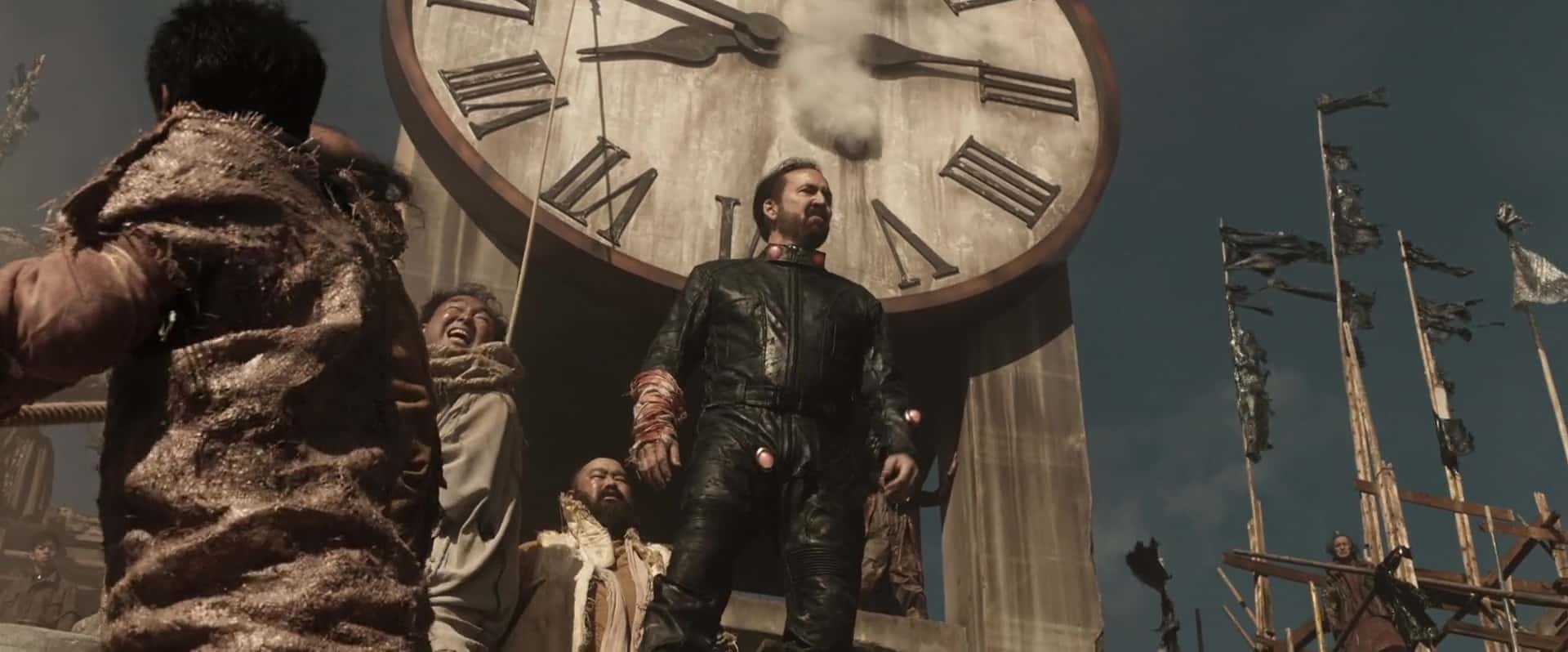
Let’s get one thing out of the way: Nicolas Cage doesn’t just star in Prisoners of the Ghostland—he detonates across it. Playing a convict tasked with rescuing a warlord’s granddaughter from a cursed wasteland, Cage leans into every eccentric, existential, and operatic impulse he has. One minute, he’s brooding like a weary gunslinger; the next, he’s screaming about his testicles in a way that only Cage could make oddly profound.
What makes his performance so remarkable is how he treats this bonkers material with absolute sincerity. Cage never winks at the camera, never distances himself from the lunacy. Instead, he fully embraces the mythic absurdity. For Cage devotees, this is a role that distills everything we love about him: the commitment, the unpredictability, the raw emotion, and the moments of gonzo brilliance that feel like they shouldn’t work but somehow do.






Follow Us!