

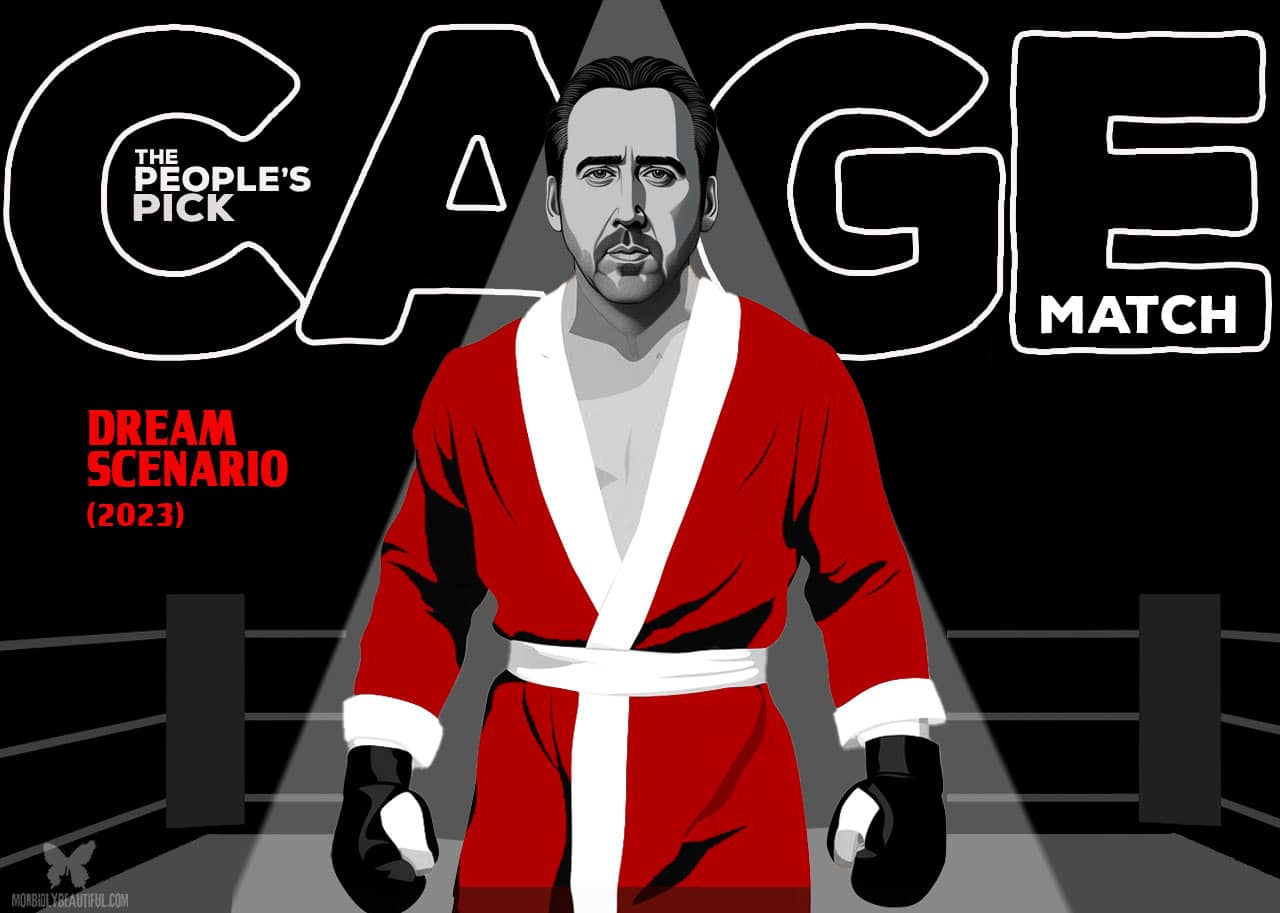
In “Dream Scenario,” Cage anchors a brilliantly original dark comedy that morphs into a haunting meditation on the price of fame.
No time to read? Click the button below to listen to this post.
We don’t want to jinx it, but 2025 has been good to us in the Cage so far. Last week delivered a couple of Cage’s absolute best (Bringing Out the Dead and Raising Arizona). This week, the random number generator gave us a ’90s action Cage classic, The Rock, and the people delivered one of Cage’s most recent career highlights, the wildly underrated Dream Scenario.
IN THIS CORNER: KELLY MINTZER
The Lowdown
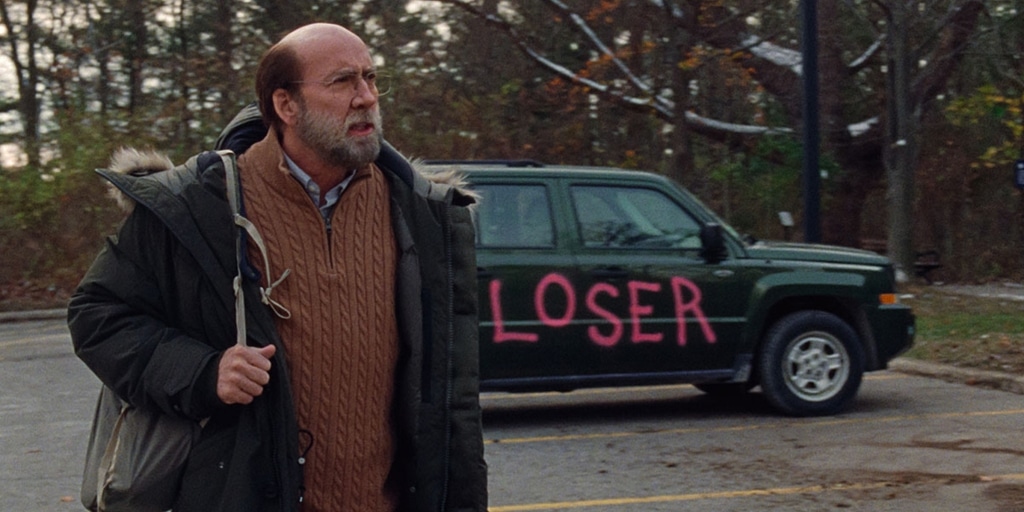
It is possible that nothing more accurately or succinctly represents the breadth and strangeness of Nic Cage’s career than jumping from The Rock to Dream Scenario (I say “possibly” because we have still barely scratched the surface of this uniquely odd actor’s indescribable filmography. Who knows what weirdness lies in store?).
One is a loud, chaotic, absolutely absurd popcorn flick, and the other is a haunting, beautiful, strangely chilling piece of genuine art. I’m not saying one is better (one is better), but boy. These movies could not be much different.
Dream Scenario launches a dynamite premise: Nicolas Cage plays a college professor who begins popping up in other peoples’ dreams. He has no control or awareness over this, but the gradual collective realization that the same man—a mild-mannered academic—keeps showing up in random strangers’ slumbers leads to a level of celebrity.
It, of course, becomes impossible to discern the genuine experiences from the power of vast suggestion, and dreams of Cage spread.
Unfortunately, what begins as a sort of bemusing curiosity takes a dark turn when Cage’s dream avatar, previously passive in moments of disaster, begins to take active, violent, and sinister roles. The public turns against him, seemingly unable to discern the real man from his fictional counterpart (yes, I see you, Dream Scenario, and yes, I think you’re doing the lord’s work). Cage’s life spirals into alienation and self-destruction, based largely on a celebrity he never asked for.
There is a lot more going on, but it would be a shame to ruin everything this gorgeous movie has in store.
It is a heady, philosophical treatise on the fleeting nature of celebrity. It explores the fickle affections of the public, how we use celebrities up and throw them away, and also how we make people famous simply because of novelty and not based on their actual talents.
It is an absolutely perfect waking nightmare of a movie.
The Cage Factor:
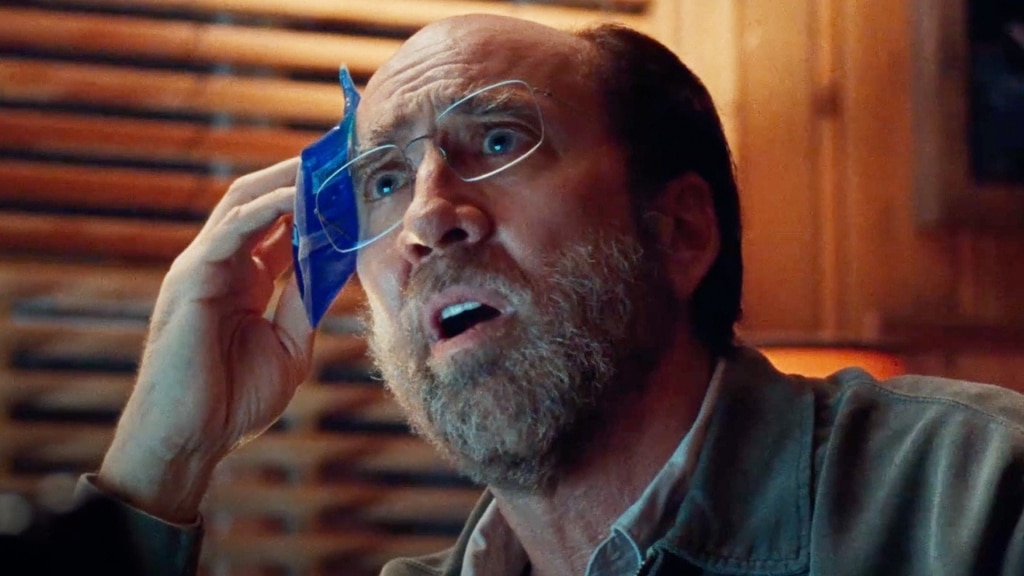
I have to call this a Cage Fighter. It is one of my absolute favorite movies of the past several years, let alone Nicolas Cage movies. That said. Know your preferences, know your limits. This is not really a fun movie. It’s heartbreaking and infuriating. It’s not a movie to put on when you just want to unwind and relax. It’s engaging and challenging and, in some ways, exhausting. But it’s worth the trip.
AND IN THIS CORNER: STEPHANIE MALONE
The Lowdown
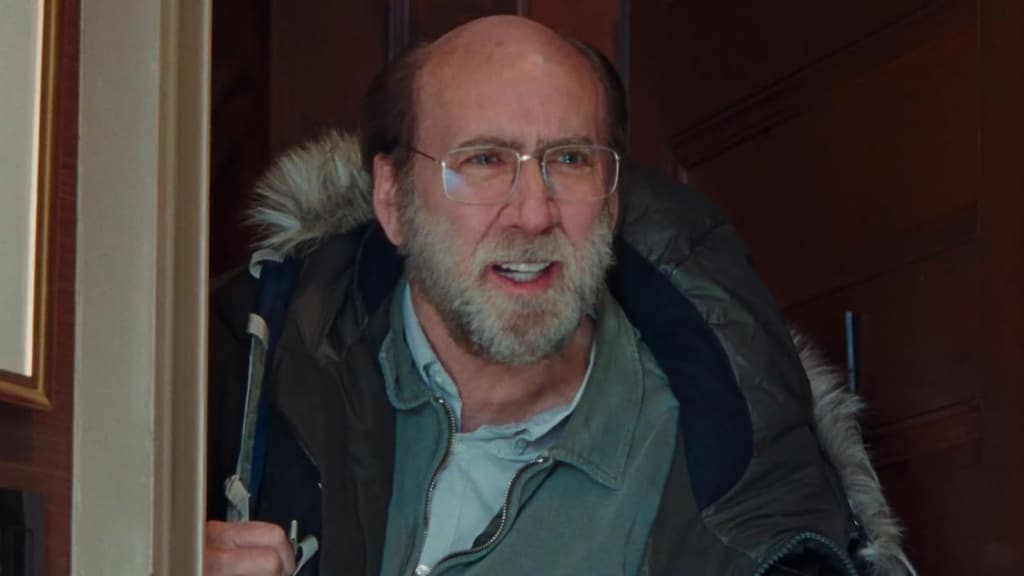
In an era where originality feels increasingly rare, Dream Scenario emerges as a startlingly fresh examination of viral fame and the fickle nature of public attention. At its center is Nicolas Cage delivering what might be his most nuanced performance to date as Paul Matthews, a mild-mannered evolutionary biology professor whose unremarkable life takes a bizarre turn when he begins appearing in millions of people’s dreams.
The film’s first act plays like a Charlie Kaufman-esque comedy of the absurd as Paul grapples with his newfound “dream celebrity” status. Director Kristoffer Borgli demonstrates remarkable control over the tone, allowing the humor to emerge naturally from the premise’s inherent strangeness rather than forcing it. The dreams themselves are masterfully crafted set pieces that feel both surreal and strangely familiar – capturing that peculiar dream logic we all recognize but can rarely articulate.
But what elevates Dream Scenario from merely clever to genuinely profound is its willingness to follow its premise into increasingly darker territory. As Paul’s dream appearances take an unexpected turn, the film morphs into something far more challenging and thought-provoking than its initial setup might suggest.
It becomes a searing commentary on internet fame, cancel culture, and the commodification of identity in the digital age.
Cage’s performance evolves alongside the film’s shifting tone. As Paul’s world begins to unravel, Cage peels back layers of his character’s seemingly benign exterior to reveal something more complex and unsettling beneath.
There’s a remarkable scene in the film’s third act where Paul attempts to explain himself to a hostile audience. Cage delivers a monologue that manages to be simultaneously sympathetic and deeply uncomfortable, forcing us to grapple with our own complicity in the culture of public shaming and redemption.
It’s a film that starts off feeling like a quirky comedy about a man who becomes a literal dream celebrity, only to perfectly evolve into a nightmare about the dark side of getting everything you thought you wanted.
The Cage Factor:
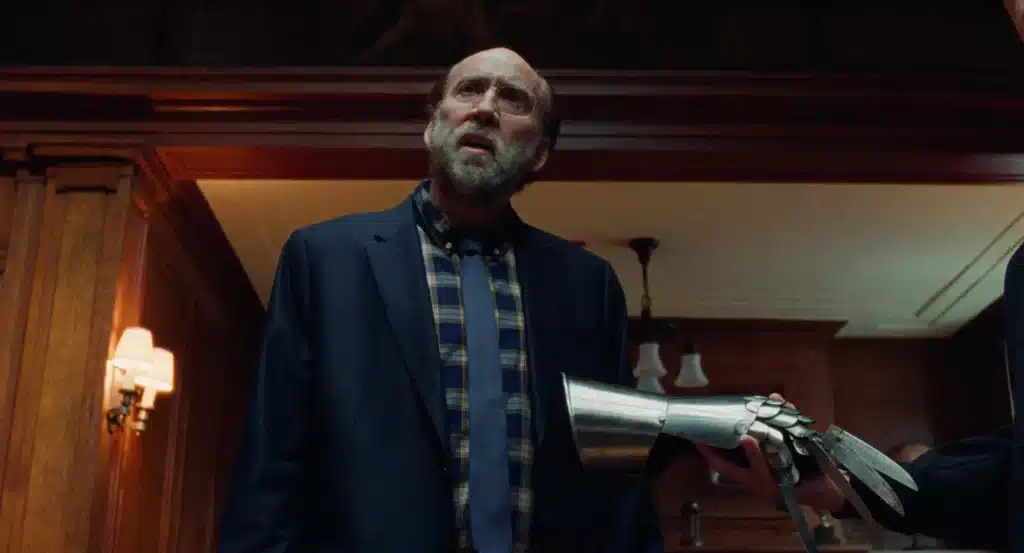
Cage, who has built a career alternating between understated character work and magnificent explosions of gonzo energy, finds a role here that allows him to masterfully blend both approaches. His Paul Matthews initially presents as almost aggressively ordinary – a schlubby academic with a slightly disheveled beard and the kind of swaggerless style that screams, “I’ve given up.” But watch how Cage layers subtle notes of desperation and suppressed yearning beneath the mundane exterior.
When Paul discovers he’s becoming a dream phenomenon, Cage’s face registers a complex cocktail of emotions: confusion, excitement, fear, and most tellingly, a hint of long-awaited validation.
For Cage enthusiasts, this performance will rank among his finest—alongside Adaptation, Leaving Las Vegas, and Pig. It showcases his ability to find humanity in even the most bizarre scenarios while demonstrating his unparalleled skill at modulating between subtle character work and more explosive moments of crisis.







Follow Us!