Point-Counterpoint: #AMFAD: All My Friends Are Dead (Review)



Before we begin, I’ll offer a quick synopsis of the premise for #AMFAD: All My Friends Are Dead. If you’d rather skip to the meat and potatoes, jump here.
We open with the 20th anniversary of the last Karmapalooza music festival, where the Seven Deadly Sins Killer (SDSK throughout the film) went on a deadly rampage. The killer remains at large. Aside from the use of the concept of the seven deadly sins as a grounding point, there’s little to no acknowledgment of its predecessor, Se7en.
Seven current and aspiring social media influencers on the fictional platform All My Friends (AMF, which is also slang for ‘adios mother fucker’ or, more gently, ‘adios my friend’), who appear to be frenemies, coordinate to attend the festival together.
You can already see where this is going.
In transit, they get a flat tire and find a house to rent on Stay Away, this world’s AirBnB equivalent. (Enjoying the naming choices yet?) Upon arrival, they are greeted by seven shot glasses on the kitchen counter, each touting one of the seven deadly sins. They quickly assign a sin to everyone in their crew.
Shortly after they arrive, themed murders commence, aligned with the sins. The kills quickly devolve from intricate and lingering into a hurried stab-fest as the guests realize what’s happening and try desperately to avoid their fates.
The audience is left to guess: Who is the SDSK, and why are these seven individuals on the chopping block?
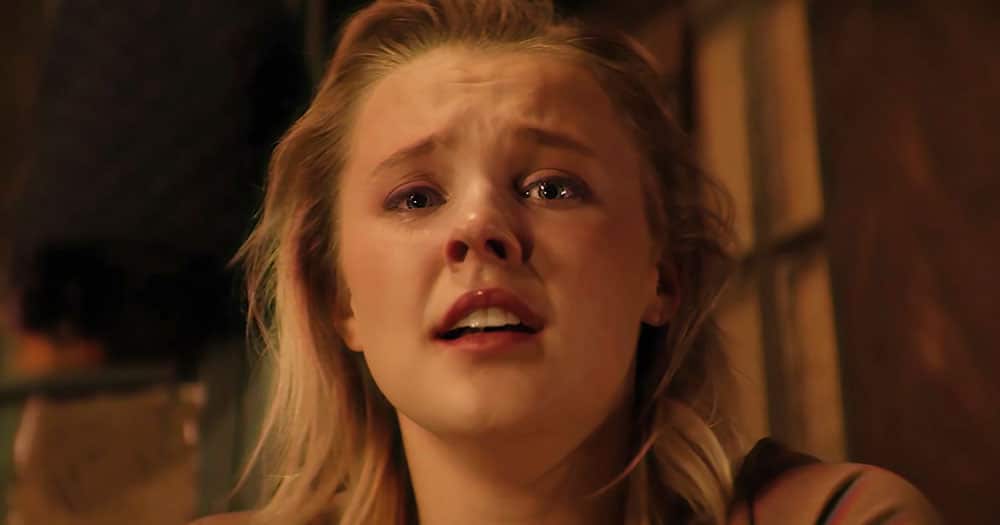
I saw Siwa’s name on the cast list and braced myself for more of the coddled child star chaos we’ve come to expect from her lately.
First, I should disclose my position regarding Siwa’s inclusion. I’m the mother of a ten-year-old who grew up with Jojo’s kid-friendly pop music. I gave myself a pat on the back when I nailed all the words to Bop! We are a queer-friendly home, and we applauded when she came out confidently to her overwhelmingly conservative fan base. I was a Jojo fan… until recently, after many cringe-worthy TikToks and interviews.
Dipping into #AMFAD, I hoped this casting choice was for a Drew Barrymore-in-Scream moment: A quick, gruesome entrance and exit. Spoiler: It wasn’t. Sigh.
I’m sure Siwa was (mis)cast before the recent facepalm moments. How unfortunate. It unquestionably impacted how I connected with this film.
While Siwa’s character, Colette, had few speaking lines, she was the lynchpin for much of the plot development. I was ultimately incapable of separating the actor from the character.
Siwa has become inseparable from her public persona. Now, when I see her on screen, she’s become one of those people you can only see as themselves. (Others in this category include Dwayne Johnson, Kevin Hart, Pauly Shore, current-day Jeff Goldblum, etc.). And it’s too bad. If the casting directors considered her in today’s circumstances, she would have been a perfect, campy cast as the sin Pride (which would have also had a funny double meaning because of this recent soundbite that got her skewered on almost every social media platform).
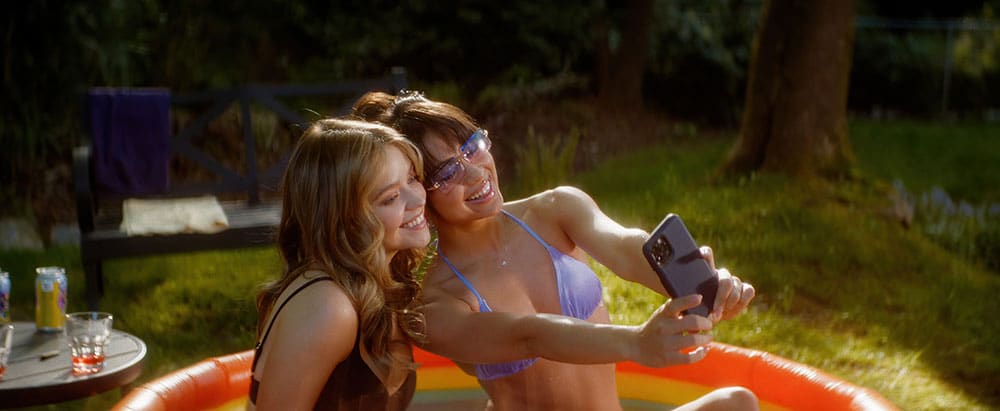
Marcus Dunstan was involved as director and/or writer on The Collector and The Collection, the Feast trilogy (swoon), and a couple of the later Saw installations. We also can’t overlook Piranha 3DD (very capable of creative horror content, sprinkled with humor and ridiculousness as appropriate). Toss into this mix the producer of Happy Death Day/Happy Death Day 2, John Baldecchi (clearly drawn to cheeky horror content). I see how this project came to fruition.
When I reached the end of my viewing, my initial reaction was, “Meh. Unmemorable.”
Then, like a good meme, it stuck with me. I woke up the following day chuckling about the squirrel interaction and Ghostface’s nod. Then, given the choice to parse the plot into seven pieces, I started thinking about it in parts. I found it more palpable this way, in small reel-sized bites.
Given this, I offer ratings below for each kill from best to worst so as not to spoil too much for you. (Click “Read More” below to dive in.)
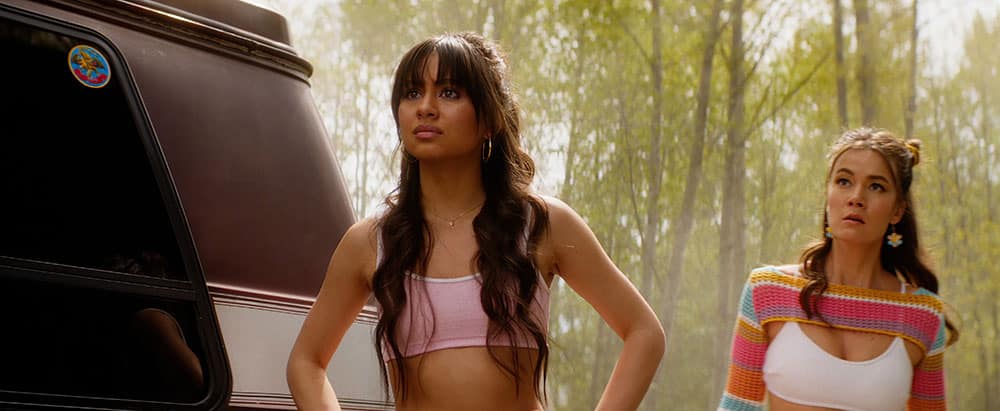
Unfortunately, it didn’t gel as a collective story for me. The lackluster kills coming into the final act caused my initial enthusiasm for the concept to fizzle. And because I didn’t feel warm and fuzzies for Colette, the ending fell flat.
The actors? I don’t have much to say about the seven core actors, aside from the fact that Jade Pettyjohn gave me distracting Jenna Ortega vibes. For me, no one offered a standout performance.
Maybe that was the point? Letting us know how vapid and harmful chasing social clout is? Or, perhaps, how close to impossible it is to create anything lasting or memorable when living life in clip form? Agent Slick Rick’s role and dialogue could definitely support this possibility.
Regardless, lower your expectations. #AMFAD: All My Friends Are Dead can’t compete with the likes of the Final Destination or Saw franchises.
However, there is enough charm and a few amusing moments to make it worth seeing and potentially warrant the sequel(s) they’re already teasing.
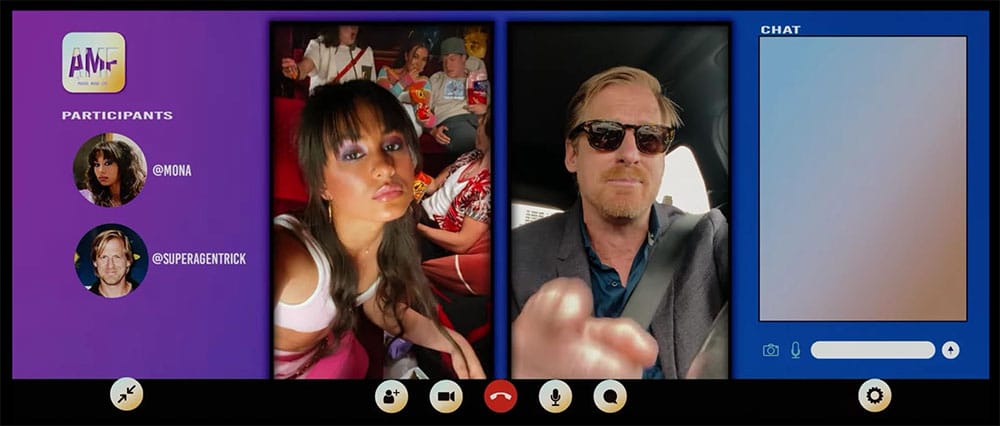
Much to my surprise, #AMFAD: All My Friends Are Dead is more than just a fun, forgettable slasher. It’s a riotous, blood-soaked romp to be sure. Yet, it’s also a savvy commentary on our social media-obsessed culture, delivered with a wink and plenty of good ol’ fashioned gore. Horror fans will delight in the creative kills and dark humor, while more casual viewers will appreciate the film’s broader themes and unexpectedly layered performances.
Director Marcus Dunstan, known for his work on the SAW franchise (writer) and The Collector (director), brings his expertise in crafting visceral horror to this film, infusing it with a potent blend of dark humor and biting social commentary on influencer culture and the commodification of tragedy.
Each influencer embodies one of the sins, their exaggerated personas serving as a mirror to the worst excesses of online culture. The clever use of the seven deadly sins theme (crafted by writers Josh Sims, Jessica Sarah Flaum, and John Baldecchi) elevates the film beyond mere slasher fare, providing a framework for both character development and inventive kills. This thematic structure allows the film to explore the darker aspects of human nature while maintaining its breakneck pace and horror credentials.
The special effects team deserves major kudos for their work in bringing these imaginative deaths to life.
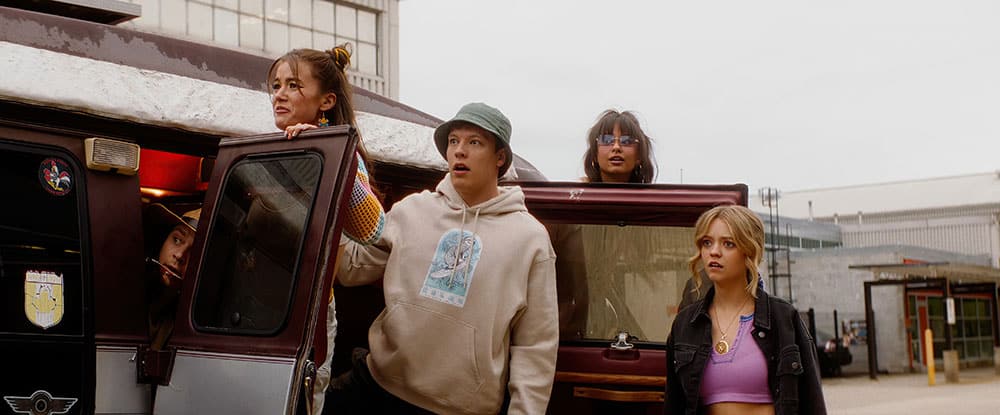
We’re presented with a strong ensemble cast where no one is safe.
The casting of Jojo Siwa, a real-life social media sensation, adds an extra layer of meta-commentary to the film. Her surprisingly nuanced performance as one of the more grounded characters serves as a clever subversion of expectations and highlights the film’s complex relationship with influencer culture.
Jade Pettyjohn shines as Sara, bringing depth and vulnerability to her role as the outsider thrust into this world of online celebrity. Her performance anchors the film, providing a relatable perspective amidst the chaos and carnage. But it’s the ensemble cast that really makes this film sing, with each actor fully committing to their deliciously unlikable characters.
#AMFAD draws influence from postmodern slashers like Scream and Bodies Bodies Bodies but carves out its own unique identity. It’s a film that understands its genre roots while pushing the boundaries of what a slasher can be in the digital age. Dunstan infuses #AMFAD with the kinetic energy and brutality reminiscent of SAW while adding a wicked sense of humor and striking visual flourishes inspired by giallo cinema.
Dunstan’s direction shines here, balancing suspense, horror, and dark humor with aplomb.
The final act is a tour de force, bringing together all the film’s themes for a blood-soaked climax that will leave audiences breathless. And just when you think it’s over, the mid-credits sequence hints at an expanded universe, leaving viewers hungry for more.
Of course, no film is perfect. Some viewers might find the characters initially off-putting, and certain plot points strain credibility. However, these minor flaws are easily overshadowed by the film’s energy, creativity, and willingness to push boundaries.
#AMFAD: All My Friends Are Dead is a smart, savage critique of capitalistic, opportunistic culture wrapped in a package of blood, guts, and gallows humor. It proves that there’s still plenty of life left in the slasher genre when filmmakers are willing to take risks and engage with contemporary themes.

She’s a lover, he’s a fighter. Together, they’re CHEER AND LOATHING. Tune in to hear your hosts, Stephanie (Cheer) and Casey (Loathing), clash over the films they love — and the ones they love to hate.
In this holiday extravaganza episode of Guilty Pleasures, join hosts Stephanie, Kelly, and our newest addition, Jonathan (Jack was tied up in tinsel and couldn't join us), as they unwrap the bizarre and unhinged world of holiday cinema. They dive into the depths of Elves, a film that's as chaotic as it is entertaining. It's a sleigh full of questionable decisions, diabolical dialogue, absurd plot twists, wildly offensive antics, and unhinged holiday mischief.
And that's not all! In the second half of the podcast, join your festive cinephile friends for a look at four more ”nutty as a fruitcake” holiday treats: A New York Christmas Wedding, Elf Bowling, A Medea Christmas, and Jack Frost. Plus, we each offer a bonus Christmas flick guaranteed to make you say, ”Ho, Ho, HO-LY Hell!”
Expect laughter, disbelief, and a spirited debate about what truly makes a movie a guilty pleasure. Don't miss this festive journey through the weirdest corners of holiday films!
Follow Us!