


“Red Rooms” is a chilling look at true crime obsession, offering a haunting and affecting critique of our voyeuristic culture.
No time to read? Click the button below to listen to this post.
Pascal Plante’s Red Rooms (2024) is a haunting exploration of the psychological depths of true crime obsession, delivering a nuanced but devastating approach to a genre often dominated by shock value.
Set against the backdrop of a high-profile murder trial, Red Rooms follows Kelly-Anne (Juliette Gariépy), a young woman obsessed with the case of Ludovic Chevalier (Maxwell McCabe-Lokos). The man known as “The Demon of Rosemont” is accused of operating a torture chamber where he livestreamed his gruesome acts for wealthy patrons, including the torture, murder, and mutilation of three young girls.
As Kelly-Anne — a socially withdrawn model, professional poker player, and adept hacker — attends the trial daily, we witness her growing fixation with the proceedings and her attempts to gain access to the forbidden “red room” videos.
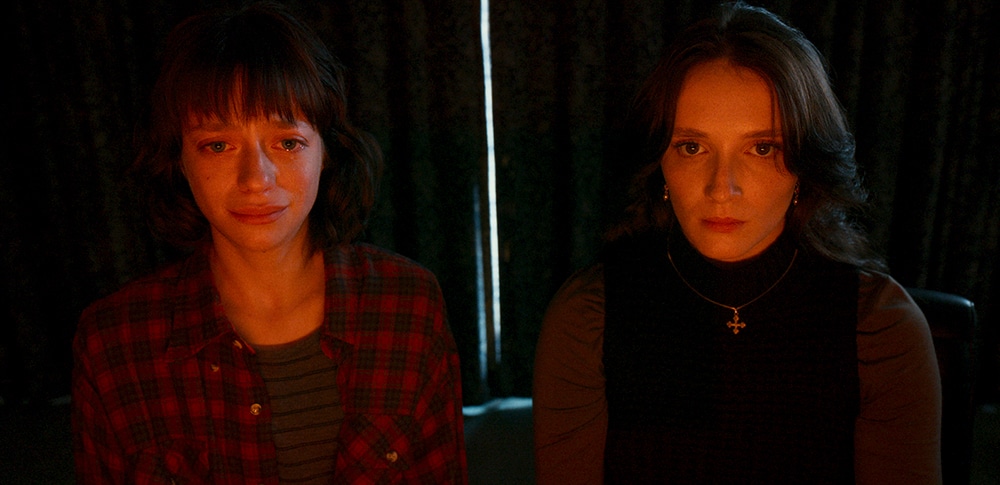
The film meticulously chronicles the trial, introducing us to key figures such as the stoic prosecutor (Natalie Tannous), the youngest victim’s distraught mother (Francine Beaulieu), and a naïve Chevalier groupie named Clementine (Laurie Babin) who forms a tenuous friendship with Kelly-Anne.
As the courtroom drama unfolds, we’re drawn deeper into Kelly-Anne’s world, her motivations remaining enigmatic as she navigates the fringes of true crime fandom and the inevitable media circus surrounding the grisly case.
Plante’s direction excels in creating a haunting and oppressive atmosphere.
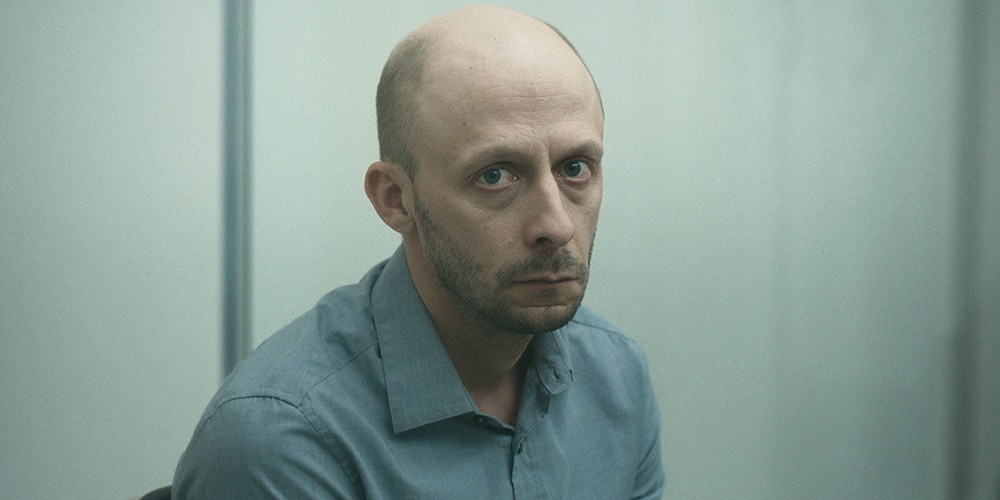
The film’s deliberate pacing allows tension to build slowly, immersing the audience in a world of unease and anxiety.
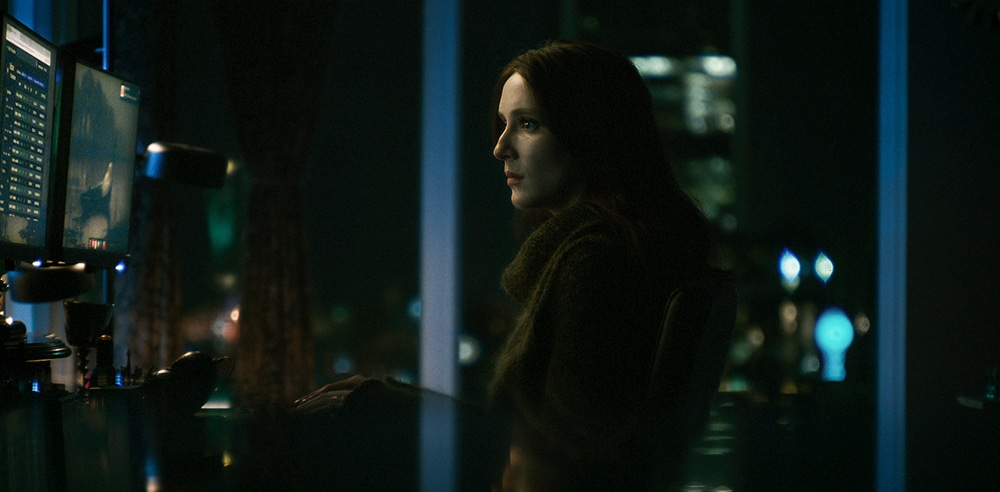
Long, lingering shots and a muted color palette contribute to the oppressive mood, while the sound design – particularly in scenes alluding to the crimes – creates a visceral sense of horror without relying on explicit visuals.
Plante uses admirable restraint in depicting the violence, but that doesn’t mean it’s any less harrowing.
Instead of relying on graphic gore, he employs subtle flashes of a blood-soaked room and skin-crawling sound effects, forcing viewers to confront the horrors in their imagination – a far more effective and disturbing approach.
The film draws chilling parallels between the voyeuristic nature of the killer’s livestreams and the public’s insatiable appetite for courtroom drama and salacious details. By focusing on Kelly-Anne’s obsession, the film forces viewers to confront their own voyeuristic tendencies and the ethical implications of consuming true crime as entertainment.
In a film that’s equal parts courtroom drama and psychological thriller, it’s surprisingly frightening, resulting in one of the most unnerving horror films I’ve seen in some time
At the heart of the film is Juliette Gariépy’s mesmerizing portrayal of Kelly-Anne.
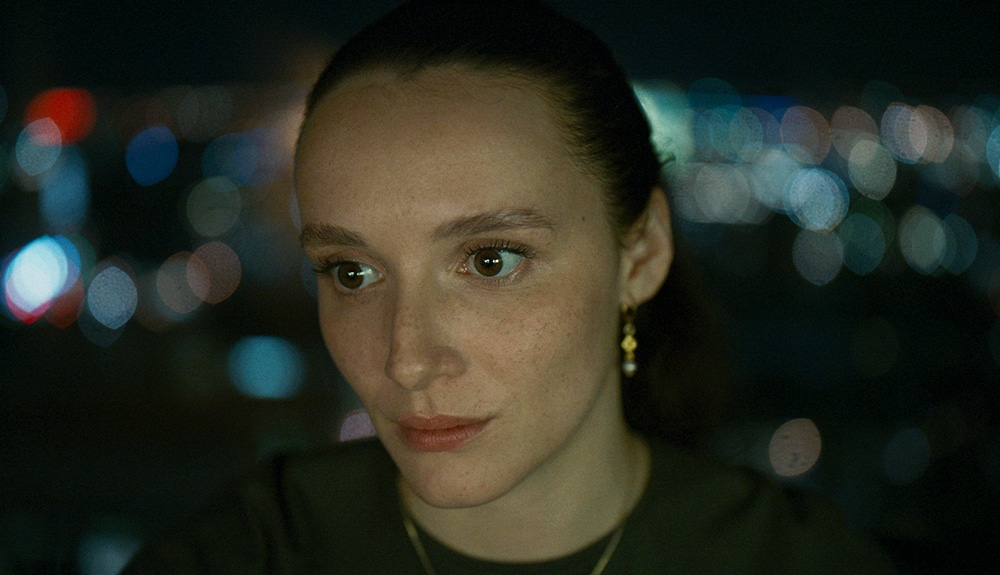
Her character is an enigma, never inviting easy sympathy or relatability.
Gariépy’s nuanced performance keeps Kelly-Anne aloof and closed off, creating an uncomfortable yet compelling viewing experience. This detachment serves the film’s themes, mirroring the emotional distance often present in true crime consumption and the darker realms of dangerous voyeurism.
One of the film’s greatest strengths lies in its rich, layered exploration of character and theme.
Rather than focusing solely on the crime itself, Red Rooms examines the human experience surrounding it, particularly the cultural fixation on true crime.
The film raises probing questions about the ethics of consuming real-world tragedies as entertainment and the potential for media to glamorize or sensationalize violent acts.
As we follow Kelly-Anne’s quest to view the forbidden videos, we’re forced to examine our own morbid curiosity and the moral quandaries it raises.
What’s on those tapes that we’re told are too unspeakable to imagine? We can’t help but wonder and secretly desire a glimpse of this forbidden horror. In this way, we’re forced to reconcile with our innate human desire to participate in the very type of sadistic spectatorship the film so deftly critiques.
This self-reflexive approach elevates Red Rooms beyond typical true crime fare, offering a scathing critique of media sensationalism and society’s fascination with violence — an obsession few of us are immune to.
The film’s technical elements are expertly crafted to support its themes.
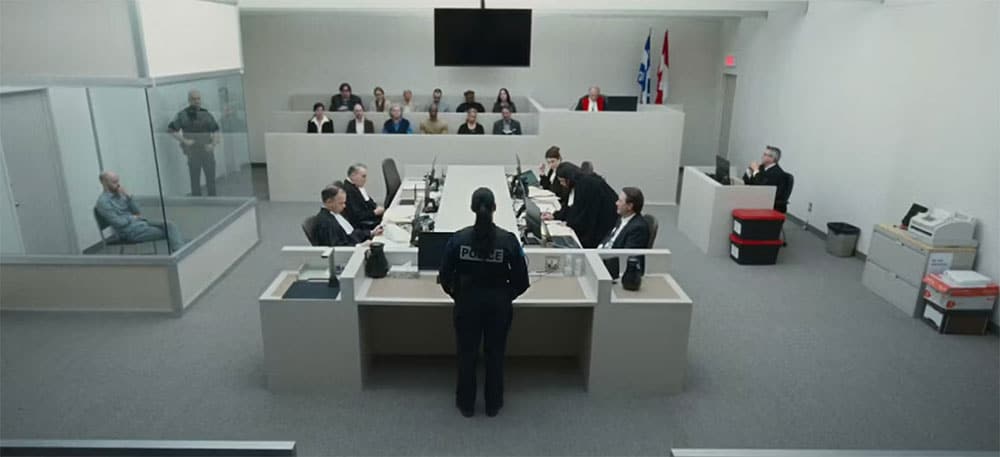
Plante’s use of sound design is particularly noteworthy, creating an immersive audio landscape that heightens the psychological horror. The cinematography, with its focus on sterile courtroom environments and claustrophobic personal spaces, underscores the contrast between public spectacle and private obsession.
Red Rooms avoids overly stylized techniques, grounding its horror in realism.
This approach is especially effective in courtroom scenes, where the stark, clinical setting amplifies the psychological weight of the testimony and evidence presented.
By drawing inspiration from real-life events and court cases, Red Rooms adds an unsettling realism to its narrative. The decision to never let the killer speak is a smart one, avoiding the pitfall of glamorizing the perpetrator and instead focusing on the psychological impact on those fascinated by the case.
It’s a film that invites comparisons to other psychological thrillers that explore obsession and the darker aspects of human nature. It shares DNA with David Fincher’s Zodiac in its meticulous examination of true crime obsession and the toll it takes on individuals. The film’s moral ambiguity and focus on the psychological impact of violence echo Denis Villeneuve’s Prisoners while Its critique of media sensationalism brings to mind Dan Gilroy’s Nightcrawler.
But this isn’t a film about sensationalizing violence. It’s a far more cerebral approach to the dark side of human nature.
While this film is worthy of significant praise, it may not appeal to all viewers.
Its deliberate pacing and methodical approach could alienate audiences looking for more conventional suspense and action.
The film’s moral ambiguity and refusal to provide clear answers or resolutions regarding the ethical questions it raises might leave certain viewers unsatisfied, particularly those who prefer more closure in their narratives.
The ambiguity of Kelly-Anne’s character arc, while thematically resonant, may frustrate viewers who desire more traditional character development or clearer motivations.
Nevertheless, Red Rooms stands out as a sophisticated and challenging entry in the true crime subgenre, praiseworthy for its psychological depth, atmospheric tension, and thematic complexity.
Pascal Plante’s deft direction, combined with Juliette Gariépy’s enigmatic but spellbinding performance, creates a viewing experience that is as uncomfortable as it is compelling. In an era saturated with true crime content, Red Rooms offers a necessary and critical perspective, challenging us to examine our fascination with the darkest aspects of human behavior.
It’s a film that lingers in the mind, sparking conversations about the ethics of spectatorship and the fine line between seeking understanding and indulging in voyeurism.
Overall Rating (Out of 5 Butterflies): 4











Follow Us!