


“The Visitor” is an unholy, full-scale invasion of the senses that shocks, seduces, and slyly transforms you in unforgettable ways.
No time to read? Click the button below to listen to this post.
Bruce LaBruce is a Canadian underground filmmaker known for his provocative, sexually explicit films. His latest film, The Visitor, is a modern interpretation of the 1968 allegorical film Teorema from fellow controversial and boundary-pushing filmmaker Pier Paolo Pasolini (Salò, or the 120 Days of Sodom).
Known for his scathing and uncomfortable indictments of fascism and the cruel apathy of the bourgeoisie, Pasolini’s Teorema was a film about the spiritual corruption of the wealthy elite. LaBruce expands the idea to tackle issues of immigration, class divisions, the exploitation of labor, xenophobia, racism, and sexual repression and liberation—all through an unapologetically queer lens.
Through an abundance of unsimulated sex acts that escalate into increasingly graphic and forbidden spectacle, LaBruce’s assault on heteronormative orthodoxy is both sexy and squirm-inducing.
The film begins with a voiceover (via renowned British actor Adrian Bracken) of a callous political leader decrying the dangers of immigration. It’s a speech that feels dystopian in its hateful rhetoric, violent disregard for human suffering, and embrace of intolerance. Yet, it is ripped from actual political speeches, including Enoch Powell’s infamously divisive 1968 “Rivers of Blood” speech.
Against the backdrop of this chilling soundscape, a suitcase washes up on the bank of the Thames, where a homeless man retrieves it.
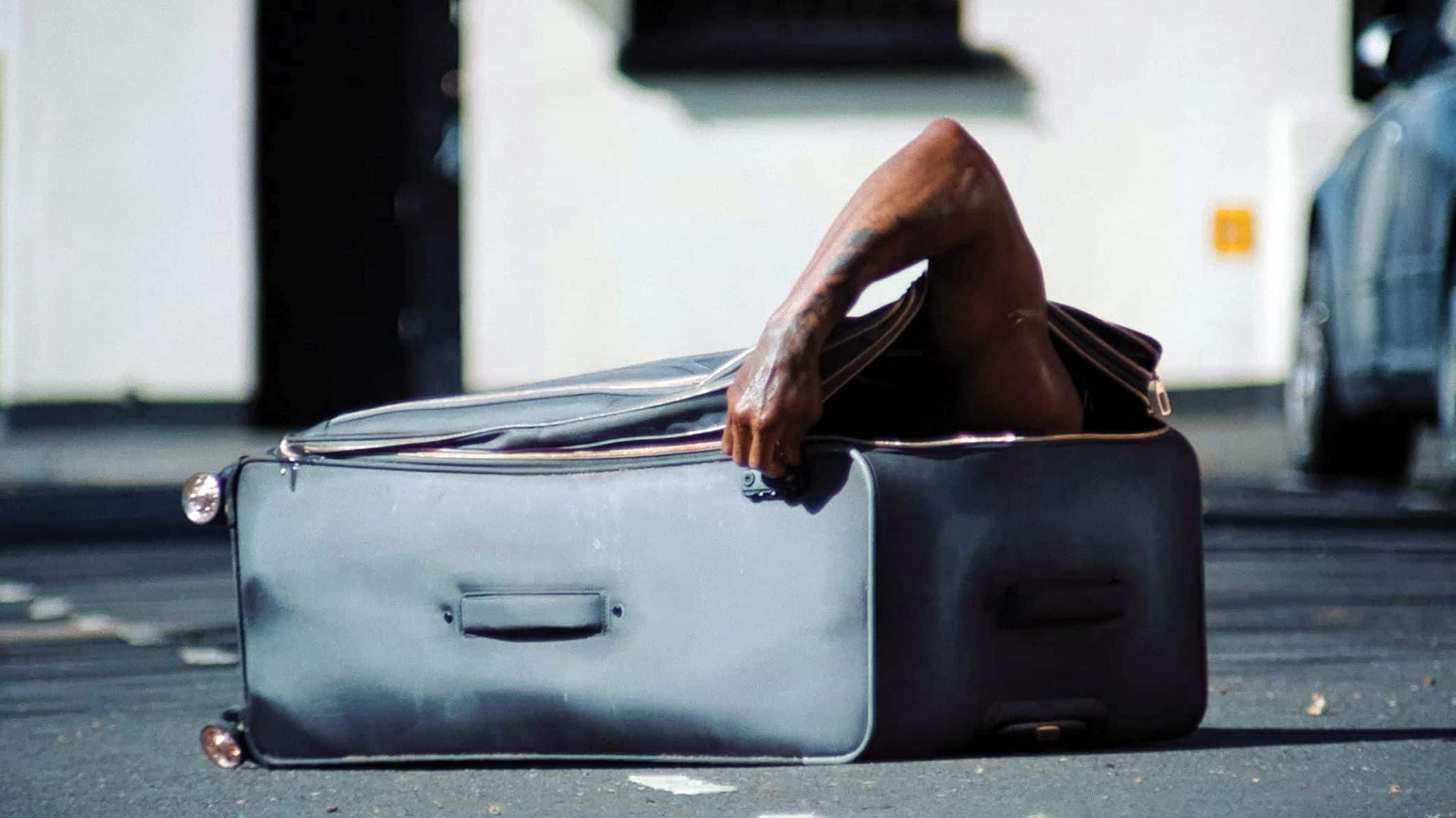
Suddenly, a muscular, nude black man emerges from it while numerous other identical-looking men begin appearing around London in similar suitcases. One of the refugees, the titular unnamed Visitor (burlesque actor Bishop Black), steals clothes from the tent of the homeless man and visits the home of an upper-class family, where he is welcomed in by the maid (Luca Federici).
In an ode to one of the more stomach-turning sequences in Salò, he’s encouraged to urinate into a pot, bleed into a jar of wine, and defecate onto a plate—all of which are gleefully served up to the unsuspecting but delighted family.
Introduced as the maid’s nephew, he is invited to the dinner table and observes the grotesque feast in satisfied silence. The family invites him to stay on as an employee. What follows is a lurid, highly stylized seduction scene as the hungry family members devour the excrement while lustfully eyeing the Visitor.
One by one, the Visitor awakens a sexual revolution in the household—including the Father (Macklin Kowalt), Mother (Amy Kingsmill), Son (Kurtis Lincoln), and Daughter (Ray Filar)—through a series of lurid and explicit, unsimulated sexual encounters.
The first to fully succumb to the Visitor’s silent charms is the maid, enraptured by the sight of the Black Adonis reading and sunbathing on the well-manicured lawn of the opulent home—in a scene that visually echoes Bong Joon-ho’s Parasite.
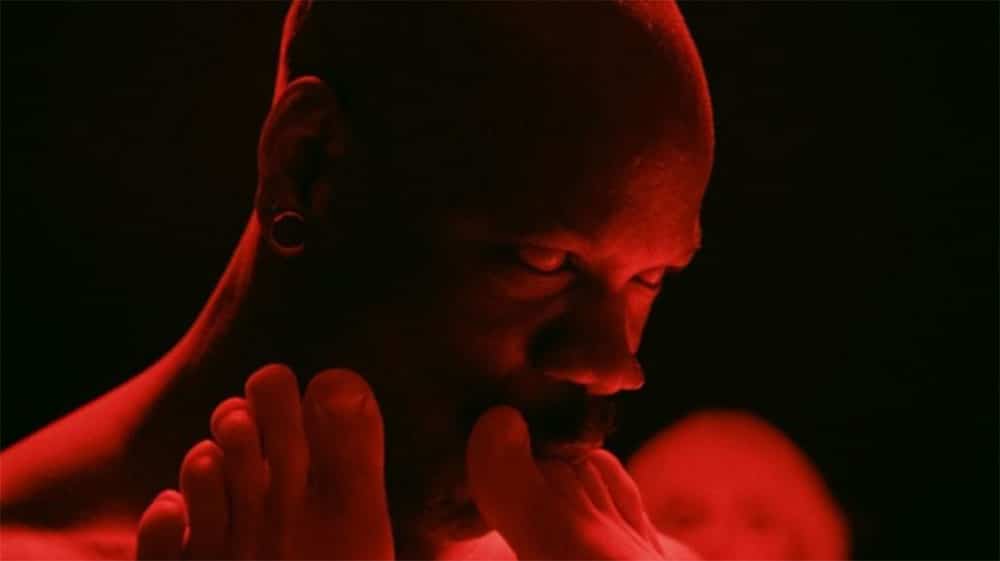
The initial taste of forbidden fruit is a techno-laden frenzy of pulsating synth sounds and vivid club lighting, with scenes of sexual perversion punctuated by bold text slogans that periodically flash on the screen.
It’s immediately clear that LaBruce is here to smash systems of religious sexual repression.

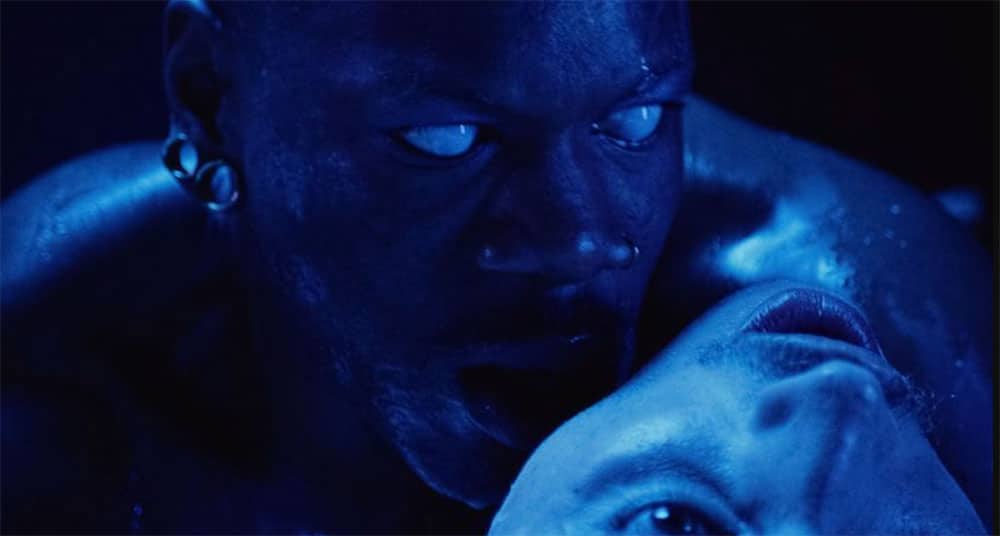
As the Visitor penetrates the maid with a giant black dildo shaped like Jesus, onscreen messages refer to sacred sex, anal liberation, and the command to “Let Jesus Fuck You.”
Next, the materialistic Mother has sex with the Visitor inside a giant shopping bag in an orgiastic tribute to excess, bondage, and fetishism—while LaBruce teases us with cheeky messages, such as “Open Borders, Open Legs”.
The Daughter, Father, and Son soon yield to carnal temptation in scenes of an intensely taboo nature that culminate in the film’s climactic celebration of queer liberation.
After seducing every member of the family, the Visitor abruptly announces his departure, speaking for the first time and delivering a passionate speech about pansexual revolution and the embrace of otherness. That prompts the family to confess how he has sexually and spiritually transformed them, deconstructed their identity, and “colonized the colonizer.”
Through graphic depictions and transgressive acts, LaBruce creates a carnivalesque atmosphere of sexual abandon.
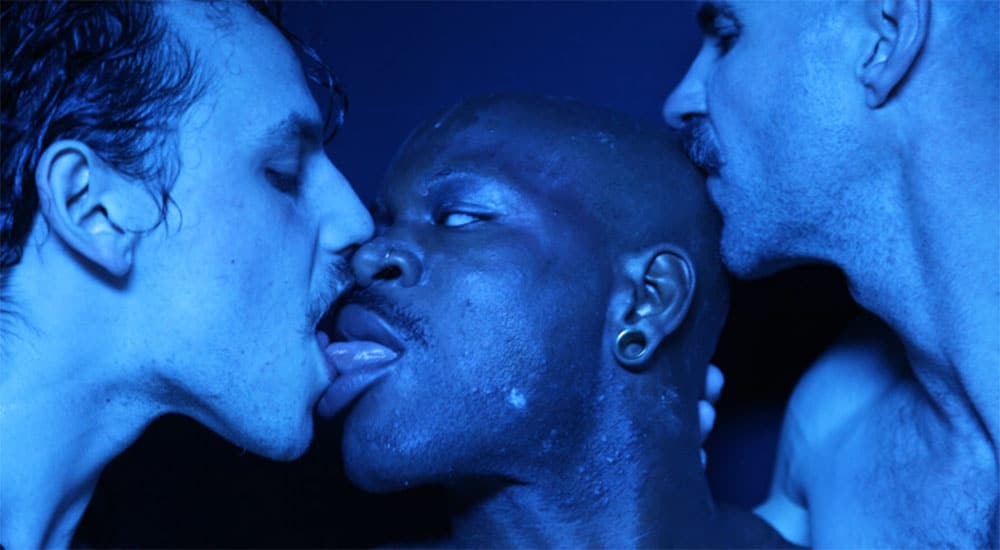
The film’s scopic excess creates a visceral experience, interrogating sexual boundaries and leaving the viewer equally titillated and disquieted.
There is no shortage of utterly game and fearless performances from the entire cast, but it is non-binary performer Bishop Black who anchors the film and seduces viewers through a mostly wordless, otherworldly performance with the same potency and ease that the Visitor seduces the Family.
If some of the racier scenes in Saltburn made you clutch your pearls, The Visitor is most definitely not for you.
In fact, the film’s tableaus of debauchery will alienate all but the most adventurous and open-minded viewers.
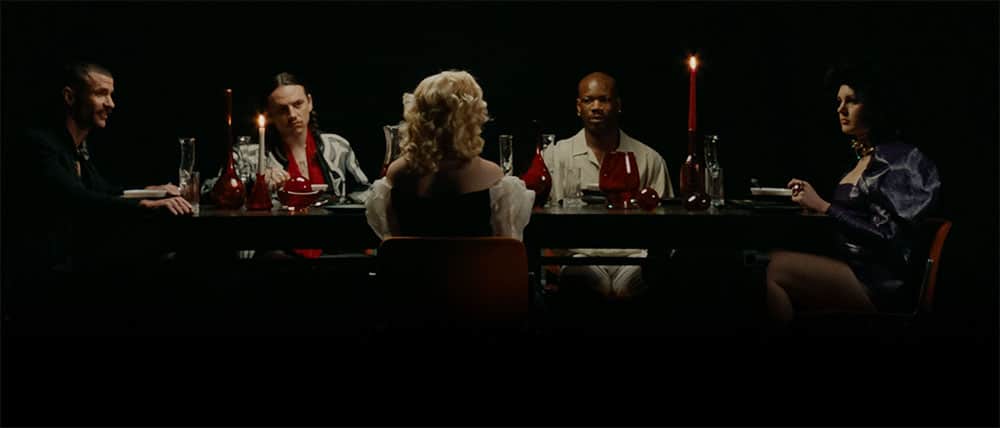
The Visitor is designed to make the audience confront their own discomfort.
The majority of the film, well over an hour, centers around lengthy sequences of explicit sexual content. Yet, there is also ample tongue-in-cheek humor, loving nods to the campy excess of pornographic films, and mesmerizing if unconventional filmmaking techniques.
The film is shot, colored, edited, and scored to create a disorienting but intoxicating fever dream.
It’s not shock for shock value alone, as the affront to polite cinema and ocularly assault is carved into a weapon of subversion—a political tool for confronting society’s tendency to oppress, repress, and subjugate through shame.
The final act is gloriously unhinged as the Family tries to cope with the absence of the Visitor, with critiques of religious institutions and the evils of capitalism.
The Visitor is a thought-provoking, impossibly hard-to-pin-down film that straddles, with heart and legs wide open, the line between pornography and arthouse cinema.
Overall Rating (Out of 5 Butterflies): 3.5
Check out the edited trailer below, and you can view the X-rated trailer over on X. The film begins touring select cities throughout the month of March, leading to a Blu-ray release on April 4th.










Follow Us!